Every time there's a thread on the topic, I like to share this fantastic realtime map of the carbon intensity of electricity production in various countries :
As I write this, the UK's intensity is 326 gCO₂eq/kWh, which is nothing to write home about.
This is better than the worst European offender (coal-loving Poland : 652g) as well as Baltic countries, the Netherlands and Germany (373).
But it's far from the best in class : Nordic countries (around 20-30, thanks to hydro) or for a more comparable country, France (around 60, thanks to nuclear)
Germany is interesting because it consistently has one of the worst carbon intensity figures of all developed countries, in spite of a record-setting share of renewables that its green activists like to boast about, and hundreds of billions of € in subsidies poured into them in the past 20 years.
That's of course the consequence of its decision to phase out nuclear power in the early 2000s. Wind/solar are intermittent and there's no way around that (battery storage isn't nearly mature enough).
That leaves 4 options for handling the base load : nuclear, hydro, gas or coal. Only 2 of those are low-carbon. And if you don't have the geography for hydro (like the Nordics do) but still decide to go nuclear-free for political reasons, guess what you're left with ?
IIRC, German coal power plants have 7 spots in the top 10 worst air pollution emitters across the EU. Coal-related air pollution causes an estimated 10.000 extra deaths each year across the continent. Radiation caused one direct death in Fukushima. Thanks, Die Grüne.
>As I write this, the UK's intensity is 326 gCO₂eq/kWh, which is nothing to write home about.
Yeah, that's true, but you've taken a reading there at the worst time of day whilst it's not windy here. The other week we achieved the second lowest carbon intensity daily average ever (the lowest was in the summer last year).
Also, I don't believe that (whilst I love their visualisation) the Electricity Map UK gCO2/kWh measurement is very accurate. For starters, they don't appear to separate out different types of gas plants. The CO2 intensity of OCGT is 3x that of CCGT.
Electricity Map is using 490 gCO2/kWh for UK gas, which is pretty much exclusively CCGT. This does seem high. The US average [1] seems to be around 418 gCO2/kWh whereas electricityinfo.org [2] seems to be using 394 gCO2/kWh and so gets a rather different value for current UK carbon intensity.
> For starters, they don't appear to separate out different types of gas plants. The CO2 intensity of OCGT is 3x that of CCGT.
What makes you believe that? They list CCGT and OCGT separately, it's just that (unless every site I've seen about UK energy is wrong) there isn't a lot of OCGT generation in the UK because it's uncompetitive. Which would be for the same reason it increases CO2 intensity - it's inefficient to run. In the UK market it doesn't make up for that enough by being cheap to build and fast to spin up so as to create an incentive to build a lot more.
Not that I have any stake in the accuracy of electricitymap's statistics, but I don't think there's any point seperating out OCGT from CCGT generation. OCGT makes up a negligible share of realised generation (and indeed, even generation capacity is rather limited). The few plants that are still in operation need very specific market conditions to make their operation worthwhile, especially considering that 3x CO2 output means 3X fuel input, and 3x fuel costs. It's better to think of them as grid-stability mechanisms, like diesel generators, or the industrial load-shedding schemes.
I don't know how any German in their right mind can continue supporting coal (especially lignite) even if you were to ignore all the fancy carbon emission calculations. Lignite is won using strip-mining here, and by here I mean in the most populous state of Germany between the major Ruhr area and Düsseldorf/Cologne, all major population centers. From where I live, I have to drive straight through these mines whenever I want to go to either city, and the experience is surreal. There's a brand new three-lane highway and then open pits, hundreds of meters deep, for miles and miles in either direction, nothing else. It defies the imagination: https://de.wikipedia.org/wiki/Rheinisches_Braunkohlerevier#/...
If these anti-nuclear activists live in coal-burning countries, and they protest nuclear power until it shuts down, and they do not protest coal power until it shuts down, then for all practical purposes, they are supporting coal.
All renewables except hydro (which Germany doesn't have the geography for) are intermittent.
It's impossible to go 100% renewables unless there's a breakthrough in battery storage.
By the time that happens, it will be too late for climate change. That's why phasing out nuclear without having any other solid low carbon plan was irresponsible.
Biogas is a renewable. And contributes 5% to Germanys energy load, at baseload capability, still being made more and more flexible. You may not like it but it is definitely there. Hydro by the way also destroys vast stretches of land and creates rivers that are poor in aquatic life. Nuclear plants also heat up local water ways. In Heidelberg, we had the local river Neckar freeze for the first time in 40 years after the nuclear plant upstream shut down.
At this point, nobody that is serious is talking about 100% renewables. As is 100% nuclear which has similar problems of being inflexible. However, not all of this has to be battery storage, having a power full, europe-wide grid is equally important. Without that already now when they are still allowed, nuclear plants have shut down at times voluntarily because there was no demand. Phasing out nuclear may not have been the smartest of all moves, but its still far from the top ten of most stupid moves done in the german energy strategy. And especially not in the top ten of the most stupid moves of the conservative party.
It's a common canard to say that batteries are the only storage technology that could be used.
Long term storage is better handled with hydrogen. Using batteries and hydrogen at plausible (or even conservative) costs, one can get to a 100% renewable (PV + wind) grid more cheaply than one also using new nuclear power plants.
Most do, they want to replace them with nothing, e.g. reduce electricity usage. And that may be a hard thing to swallow, but reducing energy usage is the only realistic pathway towards a <2deg world goal.
Perhaps you didn't mean it in a literal sense, however you and I have a very different opinion on the term realistic.
I believe a deus ex machina type carbon capture solution is a far more likely scenario than getting industrialised nations, let alone emerging ones, to actually reduce their energy usage.
Good point, I meant "realistic" as the only technologically plausible scenario. Is it realistic from a human point of view, I don't know.
I see what you mean, but even if a magical carbon capture solution was invented, it would take several decades for it to be implemented on a sufficient scale - given that the current emissions don't increase even faster!! I can't consider it as part of any "likely" scenario.
Also, emerging nations don't really need policies to reduce their own energy usage, as long as most of their own energy usage is linked to the production chain of industrialized nations, it will decrease by itself.
That's not the only technologically plausible scenario, we can use nuclear now. It's also way more realistic from a human point of view to have populations accept this rather than a drastic and sudden lifestyle change.
"using nuclear now" is part of the scenario. Any technology that has brought more efficient, less co2-intensive energy thus far has been used to increase the energy usage at a limited impact, instead of decreasing the impact. Only a policy focused on reducing (or at the very least, stopping the increase) energy usage can have positive final results.
À significant part of the population accepted a drastic and sudden lifestyle change over the last few months. Suddenly remote work and visio conferences are acceptable alternatives to driving 2tons of metal through 30km of asphalt 2x a day. Change is possible.
I think your second paragraph is misplaced. It's my belief that people "accepted a drastic and sudden lifestyle change over the last few months" precisely because it was advertised as a temporary measure.
We're already seeing large numbers of people reject the "stay at home" narrative , simply because they want to, rather than it being driven by improving conditions.
Using this as evidence to suggest that people will adjust to a "new normal" is arguing against your point.
I see what you mean, and I don't think it's gonna be easy either, I don't have false hopes.
Technically though, being locked down is more restrictive than forcing people to move in small electric cars or e-bikes. Just like remote work has jumped up in the lead few months, if proper measures are taken and enforced, demand for bike /rail infrastructures will increase immediately.
People can adapt. How many will resist to change, is the question.
Expecting industrialized countries to reduce energy usage immediately by double digits to reach the climate change goal is everything but a realistic pathway.
In practical terms that means years of Covid19-style lockdown.
We don't have time to wait for a breakthrough in battery storage or carbon recapture.
We have a solution now and it's nuclear power. It's a bit late for starting a nuclear programme now, but countries with current a nuclear power capacity (including Germany) should absolutely delay or cancel phasing it out until climate change is solved.
Well there is the hope than soon enough, that methane is made from atmospheric CO2, water and renewable energy. That would be pretty awesome as the infrastructure to store and move methane is already there.
I have this hope too, but it’s really energy intensive right now. I also have hope for renewable hydrogen, but we have a lot of research to do to reduce costs.
I love the way you say it so casually. In the grand scheme of things you are of course right, but I reckon converting a coal plant to gas is a non-trivial undertaking.
The article discusses the switch of a major plant in the UK to compressed wood pellets, sourced from the US. I would think that Germany (and most of Europe) would have a good climate for wood pellet production.
are they for real? Wood is so inefficient as fuel that shipping it over anything more than 500km (number taken out of my behind, but it is in the ballpark) takes more energy than is contained in it.
The only reason to do so is to end up with high value in "biofuels" category. Just for show.
Not wood, compressed wood pellets. Energy density seems to be between 50-80% of coal. And remember that fuel is only part of the total cost, especially if the formulas include health costs, pollution or carbon emissions.
It's an obscenity, defiling woods to make way for strip mining. I wonder once it's all played out whether they will backfill and let new woods grow again.
Ironically, Germans seem to have bought into the antinuclear frenzy that was sold to them by The Greens. Fukushima was massively overblown by the media and critical thinking went out the window during that time.
Now Germany imports nuclear from France, has the biggest investment in green energy with little to show for it, and is clammering onto their belief that nuclear is the bogeyman.
It doesn't seem as if many Germans saw further than their nose and fear when they voted against nuclear (and still continue to do so)
Minor nitpicks here - battery storage is already reaching deployment ready maturity (its not as far away as you think), but the key attribute that needs solving is not 'baseload' power, but rather 'dispatchabilty'.
Baseload power in the traditional sense (its always on) isn't always a great think either, what you really want is the ability to have it on, or off, or in between depending on the gap in demand that changes and needs to be filled. By this metric, combined cycle gas plants and hydro are the dispatchable options. While the French have figured out rampable/dispatchable nuclear - it is not the standard in reactor designs and the actual desired attribute here is the ability to dispatch energy on demand.
(also, another reason why German electricity emissions are so bad are those plants use lignite (brown coal) - the least efficient and most polluting form of generating electricity (lots of Poland is dependent on brown coal too).
Battery storage gas great dispatchability. It's scale that it lacks. It's estimated that a country needs 3 days worth of energy storage for solar and wind to work. The US would require 7 years worth of Global battery production: https://cleantechnica.com/2019/04/14/global-lithium-ion-batt...
Not sure if I missed it but didn’t see anything in your source to back up this 7 years worth of battery production requirement for what the US needs in stationary storage. Without seeing how we got to the number, I’m skeptical. Things worth considering:
1) decommissioned battery packs from electric cars will eventually have 2nd lives on the grid
2) the manufacturing capacity of li-ion globally today is paltry compared what’s needed just in the batteries for mobility, let alone grid storage. Just like underestimations done for solar and wind, I expect current projections to be undershooting where we’ll end up
3) effective demand response (ramping up and down variable loads like commercial refrigeration, heating water, among others) based on renewable generation levels can effectively replace large chunks of battery storage requirements.
4) wind and solar generation profiles compliment each other - when it is usually sunny, it’s not too windy and when it’s colder (night, winter) wind generates more. Add in negative energy prices in periods of excess generation / curtailment - that is economic opportunity for energy storage to come in and capture value
5) li-ion batteries as they are today are effective for “peak shifting” applications of moving energy across a few hours, but not across weeks or even across seasons. Where it is applicable, pumped hydro and other tech can better fill those other spaces - but we can still make lots of progress prior to those ramping up.
6)Investing in broadening the connectedness of grids across states / countries / continents is another way to reduce generation variability with renewables as across, say North America - it may not be very windy in one state at a given moment but 1000mi away it could be either sunny or windy elsewhere. Smoothing the generation across geographies and types ( connecting hydro and nuclear to more grids) is another way to reduce the amount of energy storage required on a grid.
> Not sure if I missed it but didn’t see anything in your source to back up this 7 years worth of battery production requirement for what the US needs in stationary storage.
The source is a curve of projected battery production. You take the integral of the curve. The US consumes 4TWh of electricity per day. 3 days of storage is 12 TWh. The 3 day capacity estimate already includes solar and wind generation complementing each other. Wind can produce energy at night, but is more variable over the long term.
Decommissioned battery packs don't change global lithium ion battery production. We're currently producing 300GWh of battery capacity each year. Even if we stopped making electric vehicles and electronics and dedicated 100% of global battery production to grid storage we'd still have 40 years to reach 30TWh at current production capacity. Production capacity is projected to increase year over year so the overall time to reach this capacity would be less. But it's still nowhere remotely feasible, especially when you consider that we can't actually dedicate 100% of battery production capacity to grid storage.
This is even further compounded by the fact that batteries wear out after a few thousand cycles. There are theoretical ways to recycle batteries, but we'd need to recycle them in extremely large capacities.
The notion that battery storage is remotely feasible comes from the erroneous idea that technologies applicable to household use can scale up to heavy industry. This is not the case. This is why places like Germany and California hit a wall and have been unable to generate more than 50% of their energy from carbon free sources. It's no possible without highly scalable storage. And the only storage we have that's remotely scalable is geographically limited (hydro).
Apologies for not clearly stating that what I wanted to know was not how you did your math, but your source/the modelling behind the '3 days of storage' number which I didn't see in your source.
The points in my previous reply were all in questioning the need for everywhere to have '3 days of energy storage' in order for us to significantly decarbonize. While it might represent a theoretical metric based on the state of the world today, I am doubtful it includes the points I mentioned, particularly demand response and continent wide grids connected with HVDC transmission lines (both of which are under discussions in various parts of the world).
Additionally, the same principle applies with a server/service uptime reaching 100%. Realistically, we talk about 'how many 9s'. 99% uptime is much easier than 99.999%. Pushing the last 10% of fossil fuels off our grid will be hard, and the last 1% even harder, 0.1% etc as you start covering all the edge cases until we get to 100%. Probably will not get to 100% in our lifetimes. But I'd bet that we will get to 80% and maybe even 90% much faster than what status quo projects.
Using Germany and California as an example, where many of my points above do not apply (and they are still able to get to 50% renewable generation) I view as a good sign. Neither grid has a particularly large amount of installed storage, connectedness to other grids or integrated demand response either. Getting the world to even 80% renewables will require no-where near the '3 days of storage', particularly as other tech (like storing energy as heat in blocks when there is excess energy) becomes viable in this decade. Many parts of the world have less than single digit penetration of renewables today - we have lots of room to go.
Additionally, solar's cost is declining quickly (disclaimer & note: I am in the solar industry and see these cost declines continuing apace) and have seen first hand people starting to 'overbuild' their solar sites. Factor overbuilt solar, and that it has a unique property of 'predictability' (you KNOW for sure the sun will rise tomorrow, you don't know if it will be windy at all in the next 2 weeks). Given that even a very cloudy day can still generate a large fraction of the peak energy capacity - any excess can be curtailed until that capacity can find somewhere valuable to go as the grids and other energy storage tech beyond li-ion evolves.
Estimates vary. This study [1] calls for ~1,700 TWh of storage globally (and proposes that synthetic methane be used for that storage, but this requires a way of separating and storing carbon dioxide out of gas turbine exhaust which doesn't yet exist). This study [2] calls for 3 weeks energy usage to reach 100% renewable energy consumption. A compromise of only 80% renewables would only require 12 hours. But that still leaves 20% unaccounted for. And even this more modest figure is still massive compared to what batteries can deliver. My numbers above weren't correct. The US consumes 4,000 TWh of energy annually [3] which works out to 11 TWh daily not 4TWh. half of that would be 5.5TWh, which is still more than 18 times the current global lithium ion battery production.
Declining cost of solar does nothing if there's no way to store that energy. Daytime energy use is already saturated in many markets. This a big reason why German emissions have remained mostly flat for the last 5 years despite substantial increases to solar power.
Energy isn't just a matter of installing X watt-hours of capacity. It's about delivering energy when it's needed where it's needed. Heat engines are the only way we know how to do this reliably (hydro and geothermal too, but those lose out on the "where" part). That's why the only country that have successfully gotten their electricity generation to mostly non-carbon sources without geographically dependent sources is France. They use heat engines, but with a non-carbon source of heat (nuclear energy).
The rationale is to point out that the worst nuclear accident since Chernobyl caused one fully attributable death (and an expected 50 excess deaths in 50 years), but coal plants cause 10,000 deaths per year (500,000 in 50 years) when they are working as designed.
Yet nuclear is labelled dangerous and unhealthy.
I have seen it alleged (I have yet to confirm) that the coal funded scare campaign about nuclear power in the 1960s was where tobacco learned its science-denying tactics used in the 1970s-1990s, which were later adopted by the climate change denial astroturfers.
Mining and transport of uranium ore, processed fuel and nuclear waste. I don’t know how significant those are.
My main concern with nuclear power is that they still haven’t managed to create any active long term storage of the nuclear waste. And before that, we don’t know the full actual cost of the energy.
> Mining and transport of uranium ore, processed fuel and nuclear waste. I don’t know how significant those are.
Completely and utterly insignificant, to the point where it is downright insulting when they are brought into a discussion about how 10000 people die of coal-related air quality problems every year in Europe.
> My main concern with nuclear power is that they still haven’t managed to create any active long term storage of the nuclear waste. And before that, we don’t know the full actual cost of the energy.
Do you have any sources for that? And no sensible person is advocating that we should continue burning coal as we have. So it is not nuclear vs coal, but nuclear vs renewables.
The Onkalo repository is still not active. It is projected to begin storing this year, I can't find any more exact status. And that is one site for the whole world. You have to agree that that is a rather meager result considering that they have been trying to find a solution for at least half a century.
Yes. You bury waste underground in an area with no groundwater. No geological event is going to bring a cask from 500 meters below ground to the surface, short of a meteor strike (which would make nuclear waste one of your smaller worries).
Where do you get the idea there’s no ground water at Onkalo? And no, no one is worried that the tubes one day by accident will float up to the surface one way or another.
Re: "underground isn't dry" (HN is rate limiting this thread)
Yes, it is. These story facilities are built in bedrock. You seem to be under the impression that these digs are in some random back yard. They're not. They're built in places with no groundwater and no geological activity. The only way this waste is getting out into the environment is through human intervention. I have indeed read through the waste storage plans. I suggest you do the same.
Yucca Mountain's cancellation is entirely due to political posturing, not feasibility.
There’s groundwater at Onkala [0]. So you are suggesting that there is a site in the US that will be used for burying
Nuclear waste that is dry and will be guaranteed to be dry for the next 10000 years? Why don’t you name it? I’m sure more people than I want to know.
Nowhere in your source does it predict that this trace amount of water will compromise the storage. This study doesn't even contain results, only describing the process used to measure potential water infiltration.
And for the second time, Yucca mountain is a cave dug out of bedrock. In a desert. It's abandonment was done by politicians, not by scientists raising concern over safety. We're not using it because there's so little nuclear waste to store.
The concern over waste storage is laughable in comparison to environmental damage done by fossil fuels, solar power, and hydroelectricity. We're concerned about uranium buried deep underground, miles away from any population center. Despite the fact that uranium is a naturally occurring resource that we dug from out of the ground in the first place.
Think of it this way: right now there are veins of uranium unknown to us. We're taking this uranium and putting it in a known location. In between we use it as a carbon free power source.
No, because that was a study of the water flow, which contradicted your idea about it being dry. There are countless other studies where they look at how for example how radioactivity affects corrosion etc.
It doesn't matter why Yucca was abandonned. It isn't active. If it is technical or political reason behind it. It doesn't matter because you still don't have anywhere to store the waste. If it is political or technical problem doesn't matter, because it is still not solved.
And about that desert, maybe you have heard about this thing climate change that sometimes they mention in the news? That might actually mean that in even a hundred years there isn't any desert there any more.
Arsenic occurs naturally in many places. Would you mind me burrying a few gallons of it in your backyard? You'll know where it is, so you don't have to worry about it.
> Arsenic occurs naturally in many places. Would you mind me burrying a few gallons of it in your backyard? You'll know where it is, so you don't have to worry about it.
In concrete casks, buried 500 meters deep in bedrock, sure.
That was me answering a question about dry storage casks. Dry storage casks are used above ground. Under ground it is rarely dry, so it’s not dry storage. All these things are easy to look up. I suggest you do.
And I don’t know what US proposed disposal site you have in mind, but you do know that Yucca Mountain was abandoned?
Basically we just bury it and hope for the best, it will be someone else's problem anyway.
> The Onkalo repository is expected to be large enough to accept canisters [...] until around 2120.[13] At this point, the final encapsulation and burial will take place, and the access tunnel will be backfilled and sealed.
We go from "dig it out" to "dig it in". Very sustainable. /s
> Basically we just bury it and hope for the best, it will be someone else's problem anyway.
It's rather more involved than that. The short version is that we find a place where the rock has remained undisturbed for more than a billion years, and bury them deep enough that they should remain undisturbed for the next billion years.
It doesn't need to last a billion years. Within 10-50 thousand years the uranium is no more radioactive that uranium that was never used in fuel. Sure, uranium is still a toxic heavy metal. But you do understand where this uranium came from before it was used as fuel?
Indeed.
For example, the 9TWh required to power France's high speed train fleet for a year produce 200kg of nuclear waste. Since the beginning of the country's nuclear programme, the total cumulative volume is 3650m3 of waste : one olympic swimming pool's worth of it.
What percentage of potential energy is extracted? My (old, probably out of date) understanding is that (at least in Canada) nuclear facilities limit themselves to extracting some tiny quantity of the potential energy in order to avoid producing material that could be made into nuclear weapons.
Normal nuclear reactors only extract single-digit percentages of the energy. You want to use breeder reactors to actually burn all the nuclear fuel. The "waste" still contains almost all of its energy. Breeder reactors are of course unpopular politically, because they create raw material for nuclear bombs as part of their normal operation.
The first is that they are more expensive than burner reactors. With uranium ore being cheap and plentiful, and with the energy cost of enrichment so low now (gas centrifuges using 50x less energy than gaseous diffusion), there's no economic case for reprocessing, let along breeding.
The other problem is that fast breeders are inherently dangerous, with the possibility of fast supercriticality lurking in a serious accident. Edward Teller famously pointed this out publicly in 1967:
"For the fast breeder to work in its steady-state breeding condition you probably need something like half a ton of plutonium. In order that it should work economically in a sufficiently big power-producing unit, it probably needs quite a bit more than one ton of plutonium. I do not like the hazard involved. I suggested that nuclear reactors are a blessing because they are clean. They are clean as long as they function as planned, but if they malfunction in a massive manner, which can happen in principle, they can release enough fission products to kill a tremendous number of people.
[…]
...But, if you put together two tons of plutonium in a breeder, one tenth of one percent of this material could become critical.
[…]
I have listened to hundreds of analyses of what course a nuclear accident can take. Although I believe it is possible to analyze the immediate consequences of an accident, I do not believe it is possible to analyze and foresee the secondary consequences. In an accident involving a plutonium reactor, a couple of tons of plutonium can melt. I don't think anybody can foresee where one or two or five percent of this plutonium will find itself and how it will get mixed with some other material. A small fraction of the original charge can become a great hazard."
Interesting. I didn't know that they were even more expensive than normal nuclear plants. Do you have sources, so that I don't have to cite you comment the next time I talk about breeder reactors?
This slide deck also gives references to more detailed reports.
Fans of traveling wave reactors, molten salt reactors, and other not-actually-operating reactors will quote rosily low cost projections despite the lack of any empirical evidence. They're not worth arguing with. If/when commercial TWRs or MSRs actually exist, then we can compare costs. Right now the advanced reactor cost claims are on par with Battery Breakthrough of the Week stories about how a laboratory experiment could revolutionize energy in 10 years, if it's followed up with a lot of funding and absolutely no problems crop up along the way.
The French have admitted the reprocessing doesn't save them any money, in fact it's more expensive than not reprocessing. But the cost is still only a very small part of the cost of nuclear power.
I haven't kept up on it, but aren't travelling wave reactors supposed to use the spent rods from light water reactors?[0] Seems like an elegant use of nuclear waste.
There was an argument made last year [1] that the problem with nuclear power generation is that everything we have in production is 50+ yo technology. Modern reactors are far cleaner, far safer, but the political hurdles for regulatory approval and NIMBY hurdles are enormous barriers.
Incidentally, if we're considering mining and transport of base resources to be part of indirect deaths, let's not forget that our renewable infrastructure relies on very dirty mining and transportation processes for quartz, rare earth minerals... and coal!
There are always a lot of interesting research projects brought up about what to do with the nuclear waste in the future. But never anything cost effective actually in production yet, and it's not like they haven't hade some decades to get them going. If we can cite <future technolog> as our solution, I suggest that we go with fusion reactors directly.
The main barriers for building new nuclear plants are that they aren't cost effective, so no one wants to invest in them. I'm certain they could be built cheaper without regulations about safety and funds for long term storage of waste. But I don't think we want to go there.
(Your second link directs me to a documentary about Bill Gates. How is that relevant?)
The Gates Foundation is one of the leading US investors in new nuclear tech right now. That documentary gets into the details of what they're working on and the hurdles they have in bringing new tech online. For a quick digestible bit of Gates on nuclear, watch the following. The documentary explores a lot more about the reactors:
No, it’s not good for some centuries. Corrosion and other processes that aren’t fully understood how they are affected by radiation make it hard to make any leakproof containers that will last even one century. Also, above ground storage is vulnerable both to changing climate as well as changing political circumstances.
Finally, even if all of the above was overcome, it’s just a way to push the problem to future generations. I’d be quite upset if our generation would have to deal with a hundred thousand tons of radioactive waste in old corroding containers without getting anything for it.
> My main concern with nuclear power is that they still haven’t managed to create any active long term storage of the nuclear waste. And before that, we don’t know the full actual cost of the energy.
That's a red herring. The "waste" has a lot of energy remaining (otherwise, it would not be radioactive [1]). There are reactor designs that can use "waste" from current reactors as fuel.
Only, we're not building them. Because coal is better or whatever.
[1]: that's bit of a shortcut, but elements that undergo radioactive decay on timescales that make them dangerous are unstable enough, you can put them in a reactor and poke them to undergo that decay faster and get you electricity.
No, it is not a red herring. It doesn't matter that it in theory has a lot of energy remaining if there isn't any cost-efficient and safe way to extract it. And the reason we aren't building them is because other forms of energy, including wind, water and sun, are cheaper.
> Only, we're not building them. Because coal is better or whatever.
No, we're not building them because they are more expensive than ordinary LWRs, uranium is cheap, and separated plutonium from spent fuel has negative value.
> That's a red herring. The "waste" has a lot of energy remaining (otherwise, it would not be radioactive [1]). There are reactor designs that can use "waste" from current reactors as fuel.
Don't these reactors produce nuclear weapons products? Seems like that may be a reason we don't want a lot of them around.
Rather, their fuel is plutonium. There's lots of plutonium in spent reactor fuel that can be extracted into more pure plutonium and used as fuel, but also to build nuclear weapons.
When they start repeating again that radiation didn't killed anybody, or only one people, or whatever... they lose any credibility.
If they makeup the second part of the statement, I assume that the first is also embellished and that the "but estimated 10.000 deaths" part is also false.
Why they still try such silly strategy first with Chernobyl and now with Fukushima, is a mystery to me. It does not work.
There are serious estimates, by several international organisms, that calculated between 1600 and 2000 deaths by the nuclear plant accident, just for the first two years.
Many by the evacuation, other because the hospitals in the area closed, other by stress of losing its home... and all of this happened because there was a damaged nuclear plant in the area. Not more, not less. Most of them had a slow death instead being instantly fried, but there is nothing here to rejoice. In the end is the same result.
To claim that only one people died by Fukushima and compare indirect deaths by coal with direct deaths by nuclear is an insult to the intelligence, specially when the consequences are still deploying and the process is far from being over. Nuclear kills thousands of people indirectly, for decades. The nuclear plant killed more people yet than the Tsunami did in the same area.
> compare indirect deaths by coal with direct deaths by nuclear
"stress of losing its home" = direct deaths by nuclear ? That may be the actual insult to intelligence :)
Both are indirect deaths of course. The only difference is perception : this is similar to the discrepancy between the much better air travel safety record compared to driving, and people being irrationally scared of flying.
Even assuming your indirect deaths figure is true, we'd still be talking about 2000 deaths in a single incident triggered by a natural catastrophe (most nuclear plants aren't in highly seismic zones), of which there have been two in ~50 years of nuclear power.
That's in contrast to 23.000 yearly deaths in Europe alone, from air pollution from coal alone.
We could stop the math there, but what about the death toll from displacement and migrations caused by climate change ? Or actually, the existential threat it poses to the human race ?
Australians know. The government, however, behaves as if beholden to the fossil fuel lobby.
South Australia installed the largest lithium ion battery in the world[0], and the federal government rubbished it as not fit for purpose and to small too make any difference.
Have you ever known the government of any country to play down the installation of the biggest X in the world, in their own country, rather than using it as an advertising opportunity for how technologically progressive and advanced the country is?
Australia's Prime Minister compared the usefulness of the battery to "the big banana" in Coffs Harbor, a tourist attraction[1], and the Energy Minister, of all people, compared it to Kim Kardashian.
Australian and former ex-pat of the UK here. I'm happy to see our Government getting rightly ridiculed on an increasing basis in more and more of these types of conversations.
Vale John Clarke, yet another great Australian who happened to have been born in New Zealand.
and in reply to LilBytes, I think, unfortunately, the increasing ridicule of our Government still resides within an echo chamber. There's a fair way to go before critical mass. The opposition just don't hold them to public account on much other than trivialities.
electricitymap's feed for distributed solar in Australia seems to be inoperable at the moment. Eg APVI's live map currently shows over 1GW in QLD of distributed PV generation.
This has been one of the worst times of the year for renewables - it has been cold, cloudy, rainy, and not very windy. Spot prices on the wholesale market apparently spiked to $12000
The color value is misleading though, since it doesn't account for differences in energy consumption per unit of area. For example Belgium is very densely populated compared to France, so if for example both had the same gCO₂eq/kWh, Belgium would have higher CO₂ intensity per unit of area, but this map would color them the same.
One of us is misunderstanding the map. My understanding the color is gram of CO2 (equivalent) per kWh, so not per area, but per unit of electricity consumed.
Change is happening, slowly (like everything else in germany) -- I used to take the train from Berlin to frankfurt and would pass 60km2 of solar farms starting within about 10km of west berlin..
Let's not pretend germany is agile in any way, anyone who lives here knows that's not true, but things ARE actually moving.. Slowly.. :}
Poland looks horrible when you count CO2 per kWh. But pretty good if you count CO2 per capita per unit of time. We use so little energy per capita when compared to western world that our CO2 emissions look better than some bit greener countries (for example UK or Germany) despite getting nearly all of energy from coal.
These seem to be specifically CO2 emissions from coal. When you look at total CO2 from all energy sources Poland fares better also than UK or Czechia I think.
We also buy less stuff and are not really into eating cows.
> That's of course the consequence of its decision to phase out nuclear power in the early 2000s. Wind/solar are intermittent and there's no way around that (battery storage isn't nearly mature enough).
Hmmm, in theory, it seems like overbuilding Wind/Solar might work.
Solar continues to generate electricity on cloudy days, its just diminished. Wind works from 5mph all the way to 50mph or so, it makes less energy on 5mph days but the wind almost never truly stops.
Overbuilding Solar/Wind to make up for this however, would cost significant amounts of money. Batteries would be best for storing the excess energy, but maybe other plants (ie: Aluminum manufacturing) can also be used (variable amount of Aluminum based on energy demands).
Both Solar and Wind can "ramp down". Solar panels can safely generate zero-power if you prevent current from flowing. Wind turbines must continue to move, but you can slow down wind turbines by controlling the angles, and grossly "ramp down" the energy produced.
As such, it is safe to overbuild both solar and wind plants... and later "ramp down" if the grid gets too hot.
-----------
But overall, I agree with you that nuclear seems like the simplest solution. Its a shame that the world in general is afraid of uranium. Despite the geopolitics involved, I really do think its the simplest solution to worldwide energy problems.
There's the issue of space as well : I seem to recall you'd basically need to cover the whole country in wind/solar farms to make up for the loss of a few nuclear plants.
While its not that high (about 5%), Germany also has biogas which is also a baseload capable energy source that is renewable and can use most of the existing gas infrastructure
ERCOT aka Texas isn't showing up. It says something like "data not available at this time". Does anyone know if data has ever been available from ERCOT? I know that there have been a very large number of wind turbines added to the Texas grid over the last few years, including some near my home town, which I didn't really expect, as that is central Texas and not west Texas where the big farms are.
Edit: I will say, at the other end of my home county there is a coal plant.
Is there a source to learn more about how wind/solar are "intermittent" solutions? I personally think fission's worst case disaster scenario is much worse than coal's. Imagine living in a tiny country like S. Korea and getting their nuclear plants blown up by N. Korea agents. The whole country might become uninhabitable. That's not even considering the waste.
"Wind/solar are intermittent and there's no way around that (battery storage isn't nearly mature enough)"
One way 'around that' is to use gravity storage -- of which dozens of examples already exist around the world. China has at least 21 pumped-hydro facilities (19GW capacity [0], working on 30GW more [1]) and Britain's been using one for 'tea-time' demands for decades.
'Waiting for batteries' is decisively not a useful argument. They're very far from the most economical and environmentally-friendly storage.
Great points, great site. I would just note that those scores are near real-time, so they don't reflect the full picture for a country year-round (summer will have better scores than winter, and thus better than an annual score).
For instance, the Yukon Territory in Canada shows on electricitymap.org as 100% hydro with 24g Carbon Intensity score (and 3x that only 12 hours ago). Which is great, but a look during winter surely must be a different story. Having lived at a similar latitude, I know the water powering the hydro plants freezes up at some point during the winter months, at which time the small communities I've been in switch exclusively to diesel generators for part of the year (fuel for which is trucked in). Indeed, quick research of the power suppliers in Yukon (YEC/YECL) indicates several diesel generation facilities probably for exactly this purpose.
Maybe for small hydro plants, but definitely not the major ones. Quebec uses almost only hydro all year long (with the major dams being far in the north), and houses and buildings heating is mostly electrical.
France imports and exports a lot of electricity, so the used electricity is far less clean than that suggests. Similarly, countries that import from France are cleaner than that suggests.
This is an important consideration when looking at the cost of scaling nuclear power as it gets far more expensive the lower the utilization. You can get to around 40% across an electric grid such as Europe or an island, but scaling past that needs truly massive subsidies.
> This is an important consideration when looking at the cost of scaling nuclear power as it gets far more expensive the lower the utilization. You can get to around 40% across an electric grid such as Europe or an island, but scaling past that needs truly massive subsidies.
This is why diversified solutions are best. You get ~40% from nuclear and the same from solar and you're 80% carbon-free. Even using natural gas for the last 20% would put you well ahead of most countries as it is, and as storage or other alternatives improve you can move even that to solar+storage or whatever alternatives.
The linked page tracks both - production and consumption.
For example, at the moment, Germany produces at 415g/kWh but consumes at 382g/kWh, mostly thanks to 3 GW import from France and 2.7 GW import from Switzerland.
The map shows both production and consumption, but it only tracks carbon by production nationwide.
PS: It’s not uncommon to see a country export and import electricity at the same time. In that context using nationwide numbers is clearly missing important details.
Norway is about 95% hydro. Sweden is 40% hydro, 40% nuclear, 10% wind and 7-8% biomass, 2% fossil (the last two an estimate based on a graph). Source Wikipedia.
We must also thank the nuclear industry for Windscale, Three Mile Island and of course Chernobyl. They've also been generous enough to allow us to pay to store their nuclear sewage for thousands of years.
Hummm, not sure wood pellets are carbon neutral. I think the UK has just offshored its CO2 emissions to the US. Great video below explaining in more detail.
Wood pellet burning is a temporary distraction and distortion caused by regulation that allows it to be counted as "renewable". I believe you can make a reasonable argument wood burning is carbon neutral. Unfortunately, land used for growing forests of fuel represents a terrible opportunity cost - you could grow food or let the forests absorb atmospheric carbon, provide animal habitat, re-wilding, etc.
However, there is no long-term future in which wood pellets are used for much other than limited residential space heating. Cutting down a forest, processing it into pellets and shipping them half way around the world isn't going to be the cheapest option for bulk power production.
Don't let the foolishness of wood-burning being counted as "renewable" distract you from the broader story of the quickly improving value proposition of solar, wind, and (soon, hopefully) battery storage.
I'm not sure you can make a reasonable argument that burning wood is carbon neutral, unless you want to open the door to saying that any CO2 emission is carbon neutral because the carbon can be reclaimed when it is converted into plant matter. It is kind of an absurd argument, unfalsifiable because it also applies to kerogen-based fuels like petroleum and natural gas, both of which begin their long life cycles as organic matter.
Burning wood to generate energy puts more CO2 into the atmosphere than burning fossil fuels to create the same amount of energy, because wood has a lower energy density. Under ideal conditions, most of that CO2 can eventually be reclaimed, if the forest is allowed to regrow. That takes decades, however, during which atmospheric CO2 is higher than it would be otherwise. This creates harms from climate change, including some that are irreversible, like ice-sheet melt and permafrost thaw. But emissions from burning wood are only partially reclaimed by forest regrowth, because:
- harvesting trees results in release of CO2 from soils, which continues for decades;
- burning natural hardwood forest and replacing with fast-growing forest plantations (a common practice), permanently elevates atmospheric CO2 because plantations don’t store as much carbon as natural forests;
- cutting and processing wood uses energy, which generally results in CO2 emissions.
While Biomass should not be treated as 'renewable', the key difference between burning biomass versus coal is that the inherent carbon in biomass could be treated as a cycling of carbon that already exists in the carbon cycle (assuming where it is harvested is then replanted with trees, which many of them are) - versus the burning of coal (or any other fossil fuel) which takes 'stored carbon in the ground' that has NOT been part of the carbon cycle for millions of years and increases the total amount of carbon in the atmosphere & the overall 'natural carbon cycle'.
So - 'in the fullness of time' (decades) it is 'carbon neutral'.
But the tragedy in Biomass is not just the destruction of forests as you mention (sometimes old growth) or the loss of an active carbon sink - the carbon dioxide is still released and will be sitting around when we least need it to - it will still warm the planet.
Hopefully, the EU and other countries will abandon the Biomass retrofits and jump ahead to accelerated Solar, Wind and Energy Storage deployments.
>- harvesting trees results in release of CO2 from soils, which continues for decades;
I coppice, no tree dies, the soil is not disrupted.
>- burning natural hardwood forest and replacing with fast-growing forest plantations (a common practice), permanently elevates atmospheric CO2 because plantations don’t store as much carbon as natural forests;
There are plenty of fast growing woods - willow, beech, hazel
>- cutting and processing wood uses energy, which generally results in CO2 emissions.
Meaculpa - I use a chainsaw, but there is a future in which I can use an electric saw and and axe (I use an axe alot now anyway)
Wood pellets are at least a useful transitional resource. I'm not sure how pellets compare as a coal replacement, but for residential heating a pellet stove is a big improvement over a split log fireplace or stove, in efficiency and air quality.
Do we have carbon neutral batteries yet? Last I saw the production chain for lithium-ion was not carbon neutral over the expected lifetime of the product but rather increased carbon emissions. I’m having a hard time finding numbers to compare with wood pellets or coal, though, so I’m curious if you know.
Batteries are good for N cycles (to simplify) and take M carbon to produce. If it cycles N times and is charged with fuel that emits <M carbon, that’s going to be a net carbon output surplus. This is expected and desired from solar to have some carbon output as a tradeoff to supply bursts of demand, but needs to be compared with eg a comparable coal plant (or “wood pellet” plant I guess) in order to figure out how much improvement it gives.
You can't make an argument that it's carbon neutral -- They don't just burn deadfall, and you can't grow trees faster than you can burn them.
Prior to coal, the developed world burned massive amounts of wood, which contributed to massive deforestation. This is literally a step backwards, and not in any good way. When civilization burned wood for energy >500 years ago, sure, because demand was so low. But by the 1700-1800's demand for energy was so high that burning wood was untenable - coal literally saved the forests. Today, energy demands are exponentially higher, and there's no chance biomass is going to be better than coal from an impact standpoint.
I hate to disagree on renewables, but I think there is also no way renewables as we think of them today (wind, solar, batteries) are going to be the answer either. At best they are a tool enabling independence from grids, but from a worldwide energy demand perspective, they are untenable. I think Michael Moore's recent film did a decent job of outlining the problem. Next gen nuclear is probably our only hope save population reduction (hello COVID).
> you can't grow trees faster than you can burn them.
This is probably true for the UK (large population, not a lot of forest or areas to plant forest).
For e.g. Canada or Sweden it would seem possible. Sweden has 25k square meters (2.5 hectares, or 5 football fields) forest peer person. 85M cubic meters per year is cut down which is around 2% and roughly the same area planted (8.5cubic meters per person). The energy content of it is 150-200Twh which is comparable to Sweden’s energy consumption of 350Twh/year.
Obviously as little as possible is really used for energy because the value in wood for other products (timber, paper) is higher, but at least it shows that the forest as a source of energy is viable and largely sustainable. All that’s needed is a huge country full of mostly forest. Places that don’t have ten thousand trees per head to begin with can’t do this obviously, and countries that do have trees will much rather sell toilet paper and bookshelves to the UK than burn pellets.
Mass reforestation is possible in a generation or two though... In Lithuania for example a lot of reforestation was done in the later half of the last century, the percentage of the land that is forested now is 33% compared to 20% in the 40s.
I explained in another comment that Michael Moore isn't the first, nor most reputable, to make these points. He's the first to expose the casual consumer to the problem set.
"pretty terrible" and "best available and most recent science" are squirrelly evaluations. To be specific, you're alluding to the idea that the most recent technology improves the efficiency of solar panels and may extend their lifespan, but these marginal improvements in efficiency and lifespan aren't enough to cast aside the incredible costs in strip mining (ecosystem destruction and fossil fuel energy use), manufacturing (energy use), transportation (energy use), installation(energy use and further processed materials), and operations/maintenance (energy use, e-waste). I mean, that's a quantifiable cost to balance against quantifiable (and intermittent) output and the numbers don't bode well for renewables scaling up/out and truly denting fossil fuel consumption.
The core problem is worldwide energy demand is climbing higher and faster than renewables will ever be able to address. For the fractional role they play, the payout of renewables is undercut by the fact that fossil fuels are used to produce and emplace renewable infrastructure, renewable infrastructure (at a facility level) has an enormous environmental footprint (read: habitat destruction), and has to be replaced in a few decades at best. They are producing energy maybe 50% of that time, and despite the improvements in storage tech (which has its own environmental issues), you still need to back up the renewables facilities with.. fossil fuels.
All this is to say that we need to be looking at other sources (e.g. safe nuclear) to displace fossil fuel.
Most of these trees are coming from temperate forests, and while tropical forests don't put much carbon in the soil, temperate forests do. Or rather, mature trees in temperate forests do.
As long as you can keep the temperate zones from moving too far toward the poles (and plant tundra aggressively as it thaws) that's another opportunity cost of cutting them down before they hit their stride.
In Sweden, our agencies classify pellets as better than fossil fuels, but with problematic local effects, and it's estimated that each year 1 in 10000 die from its pollution. (1000 people in Sweden, in a population of 10 million.)
One can assume that locally the effects must be worse?
Some back of the envelope maths, he said it takes an area 18 miles by 18 miles every year to produce 7% of the UKs electricity demand.
Pine trees are harvested around 30 years old (ignoring thinnings deliberately here). So to set up a 30 year rotation of 300 square miles you are looking at an area roughly the size of Wales.
That seems pretty unsustainable from a UK point of view but obviously there are less densely populated parts of the world where wood can be shipped from.
I'm not sure. Perhaps as a dispatchable source of power it makes sense.
There are few coal mines left in the UK so coal has the same issue. I think we can all agree that biomass might be a slightly less bad than coal solution to reliably dispatchable power generation. It's far from perfect though.
Coal is irredeemable. We don't talk about if it's neutral because you can't even see neutral from where coal is.
We need improvements, and we should encourage them. But.
If we stop shy of the goal because people start misusing terminology or using fuzzy math then we are just as dead but drag it out longer. The Earth doesn't care about spreadsheets or feelings. It only cares what actually happened.
Indeed. Japan is actually thinning its forests because its forests are largely monocultures that are so thickly grown that no sunlight reaches the forest floor. https://www.youtube.com/watch?v=VC4gRGPbTqE
Heterogeneous forests sustain more wildlife, sink more carbon, are healthier for the land and use less resources than would be the case for a farmed forest.
Cutting down trees and 'reforesting' is unlikely to be sustainable over the long term for a variety of reasons (soil depletion, inefficient water use, etc. Forests are their own resource. You can't simply grow them back.
The Netherlands, with roughly double the population density of the UK, became a net exporter of food fairly recently. I think they did this by adding a lot of greenhouses.
I think the UK probably can’t add so many greenhouses because, in my opinion, local politics means “pretty” is valued more than “functional”.
This is also why on-shore wind isn’t already everywhere in the UK even though wind farms don’t prevent agriculture.
Aside, but do you know if that means net exporter in value or also in calories? I had the impression all those greenhouses were great at making relatively expensive things like fresh salad, which you can then trade for cheap Canadian wheat etc, but I could be wrong.
To be fair much of Scotland used to be covered in forestry and has been denuded. There are some interesting projects showing what happens if the land is simply protected from over grazing (particularly by deer).
As for grid scale storage, the Tesla battery in Australia is 185Mwh, or roughly a 10th of the amount of power the UK receives from France in an hour as a result of their overproduction of nuclear power. It's a drop in the ocean compared to what would be needed to get us though a stormy night when the offshore wind shuts down in high winds.
Pumped hydro is great but is hugely dependant on topology.
There are some interesting developments like liquid metal batteries that might one day answer the storage problem but none which have demonstrated the scale required to go completely free of carbon emissions.
I think load shaping will probably play a larger part than most people give it credit for. There are some interesting developments, including solid state circuit breakers, which could be switched on and off over a network to reduce the load or to take advantage of over capacity of renewables.
"To be fair much of Scotland used to be covered in forestry and has been denuded. There are some interesting projects showing what happens if the land is simply protected from over grazing (particularly by deer)."
Interesting this popped up, as I'm studying an Ecosystem Restoration Design Course and the first week was studying exactly this, related Ted Talk here - https://www.youtube.com/watch?v=nAGHUkby2Is
But yes, overgrazing is the main culprit there (and also in a lot of other places that have suffered ecosystem collapse).
Can you explain what you mean by food deficit? What counts as food, does wine for example count? How do you measure food? As in what unit, calories, mass, or pounds sterling?
Does the UK produce enough food to feed herself, but chooses not to in exchange for foreign 'delicacies' from bananas to olives?
> Food Production to Supply Ratio is calculated as the farm-gate value of raw food production (including for export) divided by the value of raw food for human consumption. It provides a broad indicator of the ability of UK agriculture to meet consumer demand.
> A high production to supply ratio fails to insulate a country against many possible disruptions to its supply chain. The ratio in 2018 was 61% for all food and 75% for indigenous type food.[1]
My broad understanding is that showing an indigenous type deficit means that it is not _just_ a choice to not do so in exchange for foreign delicacies, as they could be grown in this country but aren't, particularly as "[i]n 2018 the value of imports was greater than the value of exports in each of the broad categories of food, feed and drink except 'Beverages'". It is worth noting that the article states "[s]ourcing food from a diverse range of stable regions, in addition to domestically, enhances food security", so some net negative may not be a bad thing, as it insulates us to some degree from issues that would decrease local production.
Furthermore:
> Domestic production of fresh fruit as a percentage of total new supply for use in the UK was little changed at 17% [...and] for all fresh vegetables was 52%[2]
Even if we were able to produce enough food, in broad terms, to feed ourselves, it may not be able to support a particularly healthy diet, making the imports more of a necessarily than delicacies.
The reason wood is considered neutral is, that most of the wood is used for construction and other stuff. If you burn it and happen to burn fossil fuel as well, nothing is neutral.
No, it's considered neutral because you plant more of it to replace the trees you cut down (not because you are trying to save the world, just because you have some land that's suitable for growing a sustainable commercial forest).
Over the life cycle of the tree from planting to burning, it's carbon neutral, though the shape of it for any given tree is 20 years of carbon sequestration followed by 20 minutes of carbon release.
1. Not nearly enough trees are being planted to offset the ones being cut down.
2. Neutral on a scale of 30 years doesn't much matter when we have to reduce the degree to which we're accelerating a highly non-linear climate change process right now.
But also perfect is the enemy of good. If wood pellets stop us burning coal in the short term while we transition to a carbon-neutral future, then that's surely a good thing.
That is the point where someone bring up photos from almost 100 years ago and make comparison photo of today and notice the obvious: there is a lot more trees in the old photos.
Not 100 years ago, maybe in urban areas that got converted to buildings, but overall, forest acreage in the U.S. has been flat for the past 100 years. If you go back to early 1800s, that would have been a time when acreage was about 25% higher: https://www.fia.fs.fed.us/library/brochures/docs/2012/Forest...
Obviously I don't mean perfectly flat, when we're talking an organic, dynamic system. The trend is flat. See page 7 of the document I linked from the USDA. Even the page you link shows: 766,000,000 acres (3,100,000 km2) in 2012 and 721,000,000 acres (2,920,000 km2) around 1920. Note: "The majority of deforestation took place prior to 1910"
What kind of vehicles do you use to move the lumber from the farm to market, how are the pellet factories powered, and what kind of vehicles are used to move the bulk pellets from US to UK ports?
Growing a tree removes carbon from the air. That's carbon-negative. Cutting it down and using it in construction is still net-negative for the wood itself. (Though probably not when you take other energy usage into account.) In the very long run, the building might be torn down and the wood might rot or burn bringing things back to zero again.
Growing a tree, cutting it down, and burning the wood is carbon-neutral. But it's very dirty when it comes to other pollutants. A catalytic converter can help.
You are right about it being carbon neutral but only from a small frame of reference.
How is the wood cut?
How is the wood transported?
How is the wood processed?
Every one of these steps add carbon to the cycle. Some steps are minimal, others are huge; it all depends on scope.
I've heat my home with a wood-burning stove for 20-odd years. I have my own acreage and friends/family/farmers all contribute. Cutting down a tree, bringing it home, chopping it size so it fits in the stove are VERY energy intensive operations.
> Growing a tree, cutting it down, and burning the wood is carbon-neutral
It isn’t though. A lot of energy is used planting then maintaining a forest for 30 years, cutting it down, processing it then shipping it.
When timber is used in the building industry it’s a bit better but it is still notoriously wasteful. A lot of material goes to site and is binned - offcuts, wastage, over order and material in the wrong place.
The difference is ff's were captured over many millions of years, and natural forces controlled the total amount of co2 in the atmosphere.
What is happening today is the ff's captured co2 is being released a thousand times faster than it was captured, and that is overwhelming natural forces and causing co2 levels to skyrocket. Wood pellets are one of the ways to counter this.
I could be wrong, but my guess is that you already knew all this and were only pretending to be ill-informed because you are a member of the fossil fuels forever club. If I wrong, then please let us know your views on global climate change.
Main difference is releasing co2 from fossil fuels introduces carbon that wood pellets don’t. Imagine we burn 100% of fossil fuels and then start burning wood pellets, versus going straight to wood pellets. The former releases a lot more carbon than the latter.
1. 'Waste wood pellet' power plants are a con job.
2. There is not nearly enough wood waste from construction sites/etc to operate them.
3. They have to be supplemented with wood cut down from forests.
4. There aren't nearly enough forests in the UK to operate these plants sustainably.
5. So, the wood they burn comes from cutting down Canadian forests, trucking them down logging roads, loading them onto barges, and shipping them across the Atlantic ocean to the UK.
By the time you're done with all that, the carbon footprint of your wood pellet plant is greater than that of a coal plant.
Most of your points are verifiable _facts_, so there is no discussion to be had there. However, the _why_ is an important point that you didn't mention.
If these 'bio-mass' operations are so obviously illogical and unstainable why are they pushed so hard?
The large portion of these operations are old coal plants and incinerators. These are effectively wood chip burning furnaces that managed to reposition themselves through lobbying and marketing in order to ride the 'green' wave and be labelled as 'renewable' on paper, enabling them to collect massive amounts of tax payer "green" funding to pay for operational costs that could never be profitable otherwise.
This is a case where you have old polluting businesses trying to avoid bankruptcy by grabbing "green" funding.
PS:
Things I've read in the past from astroturfers on this topic:
- It's "renewable" because we plant trees that capture carbon (not at the rate that you need to burn it to break even).
- It's reclaimed wood (marginal volume compared to forest wood).
- We also burn organic waste (doesn't burn as hot as wood chips).
- It's wood from responsibly sourced forestry (which you transported across oceans from Canada, Malaysia and Brazil).
- It's not sustainable now because we haven't started replacing local forest with fast growing trees (this would absolutely kill local woodland bio-diversity).
Seeing as coal is just as energy intensive to mine and transport, yeah... But I guess his point was that wood burning should be stopped along with coal, because it's nearly as bad.
to make matters worse, all the shipping involves wet wood, which makes the whole process more intensive, as you move a lot of water around, and then ultimately the water contributes negatively to the energy output when processed and burned.
I don't have a source that's likely to satisfy you - for two reasons.
1. Nobody has actually done a through, scientific carbon audit of the supply chain for these plants. You have napkin arguments in film, or on the internet, that you can trivially search for, that conclude this one way, or another, depending on their politics.
2. The carbon cost of running them is incredibly dependent on local conditions of the precise bits of wood that were sourced.
I can expand on the latter.
The hardest part about logging is getting your equipment to the logging site, building the roads to it, and then using those roads to get the logs out. I guess those are the three hardest parts about logging.
If you can cut down your logs, truck them only a few miles, toss them in a river, and then pick them up a hundred miles downstream, to load onto a barge, your carbon footprint is minimal.
If, on the other hand, you have to truck them 15 miles down logging roads, and then 90 miles down a freeway, your footprint greatly expands. (And has to include factors like building the logging roads to begin with.)
Unlike with mining, building logging roads is much harder than building roads to a mine - because you have to cover a lot more ground, to get an industrially useful amount of wood - compared to something like a pit mine. You have to use heavy equipment to drag logs over incredibly difficult, unroaded terrain, so that they can be loaded onto trucks that will go down the roads.
Not to mention importing fuel in a COVID world.
Relying on imports for strategically important resources is a bad idea. As we’ve seen you can’t get enough diversity of supply with sufficient burst capacity to get you through when the brown stuff vs. fan impact occurs.
Shortage of PPE is one thing. Brownouts quite another.
One takeaway is that you should think of farming trees as fuel as a competitor for land use. If it displaces growing food crops, then they will be grown elsewhere, possibly in newly cleared rainforest. Even if none of your wood comes from there.
Edit -- I may have mis-remembered slightly... the food competition story would more obviously apply to corn ethanol, which could otherwise be turned into beef.
That doesn't pass a smell test to me. Land which is used for forestry is usually not suitable for growing crops. Usually because it's on too great a slope and on poor quality soils.
This is especially true in the US where the article says they are sourcing from. US forest cover has been increasing for years as marginal farm land is reclaimed by trees - intentionally or otherwise - http://www.fao.org/3/x4995e/x4995e.htm
But does it? Not all food is suitable for growing crops; even less industrial farming crops, which requires tons of (fossil-fueled) fertilizer, so almost no soil is appropriate. But still, I imagine you need certain flatness to even begin thinking about machine farming. Forests on the other hand can grow on all kinds of land, same with free range animals, and presumably doesn't require so much fertilizer. Therefore, why not both?
Yea, as I edited when I remembered, the strong trade-off on land area is biomass fuels like corn alcohol. If you can grow that you can certainly grow animal feed.
Some tree-farming is indeed on steep ground, but I couldn't guess what proportion actually. (Big old trees are more likely to be on steep ground, as the ones in the valleys were cut long long ago, but those are much more valuable.)
It uses land that otherwise would be used for something else, like food, or natural habitat. Biofuels are a disaster because we are not just dealing with climate change, but environmental collapse.
If only there was an power source that was energy-dense, carbon-free with minimal land-use ... If only there was such a thing....
Not really, unless the resulting carbon somehow gets stored underground (e.g. trees become coal). Even carbon from soil eventually gets released (by bacteria) or reused (by other plants).
Really, the only question is the biomass of trees. 1MT trees left to grow for 100 years == 2MT of trees harvested every 50 years.
You're only looking at the deltas of carbon in/out. I am referring to the absolute amount of carbon stored per area. Older forests -> higher soil carbon and larger trees
> He says the plant now uses seven million tonnes of pellets sourced from commercial forests in the US a year and says Drax will phase out coal entirely by March next year.
Anyone know more about using ‘compressed wooden pellets sourced from the US’?
First time I’ve heard of an easy? transition option for existing coal power plants, achieved by changing the fuel burnt.
It's called "biomass" and it's a massive scam that harms the environment. Michael Moore and Jeff Gibbs released a recent documentary on it [0] that was censored by the "green" industry. As you watch the documentary, do some fact checking on your own [1].
They insist on spinning the YouTube takedown issue as 'blatant censorship', but in fact the YouTube video received a copyright takedown notice from a photographer whose content the film uses, not from some green energy lobby. That alone seems like enough to bring the filmmakers' credibility into serious doubt.
It doesn't seem crystal clear at a glance whether the copyright complaint is well founded, or if it's fair-use, but I don't see that it matters much either way. Spinning it as 'blatant censorship' seems pretty silly.
Even discounting this, and the Guardian article, Wikipedia lists a number of serious issues with the film.
Do you mean censored or censured? The two words are similar, but I have a hard time imagining how the "green industry" (who is this, btw?) could censor something.
Bhutan is actually carbon-negative for a while but this is significant. A complete country going off coal. To compare this with one of the biggest contributors to pollution, India, has around 50% of electricity generated by coal.
Of course, Britain's electricity consumption may not be comparable to India, or COVID has some effect on this. This certainly is the first step towards a better future
Britain's electricity consumption isn't comparable to India for many reasons - We use ~4 times as much per person but have only 5% the population.
1) We are geographically tiny by comparison
2) Our population is tiny by comparison
3) Our temperatures don't require active cooling in our homes (most of the time) though we do use electricity for heating
4) We are a developed economy which means for the most part highly energy intensive processes (aluminium and steel production) have moved offshore...to places like India.
However per capita we use 4,795kWh per year, India - 1,181kWh and the mix of sources definitely matters
For reference: United States 12,000, Iceland: 55,000, France: 6648
You can't however compare it like for like even amongst developed economies, Iceland uses a lot per capita but they are a cold (tiny population) country and heavy on renewables, France uses nearly 50% more than the UK but they built and operate a huge number of nuclear plants so electricity has been cheap enough for long enough that it's much more prevalent for heating.
If the western world wants to try and influence the energy usage in India and China et al then we need to get our consumption down while advancing the state of the art in renewables because can afford to do so exactly because saying "You need to not have the same living standards as us to save the planet while we use as much energy as we want" isn't a reasonable argument in the slightest.
The UK has done somewhat well there, it was within the last decade that our usage was >6000 so we've dropped 25% per capita so total energy usage has dropped while we've increased usage of renewables, we are almost uniquely suited for wind energy and in fact 7 of the 10 largest wind farms in the world are in the UK and the single largest is currently been off the coast of a town not 25 miles from where I am now.
The UK has committed to 50GW of Wind capacity by 2030 which is greater than our current energy consumption (though iiirc that's 50GW if every turbine is running optimally so we'll still need base-load/grid level storage for when they aren't) - It's a hell of a thing.
> If the western world wants to try and influence the energy usage in India and China et al then we need to get our consumption down while advancing the state of the art in renewables because can afford to do so exactly because saying "You need to not have the same living standards as us to save the planet while we use as much energy as we want" isn't a reasonable argument in the slightest.
I don't think this is accurate. As you point out France has a relatively high power consumption per capita but has nearly half the CO2 emission than China per capita. This is insane.
The state of the art for renewables is good enough. There are zero reasons today not to produce 30-60% of your energy with wind and solar. We still need R&D for storage solutions, but those aren't really needed until you already get a large chunk of your energy from non-dispatchable sources.
In 2019, wind and solar generated a total of 76.55 terawatt hours. Bioenergy (which includes wood pellets) generated 31.12 TWh. Coal generated 6.53 TWh and gas generated 129.99 TWh.
In 2009, wind and solar generated 9.30 TWh. Bioenergy generated 9.61 TWh. Coal generated 97.80 TWh and gas generated 163.46 TWh.
"He says the plant now uses seven million tonnes of pellets sourced from commercial forests in the US a year"
How is this helping? Are we seriously chopping down forests in the US to feed UK power plants just so people can feel good about not burning coal?
Honestly I think most of 'environmentally friendly' options are just scams to make people feel better about themselves, but the costs of the 'green' option is just as bad or worse than the alternatives.
I think having potentially foreign-owned interests coming into the US to buy up land for commercial logging in order to feed non-coal burning plants is not a net positive.
Why? On the face of it, the US has lots of land to spare, and if the trees are being harvested sustainably, then why does it matter where they are sold?
Sure, all else being equal I'd rather use solar than coal or wood, but if it's more economically viable in the short run to switch a coal plant to wood, thus getting to carbon-neutral, that seems like progress to me.
At some point solar will be cheap enough that the CapEx of replacing the coal/wood plant will be less than the OpEx of running the old plant, and it'll get torn down. (Indeed that crossover point has been hit in some markets, c.f. https://www.vivintsolar.com/blog/solar-energy-is-now-cheaper...)
I prefer not to make perfect the enemy of the good; I'll take some compromises if that's what it takes to get our CO2 emissions down.
Commercial logging doesn't protect the environment and it's likely even worse than digging up coal and burning it. In the end some politician somewhere is running for re-election and I'm sure this is great press. However, it's not good for the environment:
Here's another discussing why the EUs view of burning trees is off:
https://iopscience.iop.org/article/10.1088/1748-9326/aaa512/...
"Sixth, growth in wood harvest for bio energy causes a steady increase in atmospheric CO2 because the initial carbon debt incurred each year exceeds what is repaid. With the US forest parameters used here, growth in the wood pellet industry to displace coal aggravates global warming at least through the end of this century, even if the industry stops growing by 2050."
Anyone watch the documentary planet of the humans on YouTube? After watching that, I’m no longer sure what renewable energy even means anymore, which no longer gives these accomplishments any meaning. Can someone help with my disillusionment?
I just watched this and was left feeling rather disillusioned. I’ve not yet found any credible counter arguments to the case the documentary presents against biofuels.
For those that haven’t seen it yet, it’s worth a watch[0]. The side story of YouTube taking it down because it contained 4 seconds worth of supposed copyright infringement is silly. It had roughly 8,000,000 views before this take down happened.
In order to solve climate change, we need to decarbonize all of our primary energy sources by shifting from fossil fuels to zero carbon sources (wind, solar, hydro, nuclear). Biomass (wood pellets) should not be treated as 'renewable' when looked at the lens of solving climate change.
I am optimistic because the costs of solar, wind, and energy storage are decreasing rapidly (between 15%-30%+ cost declines PER YEAR). And, in many markets today - these offer the cheapest form of new energy to put online.
Given the 0 marginal cost nature of generation for wind and solar, these sites can generate power without any 'fuel' or other input cost.
While many calculations are available, the EROI (energy return on investment) of these sources is usually ~10+ [1]. This concept was not mentioned in the film, and simply asserted 'coal is used to make solar panels'->'therefore they are not renewable'. An EROI of over 10 means, that by inserting 1 unit of (lets say 100% coal) energy into solar, you get 10 units of solar energy back in the lifetime of the project. This doesn't account for various methods of extending the longevity of solar/wind sites. On an 'energy returned' basis - renewables are a viable solution to decarbonizing the economy.
And circling back to the article - while electricity demand has been impacted by the current economic situation - given the UK's history of coal use (they were the largest coal user historically through the industrial revolution), the fact that this milestone has been reached should not be underestimated and be viewed as an indicator for where the rest of the world is currently heading.
I think the only decent criticisms had to do with incremental technological process, i.e. solar panels are marginally more efficient than they were when the film was made. On the balance though, I don't think this negates the points the film made - the amount of mining, manufacturing and transportation balanced against the in-service life and the energy actually produced make for a very bad story. Burning biomass is also not good for the planet for the reasons outlined in that film and in this comment thread.
I'm a Vaclav Smil fanboy, so I get repetitive, but he has criticized the renewables industry pretty consistently and long before Michael Moore's film, so his material may be worth a look for those that want a stronger critique that doesn't have Moore's name in the sentence. "Energy and Civilization: A History" is a great book of his, and was relatively recently updated.
Solar panels are much cheaper than when the film was made. It's this reduction in cost that's driving the energy disruption, not increase in efficiency (although that helps).
Smil's critique seems off base to me. Yes, replacements of energy infrastructure take a long time if the replacing technology is developing slowly. But the cost of PV crashed by a factor of 5 in a decade. This rapid change will lead to existing infrastructure being ripped out before its normal lifespan.
(The next cost crash appears to be in electrolyzers, which will be the final coffin nail for nuclear.)
> Solar panels are much cheaper than when the film was made. It's this reduction in cost that's driving the energy disruption, not increase in efficiency (although that helps).
Solar is a nonfactor in energy. It counts for absolutely nothing.
And what reference did you provide? Other than your supposed ability to predict the future?
> Four years is FOREVER in the energy business now.
It isn't. Also, considering solar subsidies have collapsed throughout the world, especially since 2016, it's far more likely solar has lost ground. Going from insignificant to worthless. But that's probably why you haven't posted any sources right? So you should be thanking me for using 2016 data because solar has taken a beating since 2016.
> PV costs fell by a factor of 5 in the last decade, you know.
5 times nothing is still nothing. You know.
Solar was a nonfactor in 2016. Solar is a nonfactor today. Solar will be a nonfactor in the future. Mindless zealotry won't change the facts on the ground.
Global installed PV capacity has more than doubled since 2016, and now accounts for 3% of total electricity consumption.
> It isn't
It obviously is. PV costs fell by a factor of 5 in a decade; that's about a factor of 2 in four years. You would have us believe that dropping the cost of PV by a factor of ~2 would make no difference. But this is clearly not true. We are seeing record low PV bids from all over the world. The most recent eye opener was from Abu Dhabi, where are 22 km^2 project was bid to deliver unsubsidized energy at $0.0135/kWh. This is many times cheaper than the power from the new nuclear plants being constructed in the Gulf region, and is perhaps the cheapest source of electrical energy on the planet.
You seem to be another person who doesn't understand how exponential growth works. Solar is 3% of world electric consumption now; we are just 5 doubling times away from dominance. That's 20 years at the current rate of doubling. With demonstrated experience curves that will drive the cost of PV energy below $0.01/kWh in much of the world.
Ultimately, to legitimately gaslight you, your cognitive failure is to assume that things can't change quickly, and that your prejudices from a few years ago remain valid, even as the facts that underpinned them have vanished.
And nuclear. Because Brits know that you can't rely 100% on renewables (30% is about the maximum for most countries; "wood pellet" isn't actually renewable, it's forest mining).
Go to https://model.energy/ and see what the best (that is, cheapest) way to produce a steady power output would be with various assumptions about the cost of renewables, nuclear, and storage. You will find that for most locations, including the UK, under the reasonable assumptions used, nuclear optimizes to 0%. Renewables + storage can take us to 100%, and are the cheapest way to do that.
And I noticed that the 2030 assumption at the web site for the capital cost of electrolyzers for hydrogen production has already been beaten by a factor of 2. Hydrogen is very important for minimizing cost in their UK solutions, so this is very good news for renewables there.
Solar and wind are getting so cheap that you could feasibly overbuild to deal with low production times. And no, 30% is nowhere near the max, especially with storage
They're getting so cheap because they produce energy at times we don't need it, so market price fall through the ground to zero or even negative flash prices. Low prices are an compound artefact of heavy subsidizing and production in complete inadequacy with demand.
Electricity storage doesn't exist. There is no existing industrial solution at scale (except hydro, but there's no room left for expansion in Europe). We're talking of scales of many GWh of storage. Then there's price of a multi-GWh storage.
Our society is entirely relying on on-demand power generation. Wind and solar are utterly inadequate tools. In actuality while Spain installed 20GW of wind and solar, it also installed 15 GW of gas-powered plants. Climate change anyone?
The subsidies used in the UK are primarily Contracts for Difference. A Contract for Difference works by assuring the power plant they will always get paid a fixed price regardless. When the actual price paid for power is higher, the government gets the difference, when it's lower the government pays a subsidy. This is effective because it provides investors with certainty - if the power plant they're paying to build makes 100MWh of electricity at CfD strike price of £60/MWh they definitely get paid £6000.
As well as storage there are interconnects. Most of the time we buy French power, they have a lot of Nukes, but Wind is cheaper even than the French Nukes, so when we have lots of wind we do not buy French nuclear power. The interconnects have the effect of somewhat smearing European weather effects across the continent as far as power is concerned.
Scotland is already near 70% and aiming for 100% renewables. With sufficient storage capacity (hydro and batteries), there's no reason any country couldn't be 100% renewables.
Biofuels are a very small part of the mix, and I agree pretty pointless except on a small scale in remote locations to provide heat as well as power.
The article (probably unintentionally) paints a rosier picture than reality:
>> "Scotland will soon be meeting the equivalent of 100% of its electricity needs from clean energy sources."
This is kind of a weaselly. Two parts of this sentence need explanation:
1) "equivalent of"
2) "electricity needs"
The equivalency is a murky way of saying that they still use fossil fuels but are also engaged in carbon offsets to reach the equivalency. Those carbon offset methods are sometimes dubious - paid someone to plant trees in the amazon, etc. Further, do we really consider burning biomass clean or renewable (I would not)?
The "electricity need" stands apart from the country's heating and transportation needs, at least. So this is a fraction of a fraction of Scotland's energy needs being met by "clean" energy, if you consider the net return of solar and tidal to be worth more energy than was consumed in manufacturing, transporting, installing, and maintaining those facilities before their respective end-of-life.
The UK's combined wind (23GW) and solar (13GW) generation capacity is at least 3x that of nuclear (9.3GW). Capacity factor aside, nuclear is not a necessary component of a future UK grid (with the caveat that it can import nuclear generated power from France over a 2GW interconnector). [1]
There are ~269 renewables projects, roughly 40GW, in the planning stages that will add to that existing renewables capacity. [2] Hydro imports from Scandinavia over an underwater HVDC transmission cable would also be a possibility.
Check Hinkley Point C. When done it will reliably produce more than 3GWh every hour of every day. More than 28 TWh every year.
Your 269 renewable projects, occupying thousands of times more land space and requiring hundred of times more resources to build, will only produce 3 to 4 times as much at best, while still requiring an equivalent spare capacity (in storage, using unavailable technology, or in gas, coal, ... or nuclear) for times of no wind or no sun.
Renewables are a sham. A waste of money, land and resources. Seriously, I'm quite sure of it now.
> Renewables are a sham. A waste of money, land and resources. Seriously, I'm quite sure of it now.
From Wikipedia on HPC:
> EDF has negotiated a guaranteed fixed price – a "strike price"– for electricity from Hinkley Point C of £92.50/MWh (in 2012 prices),[26][81] which will be adjusted (linked to inflation) during the construction period and over the subsequent 35 years tariff period. The strike price could fall to £89.50/MWh if a new plant at Sizewell is also approved.[26][81] High consumer prices for energy will hit the poorest consumers hardest according to the Public Accounts Committee.
> One analyst at Liberium Capital described the strike price as 'economically insane' in October 2013: "as far as we can see this makes Hinkley Point the most expensive power station in the world... on a leveraged basis we expect EDF to earn a Return on Equity (ROE) well in excess of 20% and possibly as high as 35%".[98] "Having considered the known terms of the deal, we are flabbergasted that the UK Government has committed future generations of consumers to the costs that will flow from this deal"
> 25 September 2019, EDF announced that the total cost of the power station was likely to rise by up to £2.9bn and the total bill could be more than £22bn
This very much sounds like a waste of money and resources.
I can't speak to France and EDF's poor energy policies. I suppose when you're a government propping up a state owned utility, it's all numbers on a spreadsheet being moved around (except you're soaking your citizens/rate payers in the process). Wind and solar are exceptionally cheap in sane energy markets.
It's not the same reason (the 30% point is usually about how much demand-shedding is possible if you get a period of high demand and low production from renewables) but due to the current period of exceptionally low demand and the high share of renewables, the UK has had to start taking some emergency measures already:
The wood pellets are interesting —- if we were growing forests at the same rate as we consume them via the pellets, would it be close enough to a closed loop system?
I saw a documentary a while back related to the Netherlands, where they traced lots of these wood imports as coming from the US, mostly bought from private land owners cutting down pristine forest.
The margins on that must be awful. A simple tax on imported wood would probably resolve the matter by rendering it commercially infeasible to import wood as fuel.
There is also a bad influence of this within the country. As nature reserve organizations saw their budgets cut for many years, there is now a commercial incentive to cut some extra wood here and there. Even the government's own 'Staatsbosbeheer' is suspected (note: not proven) to be doing this.
Coincidentally on TV today (program Beau). About wood pellets coming from North Carolina where large areas of forest are completely cut down. Enviva Biomass is one of the big producers driving things in NL. There's lotsa subsidies involved, and local governments like it, as it constitutes a transition from gas to an 'intermediary' fuel.
This is unfortunately not the case. Lots of wood is imported from the third world, potentially the Amazon.
Even if it was grown in the country it is consumed in, it would eventually suffer the same issues that industrial farming does. The soil becomes depleted and requires fossil-fuel based fertilizer.
Burning the Amazon is now progress, apparently.
Something like fusion, or cleaner nuclear, is our only hope.
If we (USA) hadn't stopped building nuclear in the 80s, and had merely continued building it at the same pace, our grid would be (approximately) carbon-free today. Not twenty years from now, not fifty years from now, today.
But no, we collectively decided that no amount of engineering could possibly make nuclear acceptably safe, and we made the grown-up responsible decision to pump our atmosphere full of CO2 instead.
> But no, we collectively decided that no amount of engineering could possibly make nuclear acceptably safe
This is such bullshit. We have reactors that are 40 years old still operating safely. And in the 40 years since, safety systems have improved considerably. A modern reactor could probably have a 100 year service life and no accidents.
But such is the world we live in: people are scared of stuff they shouldn't be, and ignorant of all that should scare them.
As far as I'm aware, the US Navy has operated hundreds of nuclear reactors for more than 60 years without any major incidents. That's several thousand reactor-years of positive experience.
(They did lose two nuclear powered submarines, the Thresher and Scorpion, but in neither case is a problem with the reactors believed to be the cause. Though the Thresher's reactor is thought to have SCRAMed in response to it's control circuitry being shorted out, causing a loss of propulsion.)
The reason we stopped building nuclear power palnts is that growth in energy demand suddenly slowed or stopped, nuclear power plants turned out to be more expensive than promoted, and because of a 1978 law called PURPA that opened up the grid to non-utility generators.
Do you have any source for that? I find shipping wood half way around the world for power troubling but I've never heard anyone claim that the wood is not sourced from sustainable forestry.
For the most part the Amazon is being burned to provide farm and grazing land.
I'm not sure that would scale. According to their website (https://www.draxbiomass.com/), each plant produces about 1/2 metric tonne of wood pellets / year. The Drax plant uses 7 million tonnes / year, so you would need 14 equivalent plants to produce enough wood pellets for just one power plant.
In the 1980's, old growth logging was shut down in my state (Oregon) for environmental reasons. The new growth forests had a long growth cycle, so the two big operators (Georgia Pacific and Louisiana Pacific) moved the bulk of their operations back to the South, where the Southern Pine had a 12 year growth cycle.
I think a reasonable guesstimate would be that the max wood pellet production from renewable forest land would be far less than the input required to convert all the existing coal-fired plants to biomass. It's just one play in what will have to be a multi-faceted approach to green energy.
Burning wood pellets puts out co2. claiming zero carbon output for this means people could literally burn forests and claim they're being carbon neutral. It's scandalous. The only option would be forests that are managed and burnt for fuel. I'd be interested to know what area of forest you'd need to bring under this sort of management in order to produce say, enough power for a medium sized city.
But ultimately this is hopeless as a solution, you're basically planning to burn wood to produce power producing massive amounts of co2. It doesn't solve anything.
The CO2 in wood comes from the atmosphere recently, while the CO2 in coal came from the prehistoric atmosphere. That's an improvement. That's also how biofuels work. Wood is a renewable resource when managed sustainably, and carbon neutral.
Wood can even be carbon negative if you bury a portion of the biochar. Obviously, there's some challenges in scaling a biochar industry in terms of space, efficiency, etc., but it is possible.
The pellets come from managed forests. Typically around 7 trees are planted for each harvested. The carbon emitted from the burning of the pellets is absorbed by the tree while it matures. These trees generally have ~10 year lifespans. If there were no productive use for the trees, the land would be taxed by the government anyways, the trees cut down permanently and the land would be used for ranching or farming.
> Typically around 7 trees are planted for each harvested
How does that work? Most trees die of disease or get eaten by animals? Or are you just saying that at this point in time, maybe in some specific country or region, planting vastly outweighs harvesting?
Serious question, Britain's energy mix is ~80% Nuclear/Hydro and 20% Wind/Solar/Other ('other' must be either natural gas or bio fuels, garbage or wood) ... Why even bother with wind and solar? Why not just do nuclear and hydro and be done with it.
I've noticed anytime there's an article that talks about some country reaching 100% renewable energy it is always due to Hydro (and maybe Nuclear). Wind and solar are never a significant contributor. If coal is replaced it is ONLY ever replaced with one or more of hydro, nuclear, natural gas. Are wind and solar just vanity projects?
Because its cheaper? Britain is building one new nuclear power plant (Hinkley Point C) which is delayed by many years but has guranteed energy prices of 10 ct per kWh. That's about double what energy costs are usually in europe at this point.
Yes. We know coal and natural gas are cheap energy sources, but we don't want them because they emit CO2. Biomass is a disaster for land-use (so is solar for that matter). It's almost like the process of elimination takes us to hydro and nuclear as the only viable power sources (that are proven to work) that don't actually need some other base load provider.
I guess we'll have to waste a few more decades before we realize that solar and wind are a dead-end as replacements for fossil fuels.
Nope, we'll have to wait a while for people like you to clue in how an optimized renewable-only grid is cheaper than one including nuclear (with everyone being charged for their capital cost.)
Nuclear is expensive - but it's cheap compared to the costs of climate change and environmental destruction. The minuscule amount of waste it generates and the tiny land-use requirements per kWh - it's almost magical.
>we'll have to wait a while for people like you to clue in how an optimized renewable-only grid
I'm willing to be clued-in. This isn't an ideological fight for me. I have nothing against solar and wind. I want what you want. Ideally, if you could point me to an example of 100% or near 100% renewable smart grid that is running primarily on wind and solar - the discussion would be over.
Problem is, there isn't one. For all the billions that have been poured into solar and for all the talk about smart-grids, battery and kinetic storage, and molten salt batteries and all kinds of exotic things - you cannot point out ONE example. And it isn't like we aren't trying. Poor Germany is desperately throwing out their billions of surplus hoping it would happen, but the best they could do is 2060!! WTF. ITER, the cold fusion reactor, is supposed to be trialled by 2035[1]!!!. Is that not insanity? And they are signing multi-billion/multi-decade deals with authoritarian Russia to build pipelines for their natural gas at the same time they are decommissioning their nuclear plants!!!
What is going on here?!?!?! What am I missing!?! Please tell me, because I honestly feel I am being gaslighted.
Hydro and Nuclear make my province carbon-free today.. not 2050. Today. But we're building windmills (and consequently natural gas plants to provide base-load) because people have been told we need wind to fight climate change. I don't understand what's happening. It feels like religion.
> I'm willing to be clued-in. This isn't an ideological fight for me. I have nothing against solar and wind. I want what you want. Ideally, if you could point me to an example of 100% or near 100% renewable smart grid that is running primarily on wind and solar - the discussion would be over.
You are giving the "nothing can ever happen for the first time" argument.
Grids right now use fossil fuels. This does not mean that a fossil-fuel free grid is impossible, or that IF fossil fuels were excluded, renewables could not do the job. It just means that the policies to ban fossil fuels are not yet in place.
If you model what it would take to produce a 0% fossil fuel grid, using plausible numbers for the costs, you will find in most cases that nuclear gets optimized right out of the picture. It's just too expensive. Instead, some combination of wind, solar, possibly hydro if available, short term storage (like batteries) and long term storage (like hydrogen) is cheaper.
Your focus on what exists now is irrelevant to what I was talking about, which is what would be cheapest in a ground-up fossil-free grid using costs as they exist today. The nuclear plants in Ontario are sunk costs. They would not be built today as new plants. As historical remnants, they will eventually disappear, and likely will not be replaced with more nuclear.
>This does not mean that a fossil-fuel-free grid is impossible, or that IF fossil fuels were excluded
We know fossil-fuel-free grids are very possible. Hydro/Geothermal (if you can get it) and Nuclear can enable it. Today.
What is clear is that wind and solar cannot create a fossil-fuel-free grid because both wind and solar need base-load backup - which today is natural gas in most places. Everything else like molten-salt, kinetic, Li-ion batteries are either unproven or will never work (such as Li-ion batteries being used for long-term grid-scale backup). And proponents will usually equivocate and just assume we can invent our way out of this.
>You are giving the "nothing can ever happen for the first time" argument
No. But did you ask yourself: Why isn't it happening? Why is it taking Germany decades to get that 'first time'? Maybe it just doesn't work but so many people are so emotionally invested, they don't want to hear it. So much so, that they actually think that burning wooden pellets is an energy source of the future because that's one way to provide carbon-neutral base-load for solar.
> What is clear is that wind and solar cannot create a fossil-fuel-free grid because both wind and solar need base-load backup
That does not prevent wind and solar from providing an all renewable grid. And as I explained, for plausible near term costs figures, dealing with intermittency via proper system design makes the all-renewable grid cheaper than one including nuclear.
That the backup "today, is natural gas" is not relevant to that question.
Use of Li-ion batteries for long term storage is a strawman brought up by persons who are attempting to throw shade on renewables. But that would be idiot system design. Long term storage would be much better done with hydrogen (trading lower efficiency for lower capital cost).
> But did you ask yourself: Why isn't it happening?
Because the effective CO2 tax isn't high enough yet, particularly to cause the shutdown of existing fossil fuel plants for which capital costs are sunk. I could well ask "why isn't nuclear displacing natural gas?"
You seem to be arguing that wind/solar have to displace fossil fuels without any Pigouvian taxes (or the equivalent) on the latter. By this standard, nuclear also won't displace fossil fuels.
>That does not prevent wind and solar from providing an all-renewable grid.
Yes, it does. Which part of "there is no alternative to natural gas for base-load" are you purposely ignoring?
>That the backup "today, is natural gas" is not relevant to that question.
It is if there is no path past natural gas. What if there is no other alternative?
What if there is no path past natural gas. What if natural gas is not an intermediate technology on the path to utopia, but it is the end-state. Germany certainly acts like that is true because Germany inked a multi-decade deal with Russia to build pipelines and import their gas for the next 5 decades.
>Use of Li-ion batteries for long term storage is a strawman brought up by persons who are attempting to throw shade on renewables.
It's a strawman to you but there are people who really truly believe that Li-ion batteries can provide long-term grid-scale storage. And they will argue with you as vehemently as you argue for hydrogen. Every renewable proponent has its pet unproven technology as the saviour. It's a necessary part of the renewable religion
>Long term storage would be much better done with hydrogen (trading lower efficiency for lower capital cost).
Hydrogen is not a solution, or it's as much a solution as any other unproven pipe-dream. It is not used today because hydrogen for long-term grid-scale storage is an insanely challenging proposition both from generation to storage (Hydrogen needs to be stored under high pressures, thereby requiring reinforced/heavy containers). But every proponent of renewable religion will have their favourite Saint they can pray too. For some, it is Li-ion batteries. For you, it's hydrogen storage.
>Because the effective CO2 tax isn't high enough yet
That's your personal assessment? How about the fact that there is no proven natural-gas alternative to base-load? The laws of thermodynamics don't care about carbon taxes. Taxing carbon only works if there is an alternative to move to. You can tax airplane fuel as much as you want, but airplanes will continue to use fossil fuels because there is no alternative.
> to cause the shutdown of existing fossil fuel plants for which capital costs are sunk
We (NA and Europe) have no issues shutting down coal. But we sure as heck are not shutting down natural gas.
>I could well ask "why isn't nuclear displacing natural gas?"
I wish I knew. I really do. It's part of the irrationality of all of this. My guess is that nuclear suffered from 50 years of FUD from environmentalists (helped by Chernobyl and Three Mile Islan), over-regulation and cheap natural gas. So much of the entire green movement is irrational and religious. But to be clear, if it wasn't for CO2 emissions, natural gas would be a perfectly adequate power source.
I'm not concerned about Nuclear costs either, because even though Nuclear is expensive, it is not overly expensive. I think governments should subsidize nuclear. I would say the same about solar/wind if I believed they could actually make a difference.
I leave you with this: Imagine if we doubled-down on nuclear in the 70s to the same level as France did ... Think of the trillions of tons of CO2 emissions that wouldn't have been emitted. It would have bought us maybe an extra 50 years.
> Yes, it does. Which part of "there is no alternative to natural gas for base-load" are you purposely ignoring?
I'm not ignoring it. I'm telling you it's false. I've pointed out to you how one can design a 100% renewable grid without natural gas. You believe something that's just not so.
It's not possible to have an intelligent conversation with you when you're the moral equivalent of a Flat Earther.
As pointed out below, hydrogen would not be stored in containers, but rather underground, as natural gas already is.
>I've pointed out to you how one can design a 100% renewable grid without natural gas. You believe something that's just not so.
Can you please provide an example of the energy mix of a 100% renewable grid? I don't even know what it looks like in theory.
> You believe something that's just not so.
Because there isn't one and not without trying. Germany is a perfect example. A very rich, progressive country with a massive budget surplus .. and yet they aren't doing it. In fact, they are building NEW natural gas pipelines from the authoritarian nations and a geopolitical rival. How does that happen? How do you make sense of it in your head?
>It's not possible to have an intelligent conversation with you when you're the moral equivalent of a Flat Earther.
Are you sure you're not the Flat Earther? You just claim things that are in direct contradiction to what is happening in the real world. There is NO country right now, that either implemented or is on the path to 100% renewable-based grid that isn't based on hydro, geothermal or nuclear. None. That is a fact of reality. This means that every country that is at 100% or near 100% non-fossil-fuel energy generation did it with either hydro, geothermal, or nuclear. Those are all facts. I see that and I read your arguments, and it looks like gaslighting to me.
> Can you please provide an example of the energy mix of a 100% renewable grid? I don't even know what it looks like in theory.
It's not hard to imagine, if you allow yourself to think about it (which I suggest you do so you can cease embarrassing yourself here.)
For Germany, one can just look at simple model outputs, using real weather data. The site I often point to, https://model.energy/ allows you to find optimum solutions to the problem of producing a steady amount of power. This ignores seasonality of demand, but it good for addressing the "but nuclear" fanboys, since nuclear reactors produce near steady output. The assumed 2030 cost for H2 electrolysers there is already well above current costs; decline has been more rapid than expected.
If you go to that site and ask for solutions for Germany, you get a mix that includes wind, solar, batteries, and hydrogen (about 6 hours of battery storage, and about a week of hydrogen storage.)
This solution does NOT include thermal storage, which would be very large for many applications, as it is extremely cheap. In particular, underground storage of low grade heat would likely be used for district heating.
> Because there isn't one and not without trying. Germany is a perfect example. A very rich, progressive country with a massive budget surplus .. and yet they aren't doing it
They aren't doing it because the CO2 cost needed to make it happen isn't in place yet. An argument very similar to yours was made about them getting off coal. "Look at Germany, still burning all that coal." Yet when the European CO2 market was tweaked to increase the cost of CO2 credits, coal use in Germany began to rapidly decline. It wasn't high because coal is essential and irreplaceable, it was high because the market signals made it high. Change those signals and other solutions are adopted.
You are confusing what is currently cheapest with what is physically possible or practical. These are not the same thing.
> Are you sure you're not the Flat Earther?
Yes, absolutely. You're the one engaging in shoddy and illogical arguments, the "it hasn't happened yet therefore it can't happen", the one ignoring the repeated refutations of your clear logical errors and misconceptions.
The storage capacity is 84.8 PWh-H2 in Europe across all known formations. This is a very large number and likely far exceeds demand. It's safe to say we will not struggle with hydrogen storage if or when we need it.
In particular, the optimum solution for a steady supply of renewable power for Germany (from https://model.energy) for their current average grid power demand would involve about 0.1% of this as hydrogen storage.
And that's just salt caverns. Hydrogen can also be stored in aquifers and spent oil fields.
So why is Germany building NEW pipelines from Russia to import their natural gas? It sounds like there's no point in investing in natural gas when you could spend those same billions just building hydrogen storage. What are they missing?
The cost of CO2 is not yet high enough to make the CO2-free alternative less expensive. This is the same reason Germany's coal use didn't start rapidly declining until recently, when the European CO2 market was tweaked to raise the price of CO2 credits. It's not because the CO2-free alternatives aren't possible.
(It's also possible they're adding pipelines for security reasons, to avoid cutoff by intermediaries. I don't know if that's actually the case though.)
>Hydrogen can be stored underground in the form of salt caverns or domes.
And is it? On a grid-scale? And if not, why not? Is it because there are major technical hurdles that need to be overcome, and it's a completely unproven approach?
This is what happens with these renewable discussions. Proponents will just throw out theories as facts and non-existent technologies as ready for prime time and gloss over intrinsic technical hurdles ... meanwhile in the real world, even though there is desperation to move from fossil fuels, somehow those ideas aren't implemented. Why is Germany building NEW natural gas pipelines, instead of building hydrogen storage? The Syrian conflict is partially exacerbated by geopolitical jockeying between Russia and Turkey and others for the right to build future pipelines into Europe. What do they all know that we don't know?
It is happening since hydrogen is used in oil refining and other industries. Not at the scale needed, but there is definitely large quantities of hydrogen being stored this way.
Broadly speaking, it is not much different than storing natural gas.
It's not happening yet because the cost of CO2 is not high enough yet to make it competitive. Having said that, Germany is putting a lot of money into hydrogen, and this is driving down the cost of electrolysers, the same way Germany drove down the cost of PV a decade ago.
In the US, some states are almost entirely wind-powered now. It can work with the right geography. I'm in Iowa, and some days our entire demand is met by this. But it costs - about $1B per Gigawatt. Estimates are an average of about 1/3 total potential (windy days per year).
Still, nuclear is the clear winner in the long run. You can make as much as you want, and put it where its needed. Wind is entirely opportunistic.
And I'm not sure wind total-cost-of-ownership is even positive. Those towers cost money, and they require maintenance and have a life span.
Behind every big wind deployment is a natural-gas company awash with profits. Seriously, natural gas companies are probably the biggest lobby groups for, and proponents of, wind and solar these days. Just look a little deeper into any major wind deployment and you'll see a natural gas company staring back at you. Why?
Yep. I know nothing about Iowa, but I can bet Iowan wind farms were constructed by a natural gas company (or at least natural gas company was a big investor). Natural gas companies LOVE wind power because it means more demand and more customers for natural gas.
You're correct. I misread the caption in the artcle. Those are world numbers. The overall point holds. Britain uses a tremendous amount of wind but it forces it to rely on natural gas for base-load... why not just build out hydro and nuclear?
At the time of the posting, hydro and nuclear account for 75% (though I've seen it at levels of 90%+). And of course wind/natural gas are 9% and 13% respectively .. because they go hand in hand. Ontario could just buy hydro from Quebec and not even bother with solar and wind (and natural gas) and we could hit 100% renewable by this year instead of 2060 like Germany is planning. We're only building windmills because the population feels that they will a difference when we don't need them at all. What are we doing here? It's all insanity.
Solar is currently close to being the cheapest way of generating a unit of electricity that has ever been existed. Very strange definition of vanity. Anywhere near the equator the technology is going to totally replace all other generation within 20-30 years.
It could be free and still would be vanity because you still need that base-load, for evenings, night, and cloudy days. But solar isn't free. Panels are high-tech devices that require destructive mining for exotic minerals, in addition to massive land-use. Climate change isn't the only problem we have. There's also environmental collapse.
>Anywhere near the equator the technology is going to totally replace all other generation within 20-30 years
20 years away in perpetuity..just like cold fusion.
> because you still need that base-load, for evenings, night, and cloudy days.
If you are claiming that one needs base load power plants, ones that operate at very high capacity factor, that's wrong. A combination of intermittent power plants, and dispatchable power plants (including possibly storage) to fill in the gaps, would work just fine. There is no need for a steady demand to be supplied by power plants individually producing steady output. Base load supply can be synthesized from non-base load components.
> 20 years away in perpetuity..just like cold fusion.
Solar is already being installed at the many GW scale. Equating that to cold fusion is the height of dishonesty.
A big driver is that wind and solar have only recently become economical. The price of solar power has fallen by 80% since 2010, so large scale plants are all very new. Capacity factors for wind are also improving rapidly, from 25% in 2000 to over 40% today.
Basically we've had 150 years to build out hydro, 70 to build out nuclear, and only a few for wind and solar.
They currently tend to mothball the small number of remaining coal plants in the summer, and use them in winter, but even that is being forced out of the market over time. Over the course of last year coal was only something like 3%.
Britain achieves 21% of their power from Nuclear energy. Where is the rest of the power coming from? Hydro and wind?
In the meantime, Germany is phasing nuclear energy out of its grid and is facing incredible challenges in attempting to use renewables.
We've got huge nuclear issues in the pipeline though. The latest reactor is going to cost us a fortune and almost all of our existing infrastructure is at the end of its life.
Well past the original design life, in some cases. Last I heard (and this was a few years ago, so I'm well out of the loop) we were going to commission a bunch of gas plants around the M25 to plug the gap.


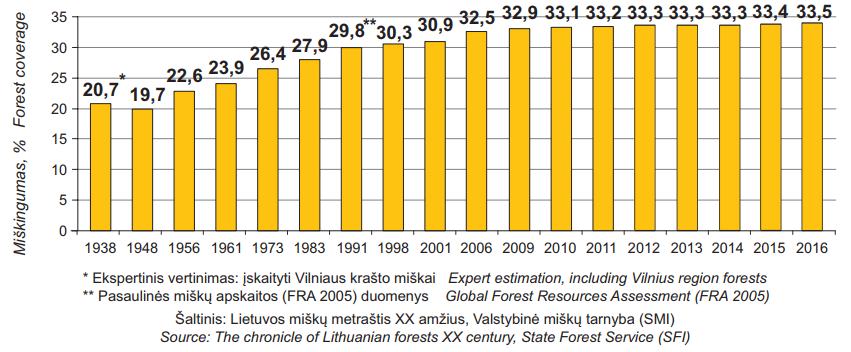

https://www.electricitymap.org/map
As I write this, the UK's intensity is 326 gCO₂eq/kWh, which is nothing to write home about.
This is better than the worst European offender (coal-loving Poland : 652g) as well as Baltic countries, the Netherlands and Germany (373).
But it's far from the best in class : Nordic countries (around 20-30, thanks to hydro) or for a more comparable country, France (around 60, thanks to nuclear)
Germany is interesting because it consistently has one of the worst carbon intensity figures of all developed countries, in spite of a record-setting share of renewables that its green activists like to boast about, and hundreds of billions of € in subsidies poured into them in the past 20 years.
That's of course the consequence of its decision to phase out nuclear power in the early 2000s. Wind/solar are intermittent and there's no way around that (battery storage isn't nearly mature enough).
That leaves 4 options for handling the base load : nuclear, hydro, gas or coal. Only 2 of those are low-carbon. And if you don't have the geography for hydro (like the Nordics do) but still decide to go nuclear-free for political reasons, guess what you're left with ?
IIRC, German coal power plants have 7 spots in the top 10 worst air pollution emitters across the EU. Coal-related air pollution causes an estimated 10.000 extra deaths each year across the continent. Radiation caused one direct death in Fukushima. Thanks, Die Grüne.