>> Importantly, these test scores better position Admissions to identify high-achieving less-advantaged applicants and high-achieving applicants who attend high schools for which Dartmouth has less information to interpret the transcripts.
Precisely. SATs aren't about hurting the poor or disadvantaged. It's about giving them a chance.
>> Third, under test-optional policies, some less-advantaged students withhold test scores even in
cases where providing the test score would be a significant positive signal to Admissions.
Importantly, Dartmouth Admissions uses SAT scores within context; a score of 1400 for an
applicant from a high school in a lower-income community with lower school-wide test scores is
a more significant achievement than a score of 1400 for an applicant from a high school in a
higher-income community with higher school-wide test scores. Admissions uses numerous
detailed measures of outcomes at the high school and neighborhood levels to account for these
known disadvantages. As one example, Admissions computes a measure of how each applicant
performs on standardized tests relative to the aggregate score of all test-takers in their high
school, using data available from the College Board.
> Dartmouth Admissions uses SAT scores within context; a score of 1400 for an applicant from a high school in a lower-income community with lower school-wide test scores is a more significant achievement than a score of 1400 for an applicant from a high school in a higher-income community
And this is how you again discriminate based on race in a post-Affirmative Action world. The weight they assign to each context is completely arbitrary and tuned to achieve whatever objectives they have.
Affirmative action on the basis of socio-economic status is a good thing, and will replace affirmative action based on race. What surprises me is that you're surprised by this. Wasn't this called out by the Supreme Court in their judgement as a better alternative to the race based admissions they struck down?
> whatever objectives
They're very clear about their objectives too - they want more of their student body to come from a background of lower socioeconomic status.
You're absolutely right but that's not what's being done when the community income is being used rather than family income. This leads to many complexities, injustices, and people gaming the system.
People gaming the system? Are affluent kids moving into housing projects in order to get admitted into Dartmouth?
The fact is if they're in a public school in an underserved area, they are most likely going to a disadvantaged public school, and face strong headwinds trying to achieve the kinds of scores kids in affluent neighborhoods get.
Note also that multiple factors are being looked at.
Generally when such systems are implemented the levels are not binary, e.g. housing project vs affluent suburb. My point was that for some bimodal neighborhoods using the neighborhood income average is not effective. Is there a national, annually updated list of neighborhood underserved-ness list?
> Are affluent kids moving into housing projects in order to get admitted into Dartmouth?
This came up in Boston Public Schools. Admission to Boston Latin took into account the portion of a student body eligible for free lunch. It became mathematically impossible to be admitted to Latin if you weren't coming from a low income school.
Students at shools where 40% or more of the student body is classified as low income receive 10 points towards exam school entrance. [0] Being a poor kid at a rich school is a penalty, while being a rich kid at a poor school is a bonus.
A student attending a school without bonus points would need to score 97 points. Class rank is a factor which effectively imposes quotas on schools regardless of students grades and or test scores. Back around 2016 there were a handful of schools where students needed to score in excess of 100 points to get into Latin.
Last year 408 high income students received bonus points while 29 low income students did not. The admission rates for these groups were 85% and 55% respectively. [1]
They're explicitly tying academic performance in relation to one's socioeconomic background. I find their claim of "doing more with less being more impressive than doing more with more" reasonable.
The only way to avoid any sort of judgmental/arbitrary calls is to blindly apply academic standards (the way UT Austin does top 4% of your HS class) and that comes with its own problems.
It's not just socioeconomic background, it also includes 'how much your parents cared about your education', to some extent. For some families (think of the typical Asian immigrant family), getting the kids a good education is the first priority. They will sacrifice vacations, living in a nicer house, etc. in order to make sure their kids go to better schools and get better grades.
If you have two families that are equally poor, but where one family cares a lot about education and sends their kid to the harder school (perhaps by living in the cheapest apartment in the neighborhood that is eligible for that school), they will be disadvantaged compared to the other family, who send their kids to the less rigorous school.
To the extent that there are racial/cultural correlations that result in poor Asian kids going to schools that have higher average SATs than poor kids of other races, an ostensibly race-neutral policy like this will mean Asian students could (as a group) continue to face disadvantages in the admissions process.
It has to be asked out loud - do you think that the admissions departments at top universities haven't explicitly thought about this?
In a post-SFFA vs Harvard world, anecdotes and thought experiments carry very little water. We all know - and the universities are very explicit about this - that socio-economic indicators are the new affirmative action. It's clearly the only practical way to effect the sort of diversity missions that many Universities seek to establish (since by their own published work, it correlates with strong community-wide academic and scholarly outcomes0. At this point, since we all know what's going on, the only question to ask is, "Why didn't you try to game the system since you know how it works?"
I'm not passing judgment on whether this is a good or a bad thing, whether it's honest or dishonest, or whether it's fair or not. It's just reality. SFFA v Harvard is a _horrible_ decision based on absurd jurisprudence and a total divorce from the truths of the world we live in. I commend everyone from admissions boards to clever families who learn how to play the new rules of the game better than those who backed the jurisprudence in the first place.
> It has to be asked out loud - do you think that the admissions departments at top universities haven't explicitly thought about this?
Yes, I think they would use this as a facially-neutral way to achieve a race-motivated goal.
> We all know - and the universities are very explicit about this - that socio-economic indicators are the new affirmative action. It's clearly the only practical way to effect the sort of diversity missions that many Universities seek to establish
Are you saying they want to have racial diversity or SES diversity?
> SFFA v Harvard is a _horrible_ decision based on absurd jurisprudence and a total divorce from the truths of the world we live in. I commend everyone from admissions boards to clever families who learn how to play the new rules of the game better than those who backed the jurisprudence in the first place.
Can I ask what you found so objectionable? I understand that many people disagree with the outcome, but from a legal perspective (IAAL), I haven't heard much criticism.
> Are you saying they want to have racial diversity or SES diversity?
Because of structural racism and similar phenomena, they're not fully separable. It's not obvious to me they're even separable in a meaningful way (meaning that if you optimize for one, you simply won't get the same result as if you were to optimize for the other).
> Can I ask what you found so objectionable? I understand that many people disagree with the outcome, but from a legal perspective (IAAL), I haven't heard much criticism.
(IANAL, and it's been quite a while since I spent cycles on this so my recollection may be fuzzy) Fundamentally, I'm very uncomfortable with the dissonance in the concurring/dissenting opinions of Thomas/Sotomayor, respectively. My understanding was that they basically argue that the proposed standards by SFFA's lawyers are effectively unworkable, yet at the same time, there's very little to indicate that many - if any - universities were actually already out-of-compliance. In fact, in the aftermath of the case it seems as if most universities simply publicly doubled down on their existing diversity policies and missions.
So what's the point here? Why did SCOTUS accept to hear this? It seems like it was just taken up so that Roberts could fire up culture wars with the commentary he made in the majority opinion he authored.
It's hard to find virtue in something that claims to do a lot but in practice seems to do virtually nothing. So maybe it's incorrect to state that this is based on "absurd jurisprudence," but I can't find anything redeeming or positive to state about the opinion or the process that took us here.
> So what’s the point here? Why did SCOTUS accept to hear this? It seems like it was just taken up so that Robertas could fire up culture wars
They accepted the case because they wanted to end race-based affirmative action.
In terms of the dissents, they were completely out of step with the Court’s affirmative action jurisprudence. Going all the way back to Bakke (1978), the Court has never approved of any rationale for race-based affirmative action other than the ‘diversity rationale’. This states that colleges may use affirmative action in order to improve the educational experience by admitting more students of different racial backgrounds. The dissents employed fiery rhetoric but were not shooting for the diversity rationale. As a result, their arguments were destined to fail.
The universities want to have 13% black students because they’re run by the kind of people who prioritize that over other goals. They are now in the position of trying to achieve that while plausibly claiming that they’re not.
While the article claims grades are less predictive than test scores, UTs policy is actually intended to have a similar locally-normalized effect, leveraging the wide variability of high school quality in TX…
like many things, there are some pretty significant unintended consequences though. In my district in Texas, parents would send their kids to the worst high school in the district because it was dramatically easier to be top 4% and get auto-admit to UT that way
Granted UT Austin is really well ranked, that seems like a terrible move for the kids. Like, great, you got in to this really well regarded school, but your preparation to get there may well be considerably worse than nothing at all.
Dartmouth wants to both achieve SES diversity and gets kids who are likely to succeed. If selecting the top of each class in the state gives them the diversity but doesn't give them the success rates, it's a less effective strategy. Their data seems to say that accepting medium-high SAT scores from poorer kids gets them both the diversity and the higher predicted success rates.
>And this is how you again discriminate based on race in a post-Affirmative Action world. The weight they assign to each context is completely arbitrary and tuned to achieve whatever objectives they have.
This would be far more disastrous if spots at colleges were scarce, but they overwhelmingly are not. There are over 15 million undergraduate students in the United States, and we are undergoing a demographic collapse (https://www.populationpyramid.net/united-states-of-america/2...). In 2 years, the children of the baby bust (2008-2009) will start applying and enrolling in college, and because there are fewer of them, they will have an easier time getting into the college of their choice.
>95% of us do not attend Ivy League schools. Removing any and all affirmative action would help, at best, five thousand students? This is a manufactured issue. No one is denied a college education because of affirmative action. Any time spent arguing against it is wasted.
I just don't see how this is a bad thing. At the end of the day, admissions depts are selecting for potential. A middling test score from a kid with access to all the support they need shows that they've reached their potential. A middling test score from a kid that has received little to no support shows that there is a whole lot more there.
No they aren’t. They’re selling a product to the highest bidder but happen to work in an industry where social and cultural expectations don’t allow them to sell exclusively to highest bidders. Adjusting to those expectations is ever changing as we’re seeing here.
It’s an unfortunate fact that high bidder’s children roughly correlate with high potential (somewhat impolite to point out), so colleges these days can still point to success stories and pretend they did something.
The fact that race and class are so strongly correlated in the United States is a disgrace and a shameful reminder of its history. Giving more opportunities to poor students will of course naturally give more opportunities to Black students, but not because they’re black. It will also give more opportunities to other poor students.
Will processes like this result in families avoiding (or at least not seeking out as much) rigorous high schools? It seems like some families might choose to send their kid to a not-super-rigorous high school — where they can coast in class and learn via outside enrichment — instead of a school with more rigorous academics where they'll be held to a higher bar by colleges.
This would allow students to have a lower-stress life and have an advantage at college admissions — even if they actually learned less academically than they would have at the rigorous high school.
I'm skeptical someone would risk giving their child a significantly worse education in the off chance it might give them a marginally better chance to get into a top university. Regardless high income families moving to low income areas to go to those schools I would assume would be a net benefit for all from a tax perspective. Some of those taxes would presumably go right back to improving the local schools for everyone else.
I wasn't suggesting that families would move, just that they would select lower-intensity schools that they currently have access to. For example, families in Menlo Park can send their kids to high school in Atherton, Redwood City, or San Carlos. If they can get an edge by sending their kid to a school in RWC, where they'll be at the top of the class, and apparently get a boost when colleges weight their SAT, I wouldn't be surprised if some families started choosing this path.
The student who would have been valedictorian but-for such migration would beg to differ!
Of course, this is a dynamic system, and if enough high-scoring kids migrate to less-rigorous schools then the advantage would be diluted. But at the same time, kids who previously would have gone to that less-rigorous school will now be measured against a different standard, since their school would no longer be one that has a very low average SAT. Basically, it's complicated, and there are weird incentives at play.
It's relatively common for similar behavior on the margin; people avoid sending their kids to the super competitive high schools for a combination of competitiveness/mental health/standing-out-to-colleges reasons
Indeed. If the level of instruction between neighboring school districts is the same but one is super competitive and the other is not, I really don't see why you'd decide to buy a house in the the more competitive one. What good does it do? And that's not even taking into account the fact that kids from a weaker school might actually have better chances during admission.
I think the general sense is that being around other high-performing students would be motivating and enjoyable. But if there is a significant tradeoff in terms of admissions, I think some parents will lean in the other direction.
This is nothing new. I went to a very rigorous high school in the late 90s. It was in no way a secret that every top university and even scholarship competition had caps for how many could make it in from our school. The joke amongst students was that the easiest way to get into a top college was for to move to Wyoming and just become valedictorian.
This is a critical part. The problem is not using metrics (like SAT/ACT), the problem is using metrics blindly. That's the thing that always bugs me is when people just go on metrics alone as if they perfectly align with what's being attempted to be measured when metrics are only guides which choices must then be made from through careful evaluation.
At what point can we use genetics to weight scores as well? I’m having a hard time logically justifying class factors (being born poor is not something you can control) but not genetic factors (being born dumb is not something you can control).
A key idea here is that being poor makes you do worse at high school relative to how well you would do at university. Being stupid probably doesn't. So being more generous to poorer students may result in getting an academically stronger set of students overall, whereas being more generous to stupider students won't.
(I don't know how true this "key idea" actually is. I can imagine ways in which poverty might disadvantage people that would persist through their time at university. But it seems plausible prima facie.)
>> Importantly, Dartmouth Admissions uses SAT scores within context; a score of 1400 for an applicant from a high school in a lower-income community with lower school-wide test scores is a more significant achievement than a score of 1400 for an applicant from a high school in a higher-income community
Since I encountered a similar approach just three years ago in my son's High School application in the Chicago Public School System I can say this leaves a lot to be desired non low-info,e families. Here's a high-level summary of how it works:
1. Chicago is neighborhoods are assigned one of (if memory serves) four levels, which represent socioeconomic levels.
2. With the thought that the economic level is proportional to school quality (this is more true in most places in the US than other countries, since a big chunk of school budget comes from property taxes, so neighborhoods with low taxes get school with lower budgets) scores from the entrance exams for kids from different levels are boosted by different multipliers.
Now, of course, (2) is a travesty of the US but that's another long discussion. The problem with (1) is that the neighborhood to level assignments are not revised each year. So you can be affluent in a district that has gentrified in the past 2-5 years and your kid will get the low-income boost unfairly.
Additionally some neighborhoods are highly bimodal, eg take Lakeview. This is considered a low-income neighborhood but there are many high-income high rises and single family homes within its borders. Alternately, there are many rental condos in our neighborhood which is the highest income level, so these middle income kids get slammed.
Still another problem is families purposefully gaming the system. We had friends who changed their rental condo during their child's 8th year so they can get a lower-info,e address sin their application. This is widely known and done.
Perhaps a better approach would be to use the family's income rather than communities.
Edit: I had more time to research and found the following, in case somebody is interested:
* What I referred to as the four levels are actually called tiers
It's so weird to me that all this data exists, and that's it available and munged enough to be actionable. Do colleges really keep track of this for the tens of thousands of high schools, not only that, but all the income info, the mechanics of student placement for each school district, etc... it just seems so intensely convoluted.
But how do they keep track of all that even so? e.g. school district lines get redrawn all the time. And each school of sufficient size has AP or IB tracks anyway, which basically kills any comparison. And within those, there may even be a further tiering between magnets that select on aptitude etc etc... and what reporting requirements do schools even have? is this mandated by law? the more data you introduce the more it needs to be corrected for; you know like those "10 best cities to ..." listicles.
I don't know. Look at parent's address, correlate with census and income, look at SAT, and be done with it. Solved lol.
these schools aren't new. lots of data to be collected, and likely is collected.
the schools are in most cases public, in which case there is a mandate for many of these statistics. public money pays, so show us what you're getting for it. this is especially the case given poor and underprivileged students, who have been the focus of many studies (and some targeted funding efforts).
the middle school to HS to college pipeline also isn't new at all, and has been tracked for decades.
whats really more shocking to me is not that it's happening, but that more people aren't abusing it aggressively.
Which was, of course, a major justification for creating the SAT in the first place:
> First offered in 1926 by the College Board... Early proponents of the SAT argued that the admissions exam made higher education more meritocratic. Admissions officers at elite institutions like Harvard believed the test would identify talented applicants at less academically strong high schools and accelerate their journeys into higher education. [1]
There was probably a time in which SAT scores are weighted highly in admissions for elite schools.
Now it's a starting level filter. You're not getting in because of top scores, but you will get rejected because of bad scores absent a massive alternative hook. People that get in have top scores and other superhuman traits.
Or: Having a high IQ isn't enough anymore, you also need to have - and prove - that you have doggedly high Conscientiousness. Preferably in a way which aligns with traditional prestige seeking, like debate or math competitions or football.
That's probably a good thing imo. It indicates that our overall expectations for our elites is on the rise, which translates to better outcomes on net down the line when they actually get fast tracked into positions of power. Those of us who are smart and lazy similarly benefit because many more of us are able to find less taxing jobs plying our expertise at the right hands of these elites for very comfortable wages, rather than being forced into the millstone of the C suite ourselves.
If a school asks for SAT or ACT scores but, hypothetically, wants to discriminate based on race or some other characteristic, doesn't requiring the ACT/SAT make them more likely to be liable for discrimination because there is an objective standard to show that they are treating some groups differently than others? I thought that some of the recent rulings against selecting students based on their race hinged on the statistics showing that some groups were able to get in with lower ACT/SAT scores, while other groups had to have a much higher score to be admitted.
The NY Times article about this addressed that concern specifically, indeed it was the key point of the study:
> It’s worth acknowledging a crucial part of this story. Dartmouth admits disadvantaged students who have scores that are lower on average than those of privileged students. The college doesn’t apologize for that. Students from poor neighborhoods or troubled high schools have effectively been running with wind in their face. They are not competing fairly with affluent teenagers.
> I also asked whether she was worried that conservative critics of affirmative action might use test scores to accuse Dartmouth of violating the recent Supreme Court ruling barring race-conscious admissions. She was not. Dartmouth can legally admit a diverse class while using test scores as one part of its holistic admissions process, she said.
A. People who attend poor high school and get a 29 on his ACT are admitted over students to went to a college prep private school and got a 32.
B. People who are of a certain race that get a 29 on their ACT are admitted over people of another race that get a 32.
It sounds like Dartmouth is doing A. The recent court cases had to do with schools that were doing B. If a college requires SAT/ACT tests and continues doing B, then it is pretty easy to see they are doing so based on objective data.
I believe those court cases are one of the reasons schools are moving to test optional--not because the SAT/ACT isn't useful to predict success at college, but because they see it as a liability in their acceptance process.
They still might do B, but use proxies to determine probable race. This can be determined based on scales they apply to different high schools. Of course the underlining issue is US socioeconomic fabric that is the root cause of this issue.
> It’s worth acknowledging a crucial part of this story. Dartmouth admits disadvantaged students who have scores that are lower on average than those of privileged students.
They may have a higher bar for "privileged" students, i.e. Asian/white, but the bar is far lower for the truly Privileged legacies/donors.
That doesn’t actually address the concern if I understand it correctly. If Dartmouth is primarily concerned with accuracy, and SAT alone is predictive of performance, and wealthy students tend to score higher even for equally qualified applicants, then a test score only admissions process will naturally disadvantage poorer students.
> I also asked whether she was worried that conservative critics of affirmative action might use test scores to accuse Dartmouth of violating the recent Supreme Court ruling barring race-conscious admissions. She was not. Dartmouth can legally admit a diverse class while using test scores as one part of its holistic admissions process, she said.
I am conservative and I have no problem with poor students from disadvantaged backgrounds having their scores weighed differently.
I absolutely do have a problem with race-based admissions. Most conservatives have a problem with race-based admissions because it is not fair to poor students.
I remember a girl from my college (elite institution on west coast) that would go on and on about how disadvantaged she was because she was 'black'. Firstly, she's like a quarter black and looks completely white. Secondly, and more importantly, she's filthy rich. I mean... like multiple international trips a year growing up. Super picky about fashion, etc. Both parents had PhDs. Nevertheless, she qualified for all the diversity offerings the school had, including scholarships, special programs, etc.
Meanwhile, we had kids whose parents never attended college and grew up in the middle of bumfuck nowhere with very disadvantaged background, who were given nothing because of their race and sex.
Now, I'm certainly not part of the latter group (grew up middle class and am neither white nor black or any 'disadvantaged' minority) and frankly don't have a whole lot to lose in this debate, but seeing this with my own eyes has convinced me that we need to look at actual disadvantage, not just race. There are A LOT of high-achieving black, latinos, <insert minority here>. That's great! More power to them. I have no qualms with rich people.
I do have qualms when they pretend to be disadvantaged to get an advantage over obviously more disadvantaged others. This is annoying when Donald Trump does it. It's annoying when Elon Musk does it. And it's annoying if someone who's not white does it too.
The idea that simply because you're of a particular race, you're automatically disadvantaged is retarded.
I agree with 90% of this but I would say it's not entirely "retarded". It USED to be a very valid disadvantage across the board to have a minority race or skin color, but now as racism becomes less pervasive and "affirmative action" has had time to take effect it is becoming less of an effect. To dismiss it entirely ignores how much it seems to have accomplished.
I do hate to see poor and working class white male children pretty much hung out to dry in the eyes of progressives these days.
> It USED to be a very valid disadvantage across the board to have a minority race or skin color
I completely agree that this used to be the case. I might even argue that it is still true to an extent. I will also agree that we should still address it. My problem is when addressing it involves discriminating against asian Americans like me. The people who want to discriminate against asian Americans are just using "historical disadvantage" as an excuse, their actions are political/ideological.
The thing that made the least sense about Harvard's case was that Asians had a harder time getting in than white students. I could see the argument for other minorities being given a leg up over Asian students, but white students? That made no sense.
And the people who want to discriminate against Black Americans are just using "discriminating against Asian Americans" as an excuse, their actions are also political and ideological.
I guess that by your standards "stupid" would be equally invalid. We don't use "retarded" as medical term. If you have a medical condition then you are "intellectually disabled". Retarded is now mainly used to mean "very stupid" or "incredibly stupid" in informal context e.g. like in HN comments.
The way you phrased it, yes. But, that isn't what the report was saying. It was using a generalized criteria of disadvantaged meaning low income or non-english speaking. Race based criteria can't be considered, but income can which means poor white kids from Appalachia as well as poor black and latino kids from urban areas.
Yes the report sounds like Dartmouth is trying to do a good job of weighting the scores based on things that matter for college success--meaning not the race of the person.
The point I was trying to make was that it appears many colleges may have an incentive to NOT require ACT SAT tests if they want to continue to use race or proxy for race and avoid what the report from Dartmouth is suggesting. Dartmouth looks like they are considering ACT/SAT along with the students background / opportunities, but specifically NOT treating people differently based on the color of their skin.
Dartmouth is assuming that they will get racial diversity just by getting better at selecting the best students instead of trying to penalize or reward people for the color of their skin.
Although my family moved around too much to actually be from Appalachia, I was a white kid with an Appalachian family background that grew up on government assistance (on and off) that was significantly helped on my academic journey by the use of the ACT to award scholarships.
Depends- if they end up doing race based red-lining, where they’re only boosting minority dominated zip codes instead of generally poor ones, they could still get dinged.
That’s why they choose something not directly associated with race like socioeconomic environment. If the result is correlated with race, that’s not necessarily an issue with admission processes.
There are other non-academic tests like CogAT, Wechsler, etc. that may be even better since they evaluate abstract reasoning and scale from young to old without significant modification. Those are used by gifted programs and organizations like Mensa. It’s possible that these would be adequate replacements for college admissions as well, but you may get a bunch of mildly on-spectrum kids who have never had to work hard for academic success (from my personal experience).
> If the result is correlated with race, that’s not necessarily an issue with admission processes.
True, though if socioeconomic status were not correlated with race, then there would be much less of a reason to want to select based on race in the first place.
> There are other non-academic tests like CogAT, Wechsler, etc. that may be even better
They probably would, for a while. Anything different from the SAT/ACT but correlated with some sort of capability is going to do better when the problem is specialized preparation for existing tests. And that was precisely the problem that caused colleges to stop looking at SAT/ACT. It wasn't because the tests are bad. It was the usual "you make what you measure".
Switching tests isn't free, though. You lose all the historical data that show the association between a test and the specific outcome you care about (eg graduation rates at this institution). You have to go through a bootstrapping period, and by the time you're done, it's possible that people are now targeting the new test and it starts losing its utility too.
Yes, it will be easier to sue Dartmouth (successfully) for race-based discrimination if/when they return to requiring standardized tests. For example, they won't be able to admit certain minorities with low test scores while not admitting other applicants with similar/better test scores.
However, it sounds like their system works around this problem by weighting the test score based on the average score at the school. So they can still down-weight the application of a poor Asian student from a more challenging school, compared to a different minority student who goes to a school with worse SAT performance. If Dartmouth's percentage of Asian students doesn't tick upward materially in coming years, I would assume this is what they are doing.
To steelman the argument for this process, it's effectively boosting the scores of kids whose parents didn't care as much about education, or who had no avenue into a challenging school. On the other hand, this process dings students from families that prioritize education, who work really hard. Those kids would probably succeed at Dartmouth, and beyond.
They weren't admitted, but how do you know they were not even considered?
More generally, a 1600 is not some kind of "get into college free" card.
I did admissions for a very competitive university program many years ago and we primarily used test scores to establish a baseline. One reason was to make sure we only considered people who could handle the program's rigour, but equally valid was that the four of us couldn't possibly review thousands of applications so we needed an automatic filter. But after that filter we didn't pay attention to test scores except as a tiebreaker when filling the last few spots.
> Standardized exams are the most fair and transparent.
perhaps the _most_ fair right now, but certainly not what I would consider fair.
consider a middle class family that has secure food, housing, and transportation vs lower class family where the child might potentially have less consistent sleep, food, or has to work to help pay bills.
It would be interesting to regress out family income from scores and then correct the scores to the national median family income. I wonder if anyone does that.
I'm pretty sure The College Board (makers of the SAT) have done that analysis. Not sure if they share it publicly, but I'll bet they share it with admissions officers.
Of course you can argue that. There is nothing that is perfectly fair. More fair would be to individually interview every college candidate with questions custom tailored their life experience via video chat where their face and voice is obscured as well as any accent and speech affectation they might have.
But that certainly isn't scalable. I'd argue the SAT is one of the most fair things we have at scale.
It's true that the SAT used to be biased (for example the word problems would use the word regatta which a wealthy east coast teen would know but a poor west coast teen would not) but from what I've seen they've done a good job removing that bias (as shown by this paper).
It would actually be really interesting if schools started using an AI-based live interview, where the interviewer (AI) was provided with their application file.
Admissions officers could then watch the recording, or rely on the automated scoring that the AI platform spits out.
Not everyone performs well on interviews, and I imagine performance would vary even more on interviews where you know your "interviewer" is an AI. But it could be really interesting, and a way to achieve the type of personalization and scale that you allude to.
Move all children to government controlled facilities and do not let them see their parents until they are some age like 21?
Or maybe we should get rid of all criteria for education and just do huge once a year lottery. You get one chance to enter. As poor people can not afford more.
You can still have elite schools for the absolute best (though I would question that certain self-styled 'elite schools' are really principally selecting for that and not e.g. wealth or family connections), but that doesn't mean that you cannot raise the bar on public and affordable education (including traditional schools and universities but also via other means, e.g. self-teaching via online resources). These are two competing goals and often people only focus on the one to the exclusion of the other, but they are both important.
Research shows students admitted based on affirmative action have higher drop out rates due to the academic mismatch effect. Giving preferential treatment based on class may be better than based on race, but such students may still be under prepared for the rigors of an elite university's program. After all, middle class families generally choose the best schools they can afford under the assumption that it has a material effect on the human capital of their children.
I also don't see the problem with students from poor families simply going to community college for a couple years then transferring to a state school. It's far cheaper and the curriculum is largely the same for most undergraduate courses.
The major problem that progressive don't want to recognize is the role of culture and family structure, e.g. lower class Blacks and Whites who view education negatively, and who tend to be raised by single mothers. Asians generally don't have this problem and have the highest SAT scores even when you control for family income.
To create wealth, you must identify and educate the most capable students.
The only way to pay for a large and generous welfare state is to educate the most capable to the highest level of ability. The tech industry was built by highly ambitious, competitive, risk-taking individuals.
"California collected almost $1 billion in personal income tax revenue from Palo Alto’s 94301 zip code in 2016. That was the most of any zip code in the state, according to a new LA Times analysis, which found that California’s top 1 percent of filers paid nearly 46 percent of income tax for that same year. "
Shelter, food and health are social issues that should be addressed much earlier in the pipeline. Well before a student applies to college.
For example in 2022, 63% of black children are born in single parent homes vs 16% of asian children. Having two parents around is an advantage in the doubling of resources.
What policy actions would you recommend to change what outcome?
Always felt that the ability to think was indicative of academic success.
But also a good SAT for (those not naturally brilliant = most of us) also a positive indication of the student work ethic (to study for the test).
The problem I believe with the disadvantged students argument, which I believe to be a very real problem - is that lowering the standards wrt the test scores - is just a bad solution to a real problem.
Poor students do sit at a disadvantage - but the fix is much more difficult and complicated, and involves that child's entire life experience until they become 17 or 18 y/old. No one has a handle on how to fix it.
I get the feeling smart + hard work will come back into fashion when it comes to academic opportunities.
It's also risky to take on debt if there is a higher chance of not graduating. Being admitted on a lower score might come back to bite the student. There's no substitute for actually having a handle on the subject matter. The fix is to help students before they start lagging.
>> who attend high schools for which Dartmouth has less information to interpret the transcripts
IIRC most colleges correlate incoming and outgoing grades for specific high schools - so that a 3.0 average at a highly competitive high school (think Stuyvesant or Thomas Jefferson) is a better indicator of success than a 4.0 at a poor performing school - the SAT is very helpful to add context to a GPA for a students applying from schools where colleges don’t already have a sense for the HS program’s rigor.
I came to appreciate my high school education when I attended a highly selective university and found my grades going up from high school without actually doing any more work while seeing class valedictorians (I barely scraped by with a cum laude) from other high schools really struggling.
IMO the thing that tests do not sample is persistance. Missing that degree of freedom misses important mind-sets to achieving goals.
One of the most interesting studies, not specifically focused on "success" / GPA, but on "life-satisfaction" comes from a longitudinal study "Project Talent"[1]. The key correlation to "life-satisfaction"/happiness is how many questions a person _attempts_ to answer on an otherwise un-finishable exam.
Notably it’s not clear if there’s a better determinant of that. Tests at least have the advantage of being a knowable thing you can prep for, instead of whatever you have without tests.
The test is too long to finish, basically at some point the students look through the pamphlet and decide no one can finish this thing.
"Retaking" misses the implementation of this test, it is more akin to "I'm going to keep giving you problems as long as you are willing to sit here" kind of thing.
Additionally this is the main correlation of the study. I doubt if researchers had in mind that the number of questions answered would be significant. If you told students "we are testing for number of questions answered" obv would distort the results.
In most cases, I'd agree with you, but my parents thought it would be a great idea to have me start taking the exams in 7th grade so that by the time it mattered, boy would I be ready.
Over four years, I added 350 SAT (1200-1550) points and 5 ACT points (30-35), but it seems pretty likely to me that it wasn't the direct work ("persistence") that made the difference as much as the generic four more years of schooling and general maturity.
Retaking tests, to optimize a specific metric, I think is a direct misunderstanding of this point.
If one sets a goal to achieve & takes many tries at it, it is similar but not the same as "heres a bunch of questions, answer as many as possible and some correlations in the answers might be more important than others".
I think if you want to predict success there are two key factors:
1. Test takers must have weak feedback on their results
2. Test takers must be told that there is not uniformity in the importance of specific questions & some may be worth more than others. The test must be long enough that no one is willing to sit for the entire duration, and test takers should not be given an end-time or instruction on how to take the test.
Why? #1 mimics the weak feedback in real-life scenarios, if someone doesn't find you likeable for some unknown reason ... you'll probably see less of them.
#2 gets at you may never really know whats key to your success & hopefully by trying you get "lucky".
I didn't "train for the test." There were no SAT books or training courses or anything like that.
Sure, taking it a few times meant I knew what it felt like to take it. I knew what the books were like and how the proctors would act. I knew what could go wrong and what kinds of distractions I should be ready for.
That's why I think I only actually got better at the same rate that I would have if I weren't taking the tests.
Understood. I think that if one wants to predict success / happiness later in life the test should be as much like real-life experiences as possible.
A carefully crafted test-taking strategy is an optimization that seeks to maximize the score. Scoring on the aforementioned test basically wasn't correlated with future outcomes in a significant way, ie it could contribute but isn't a major, main or significant factor in determining how happy or successful people who took it came out.
Retaking tests has these problems, in that people adapt to optimize the result. For example if you told people the result of this test before taking it, I would say you would end up with a lot more people "answering" in the fastest way possible all of the questions. This would destroy the effect measured, in the same way that telling people tests will be ranked by scores erodes the metric.
I wouldn't say you "added 350 SAT points" so much as your score went up by 350 points between 7th and 11th grade. I would imagine that for practically every student, SAT scores would go up by hundreds of points during this stage of academic development.
> but it seems pretty likely to me that it wasn't the direct work ("persistence") that made the difference as much as the generic four more years of schooling and general maturity.
I would agree it is hard but not impossible to test for. The test being very long, at some point people just figure no one can finish it... and in some ways that is how I feel about work in life.
I imagine if you told people "we are not testing for correctness, just number of problems solved" then you would skew this test.
However when the tests were administered in the longitudinal study, the researchers didn't know which metrics would be important so they just put a lot of problems on it.
No, it's not hard to test for. Military units test for it routinely.
At the SEAL/Delta/Army Special Forces level, the testing for that is insane.
Some companies used to do this. Around 1900, if you went to work for a major US steel company, you started out shoveling coal. Even if you were destined for management.
Japan Air Lines pilot training for new pilots involves a stage where they do grunt jobs in maintenance such as checking incoming part serial numbers.
Probably, but you want to give the network effects to them to multiply their societal effectiveness. Long term rewarding them is less about assisting them individually but increasing their influence on the general welfare.
The point of the report is that SAT scores are less correlated with socioeconomic status than other metrics used by admissions like GPA, high school reputation, extracurriculars, essay content, etc. They're still correlated. One of the interesting findings of social science research is that a lot of different metrics like IQ (itself a correlation between different subtest performances), GPA, parental income, child's income, parental wealth, child's wealth, college acceptance chance, eventual education level, ability to delay gratification, general health, etc are all correlated - that's the idea behind the g-factor, a measure of general intelligence that highly correlates with wealth & income. But this research shows that among those correlates, SAT scores are actually less correlated with socioeconomic status than the other metrics that admissions committees can use.
This is also why the SAT was adopted by Harvard in 1934. Prior to that, most students attending Harvard came from private New England boarding schools that could only be afforded by the upper class. They saw an opportunity to diversify the student body by testing the general public and admitting those that scored highest. As an added benefit, the SAT was much easier to grade than previous essay-based admissions standards, and so it reduced cost for the University.
A Harvard, Princeton, and Yale alumni survey found three-quarters live in zip codes that rank in the top 20 percent by income and education. Half live in the top 5 percent of zip codes.
Only if your only criterion for success is diversity. I don't think the intention has ever been to recruit evenly from all zip codes or whatever. My understanding is that the idea is to have a substantial portion come from a less advantaged population. (Heck, these universities still need to have a lot of wealthy kids so their families give them lots of money. A dozen self-made millionaires aren't worth much compared to a handful of trust fund billionaires.)
If I flip your numbers around, it actually sounds pretty good: a full quarter of the alumni come from the bottom 80% of zip codes!
What would the counterfactual be? The population of elite New England boarding schools, at least in 1934 when the decision was made, was pretty solidly top-1%. (It too has diversified recently because of efforts by those top prep schools to accept diverse applicants on scholarships, but a major applicant criteria they use, particularly for underprivileged applicants, is...get this...the SSAT!). If they're accepting 25% of students from outside the top 20%, that is way better than the situation 100 years ago.
> Students without parents that are college graduates are also at a disadvantage no matter what their potential is.
It is possible both for SAT scores to predict a person's potential to contribute in cognitively demanding fields AND for there to be a strong correlation between SAT score and parental income/zip code/etc. In fact, this is true even of a theoretically perfect measure that can somehow peer into the future of every prospective student were they to be admitted.
Is there some reason you expect that the children of people who did not go to college will have the same level of potential as those born to college graduates? Would this hold true of the children of professors, or Nobel winners? Is there any place for 'nature' in your worldview, or is it purely 'nurture'?
This point is specifically addressed in the paper. The predictive power of SAT/ACT goes far beyond its corralation to socioeconomic status.
> Importantly, the relationship between first-year college GPA and
SAT/ACT scores is likewise quite similar across neighborhood income and other demographic
subgroups at Dartmouth. By contrast, Chetty, Deming, and Friedman (2023) show that certain
non-test score inputs in the admissions process, such as guidance counselor recommendations, do
not predict college performance even though they do advantage more-advantaged applicants at
IvyPlus institutions, increasing their admissions chance
Disadvantage students having lower GPA isn't surprising, it is the expectation.
The question that hard to answer is did those lower performance groups still learn, and what was the delta on where they started.
Private tutoring, existing life skills, access to money to free up studying time etc...
A student that has to work through school or has to help with the career of a family member has to sometimes sacrifice GPA for life's reality.
Obviously GPA is important for social ladder climbing. But this is part of the reason social mobility is the US is far lower than many other countries.
A B or C+ student is still learning and allowing for a path for those in the lowe 'casts' is how we grow economically.
This isn't a zero sum game. Eugenics based policies have hurt our competitiveness.
There is a lot of support for students who can’t afford to take the test. What isn’t really included is test prep. China has the gaokao, which everyone can take, but the prep factor is real even if they tried to outlaw it.
But your local library probably has test prep books. I know things have gotten more competitive since back in the day but you can probably get 90% of the way there without expensive test prep courses.
(Yes, it takes time and commitment but it's mostly not the case that paying for test prep courses automatically translates into higher scores.)
I prepped on my own and did really good, but I was middle class and had a lot of other advantages. Prepping isn’t just about having access to prep material, but coaching that encourages you to actually practice the material.
My friends and I all prepped on our own. It really helped to have that kind of friendly competitive mindset among high school friends to provide each other motivation to one-up everyone else. Of course all of us were middle class, and we were all raised in the kinds of families value education above many things.
Right. So if a high school is full of that kind of kids, someone performing well on the SAT shows more grit and perseverance than my kind of peers. Colleges should rightfully award that.
It sounds like an award for breaking Goodhart’s law, but it’s amazing how many kids don’t know this one simple trick to getting good grades and getting into a nice university (study for tests using available prep material).
Absolutely. If someone isn't from a household that values the idea of test prep and education more broadly, that's a huge disadvantage. It's just the idea that if you can't plop down whatever a test prep class costs that, in itself, is a huge inhibitor is mostly not true.
You can't recognize it's a competition and argue people should be fine with only partial access to what their competitors get.
And yes, money helps a lot to brute force what material works for a kid and get motivated teachers. It's not a magic bullet, but it's a lot better than no bullet.
The real cost is the opportunity cost. Prepping for a competitive test (I don't know if SAT or ACT is one) is a full-time job. If you work for living, you don't have the time and energy to prepare adequately.
A lot of it measures high-schooly type stuff. I imagine if you put a SAT down in front of me today, I'd do terribly (especially in math in spite of having advanced degrees). I just don't have instant recall of a lot of the geometry and other stuff at this point. Heck, I'm not sure I could even do long division.
At least that SAT/ACT isn’t heavy into classic geometry proofs like the gaokao is. It’s literally something you’ll forget after you take the test because trigonometry is so much more effective (Chinese learn both).
Honestly I think their is more free test prep resources than funds for people to pay for the test. A student is never going to have enough time to use all the test prep tools and sample tests that are available for free.
"Should". Every time I read the word "should" I cringe. Everything should be free. I should be able to go to restaurants for free and have the chefs prepare the food for me and the waiters serve me and I should do this and not have to pay money. After all food should be a right.
You have to look at the context surrounding them though.
In today’s educational environment in America, students are rewarded heavily for belonging to an upper class, they are made to donate volunteer hours, join a sport team or a social club, participate in extracurricular activities, do homework (hopefully in a peaceful home setting with helpful parents and/or tutors), and then master the niche skill of pen and paper test taking. The SATs at the very least allow some students to skip all but last one, and have some chance of getting a decent education.
Ideally the systemic barriers to proper education should be dismantled. Remove this volunteer hour, move sports and social activities outside of the school system, remove homework, provide tutors to everyone that needs one, stop relying on pen and paper tests as the primary method of evaluation, etc. With all these systemic barriers removed, you can be sure that the SAT will have a diminished value.
Is this a US thing because there has been so much debate on race, equity and etc? I thought this was obvious. Academic excellence arguably requires the least resources, which means the difference in social-economic status matters the least. All one needs is access to excellent books and internet resources, a competent teacher, and optionally a supporting community. And one driven kid can get all of them from libraries and the internet nowadays.
Besides, SAT and ACT are really simple tests. If one gets 1600 for SAT, it does not mean this person will excel in academics, but if one gets 800 for SAT, well, this person statistically is not smart enough to achieve academic excellence. Of course, this person can be smart in many other ways.
Luckily those kids won’t go far academically. I can understand why one needs tutoring for IIT’s JEE, but SAT? Students in Asia and Eastern Europe send their LOLs. So kids who have certain talent can beat those who need tutoring for SAT one way or another, hands down
A chance to acquire a massive debt (four year tuition alone is > $240,000, not counting rent and food and books). Whether or not that will be worth it (as the main reason to go to an Ivy League school is for social networking with the children of wealthy parents who might fund future endeavors) is an open question.
What, you mean kids from a disadvantaged background can't build a 10 page CV filled with outreach, volunteering, expensive sports and musical practice by the time they're 18? They don't have an instinctive feel for the current pieties, bred into them since they're 3, to put in their admission essays?
This is a super goofy thing to say about Dartmouth admissions, because as of 2019 they expected admits to have all of that and have a 1550+/35+ test score.
I'm beginning to think a lot of the people commenting on these things have this weird concept of these schools admitting poor kids from the sticks and asian kids from Chinatowns with no resume items except good grades and test scores....it's true they have much lower standards for them, but they still need to have a decently "pointy" resume to get in.
The only way Dartmouth can fix it's "equity" problems is by shutting down for good.
The people that get a 1480 (a high score, but not considered a high score by students at Dartmouth) are likely athletes or people that are in some other form of affirmative action - from underrepresented states, have legacy status, or have some other hook.
I know a handful of people that got into Dartmouth and equivalent Ivies, none had an SAT score that low and this is from middle class high schools in the surburban south, not even the rich public schools, selective magnet schools, or prep schools.
At some point we have to wonder what kind of institution are we are encouraging here - are we trying to educate the public, or create an elite ruling class that spits on the rest of us? We have to choose.
I remember a time when CUNY schools would accept nearly everyone but had more Nobel Laureates than all of China even today. Perhaps this is a better model.
Maybe it's an either-or thing? You either write about how you were in every club and did outreach and volunteer work and everything, or you write the sob story about how you wanted to be in all of the clubs but your mom's cancer meant you had to stay home and care for the 14 other kids instead.
This is very apt. And then all the anti science people come and argue we need to take every patient off chemotherapy because it hurts them, and thus making things worse for these poor patients. I think it is ok to think that those kind of people are insane and need to be stopped, and that chemotherapy is overall a good things for patients even if it hurts a bit.
Well if I were diagnosed with cancer and my doctor said 90% of the time chemotherapy was ineffective but that there are no other treatments, I might still consider doing chemotherapy in case I'm in that other 10% of patients. So it should at least be considered as an option. And this is what every good doctor does with every patient -- presents options, lets you know what the risks and benefits are, and works with you to make decisions.
I would be really upset if the doctor didn't at least let me make an informed decision here, even if you think I'm being anti-science by doing so.
can you vouch my post? there is nothing unsubstantive about our contributions to this thread and its odd people that people are unwilling to discuss the merits of the observation
Dartmouth in 1950 was an all mens college that enrolled less than 2,500. Women weren't allowed until the 1970s.
Dartmouth today has 6,700 students of all races, genders, religions.
Enrollment numbers can and do change, but it is much harder and slower to change something that is physically and resource constrained than it is to change policy.
There's long been this mythos around Dartmouth in the vein of Daniel Webster's "It's a small college but there are those of us who love it" when in fact it's a research university even if it at least clings to the idea that it's a rural, athletically-oriented New England liberal arts college.
I thought we could fix the world by writing things on offical looking paper though, you are saying we cant just vote that everyone gets a free Lamborghini?
Harvard, Yale, etc. could set a particular standard and increase enrollment to accept everyone who met that standard and (if logistics allowed) that could possibly be a good thing. In some ways the massive online classes seem to be piloting this idea.
However, if you go spend some time teaching at a community college, I don't think you'll walk away with the idea that somehow getting all those students pushed into a university would improve things for the community college students or for the ability to educate kids at the university.
Increasing enrollment might be beneficial, but past a certain point it is going to be detrimental to education.
It’s an objective truth that there are more elite students than there are positions in these schools. It’s also true that schools have absolutely exploded in administration size. They just haven’t hired more teachers.
Schools can’t double capcity overnight. But they currently aren’t making student body growth a goal. They prefer to keep it small and be extremely selective and exclusionary.
The flip side to this is that undergrad doesn’t matter. These elite schools don’t actually provide an elite education. They merely serve as a talent filter.
> You just can't find enough faculty to meet the high standards.
Sorry, but this is ridiculous. Many/most PhDs who want a faculty position will never be able to get one because the availability of jobs is so low. There's really no shortage of potential faculty members.
I can’t find the study, but all the inflation in tuition can be basically be traced back to everything but increasing educational staffing (in other words all the incremental spending goes to new new sports complexes, administrators, etc.)…
I can't imagine theres a dearth of physical space or qualified educators near any university. The fact that they are not growing to accommodate the demand has always boggled my mind...
Space isn’t the limiter, teaching hours via faculty are. The most popular universities, research ones, have faculty that teach only a few undergrad classes a year. Changing those popular universities into ones more focused on undergrad education would make them less popular.
Germany might be a better model where barebones education is easily accessible. They leave much more up to students: your homework might not be looked at and your grade depends solely on a final exam. No student centers or leafy campuses either.
>Space isn’t the limiter, teaching hours via faculty are.
The glut of un/under employed PHds suggest that the limited faculty is an artificial limit. Schools could easily hire more faculty and expand their undergrad programs if they wanted to.
They see their half percent acceptance rate as something that makes them special.
There are a lot of great PhD students who will never be able to get a faculty position. It bears notice that the number of faculty spots has being going down for over a decade.
Your popularity goes down if too many of your classes are taught by PhD students and post docs. Overhead is brutal, and research grants are limited, so hiring more faculty is tough. If they just hire enough professors to satisfy demand, they would be on the hook for paying most of their salaries since they are unlikely to get funding. Hiring a bunch of pure teaching faculty is a no go since that turns the flag ship into a less popular non-research university.
In the humanities at least, tenure-track hiring numbers are down about 50% from pre-2008 era, while the supply of humanity PhDs is broadly stable.
The problem is that the university departments are less willing to hire the faculty that they once did, and that largely comes down to university administrations having decided that paying for anything non-STEM (and non-sports, I guess) isn't worth it anymore.
Research universities don’t pay most of their faculty’s paychecks, research grants do. Research funding agencies are more to blame for this than universities, and it also reflects more STEM demand in the job market, why encourage creating a bunch of graduates who can’t get jobs?
College already lost its prestige since today everyone who wants to attend a college can do it, there are free spots every year. Now only specific colleges are prestigious not colleges in general like before.
Also means that the "just increase the spots" already happened as well, there is no lack of spots today, just a lack of prestigious spots. But not everyone can get into prestigious positions, by definition prestigious has to be something special and not for everyone.
> but state schools are already massive? They are certainly already going with that approach.
Sort of.
Sure, the school itself is huge, but often times that means that worthless majors[1] like Psychology and English are open, but more valuable majors are often limited.
---
1. Worthless in the sense of earning potential with a Bachelors
Not sure if you're referring to Dartmouth or universities in general. For state universities, I think they do increase enrollment all the time. University of Michigan, for example, increased enrollment by 25% in the last decade.
Dartmouth actually has a pretty unique program that allowed them to increase enrollment substantially. Basically, every sophomore stays around for the summer semester, but takes off either fall or spring to do an internship or something. The sophomore summer is a great bonding experience for the students, and the program allows the school to enroll significantly more students than they would be able to house otherwise. To my knowledge, no other similar school has a program like this.
The Dartmouth plan (D-plan was basically a way to introduce co-education without reducing the number of male students. Not a bad thing at all but that was pretty much the impetus.
This is not surprising to me. Our local school district started using social promotion several years ago when a new Superintendent started. Struggling students were ratcheted down to being taught materials 1-3 grades below their level. Extra credit not related to the subject were allowed to boost grades (such as coloring assignments in 4th grade Spanish). The end result was a huge population of kids with straight B averages who performed dismally on State standardized testing.
We know because our kids were two of those students. We took them out of public school into private last year. The first six months were hell as they had to catch up from their deficits and learn how to study for real. 18 months later they are getting real A’s and B’s (and a few C’s) that are real grades.
We need standardized tests because more and more school districts are going the social promotion route
That seems like a poor plan to get kids "up to speed" with their peer groups. Especially if any of those students have parents who are unable or unwilling to provide a nurturing environment for their kids.
Standardized tests aren’t a fix, they are a form of measurement to diagnose the problem. When your son has a B average in 8th grade and scores in single digits on State standardized tests, it is clear there is a very serious problem.
The fix is to get proper leadership in the schools. Our Superintendent started his career as a gym teacher, and it shows. At a school board meeting when parents criticized the low standardized test scores, he crowed that they don’t matter because colleges stopped looking at them.
Forgot to add - public schools in the US are effectively mini monopolies. You are forced to send your kid there, unless you work very hard to get your kids into a “choice” program, or can afford private school, or have free time to home school.
In our State, NJ, in theory each County has a County Superintendent to over see schools, and the State Dept of Education to oversee them. In reality, the County and State bureaucracy does little to nothing to provide actual oversight, and schools become private fiefdoms. The end result is school quality varies wildly, and housing prices are very strongly correlated to school quality. In our crappy district, real estate agents complain it is very hard to sell housing to families with children or who will soon have them because the schools are so bad. This creates a downward spiral for the school as fewer and fewer kids are enrolled.
The SAT was based on IQ tests used during WWI to try and find draftees with the most potential who shouldn't be wasted in the trenches. Standardized tests have always been about making things as fair as possible, and the fact that paying huge money for tutoring only results in minor score improvements should be a sign they are effective
the war against them was because people didn't like the implications that poor Asian immigrants were able to outscore other demographics regardless of income, which goes against modern academia's favored nurture over nature mindset and destroys the basis for trillions in social programs. Standardized tests effectively threaten the entire house of cards, even more than the replication crisis showing that most of the "research" used to justify modern social programs was fake in the first place
The war against standardized tests has far more to do with black students performing disproportionately poorer on them. Many people are unwilling to acknowledge the multitude of cultural and socioeconomic factors responsible for that and instead want to simply chalk it up to racism. And so there's a war against any admissions policy that results in disproportionate racial outcomes, until we're left with admissions policies that are openly racist in order to achieve race-based results.
> And so there's a war against any admissions policy that results in disproportionate racial outcomes
Except legacy admissions and pay-to-play donations. After all, pedigree and wealth are merit (or proof thereof) - no need for pesky test scores in the face of such overwhelming evidence.
I don't think people truly care about legacy admissions and pay-to-play as long as it's fair. Put a big banner under the admissions page with clear criteria for the donation thresholds necessary and people would be fine with that. It's the hypocrisy and pretense that it's a fair meritocratic game that people cannot stand. The universities are trying to prevent brand dilution while shouting racism the moment people accuse them of having an unfair admissions process.
Can we agree that legacy admission should be completely done away with? The only people I think would be opposed would be the managers of the endowments and fundraising (and legacy beneficiaries, who are smaller in number).
None of that changes what the poster you were replying to was getting at. The opposition to standardized testing was entirely due to the performance of _some_ minorities and entirely political.
> Many people are unwilling to acknowledge the multitude of cultural and socioeconomic factors responsible for that and instead want to simply chalk it up to racism.
How many of those cultural and socioeconomic factors were almost directly related to racism though?
Considering Asians were discriminated enough against to have a law just against them + internment camps and still excel in the USA should tell you something. It's that we get very high "quality" Asian immigrants to the USA who are better than average citizens of their home country.
Racist policies against Asians in California have pretty deep history.
Yet Asians do well in California schools.
"The California Alien Land Law of 1913 (also known as the Webb–Haney Act) prohibited "aliens ineligible for citizenship" from owning agricultural land or possessing long-term leases over it, but permitted leases lasting up to three years.[1][2][3]....... The law was meant to discourage immigration from Asia, and to create an inhospitable climate for immigrants already living in California.[7][8][9]"
Cubefox is being downvoted but for those unaware, there's still a lot of disagreement amongst experts in the role of genetics vs environment in determining G. There is undoubtably though, a huge amount of political and social stigma surrounding the topic. Hence the green username - I daren't touch this topic with a ten foot pole.
The study "Survey of expert opinion on intelligence: Intelligence research, experts' background, controversial issues, and the media", Table 3 in particular, makes a good illustration.
That possibility can be debunked using a simple fact - Nigerian Americans perform comparable to Asian Americans.
On top of that, most Nigerian Americans tend to be Yoruba and Igbo, just like the ancestors of most African Americans.
Unless you mean the genetic factor is caused by English and Scotch Irish Americans, as most African Americans have around 20% white ancestry, which was caused by sexual relations (mostly non-consensual).
Yet English and Scotch Irish Americans perform within the White average.
Alternatively, genetic based arguments don't make sense when humans are almost virtually identical, and the fact that race is inherently arbitrary - are the Kardashians white? If yes, then is Recip Tayyip Erdogan white? If yes, then is Ayatollah Khamenei white? If yes, then is Hamid Karzai white? etc.
Clearly, racial and genetic factors don't make sense.
Instead, economic and social factors make more sense (poor people do worse at exams due to less resources, sadly most African Americans are poorer than other similar groups due to historical traumas).
Why is it that these kinds of accounts on HN always seem to have been made in 2021?
> That possibility can be debunked using a simple fact - Nigerian Americans perform comparable to Asian Americans.
Do you have a source for that?
> Instead, economic and social factors make more sense (poor people do worse at exams due to less resources, sadly most African Americans are poorer than other similar groups due to historical traumas).
Results of trans-racial adoption studies contradict this theory:
> [...] In transracial adoption studies, such as the the Minnesota Transracial Adoption Study, the familiar average IQ gaps between children of different races typically remain even after their adoption by high-IQ white upper-middle class parents able to provide optimal environments. Studies show that by the end of childhood, Asian adoptees end up with higher average IQs than white adoptees, white adoptees with higher IQs than mixed-race (mixed black-white) adoptees, who end up with higher average IQs than black adoptees. [...]
> the fact that paying huge money for tutoring only results in minor score improvements
This might be true in aggregate, but I’ve seen data that says otherwise (buddy owns a test prep school). The keys are that the student wants the test prep and that the student has room to grow (i.e., not already near the top, where increases are capped).
Middle of the pack students can gain 50-150 points per skill (this is a lot).
> the implications that poor Asian immigrants were able to outscore other demographics regardless of income, which goes against modern academia's favored nurture over nature mindset
Is this implying that Asian immigrants do better because of genetics (nature)?
The non-agenda-based research on this topic is pretty clear that Asian immigrant success is mostly about a culture of schooling and learning in Asian communities. This includes things like tutoring, “cram schools”, and test prep.
Here is an example of research/views from outside the US:
Almost all academic success is built on a culture of learning of some sort (e.g., parental involvement in schooling, reading to kids, etc.). Note that this is true regardless of race. The higher quality (non-agenda-based) research in this area all focuses on how this culture of learning can be fostered, with special focus on low SES (low socio-economic status) families regardless of race.
> destroys the basis for trillions in social programs
> Standardized tests effectively threaten the entire house of cards
Programs like Head Start in the US have measurable positive impact:
Fwiw, I actually agree that a lot of research in education is non-replicable, agenda-based bullshit, but your comments here go against both the better research and fairly substantial anecdotal evidence (my buddy’s test prep program).
>Is this implying that Asian immigrants do better because of genetics (nature)?
Yes, that is very likely true. I would go as far as to say that the "nurture" side of this coin is to a large extent an indirect result of nature as well.
> Yes, that is very likely true. I would go as far as to say that the "nurture" side of this coin is to a large extent an indirect result of nature as well.
I’m not sure if you’re Asian or have lived in Asia, but…
I have lived and worked in East Asia for 9 years, and I have worked with Asians (both Asian-Americans and Asian immigrants) for decades more, and I will just say that this strikes me as patently untrue.
East Asians (from East Asia) are often better educated as a group, but what they do with that knowledge is often underwhelming.
If a study were to control for things that correlate with intelligence like “was able to work with / game a system that led to immigration”, then I might agree that certain immigrants might have IQ that skews slightly higher. That said, the predictive variable there would not be race, but the ability to understand and work successfully within a complex system.
> Programs like Head Start in the US have measurable positive impact:
Something can have an unjustified basis, but have a measurable positive impact. Just because the unjustified basis of race was correlated with income. But using the justified basis of income and wealth will not only lead to even more measurable positive impact, it will also be fair.
> modern academia's favored nurture over nature mindset
The is a simplified way of putting it by I would roughly agree with this statement. However, I think you're drawing the wrong conclusion from the fact that "poor Asian immigrants were able to outscore other demographics". It is absolutely about nurture, but not in a way that the "academia" wants to emphasize. I think the main reason these poor kids achieve better is the support and, yes, the tremendous push they get from their families on topics related to education. I'd wager that having a two-parent family that places importance in education correlates most with academic performance.
That is a pretty old link which has been severed a long time ago. They’ve even changed the name from Scholastic aptitude test to just SAT, in an effort to convey that SAT doesn’t actually measure anything but it self. (This is in a stark contrast to IQ which makes ridiculous and pseudo-scientific claims that it measures something approaching what they call general intelligence)
I have many beefs with SAT and standardized testing in general, but the link with IQ is not (anymore) one of them. IQ is a horrible and racist concept that should remain along with phrenology as a pathetic attempt to use science to explain racist beliefs. SAT used to be there. But we have to give them credit for having moved on.
How is r=0.15 to r=0.3 a strong correlation? Especially when the correlation is very strong in one direction (low IQ, low income) and weaker in the other.
The educational achievement correlation has to be thrown aside completely because the SAT and GRE were largely an IQ test until the late 80s.
I'm not saying that IQ tests are completely useless. But clearly, the correlation isn't strong, and the whole hypothesis that it measures a g factor is not borne out by strong evidence.
You can replace social science with "science about predicting people's behavior" if you want. The important thing is that IQ is one of the most powerful predictors of human behavior in science. So few things get proven to have a major effect on outcomes over and over again. You shouldn't just throw that out.
I think IQs usages outside of a very narrow scope of a) psychometrics and b) developmental psychology is very limited, if any to speak of. In developmental psychology it is more often a tool to detect developmental or learning disabilities, and even then many (most?) psychologist prefer individual subtests rather then to assess the whole IQ of the individual, indicating that it is not the IQ it self which is useful, but rather the tests.
In psychometrics (which is a scientific dead end IMO) IQ is indeed still popular, but the predicting factor of IQ is more often then not other operationally defined concepts which psychometrisians fight tooth and nail to justify is not circular logic, that IQ is not just predicting IQ.
If you think IQ is the best predictor of human behavior, you must not have heard about many more. If you grow up in an english speaking household, you are very likely to speak english fluently in your adulthood. You are much quicker to find Waldo if you’ve done so 10 times in the last 20 min, then on your first attempt (cognitive priming), if you smoke weed you take much longer to find Waldo. If you inhibit your serotonin reuptake in specific areas in your brain, you are much less likely to suffer severe depression. If you reward child with a praise you are much more likely to see this child repeat the behavior then if you punish the child with a shout.
These are all pretty powerful and—more importantly—useful predictors in behavioral sciences. IQs predictive power is very limited to a very narrow scope inside psychometrics, we will do just fine throwing it out. There are much better constructs out there (including the SAT).
> psychologist prefer individual subtests rather then to assess the whole IQ of the individual, indicating that it is not the IQ it self which is useful, but rather the tests.
This aligns with my experiences during my ADHD diagnostic process.
Perhaps IQ can be useful to some degree at population levels, but I am not even sure about that -- way outside my area of expertise. I do strongly believe IQ falls apart at an individual level. At least, past a certain extent. I imagine IQ might be a decent predictor of outcomes for an individual if his or her IQ is below one standard deviation of average i.e., (IQ <= 85). I'll even concede maybe up until the point of average. Past average, I question the utility, especially the further one's score increases.
Person A has an IQ of 125, and person B hasn't an IQ of 130. Realistically, how much of difference can we expect in life outcomes for these people? How much does each single point actually matter? I've never been able to find a good answer to this either.
Another issue I have is that IQ testing seems to be a snapshot of all of one's particular factors and circumstances at that given time. I liken IQ testing to something like hunger testing. I do not believe intelligence is generally a constant value nor is something like hunger. Both are qualitative by nature anyway.
I'm sure we could create a "Hunger Quotient" and use it to measure hunger the way we measure intelligence. However, wouldn't one's hunger vary depending on prior circumstances and factors like when the last time one ate, how much one ate, how many calories one has burned since his or her last meal, etc.?
I imagine IQ is no different. If I deprived myself of sleep for more than 24 to 48 hours straight and then took an IQ test, then I wouldn't be surprised if my score was significantly lower than taking it when well rested. There are probably damn near infinite amount of factors -- Do you have test anxiety? Do you have any chronic conditions? Any recent, major life stressors? Do you even care about doing well on this IQ test?
My point is that IQ can only tell you how "intelligent" you are at that given point in time when you took that exact test. That makes me question the utility of it even more.
I understand research tries to control for these types of factors, and that the tests seem to have great reliability when retaken. However, in my experiences, it does not seem like there is any attempt to control for variables in a clinical setting where these test are most often administered...
Finally, I would like to mention Lewis Terman's fun experiment which I believe he started in the 1920s where he followed a group of 1500 or so "gifted" children throughout their lives and for the rest of his life. Of the 1500 or so gifted children, while still mostly successfully, apparently none of them went on to become anything noteworthy.
However, two children that were not included in the study due to having too low of an IQ, William Shockley and Luis Alvarez, both went on to win a Nobel Peace Prize separately and in separate fields.
I'm not saying this proves anything, but I do find it rather funny.
Eugenics was hot among progressive academics in those days, the founder of Planned Parenthood was one and so was the guy whose statistical methods are still the basis for all modern research
back then being against eugenics meant you were a crazy religious nutcase who couldn't accept scientific fact about evolution and genetics
Eugenics was always a politically motivated and highly contested topic. Many prominent scientists in relevant fields were opposed to it. It became popular, because nationalism used to be popular among the elite. Then it declined quickly, because WW2 made everything associated with nationalism undesirable in the West.
Progressive academics, all the way up to the president of the United States (Woodrow Wilson). It should be embarrassing to call oneself a “Progressive” these days, yet here we are. A small but meaningful indicator of the extreme bias in our education system…
To measure academic achievement they use First Year GPA. It makes sense they're correlated, both require studying known material for a test. But is GPA the best measure, especially first year? I would be interested in other metrics like 3rd-4th year GPA or placements into jobs and such.
I believe there's some research that suggests your college GPA is not correlated strongly with job performance[1]. I suspect if SAT/ACT scores are strongly correlated with GPA, there's reason to suggest it may also not be strongly correlated with job performance (but I can't find anywhere that tests that).
I suppose this shouldn't be surprising. School does not train you to be a good office worker.
The goal of school IS NOT to make you a good office worker. The goal of school is to create the ability to think creatively, rationally and critically and make you a better citizen of society through those processes.
Job performance is subjectively measured by your bosses which has political implications. It is inherently a terrible metric.
> The goal of school IS NOT to make you a good office worker
Who defines this "goal"? Each student has their own individual goals. I bet you if you surveyed students
"The goal of school is to create the ability to think creatively, rationally and critically and make you a better citizen of society through those processes."
Would rank all the way to the bottom and they all are terrible reasons to get into $200k of debt.
Many go to college without a second thought just because they think it's what they are supposed to do. Many go because they don't want to be a manual laborer and they want to be able to make more money. Many go to get drunk and party.
This is such a cynical and tired take. I would imagine that most people attending college at least intend to learn something and level up some ability. Many of them will also enjoy partying in their early 20s. Both can be true, and there’s not a singular purpose of attending school.
Good job, starting off strong with a real substantive criticism.
> I would imagine that most people attending college at least intend to learn something and level up some ability.
Your imagination is lacking and you have not spoken with many 18 year olds, the vast majority are not highly motivated learners. A large number of degrees teach skills that are not even valuable enough to pay back the amount of money that is put in. So they are leveling up in worthless shit. All these indebted graduates are clamoring to have the government pay for their bad decisions. None of them blame the institutions that charge these exorbitant amounts to supposedly become "cultured" and "creative".
> the vast majority are not highly motivated learners
The honest truth is they shouldn't be going to college. Because they went to school and didn't come out cultured or creative.
(I went to a state school. It was easy to structure your schedule with zero liberal arts. I almost did. To the extent I have regrets about my time in college, it's in not taking more liberal arts classes.)
> I also went to a state school, I took the liberal arts classes, they have added nothing of value to my life. If you want to get cultured, read.
I think that means you were very fortunate. For me, 2 years at a community college was essential for getting my career in tech off the ground. Learning to write at the college level, being able to read/search/cite journals, and the practice of being able to synthesize a bunch of information into a cohesive document and/or presentation opened a ton of doors for me.
I get the impression some people figure this stuff out either through more demanding work in high school or from having smart parents who inculcate this knowledge into their kids. For me, I didn't have that.
> I took the liberal arts classes, they have added nothing of value to my life
Sure, many were useless. But the few that were good were golden. Sorry you missed that.
> If you want to get cultured, read
This is necessary but insufficient. The discussion is essential. To be clear, I'm not saying you can't become cultured outside college. (Of course you can.) But that coming out of college uncultured is close to a waste for most graduates, i.e. those graduating with a degree that isn't immediately in high demand at a six-figure wage.
If a student isn't a highly-motivated learner, and their goal is maximising lifetime net earnings, they shouldn't be going to college.
> If a student isn't a highly-motivated learner, and their goal is maximising lifetime net earnings, they shouldn't be going to college
I disagree. I think further education in valuable topics is valuable to people even if they are not motivated. I don't think getting into massive debt for this education is valuable to them. There is nothing inherent about college that requires it to be so expensive and simultaneously useless.
All the defenders of the current system always respond with the tired "college is not about teaching how to do a job, it's about teaching culture, creativity, and critical thinking" bullshit that is not backed by any data. If we go by actual results, college is about getting people into massive debt to fund college administrators.
What college and education should be about is teaching people things that can give them the ability to contribute to themselves and others.
> further education in valuable topics is valuable to people even if they are not motivated
Sure, but that doesn’t need to be college. Many European countries have colleges in name only that actually function as trade schools. An unmotivated learner should go to a cheap 2-year trade school and then start earning.
> college is about getting people into massive debt to fund college administrators
Completely agree. That said, we have standout colleges where the purpose is to educate our next generation of elites. That’s still important.
My girlfriend in high school had no idea what she wanted to major in, no idea what career she wanted, no idea what her future looked like at all. Anytime I'd ask her, she'd get upset, because she didn't want to stress about it before she had to.
We eventually broke up, and she went to college, changed her major 3 times, spent the whole time drunk at parties, and graduated with a degree with a relatively limited scope of jobs. She graduated 4 years ago, during which she's worked as a receptionist, a dog groomer, and a call center rep.
We shortly got back together as she was graduating college, and I encouraged her to apply for jobs for which her degree would come in handy. Every single time, she refused, because she "wasn't qualified enough" even though she had her Bachelors in what they were asking for.
I say all this to say that I think many kids are corralled into college without an actual end goal in mind. They go because it's what they're supposed to do. In my anecdotal experience, there isn't much thought about intending to learn or leveling up some ability.
SAT is well-correlated with 1st year GPA, but not well-correlated with eventual job placement (although it does correlate pretty well with eventual income). However, 1st year GPA is well-correlated with 2nd year GPA, which is well-correlated with 3rd-year GPA, which is well-correlated with 4th year GPA, which is well-correlated with eventual job placement, which is well-correlated with entry-level salary, which is well-correlated with mid-career salary.
A pretty useful model for life is that it's a series of contests, and doing well at the previous contest gives you an advantage for the next couple contests, but only the next couple contests. By the time you get to mid-career, nobody really cares what your high school GPA was. However, because each contest determines which set of subsequent contests you'll face, performance early on can have outsize effects on eventual life outcomes. You typically won't be applying for CEO jobs if you worked retail your whole life, unless you lie your ass off and bullshit convincingly to executive recruiters.
In my own experience, first-year GPA in college was a cakewalk. I had straight As until Junior year, then things got a bit more demanding and I was caught off-guard because college had been pretty easy up to that point. (Large state university).
My experience was the opposite. First two years were a blur, I was in the trenches juggling calculus and organic chemistry and physics along with my major work and the extra busywork courses they throw on top of all that too. By the time I got to my upper division work in the third year it was like grades didn't matter at all. There's be no more assignments or quizzes, maybe two exams to determine your entire grade for the course, that would be pretty easy to get an A on if you attended class and didn't sleep.
It could just be that professors don't want to invest a lot of time designing a bevy of coursework. In the weed out classes they are all lecturing off a textbook, which provides for them slides to use and a general schedule of topics, as well as banks of questions they could pull from and permutate and reuse. Its a lot of time saved for sure. In the upper division, there is no textbook or anyone designing any course, they might literally have a sentence description of what the course is pitched about in the catalog then they take it from there. The professor has to come up with what to talk about from their field for an hour twice a week, and sitting there drafting up those slides is enough work if they don't have any from last year to use, considering they are usually also a full time researcher on top of this.
I agree. Every other comment here seems to be like "well duh" and I'm... skeptical. My experience is that the ACT/SAT seem to be good indicators of getting good grades in well-defined spaces. But things like creativity, curiosity, work ethic are much better predictors of other kinds of success that frankly matter much more in the real world.
I know some really, really unintelligent people who got good grades in college. They just ate books.
Undergraduate GPA predicts lifetime earnings[1], incoming test scores and GPA are highly predictive of both advanced degrees (which increase earnings), and increased earnings within degrees [2], [3].
I suggest these effects are because being a good student aka "eating books" is correlated with conscientiousness. They show up to lectures, prepare, and test well.
And conscientiousness is very highly correlated with lifetime achievement, AND fufillment [4]. So measuring conscientiousness, and signalling high conscientiousness is a really good idea.
IQ is great, but conscientiousness is how you get things done [5]
That is...an extremely narrow study to use to make that broad an assertion. GPA of two classes from 2010 at a single business school in China, their starting salary, and then their salary in 2018?
Why is it narrow? N is a few hundred at a well ranked and good amount of rigor university, and is aimed at the graduating class and then their earnings as they rose through to probably mid career positions past entry level.
I haven't read the entire study mostly because I don't care, but I think you're wrong in your statements.
GPA is well correlated to earning potential, as well as earnings in reality.
Their Figure 1 is why we keep having these discussions in society. It's grossly misleading and not what a scatterplot for a 0.46 correlation looks like. I know what the figure is, it's just done in a way to overstate a case and ignore variability within bin.
If that figure were about anything else, people would be screaming bloody murder about misleading figures and overly generalized interpretation.
I'm in favor of allowing for the use of test scores but they get abused and the language in this report is a good example of how this happens. Scores have these real but modest correlations with real world situations, but then get used as rulers of atomic precision without any context or recognition of their massive limitations.
It makes the authors of this report look either deceiving or ignorant of statistics or both.
The thing is: completely unsuitable students need to fail out in the first year. That's what "weeder" courses are for. They prevent students wasting time and money, only to fail out years later.
Which means: you don't have the same stats for 3rd and 4th year students.
The reason people measure first year GPA is that, in the past, all freshmen at a college took the same set of classes. If you measure 3rd year GPA, you get confounded by the difference between physics students and French students.
Obviously, the worth of the metric goes down over time as first-year curricula differentiate from each other.
> But is GPA the best measure, especially first year?
No. For example, SAT score is a better single measure than GPA is. But you can't use that to check the validity of SAT scores.
I believe they do look at other things (EDIT: or at least the study this paper was based on did):
"Using detailed admissions data from IvyPlus institutions, Chetty, Deming, and Friedman (2023) show that SAT and ACT scores also predict career success, including high levels of earnings and attendance at elite graduate schools, holding family income constant."
Right, but what I think they're trying to do is to confirm that the larger, more comprehensive study also applies to Dartmouth. But the fact that they didn't also run the test against other metrics might suggest they didn't want to publish that data publicly.
Or if you're more cynical, they failed to produce those results.
If I were judged by my first year GPA I'd be homeless. Instead I'm really quite successful in spite of my first try (and miserable failure) at university.
When I went back and was paying for tuition out of my own pocket as opposed to magic sky money falling into my lap from the US Dept of Education, things were a LOT different.
I think some of us (like me) were too immature at 18-22 to make good use of college. I'm not sure the amount of skin in the game would have made much difference, but I wouldn't have been able to pay for it myself, so that's a benefit. When I went back and got high grades, I also had manna-money from Direct loans. I just had a lot more life experience and maturity.
I see your point and relate, but had you asked me at 18 if I wanted to go so badly that I'd work my way through without loans, that would have been a hard pass.
Right, I worded it funny. It would be good if I couldn't have afforded it because I wouldn't have wasted the time and money.
The options in my area after high school were kind of unattractive, though. I could work retail, or maybe go to trucker school, or try to find odd jobs helping people with computers. My current career path (veterinarian) didn't occur to me at that time.
Contrary to what some may think: I would strongly suspect that particularly high scores on SAT/ACT would also correlate fairly strongly with well-paying job placements and long term GPA.
Note I am not saying that people who don't do particularly well on SAT/ACT can't also succeed on college and beyond, I had a pretty average score myself and consider myself fairly successful. But all the people I know who had the highest scores on SAT's were also the people most motivated to study and work extremely hard whether it be based on family pressure or just an inherent drive to be better than everyone else, and even to this day these people I knew who had scores in like the top 95+% are for the most part the most successful people I know primarily just due to an inherent drive to succeed at all costs.
Of course this will also depend on what metric you use for success. Also of course there will be people who do extremely poorly in traditional education but become wildly successful.
There's some nuance to the "work ethic" factor. Work ethic makes a big difference in academic outcomes, but it depends on where that work is targeted.
Anecdotal evidence, part 1:
I grew up in the suburbs and went to public schools that, at the time, were good-not-great within the state. In that setting, I was a high achiever by any sensible metric. I was friends with a lot of the other "smart kids," and I definitely worked harder than some of them, but outside of school, I was also working on different things. My hobbies and extracurriculars weren't strictly academic, but they certainly set me up for academic success better than sports or video games would have.
Anecdotal evidence, part 2:
One of my classmates was "freak of nature" levels of gifted. I shared math classes with him for three years of high school, and to my knowledge he got one math test question wrong in that entire time period. He was also one of the school's best tennis players, and he made it into so many state concert bands/jazz bands/choir groups that their schedules overlapped and he couldn't do all of them. Last I checked, he was finishing up a PhD in neuroscience. But get this: he was our salutatorian, solely because someone else who did no sports and few clubs took more summer classes, and thus had the same GPA with more total credit hours.
I didn't read the entire document in depth, but perhaps it has been shown elsewhere that first year GPA is a good quality predictor of GPA in subsequent years.
The headline should really be, "A test-optional policy is likely a barrier to Dartmouth identifying less-advantaged students who would succeed at Dartmouth." I think it's no surprise to anyone that test scores correlate with academic success, but it might seem counterintuitive that test-optional policies actually bias admission in favor of higher-income students.
Honestly, reading this makes me think "well yeah... Why is anyone surprised?"
Being a good test taker will 100% translate to doing well in college. Almost every course I took in college had over 80% of it's overall grade being tests, with a large number of them being closer to 90-95% for how much tests+final count.
So yeah, if you are good at taking tests and/or studying for them effectively... Yeah, you will do well in college. Especially the first year.
NYTimes "The Daily" podcast had an informative episode on the matter[1]
I'm out of the loop since my college days are behind me, and I don't have kids.
I had heard colleges were going to rely less on standardized testing (and many dropped the requirement during Covid when SAT tests didn't take place at all). I had also heard that there was controversy over reliance on standardized tests, because the wealthy can more easily afford expensive test prep, which initially seemed reasonable to me.
But then when I listed to the podcast I was stunned that the colleges seemed to think relying much more heavily on grades and extracurricular activities was somehow an _improvement_. I thought "grade inflation" was a big worry over the past couple of decades? I thought we all joked about today's nonsensical GPAs where kids get, whatever, 4.5s or 5.0s on a scale of 0-4. And it goes without saying that it's obvious to most of us that volunteering and participating in travel sports and debate teams and so on, is FAR more accessible to those with money, with transportation, with resources, with involved parents?
Standardized tests can't tell us how diligently kids do their homework, how well they do after encountering a setback. Maybe they favor kids who are smart but lazy. They can't tell us how a kid will do when they go from being a high school standout to a below average Harvard student.
But they sure as hell tell us a lot more than utterly subjective grading systems with no standardization whatsoever, and "intangibles" that tell us only how good a kid's family (or hired college prep expert) is at identifying activities that will get them into a selective University.
Not exactly, it's tough because every high school needs a different normalization, and it may drift from cohort to cohort. Most universities only ever see a handful of students from any given HS, so it's really tough to untangle the big spike of 5.0 students. Usually the results are weakly predictive of academic success, if the correlation even exists at all. External agencies like the CollegeBoard offer data as a service type solutions for this, but they're (A) low quality, (B) expensive, and (C) have lots of weird privacy concerns because it's data about minors.
People who take the SAT are self-selecting. An awful lot of kids don't take it, and a lot of schools don't require it. So the sort of kid who takes it will also be the sort of kid who gets good grades.
You know what’s an even better policy? Making standardised tests the sole admission criterion. No high school grades (which are often inflated, unless your teachers hate you), no extracurricular activities, no essays. Just one set of objective numbers from the national maturity exam; which tests and with what weights depending on the field of study. This is what universities do in Poland (for most fields of study; some might have extra tests to write), and it’s great at letting people from different backgrounds into universities while filtering out people highly unlikely to succeed.
What a silly idea. Universities are not just in charge with academic education but rather with the formation of a person’s character. To succeed with the latter, academic capability must be held alongside the estimation of one’s character, for it is not only about one’s intellectual capacity but rather how one uses it.
If schools started estimating the merit of one's character they'd have to probably throw out half of their own faculty and cut off ties with many of their donors.
If academic education is not their top priority, it would be beneficial to separate research facilities from universities and let universities be glorified fraternities. It's a waste to spend resources of top professors on "formation of a person's character" when they can help build the next generation of elite scientists and engineers.
I don’t think it’s a job of academia to instil “good character” into students. It reminds of scientific textbooks in the USSR that had to mention Lenin in their preface and the mandatory subject that taught the history of the Communist Party.
No, it doesn't. We already have K-12 for that and rightfully so. Academia is supposed to be a place for complete adults to be able to optionally invest to specialize. At this rate we have to admit that 12 years of general education isn't enough to build characters so we have to make K-16, which is certainly an option with its own concerns.
In theory this is what the diploma or GED is already for. These are all certified by the state to show you've completed a certain amount of education to a certain level of quality. What is an SAT or ACT supposed to be on top of all that honestly? Really its tackling a symptom of colleges for whatever reason no longer trusting the states own education departments' diploma or GED. Which is damning considering these schools point to these same states accreditation as a quality measure for their own programs, forgetting that if the diploma is untrustworthy then so are these state accreditation...
Where do the grades on a US high school diploma come from? They are arbitrarily assigned by teachers from the student’s high school, right? One teacher might give everyone good grades, while another will be more strict, and yet another may give good grades to their favourite students only. Grades of two students from the same class are often not comparable, let alone grades of two students from different states.
The SAT and the ACT are standardized tests, meaning that everyone in the country writes the same test on the same day, and the tests are designed to make the test results comparable between different sessions.
There are sometimes state ran standardized tests done to prevent this very issue of certain schools having uneven standards. And both SAT and ACT tests are conducted multiple times a year with completely unequal testing center conditions if you are into considering anything that might introduce a confounding factor (e.g. some schools they have hundreds of kids sit in a gym like what you'd see out of national exams in Korea, other kids might take it in seclusion at a private testing center). Then there is this idea of the extra tutoring people are paying for outside of the school curriculum basically amounting to something akin to paying for the right to use steroids in sports.
There is no way for all 3.7 million high school graduates in the US to write a test in the same conditions. But the SAT and ACT are much better w/r/t similar conditions than grades.
> state ran standardized tests
The US is the land of capitalism, so it delegates standardised testing to private for-profit corporations. Many European countries have a nation-wide or state-wide standardised testing system.
> Then there is this idea of the extra tutoring people are paying for outside of the school curriculum basically amounting to something akin to paying for the right to use steroids in sports.
I wouldn’t compare tutoring to steroids. In sports, some athletes can afford to spend more time in the gym and to get a better coach, while some can’t, and that might affect their test results.
I don't know if you're trying to make a point about test taking, but you're aware that college GPA is composed of more than just being a good test taker? Better way of putting it might be: someone that scores highly on an IQ proxy is good at everything.
Not in my experience in the Big Ten. For any math/science class, the plurality of the final grade was made up by exam scores - typically 45-60 percent, to my recollection.
60ish percent is a very particular number, because it's the highest weight that doesn't make it possible to pass the class by doing almost nothing except the exams. At 65 percent, you're giving students an easy way to game the system.
Some classes had a substantial lab component, but it was relatively easy to score well on labs. Labs were graded by TAs, who were consistently more lax than the professor. I don't think there's some coordinated effort by TAs to lower the bar; they were simply too busy with their own studies to provide a thorough criticism of every lab report they received. In most classes, labs were effectively a curve.
English courses were different, since those had essays instead of exams. However, I'd argue that it's feasible to write a paper "to the rubric" in the same sense that one can shape their studies "to the test." Given the audience HN caters to, I'd imagine that we're more interested in the science/math/engineering stuff anyway.
Yes exams are heavily weighted, but labs/assignments are not usually easy in stem courses. You're delusional if you think that you're gonna get a 4.0 by half-assing course work, and even more delusional if you think someone like that will average over 90% on their exams. The SAT covers fairly basic topics that nearly every student should know, that's why it's like an IQ test. When I was in school freshmen would take it just to see what it was like, and many would score well on their first try.
The labs at least are not designed to be challenging. They are designed to safely demonstrate some topic. I have been graded on yield and purity in chemistry before but it was only on a sliver of a percentage of the write up grade. Things can go sideways on you in lab all the time the last thing they want is for you to be worrying about that and dropping glassware full of chemistry. Lecture component was always the ugly beast that demanded all your focus. The lab, you show up, you do your writeup, you get a great grade on that section generally. If they have a lab specific exam at the end of the semester its a mole hill compared to the mountain of the chemistry lecture exam.
Well we definitely didn't have the same experience. Labs and course work often made up between 25%-50% of the grade. This has been the case in both undergrad and grad school at a top school. If you did sloppy work and got Bs all semester you weren't magically going to turn that into an A with some good exams, even if it was theoretically possible. The points definitely weren't free either.
Nothing you've said refutes my argument that exams are the most important component of a college GPA. Yes, homework can be hard, but it's rarely a plurality component of a final grade. Yes, labs can be a major component of a final grade, but they're rarely difficult enough to constitute anything more than a soft curve.
> You're delusional if you think that you're gonna get a 4.0 by half-assing course work
Nobody employing such a strategy was trying to get a 4.0 in the first place. In fact, setting the benchmark GPA for rigorous postsecondary education at 4.0 is itself delusional.
> The SAT covers fairly basic topics that nearly every student should know, that's why it's like an IQ test
Having taken two IQ tests administered by two different psychologists, I can confidently say no. The SAT does not resemble an actual IQ test. The SAT doesn't test short-term memory, and it only indirectly tests associative thinking.
That said, there's probably a correlation with IQ test scores, because smart people are smart, and so they perform well at tasks designed to test intelligence... just like how being good at taking tests in high school, means you'll probably be pretty good at it in college too.
The vast bulk of your GPA is due to testing. In major classes its pretty common to have your entire grade be from two or three exams. Increasingly in nonmajor classes they are weighing things like labs and assignments less and increasing the weight on exams. Especially in this era where you have to be at least a little suspicious of every submission you aren't in the room to see.
It's not trivial to go from performance on a single test to performance throughout the year, which will include long-form writing, lab work, and other forms of learning.
SAT/ACT for high achieving students means months of prep/studying and practice test taking. It ends up being a ~somewhat~ similar experience to a college class. Not really similar to humanities classes that depend on discussion section and papers, but if you squint enough it kind of looks like some STEM classes.
You are right it’s not trivial, but on the other hand if you simply try to make such a test you’d do better than completely uncorrelated pretty easily I’d suppose.
SAT has has been around almost 100 years and ACT around 2/3 of that, so they've had pretty long to hone the tests as well. This is far from their first stab at it.
Except that the test is pretty clearly perverted. You take two kids, same education, give one an after school testing program their parents pay money for, and they score better. Is the wealthier kid more worthy of receiving a college education? What does that say about how we educate our society then, and what we are actually valuing and giving privilege?
> Is the wealthier kid more worthy of receiving a college education?
Not to mention, what about us test-disabled people?
I didn't know I had ADHD and its "friends" when I took the ACT, and I could have potentially benefited greatly from the reasonable accommodations the test allows for. However, it's not like every child is required to have some kind of psychological evaluation while in school.
I find all of this standardization in testing to be nothing more than Goodhart's Law in full swing.
Just what we need, more "Teaching to the Test" and route memorization in our education system...
I know. Sarcasm aside though, there is a growing movement of HS and elementary school teachers looking to remove all KPIs from schools. It is very worrying that this protected class of workers are arguing they are special compared to every other problem in the world and their performance and those who they are teaching should never be measured.
I was born and raised in Germany where I attended an ordinary high school. Eventually I decided I wanted to attend university in the US but had no help navigating the process and requirements. Needless to say, I realized I had to take the SAT last minute and had never seen a practice test, or taken this kind of test in English before. All my instructions had been in German, and the German school system does not usually perform multiple choice tests - everything is about showing your thought process and your steps. Needless to say, I received an abysmal score. For me this test truly only tests how good you are at that test.
I applied as an international student to a top tier liberal arts college equivalent to Dartmouth. I was able to make my case and was accepted there. My academic performance in both my first year and the rest of the four years was stellar.
Perhaps the SAT can be predictive of performance for those who grew up in the system that prepares you for the SAT (or ACT). For anyone else, this is however meaningless.
> everything is about showing your thought process and your steps
You probably did well at a US college because you came from a system that actually provided you with critical thinking and reasoning skills. Instead of a system, like the US, which is rife with route memorization and multiple choice tests.
I would imagine the opposite experience would be much more difficult (assuming what I remember from studying German is actually correct).
> For me this test truly only tests how good you are at that test.
International students are a completely different story. As you say, your entire educational experience had been in another language. This is not the case for students in the US. All students here have taken many multiple choice tests in English by the time they get to the SAT. For example, there are state- and federal-mandated tests that students must take.
> Perhaps the SAT can be predictive of performance for those who grew up in the system that prepares you for the SAT (or ACT). For anyone else, this is however meaningless.
It is perhaps close to meaningless for an international student, but for a student who went to school in the US, it is not meaningless at all.
They should "un-bin" the statistics and identify individual outliers -- those who scored poorly on the tests but hold higher GPA, and vice versa, and learn things from these individual students.
Recently saw an article about parents spending hundreds of thousands of dollars to have their kids work with professional resume builders just to get an advantage with college applications. Now that many colleges are trying to phase out SATs because “it discriminates against poorer households”, it’s being replaced with essay and resume based things that seem to provide an advantage to the richer households who can afford the absurd amounts to very carefully cultivate the documents.
Yeah, Canonical presented one of these 40 question style interviews that felt like a very thinly veiled class check in comparison to the usual interviews in my country. I'd much rather a whiteboard exercise than that.
This is refreshing. I sometimes wonder if the universities understand why they have value to industry. It's not the education. Schools are rating agencies for people.
The university admission process takes a more comprehensive look at candidates than is practical during the hiring process in industry. In particular they pay close attention to proxies for general intelligence (SAT math and to a lesser extent reading) and trait conscientiousness (grades, extra-curricular, etc.). If an employer sees Dartmouth on your resume, they can make an educated guess about your IQ and your conscientiousness, both of which they should care about as an employer.
As other comments have mentioned, measuring these psychometric traits more directly has the effect of identifying top candidates in unprivileged circumstances. While diluting these psychometric scores with other measures has the effect of biasing towards affluent candidates who can afford to do things that are impressive on paper.
Of course high scores on a test are going to correlate with academic achievement, they are both just a measure of ability to pass tests. This is like saying people who swim very well will have high achievement in swimming competitions.
The paper's summary implies that they should make testing mandatory, because when they made testing optional, they couldn't see the students who they'd like to admit. But they kind of ridiculously don't comment on the fact that mandatory testing might not make any difference at all.
There must be reasons students don't send in scores when testing is optional. But just making the testing mandatory doesn't address those reasons at all. So there is no reason to conclude that suddenly applicants would start sending in scores at a higher rate. It's equally likely they would just stop applying.
My own experience was that I was a mediocre high school student due to my ADHD-Inattentive, but then the SATs were interesting enough to me that I was able to really, really focus for the length of the test. And I did far better on that test that anyone would have suspected I could do based only on my grades, and it was, in fact, predictive of my college performance. In college, I was able to figure out tricks to manage my ADHD.
I'm ADHD-C, but I always did well in school, got shit on by the ACT, went to college and did well up until my final year, but that was mainly due to some extenuating circumstances and not my drive or intelligence.
They accepted me (same year as the guy who wrote that article!) from a high school than only gave letter grades, computed no class rank or GPA, and offered no "AP" classes or SAT prep. Then again, back then, I don't remember colleges caring about extracurriculars either, though I might have forgotten.
I've taken ACT as an exchange student when I was in the US. I didn't need it, but everyone in my grade was doing it and it was for free, so why not.
Sometimes people say, that for ACTs, one needs a specific knowledge of how to take the test, which does not teach you anything, but I did not get the feeling.
All of the questions seemed quite reasonable, no tricks and not even a need for smart ideas (unlike let's say math Olympiad). Basically know the basic math rules, and you'll be fine.
The knowledge I've gained at a Czech Gymnasium with more traditional methods (i.e. no multiple choice) translated very well into getting a good score.
I was raised in the Southeast, USA. That's a big ask of us and our education system.
In my state, we have a few state administered tests that are taking throughout one's primary schooling years. Student take these exams at periodic intervals. For example, there is one for reading comprehension and assessment taken, iirc, at grade 3, 6, and 9 or something like that.
Well, 60% of students in my state right now who took the 3rd grade reading comprehension assessment have failed to demonstrate the ability to read at a 3rd grade level.
I have a hard time accepting these test [ACT/SAT] as some kind of arbiter or one's future when the education system is failing many students long before he or she ever gets to take the SAT/ACT.
I feel this way about most of the standardized tests. I took the LSAT on a whim which no prep and scored 95th percentile. The whole thing was completely reasonable and mostly tested basic logical reasoning and vocabulary/reading comprehension. At the time, there was a short essay component which was entirely about the ability to express whatever thoughts you were supposed to express clearly.
The thing about these tests is that they are all perfectly reasonable. The main reason people have a test with them is they also tend to identify people who _probably_ should not be in college at all and that is not a message anyone wants to accept needs to be sent.
We may nitpick at which process gives more equitable chances of admission to Dartmouth. But ultimately we are still saddled with the absurd notion (and very real prospect) that a ticket to the middle class depends on winning very costly degrees. - particularly degrees whose brand recognition enables employment with greater proximity to the deployment of capital rather than operation of capital.
Meanwhile there is little discussion of why issues of equity in admissions are zero sum rather than leveraging multi-billion dollar endowments to expand access overall.
Endowments are used to fund scholarships for students from middle-class and lower backgrounds. The degree is only costly to the extent that your parents are to well-off or your school's endowment is too small. (This is a serious problem if your parents are well-off but stingy, or if you get into an elite-ish but not actually top-tier college).
Endowments, like universities, are meant to be perpetual, so the amount of access they can provide is limited by the return on capital. Some people would perhaps like to see the principal spent down, which could provide dramatically more access in the short term, but then the money would be gone.
this fact suggests that dartmouth is not weighting sat test scores highly enough in their admissions process
if dartmouth took sat scores into account in the admissions process by precisely the right amount, then within the set of people they actually admitted, sat scores would have no predictive value with respect to academic achievement, because the students who were admitted despite low sat scores would have been admitted due to some advantages detected by admissions that turned out to matter precisely as much as the higher sat scores would have
if, across the entire population, higher sat scores had no predictive value with respect to academic achievement, dartmouth could get this result by preferentially admitting students with lower sat scores. (for example, maybe you would need a high school gpa of 4.1 or higher to get in if your meaningless sat score were 1500, but this hypothetical bizarro dartmouth would let you in with a high-school gpa of 3.1 or higher if your meaningless sat score were only 1000; if the 3.1 students in high school continued being 3.1 students at dartmouth, it would make the meaningless sat scores highly predictive of academic achievement at dartmouth, among the people who actually got in.)
of course that would be an extremely unlikely thing for dartmouth to do, and they mention a lot of other evidence that sat scores predict academic achievement in general, not just among the students they admit
r-squared of 0.22 is still not a great predictor, though
if you want to read this report, it may be useful to open it in two separate browser tabs, scrolling the second one to the figures, which begin on p. 9
... but it still doesn't predict actual success in my experience. I was "gifted program" adjacent growing up (all my friends were in these programs in the late 70s -> 80s) -- all earned high grades and test scores -- but many are now puzzled why they are not showered with $$ and success into present day. Well, they don't think they are successful to where they should be.
Well yeah, our society doesn't really reward hard work and advanced knowledge for the many. There are the rare exceptions, but for the most part to make $$$ you need to buy into the current system which is all about making spreadsheet numbers go up YoY at the cost of everything else. If you don't do that, well I hope you can find a niche somewhere that is stable and comfortable.
Are we maybe missing the forest for the trees here? Like, do the test scores or the academic achievement at Dartmouth actually matter?
By sheer dumb luck, I am exactly the kind of intelligent schools and standardized tests measure for. I went to my first choice schools on a full academic scholarship for both undergrad and grad school.
And it's meaningless in the real world.
The most important connections I've made certainly weren't at school. The academics themselves weren't terribly useful in terms of preparing me for life outside the ivory tower.
If what you said is true, then you are likely an ideal employee for the vast majority of roles. You can read well, understand what you are supposed to do, follow instructions, etc.
It's not meaningless in the real world. You may not be satisfied with your level of success, but that's dependent on how you define success.
You won't find many dumb people among self made multi-millionaires. But being high IQ isn't enough to get you there. It also requires creativity, people skills, a network, luck, etc. We don't test for those things because the people running the show aren't interested in identifying people to compete with them, they are interested in identifying people who will work for them.
I'm not, though. I'm terrible at taking anyone's word for anything, partially (not entirely) because I was told I knew more things than my peers.
I'm also garbage at just doing what I'm told. Who's giving me the directions? Why should I trust them? What do they know?
You seem to be thinking of the people who did well in school because they worked hard. Perhaps they are excellent employees.
Those of us who never had to apply ourselves to anything and were told incessantly how much better we were than our peers make terrible employees in most atmospheres.
In Canada there are no high school SATs and university admission is mostly based on high school performance. Universities there don't seem to have the issues that American ones do.
Living in America now I see a lot of parents spending thousands of dollars on SAT tutoring & preparation.
It seems a lot of things could be fixed just by being able to support and admit more students at the "good" schools? (also not sure why there is such a massive disparity in the quality of colleges here as well)
Universities in Canada definitely do have issues due to the high school GPA system.
In Quebec, it's not present, instead you get in based on a Z-score renormalized based on how good your class was at standardized tests in CEGEP, which itself disproportionately looks at your standardized tests scores and those of your peers in high school
As far as the rest of Canada, highly competitive programs have to calculate the strength of a high school to normalize for grade inflation, especially in Ontario. It's a huge problem and makes it unfair for some students who don't go to the right high school.
this says more (good stuff) about Dartmouth than it does about the standardized tests. If scoring higher on something that is close to an IQ test doesn't predict higher academic performance, what does that say about the coursework?
... is it close to an IQ test? Like, people study very specifically for these standardized tests, and success is also related to how much prep work you put in. I think that may also align with how people study for exams once they're enrolled students, how much work they put into projects/papers/etc.
True. Having the will to prepare for one test (such as the SAT) might indicate a will to prepare for other tests, such as those considered for academic performance ratings.
Then you just normalize the scores based on socioeconomic indicators like is done in the article. Of course, this highly advantages well groomed students from bad demographics, and horribly disadvantages neglected students from good demographics. That's why China worked hard to ban test prep.
I think we're missing each other. Propensity to study may be a different attribute than IQ, which is a predictor for both standardized test scores and academic success. Normalizing for socioeconomic factors does not in itself disambiguate these possibilities. Someone with low motivation to study is not necessarily 'neglected'.
I've seen years ago a highly cited paper showing relatively high correlations between SAT scores and IQs, but critically its data was from the late 1970s, when norms around test prep, and access to prep resources, were meaningfully different.
Propensity to study is highly correlated with socioeconomic factors. Kids from good homes are provided the support and encouragement needed to get it done.
I think the real reason China banned many forms of test prep is because it's a zero sum game. Rich students are already advantaged by going to better schools, but too much test prep ends up forcing every student to study 14 hours a day to compete, with no actual advantage beyond that, so everyone poor and rich alike suffers from excessive test prep.
Fair enough. However I think the consequences of that is a China like situation. Education is increasingly competitive, and early achievements sort you into a caste for the rest of your life. Of course, race based discrimination will become even more problematic as lower class Asian Americans are fast tracked into the China style rat race to get into a good school.
... but b/c this is a highly competitive school, those "small" differences matter. Looking at figure 1, where they divide by scores into 16 equal buckets, we can tell that the median was over 1500, so the space between say 1510 and 1600 has to express as much of the variation as the whole range to the left. Similarly looking at figure 5, the impact to your admission chances of moving from 1550 to 1600 is larger than the impact of moving from 1200 to 1400. In that context, 60 points is pretty significant.
The fact that SAT scores are directly proportional to how much time, effort and money you have spent in preparation should tell you that it is very different from a general IQ test.
Given that that test has a limited number of questions and the nature of the test it seems that anyone who is good at remembering lines could benefit from coaching. In fact they've come out with versions of that test which are different from the standard test because the standard test is too well known.
My perception is that there is a psychologist who administers the test and another psychologist who administers test prep, but a lot of people hang onto the idea that Alyssa Milano must have really gotten a perfect score on Raven since everyone successful must be really smart, the system is fair, etc.
No, AFAIK you can very much improve at general IQ tests with practice. But all IQ measurements and normalisation are taken on subjects who (hopefully) haven't practiced, so the correlation between the SAT and IQ measurements should not include the practice factor on the IQ side.
You can improve with practice to the point where the procedures for most IQ tests forbid using a measure if the subject has taken that test in the past N months.
I didn't spend a dime on ACT prep. I barely spent any time on it. I scored 33/36. It's perfectly possible to score well on these tests even if you don't spend money/effort on preparing.
Anecdote: a friend of mine is an admission officer for one of the US largest public university.
They told me that if your kid has a 4.0 GPA (a perfect GPA), do not take the SAT/ACT ... because, without those standardized test scores - your kid is "perfect".
But unless your kid has a perfect 4.0 GPA, taking the SAT/ACT typically helps your child get into a better school than their GPA might indicate.
That sounds very localized to the institution your friend works at. And public universities have very different admission procedures than private ones.
You won’t get into a high tier private university (Ivy or not) without SAT/ACT scores.
My point is that, 4.0 GPA or not, if you don’t take the SAT/ACT you will be at a disadvantage when applying to elite, private universities. For the very simple reason that there’ll be many others with similar background as you, with the exact same GPA _and_ SAT/ACT scores. You’ll be more of a wildcard to admissions due to lack of information.
If you want to have a chance to get into Harvard/MIT/Stanford/etc you have to take the SAT/ACT. Period.
Of course standardized test performance correlates with test performance a year later when someone arrives at a college or university. That's the wrong question to be asking ourselves.
This discussion is maddening to me because it assumes that what colleges and universities should optimize for is test performance, full stop.
I've never been a strong test taker, but I gained a lot from my time in college and I've done objectively well in my career. The way colleges, universities, and some of the people commenting here are willing to limit access to education and life-changing opportunity based on one narrow measure is antiquated and narrow-minded.
If I had to give advice to someone who is motivated and interested in higher education but doesn't perform particularly well on standardized tests, it would be to feel no shame in doing whatever it takes to find your way through or around the arbitrary barriers like standardized tests that are going to be put in front of you.
There is a lot of really interesting and simultaneously totally useless information in the comments here. If I ran a college, im accepting whoever I decide, because its mine. Imagine accepting random strangers in your house to level out income/racial/gender inequities.
Of course the standardized tests are the best indicator of collegiate performance, and of course you will miss inspired candidates by only looking at test scores. Its a numbers game, and people pay a high price to come to my college, because every student gets a well paying job, because every student has a good grasp of the material and we built a reputation for high standards. If I accept unqualified candidates then my reputation and profit will suffer, because im dumping thousands of subpar kids into the market with papermill degrees.
"Oh no, it was always my dream to go to harvard, its not fair!" Like fuck-all is fair in life.
> If I ran a college, im accepting whoever I decide, because its mine. Imagine accepting random strangers in your house to level out income/racial/gender inequities.
You probably can get away with it, as long as you don't want to be credentialed and don't want any federal funds.
> And Asians have higher SAT scores than everyone else.
And that might be the biggest reason to prefer "holistic review" over SAT scores. Originally invented to limit the number of Jews [1], "holistic reviews" is now being used to limit the number of Asians in top universities.
Excerpts from the story: From colleges’ perspective, “holistic” is just shorthand for, we make the decisions we make, and would rather not be asked to spell out each one. It’s a way for schools to discreetly take various sensitive factors—“overrepresented” minorities, or students whose families might donate a gym—into account.
It seems fairly obvious you need these standardized tests, especially when GPA inflation would be incentivized otherwise, but the SAT and ACT drive some very uncomfortable discussions involving intelligence, primarily on its hereditary nature and the possibility of "group-differences". Gets even more uncomfortable since we're talking about children. If "group-differences" exist at the genetic level for example, why shouldn't affirmative action be required since disadvantaged groups also pay taxes to these schools.
Standardized test scores are objective qualifications not subject to racist prejudice.
Racist prejudice invades every step of admittance to college, subjective grading, scholarships, hiring, promotion, and firing. Therefore qualifications like education, worke experience, references, and salary history are racist and must be disregard in favor if objective qualifications.
A fair employer would only look at SAT, ACT, and industry certifications that are awarded solely based on passing an exam.
So, students entering Dartmouth with a higher SAT score also have higher first year GPAs. Which shouldn't be a surprise to anyone considering they are both basically testing the same thing.
The fact that over the last couple decades employers at large have stopped asking for college GPAs (and by extension SAT scores) on their job applications should instead tell you that all these numbers have very little relevance in the real world.
I got a 1530 by just doing 20 practice tests from the stickied thread on r/SAT and basically learning every possible question type. 1-2 tests a week over the summer and into the early school year. Not a monumental amount of effort and didn't cost me any resources besides time and paper. I think most people just don't know how or what to study.
What if schools had a minimum-level lottery system based on standardized tests? E.g. "you must score XXXX to be eligible for entry to a T20 school, and you will get in randomly". XXXX+50 for a T10, XXXX+100 for a T5, XXXX-50 for a T50 etc...schools could tailor their minimum score to whatever they desired.
Disambiguation for my fellow residents of Britain: this is about university entrance tests for undergraduate courses at Dartmouth university in New Hampshire, USA, not primary school examinations at Dartmouth, Devon (the Original and the Best™).
As the universities attempt their cute little social science experiments there is probably a lot of opportunity to create a new university whose admission criterion is simply a 1600 SAT score
SATs are the worst predictor of academic success, except for all those other forms of predictive measures that have been tried. (a variation of Churchill's democracy quote)
The HN algorithm for comments is not prepared for the 90% problem. One poor quality comment receives the majority of the replies, putting the poor quality first in the list.
My grad program was fairly open about saying the standardized tests were used to sort applicants for consideration order and other disregarded. I thought that seemed fair.
My ideal admissions system would consist of highly weighting standardized test scores and grades along with community impact and other extracurriculars as well as letters of recommendation from teachers and other community members.
...oh, wait, we have that admissions system. That's the admissions system of every flagship state school and the US Service Academies. Why does Dartmouth (and before it, MIT's) flip-flop on this matter to 99% of us again?
Extracurriculars are by and large a scam. I became vice president of a few clubs, started a UNICEF chapter at my school, etc. But I made almost 0 impact on the world because we only raised like $200, most of which was from me and my family. The proof that most people don't actually care about these things is that they quit them the day they start college. Maybe participation in something like ISEF is a better signal. But not National Honor Society membership (which I of course had, because that's what you do).
No one can verify the accuracy of letters of recommendation and teachers routinely break the rules by showing them to students. In some cases I have heard of teachers asking students to write them (!).
Yeah, that kind of extracurricular isn't enough for top schools unless you have some other kind of hook. Winning ISEF/placing high (not 100% how it works) already is a pretty good hook, I'm sure most of the MIT entering class won some equivalent national prize like this.
> In some cases I have heard of teachers asking students to write them
This is very common in college, most professors don't have the time to write letters of rec for all of the students they do research with etc. They may edit it and sign off after.
I got into University of Michigan which I think is T25. I would not have gotten into an Ivy. But I'm just saying that based on my experience for a large number of people, their high school extracurriculars are "fake" in that they have little actual interest in them and that they are an overweighted admissions signal.
I’ll admit I forgot they kept test optional - I’ll celebrate when they bring it back, not when elite schools whose purpose is to segregate and enrich the few do it.
They are not test-optional; they refuse to consider it. They previously toyed with the idea of making their own test, but IIRC they gave up on it (probably because they realized it have the same features/bugs as the existing tests). They may be forced to bring mandatory testing back in the future, but currently there are no rumors that will happen. They have other priorities for admission these days.
If this was a paper submitted by one of my students, they would fail. Why would these faculty members sign their names to this drivel? If you read carefully, you see how useless SAT and ACT scores really are.
Here are just a few insane things.
> Figure 1 shows a linear relationship between SAT scores and cumulative first-year GPA for
Dartmouth students. SAT scores are grouped into 16 equal-sized bins, and we plot mean
first-year GPA (y-axis) against mean SAT score (x-axis) in the bin.4 Within any smaller range of
scores, first-year GPA and the SAT maintain the same linear relationship.
Total nonsense. Figure 1 does not mean that SAT/ACT scores are predictive of academic achievement! Without seeing the variance you cannot make this statement. At all. The fact that there is a linear relationship means nothing statistically.
> SAT by itself explains about 22% of the variation in first-year GPA
So we're explaining less than 1/5th of the variance. This makes SAT scores basically worthless, this account for almost none of the real world performance of people, never mind how redundant they are with GPAs.
The correct title for this would be: SAT and ACT are not highly predictive of academic achievement at Dartmouth.
There's a massive disconnect between the title and the data. The data shows there is likely some statistical effect on performance by SAT. The title would have you think that if you know a student's SAT scores, you would be good at predicting their outcomes at Dartmouth. The data shows this is wrong: if you only used SAT scores, you would almost always be wrong in predicting how well a student would do.
A lot of papers play this game, they imply that statistically significant means meaningful. Nothing could be further from the truth. Something can be statistically significant but inconsequential.
Never mind that they define as success at Dartmouth as your first year GPA.
I'm not super great at statistics, despite having taken several classes in college (which is now decades in the rear-view mirror). I am interested in your critique here but can't quite follow what you're suggesting. Can you make it in plainer terms?
I understand that HN has blindspots, but I'm a bit skeptical that HN has a blindspot and a gaggle of Dartmouth professors who were selected to do data analysis have the same one.
> Total nonsense. Figure 1 does not mean that SAT/ACT scores are predictive of academic achievement! Without seeing the variance you cannot make this statement. At all. The fact that there is a linear relationship means nothing statistically.
You are putting words in their mouth from that quote. They didn't use that Figure to claim the test scores are predictive of academic achievement. They specifically say it is evidence of a linear relationship. They argue in the next paragraph that they are and use regression analysis to make their case.
> So we're explaining less than 1/5th of the variance. This makes SAT scores basically worthless, this account for almost none of the real world performance of people, never mind how redundant they are with GPAs.
Compare that to high school GPA, which explains ~9%. The test optional movement implicitly puts more weight on high school grades by putting less weight on test scores.
I'm not saying their analysis is perfect, but your arguments aren't that strong...
At the end of the day, the analysis focuses on a subset of people who are going to Dartmouth. This is a highly filtered subsample of the total population. If you took a random sampling of 18 year olds, gave them the SAT, and then enrolled them at Dartmouth, then I hypothesize you would see a significantly stronger relationship between test scores and college grades than what is observed in their data.
The knowledge of statistics on HN is astoundingly bad.
Figure 1 shows nothing. At all. Without knowing if the results are statistically meaningful, showing a linear relationship means nothing. You can draw no conclusions from that figure. The only thing it does is lie with data, to imply to an observer that doesn't understand statistics that this means there is a meaningful relationship between the two variables.
> I'm not saying their analysis is perfect, but your arguments aren't that strong...
They said "SAT and ACT scores are highly predictive of academic performance". This means that they can predict academic performance based on SAT. They absolutely cannot. Their own data shows this beyond any doubt.
I'm confused. The authors cite several instances of research done at other institutions as the main evidence that SAT/ACT scores are predictive of overall success. At that point, the a priori assumption is that Dartmouth would behave the same way, which they then go on to show. I agree that they could have fully analyzed graduation rates and full-term GPA, but other studies have already done that. I do believe their analysis is thorough enough (looking at first year GPA) to adequately show to me that there is absolutely no reason to believe that Dartmouth would be any different than the other institutions at which much larger / more rigorous studies have been done.
I mean... do you have a full double-blind study done when you're sick to determine the right dosage for you, or does your doctor consult an existing dosing study, make sure nothing is substantially different between you and the study group, and then decide upon an appropriate dose. There's a certain point at which over-analyzing makes little sense. The authors here ARE NOT engaged in research. This is NOT peer-reviewed. It's a letter elucidating an opinion by researchers in the field based on their knowledge of previous literature in the field and then a surface-level analysis to make sure that those results ought to apply to Dartmouth as well.
Moreover, you're hyperbolizing yourself. Namely, you criticize the title, which is not the author's title at all. Their letter is titled "Report From Working Group on the Role of Standardized Test Scores in Undergraduate
Admissions"
The authors main claim (on the first page after niceties) is that ".Our overall conclusion is that the use of SAT and ACT scores is an essential method by which Admissions can identify applicants who will succeed at Dartmouth." This is not "SAT / ACT scores are highly predictive...". It's an entirely different statement. Let's not confuse HN editorializing with the contents of the letter.
> The title would have you think that if you know a student's SAT scores, you would be good at predicting their outcomes at Dartmouth. The data shows this is wrong: if you only used SAT scores, you would almost always be wrong in predicting how well a student would do.
Except if you read the text, that's not at all what the authors claim. The authors do not claim the title (again... that's HN's title, not the paper's). The authors say:
> In short, consideration of SAT scores allows Admissions to identify applicants who will thrive academically at Dartmouth better than does the use of high school GPA alone.
which is true. Even if you don't think it's a useful predictor, it is a more useful predictor than GPA. This is a reasonable contrast because in the absence of test scores, this would be the only data available.
As for the other critiques. I agree that Figure 1 is not useful and shouldn't have been included. However, the table at the end is pretty straightforwards and provides essentially the same conclusion as above, which is that SAT is better than GPA. Moreover, just because the figure they included is bad does not mean the data they studied was. We'd need to know more, not wholesale reject their conclusion.
The authors then go on to argue that other papers agree with these conclusions (they do), and that alternates to both SAT and GPA (letters of rec, etc) have been shown to exacerbate inequality while having very little power to predict how well a student will do.
> The fact that there is a linear relationship means nothing statistically.
It does... in fact... mean that there is a linear relationship in the observed data with the given levels of significance. I'm not sure what exactly you're going at here. I agree a scatter plot of all the data might be more useful, but honestly, given the plethora of other work on the subject published by so many disparate institutions of higher ed, I really have no reason to believe dartmouth would be much different. So while the included figure is not great, I'm guessing that if we saw all the data the conclusion would probably still be the same.
When I talk about statistics on HN it feels like I'm taking crazy pills. The HN community pretends to be intellectual, but the level of mathematical education here is terrible.
> Moreover, you're hyperbolizing yourself. Namely, you criticize the title, which is not the author's title at all. Their letter is titled "Report From Working Group on the Role of Standardized Test Scores in Undergraduate Admissions"
The authors clearly say "SAT and ACT scores are highly predictive of academic performance at Dartmouth". That is what they want to show.
And this is totally false. They cannot accurately predict high vs low academic performance based on SAT or ACT scores. Their data clearly shows this is impossible.
> Except if you read the text, that's not at all what the authors claim. The authors do not claim the title (again... that's HN's title, not the paper's). The authors say:
Huh?! That's literally their claim.
They even say in the conclusion "They are significantly predictive of academic success at Dartmouth"
This is just totally wrong. They are a statistically significant but practically insignificant predictor of academic success when you define it in the most absurd and irrelevant way (first year GPA).
> It does... in fact... mean that there is a linear relationship in the observed data with the given levels of significance.
Summarizing data with some line, without any statistics, and saying "look the line slopes up", does not mean there is a linear relationship. At all. You cannot conclude one from the other.
The fact that this isn't obvious is truly frightening.
You're right those sentences are there. My bad, I should have kept a closer eye. I looked at the author's title, which is indeed not as sensational as the HN title though.
> They are a statistically significant but practically insignificant predictor of academic success when you define it in the most absurd and irrelevant way (first year GPA).
As I said in my post, the bulk of their argument references other studies at similar institutions
> Summarizing data with some line, without any statistics, and saying "look the line slopes up", does not mean there is a linear relationship. At all. You cannot conclude one from the other.
They run their own linear regression. In no way is the argument "look the lines look linear".


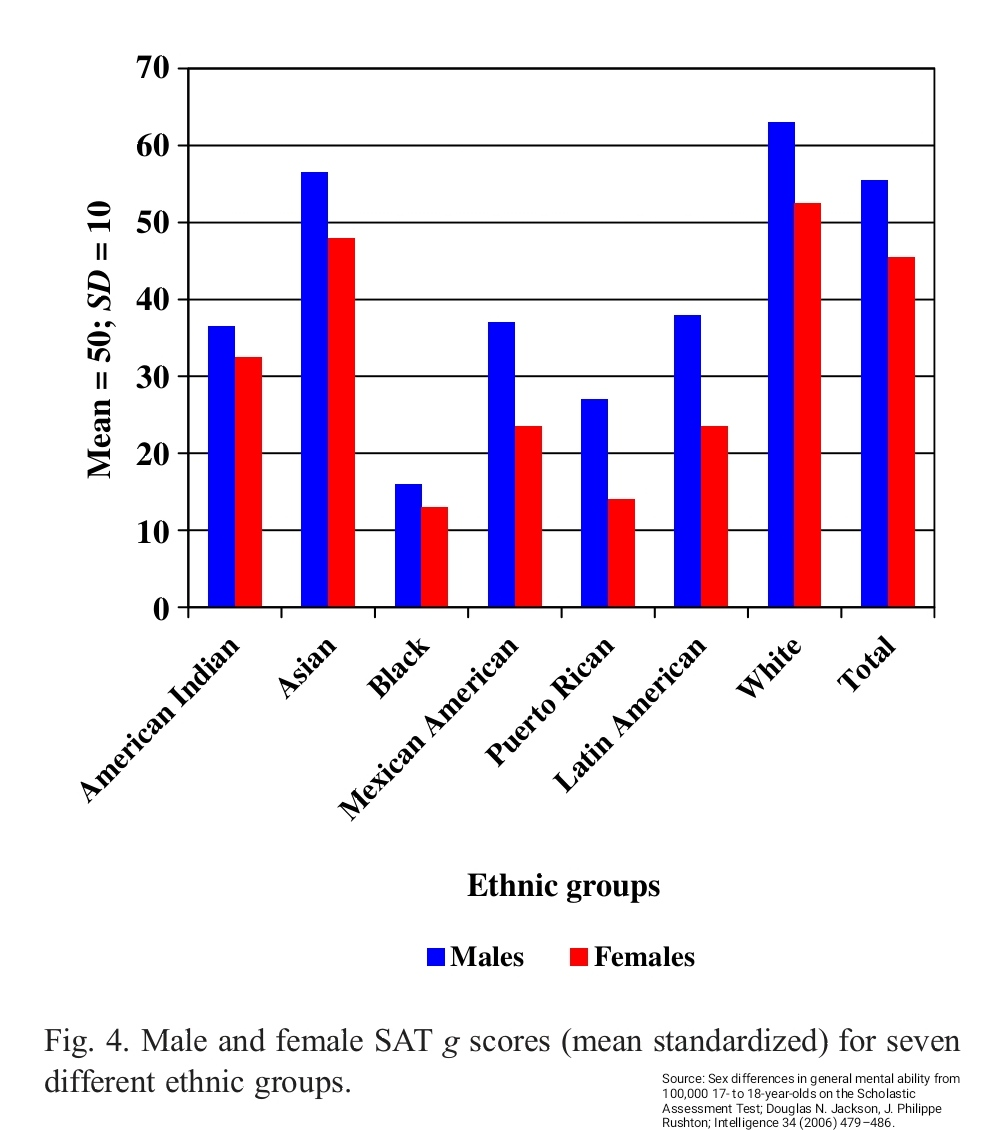
>> Importantly, these test scores better position Admissions to identify high-achieving less-advantaged applicants and high-achieving applicants who attend high schools for which Dartmouth has less information to interpret the transcripts.
Precisely. SATs aren't about hurting the poor or disadvantaged. It's about giving them a chance.