I find it strange that the charts only go down to 20°F, when for example at the moment I write this comment, it's -5°F (-21°C) in Bismarck, North Dakota.
And sub-zero Fahrenheit temperatures are pretty common in the winter across the Northeast, especially at night. "Normal" driving conditions extend way below just 20°F.
As I’m sitting here reading this, it is -35 C after windchill. The reason we didn’t get an ev is because we are getting the sense that the companies that make them do not take Canadaian weather into account
It looks like some of those manufacturers only lose 3% of their range in weather like this, but that’s estimated. The verified numbers are far lower?
Plenty of people drive EVs in the arctic far north of Norway (Troms & Finnmark). Not quite as cold as Canada, maybe, but close.
Of course EVs will have less range in cold conditions, but they also have some advantages in the cold: pre-heating from an app so the car is warm when you set out, for example. They may be more reliable than petrol and diesel vehicles in extreme cold conditions, and no need for engine block heaters, etc.
> far north of Norway (Troms & Finnmark). Not quite as cold as Canada, maybe, but close.
Not even close! The Gulf Stream keeps them nice and toasty. Tromsø or Hammerfest, for example, sees wintertime overnight lows similar to e.g. Worcester, Massachusetts (28 degrees of latitude further south). A far cry from places like North Dakota where the daytime highs in December and January are colder than the overnight lows in Tromsø, let alone places in inland Canada.
The interior of Finnmark in northern Norway can get very cold indeed. Temperatures approaching -40 degrees are not unheard of there. The coast is much warmer most of the time as you say.
Wow. That would be "nearly every modern gas vehicle in north America".
Seriously. Running a cold petrol engine under low load in freezing conditions only for heating i just simply a bad idea. Never understood how this is even remotely OK in the US. This is illegal in most of Europe. And for good reason.
If it is around Celcius -40 then you would never turn off the vehicle. And a bit over that - there is always the Russian option of having a large candle below the oil tray (bad english, but you get it... under the engine) for pre heating. The more mainstream option is plugged in electric heating of coolant water.
I remember from my days in the Swedish army that there was a pre heating scheme for the drivers where specific spots on trucks APC's and such should be heated by gas light.
Usually it is sufficient to start the engine, clean the windows from ice, and then get going. A short engine running time without load for letting oils and fluids melt is only sane. Actually heating the cabin is nothing but wasteful.
>Wow. That would be "nearly every modern gas vehicle in north America".
>Seriously. Running a cold petrol engine under low load in freezing conditions only for heating i just simply a bad idea. Never understood how this is even remotely OK in the US. This is illegal in most of Europe. And for good reason.
My German BMW 7 series definitely had remote start (and an auxiliary heater too). Maybach GLS has an auxiliary heater.
These are hardly uncommon features in vastly cheaper cars either. Various Webasto systems have been around for ages, often installed by OEMs.
In Canada, electric block heaters for the engine are fairly common as well: https://en.m.wikipedia.org/wiki/Block_heater . Similar concept to fire under the engine, but a bit more modern
It's to do with safety, not economics. Remote start on a combustion vehicle presents a carbon monoxide poisoning risk. This is perhaps more significant in Europe where more people park indoors and in confined spaces.
Pretty much any EV in Europe has a remote cabin heating feature. If it were about energy and economics, wouldn't that be banned also?
If you are parked indoors you don't need remote start. Our garage stays about 32F degrees even when it is -10F out. The entire point of remote start is for the case when you are parked outside, such as at work.
Sure, but is the car actually smart enough to detect when it's indoors and block remote start? Many countries ban or restrict remote start features due to the risk of carbon monoxide poisoning.
In any case, not all indoor parking is climate-controlled. It's nice to be able to remotely warm (or cool, in summer) the cabin to a pleasant temperature before you arrive! 32F is still pretty chilly.
> "Surely pretty much any equivalent gas car remote cabin heating too, it's a very common feature."
Remote cabin heating in a gas car requires a "remote start" feature, which is illegal in many European countries - particularly Germany. This is not a common feature in Europe, except in EVs.
No it doesn't. It just requires an auxiliary heater, which has been a common feature in cars sold in Europe for at least 20 years. It's a feature you can find in cars sold during the 80s, like the W214.
> This is not a common feature in Europe, except in EVs.
It's a common feature in fancy cars and has been so for ages. Most EVs definitely fall into the fancy car category.
Fair point, but what, maybe 5% or so of gas cars are fancy enough to have a fuel-burning auxiliary heater in Europe? (not just Scandinavia)
Where as most EVs have a "remote HVAC control" feature - even the pretty basic ones. And EVs, of course, will cool the cabin in summer time as well, something that an auxiliary heater can't do.
Across all of Europe? No way. No cars sold in Southern Europe have this, and afaik it's rare (at best) in the UK. In Scandinavia? Maybe.
But aren't most premium new ICE cars in Europe now (mild) hybrids anyway? Why not use the big 48V battery to power an electric aux heater? Surely way cheaper, simpler, and less dangerous?
Running the engine is a very inefficient way to heat the oil (sometimes requiring a plug-in _electric_ engine block heater if it's so cold the bearings and rings would be insufficiently lubricated to start), and doesn't work at all to warm up a gelled tank of diesel. It's ridiculously inefficient to try to cool the cabin.
EV heating and cooling is far superior to warming up a gas vehicle.
Not directly, but the warm water in the block will mean that at least some heat is immediately available once you start the car. The main benefit of block heaters is not in heating the cab, but heating the engine itself so that it's actually possible to start it.
That aside, never understood the value of "pre heating" the car interior. If it's that cold, you're wearing a coat and gloves (or should be). Start the car, drive off, and you'll have heat within a few minutes.
The value is not having to wear all that gear while driving, and just comfort generally.
Living in the bay area it's nice that the Teslas have this capability to warm the interior from 55 to 70 before I get in the car. It means I can leave the house in a t shirt in the morning.
If you're driving around in subzero weather without a coat, gloves, and preferably a few blankets in the car, you're asking for more trouble than I am.
It’s kinda a pain to drive with a big puffy jacket, especially once the cabin gets warm.
I’m often in this position: car is in underground car park that sits above zero (Celsius) when it’s far colder outside, so I hand-carry my jacket and keep the vent off until the engine heats up.
You don't need to wear the gloves, you want to have them in the car in case you end up in an accident and your car is rendered unable to keep you warm.
Essential safety equipment while driving in the cold.
Almost all ICE cars I've seen sold in Nordic countries during the past 30 years have an outlet on the passenger side to power these. I think these have been a thing since the 70s though.
Fuel-type block heaters heat the cabin as well (they turn on ventilation once the coolant has warmed enough). Electric heaters are meant to be used with a cabin heater that uses the same external power source.
And another difference is that I can preheat my EV while it’s inside the garage. While I’d never warm my gas engine car inside the garage, not even with the garage door open.
My gas powered Mercedes heats up just fine without starting the engine.
This has been a common feature for like ... idk, 20 years? I think even the 80s W214 had this option, although that used a separate burner system instead of batteries.
If its cold enough in Europe they install dedicated heaters rather than idling the engine - they install a small heating device and pump plumbed into the cooling loop and to the petrol or diesel supply.
When it runs it heats the coolant and circulates it through the engine block.
Newer ones can also talk to the ECU to open the heater core valve and fans to pre heat the interior too. They also can use either SMS messages or an app to turn on remotely if you don't want to use fixed timers.
Replying to the comment below about garages. One can simply open the garage door, also remotely. Step 1, open garage door remotely, step 2, start car remotely.
But those aren't real differentiators. You've been able to remote start ICE cars for years, so it's warm when you get in. With a block heater, even diesels will start well below zero. Even without one, my 20 year-old ICE car starts up in -20F. And if you've got a place to charge your EV, then you've got a place to plug in your block heater.
I was under the impression that cars died in the cold due to the battery dying. Are evs more reliable because they are likely to be plugged in over night?
It depends on how cold you are talking about. Lead acid batteries run into issues, but portable jump starter is a cheap and easy solution for that. However, if your talking -40C both oil and fuel both run into problems with ultra low temperatures so people need to use heating blankets.
The nice thing about EV’s is you can have them warmup while plugged in an unheated parking space. The bad thing is cars are poorly insulated so at ultra low temperatures they need to use a lot of energy to keep warm.
Or a standard feature if you're living on the Canadian prairies.
In the mid 70's my uncle left Edmonton to do his doctorate in the Bay Area, and had his classmates at Berkeley convinced that his big Dodge Charger was electric because of the block heater cord on the front of it :-)
An EV battery is entirely different than a lead acid accessory battery in a combustion car.
It has a whole system dedicated to maintaining its temperature within ideal ranges.
They don't die in cold weather. I've never heard of one doing so.
The only issue with cold weather is reduced range. So just make sure you buy one with a battery big enough to handle your commute even with reduced range in cold. Which is pretty much all of them these days, honestly.
Those don't have "a whole system dedicated to maintaining its temperature within ideal ranges" although now you've got me wondering whether a laptop that expends some energy to keep its battery warm would actually last longer in extreme cold than an otherwise-identical laptop that doesn't... of course one would need to also consider whether the keep-warm energy is drawn while plugged in (which would obviously let it last longer) or not (which I'm not sure about).
EVs are mechanically far simpler. Mechanical parts always have issues dealing with large temp ranges (it becomes a very hard engineering problem), and the simpler the better. It’s not just oil (not needed to the extent it is in ICE cars), but everything.
For EV’s, the chemistry will have issues at low temps (fixed with battery warmers), and it has to use propulsion energy to heat the cabin, both of which will cause some loss of range.
As long as the battery doesn’t run down too low though, it’s a decent choice if other things are engineered correctly.
Li-ion batteries perform better at low temperatures than Lead-acid. The traction battery is also a lot bigger so it retains heat for much longer. And in some models, the car's battery management software can kick in some heating to prevent it from getting excessively cold if necessary.
I drive an EV in Canadian winter all the time. Not at all an issue. Range loss is a thing but it's not like the car stops working. In fact it starts more reliably and heats up more quickly for me. And I start mine remotely while it's still plugged in, so the cabin is warm and ready to go without wasting battery energy. And can do this safely in the garage without concerns of carbon monoxide poisoning or stinking up the garage.
Aside: I wish people in this country would stop reporting wind chill temps as if they're some sort of accurate measure of anything. They're only useful as a relatively subjective measure for people who aren't dressed properly.
> They're only useful as a relatively subjective measure for people who aren't dressed properly.
That's a bizarre thing to say when to dress properly, you need to know the wind chill.
If it's 25°F out no wind, vs. 25°F out but it's 5°F with wind chill, that's an entire additional layer I need to put on during my morning walk.
Wind chill is a very accurate measure for judging what to wear. How do you think it's not accurate? It's literally an equation that accounts for the fact that wind makes you colder. You can scientifically, objectively measure the faster cooling effect of wind on an object. (Granted there are marginal differences in its effect on a human body depending on one's height and weight, but that still doesn't make it subjective.)
But if you only know the windchill temperature, how do you dress? If it is 10f with wind chill, do you prep for wind or not? I want to know temperature and windspeed, and then I know how many layers of wool I need (from the temperature) and how windproof I need to dress (from the windspeed).
You dress for the wind chill. I'm actually having trouble understanding your question because I can't think of any circumstance where you wouldn't.
I don't care about the wind speed as a separate number because it's useless to me except in how much it converts to wind chill, since I'm not going outside to fly a kite.
Perhaps I simply don't understand the concept of dressing to be windproof or not. Virtually all winter outerwear is "windproof" enough. People aren't usually going outside for an extended period of time in a cable-knit sweater as their outer layer.
Also -- you do understand that the wind still makes you colder regardless of how windproof your clothing is?
Interesting point: if we need to know two things, one of them being air temperature and the other being [windspeed or windchill], the second thing ought to be whichever delivers more overall value.
If you can figure out how to dress based on either one equally well, then it comes down to what else can be gleaned from windspeed vs from windchill. I would tend to agree that windspeed is more valuable, as it's better at readily telling you if an activity you're planning to do, which is only possible under certain windspeeds (like using a tent or something), will be doable.
Wanting to know how cold it's going to feel on one's face seems like a pretty reasonable need. At the very least, to know when to break out the balaclava.
> And the reported wind chill matters when the car isn't moving.
It matters in the sense that a parked car in the wind will cool to ambient temperature faster than it would when the air is still, but not in the sense that it will ever get colder than the actual still-air temperature. Wind chill affects rate of cooling, but (in the absence of evaporation) not the actual low temperature that is reached. Since the concern with loss of range or or starting capacity usually has to do with how the batteries perform at at extremely low temperatures, it's probably closer to true to say that "it does not matter".
Wind chill is mostly a number for TV weathermen to use to hype up cold weather. It does matter to some extent for people in that they may want to be careful to cover exposed skin and wear something windproof. But it's more about dressing for cold windy conditions than about an absolute number.
> Since the concern with loss of range or or starting capacity usually has to do with how the batteries perform at at extremely low temperatures
Isn't heating the cabin also a major component of the concern? That's where heating the cabin on grid power would help get some range back (assuming the battery is fully charged; if it's mid-charge then you're just shifting the grid power from charging to heating so the range will continue to suffer).
In the best case scenario where the car is in a garage, I've heard that you can pre-emptively bring it up to temperature on grid power and a great deal of the cold-induced range loss goes away. Might still work for outdoor parking, just a bit less shielded of an environment.
Wind chill is because your body heat makes a bubble of warm air which the wind blows away. When you have a full body suit and helmet, wind chill doesn’t matter.
It's always been a pet-peeve of mine. People from the Mid-west of America always use it for hyperbole. -10C is cold, I get it. You don't have to go all dramatic and tell me it's -40C windchill, you're not naked. (if you are, I'm fine with windchill)
The air velocity as measured relative to a parked car is not relevant to EV range. When the vehicle is moving the relative air velocity is far different than what it is when parked.
Doesn't the range of an EV drop as the heating load of the cabin of an EV increases?
And doesn't the heating load of the cabin increase as the air velocity over all of its metal and glass surfaces increases? Isn't the shell of the car essentially a giant heatsink with a 70mph relative wind moving across it?
However the speed of air over the car while driving is unrelated to the airspeed that meteorologists use to calculate the wind chill in your local weather report
Generally true, but could be relevant for calculating heat loss rates of cabin or battery. Only when parked I guess, as air velocity due to driving would typically be much greater.
In the summer, I can drive from Calgary to Edmonton without stopping to charge. I did one trip at -40 (without windchill) and I had to charge in Red Deer for about 30 minutes to make it.
Came here to say that (am in Minnesota for Christmas holiday, where it’s currently 1°). It gets much colder than 20°F for extended periods in the Midwest. Is there just not a large enough sample of EV driving in those temperatures to extend the graph?
I have owned a Model 3 in Iowa while living in an apartment with no garage. This was at the beginning of the Covid lockdown where it stayed unused for extended periods of time. The battery was cold-soaked in temps below 20F. Whenever I drove the car, I had almost zero regen-braking, reduced acceleration and the range was decreased by about 30%. For short commutes, that would persist throughout. But whenever I went on longer trips, a one hour drive would get it back to its original performance. The range would stay a bit lower due to higher energy use (~330 Wh/mi instead of 240 Wh/mi in the summer). The navigation would account for this when planning trips and also pre-condition the batteries prior to going to superchargers. On average it added maybe one extra charging stop during road-trips.
This is interesting. I wonder if large capacitors could alleviate this: somewhere to quickly dump the regen energy, and charge the battery with it at some slow rate equivalent to the long-term average regen load. Not only would it help in cold situations where the battery can't be charged quickly, but also situations where the battery would be healthier if not charged quickly, which is always.
While not giving any energy back, Teslas can now detect when regen breaking is limited, and blend in the regular brakes for you, so that you don't have to change your driving style. It has only come out in the past couple of weeks, but I cannot tell the difference when regen is supposedly limited after enabling the feature. Before it was a little dangerous to have to modify your driving style and watch out for how much regen your car uses compared to its normal amount, since after a week of driving an EV in the summer you don't ever really touch the break pedal.
Are you sure this is related to the cold, and not just that the batteries were fully charged so that regen had nowhere to put the energy?
[Edited to add]: I say this because I see this in all types of weather: I live on the top of a hill, and if the car is fully charge there will be no regenerative braking when heading down the hill.
Exactly. They likely didn't have enough data, because a)it doesn't actually get that cold for very long, even in the coldest parts of the US and b)there aren't many people in those locations (North Dakota, grandparent comment's home state, has the same population as Boston, Massachusetts. Not the region - just the city itself) and c)there aren't many EVs, either - due to lack of infrastructure for them, lower income levels, and (drumroll please) their lower ranges.
Contrary to the knee jerk reaction some people seem to be having, this isn't an conspiratorial attempt to pull the wool over the eyes of Real Americans(TM).
I don't understand the reaction, anyway - ICE vehicles plunge in range with cold temperatures too, and there are a bunch of reasons why EVs seem well-suited to rural life.
The range reduction doesn't mean squat when the longest average commute in the US - Maine - is 10 miles. Who cares if your 300-350 mile EV only gets 200 miles, when that's still 20 days of commuting, and every hour your car is in your garage, it's "gassing up" with no intervention on your part beyond a few seconds to plug in a cord when you get home?
FYI, looking at a smattering of temperature charts, "much colder than 20 degrees for extended periods" is a slight exaggeration for Minnesota.
I guess I meant “extended periods” to mean “longer than two weeks”, which is about how often I’d fill up the gas tank when growing up there. Average temp in January through March is below 20°F per Wikipedia for most of the state.
Regardless, I agree there’s still good use cases for EVs in cold climates.
I'm in Fargo and one of my coworkers recently got a Model 3. It's going to get much colder in the coming week and I'll be asking him about what kind of mileage he's getting.
I figure 20F is just sufficient to prove their thesis (effects of cold on EV cars). I don't think it purports to be an all-encompassing study, especially since there are variables like cabin heating which can have significant effects on range in lower temperatures.
At even colder temps than that EV batteries start having even more problems, for example they become permanently damaged if charged at freezing temps or below, so even more energy has to be used to heat the batteries for the batteries to be able to accept a charge.
Easily mitigated by good charging practices (eg: charge when you finish a drive and the car/battery is still warm, not after leaving it in the cold overnight)
Yes, in very cold conditions, regen braking can be reduced/restricted until the battery warms up sufficiently. The car will warn you about this, so hopefully no surprises!
Agreed, and that’s as someone who grew up in North Dakota and now lives in the milder northeast US, near the ocean.
’d also be interested in seeing it colder for trips back to ND, sure. But the majority of folks in the US live in places where it isn’t as brutal as a North Dakotan winter, so doing a study at 20 F seems reasonable to me.
I don’t understand it either. Lows well under 20°F are fairly common in the US. The _average_ temperature in the winter is in the mid-20s where I currently live.
I think it’s because most people who are pro electric understand their downsides, and usually the downsides are presented as dismissal (eg why buy an electric, you have to stop when you’re traveling cross country.) It’s kind of a boring topic unless there’s something new to discuss.
I think you’re lying to yourself because you’re an EV fan.
You have to consider what the pushers are saying and if there’s sufficient pushback when they’re misaligned.
Currently that doesn’t happen. Currently you face everything up to deplatforming for speaking against the narrative that EVs are the one true solution.
Quite the opposite, I find every thread about them (including this one) to be entire dominated by the naysayers who claim they are repressed but in actuality are the loudest and most visible voices.
It's a bit ironic you claim "propaganda" and "downvotes".... in the most upvoted, top thread on this post, a thread which is highly skeptical/negative to EV.
These days I find it difficult to find real-world data or anecdotes from EV real owners amongst the tidal wave of gasoline vehicle operators predicting how terrible an EV would be (and justifying their ego/decision to not buy one).
Because nearly every article posted on HackerNews comes from a website whose entire purpose is to promote electric vehicles. The "naysayers" in the comments offer a balancing view.
You'll note it's RARE that the article is negative towards EVs, only the comments. Because it's pro-EV, all the time.
Two winters ago I tried to drive my model 3 across North Dakota - never will I do that again. Range was cut in half and I had to stop at every single supercharger.
While they aren't as popular in the Dakota's, there's quite a few EV's in Minnesota, where the temperature ranges are similar (1 degree Fahrenheit at the moment).
> It includes aggregated and anonymized data from 7,000 vehicles in the Recurrent community from across the United States as well as tens of thousands of data points from on-board devices that provide data on energy usage.
Maybe some more Northerners should join Recurrent?
I'm in the Rockies, about 6300' elevation and the temp in the winter is often sub-zero with extremes being around -25F but only a few days usually. None of the locals have an EV but I have seen them on the highway going up to Yellowstone so I have not been able to ask them about range.
The UPS drivers here will soon have a couple EV delivery trucks. I talk to them all the time so perhaps that will be useful data I can relay. It won't be graphs, just happy or grumpy driver anecdotes. I hope they give the drivers good heaters.
Average January low in Oslo is 22 F. In Fargo, ND it’s 0 F. Oslo is at 59 degrees north latitude, Fargo is at 46 degrees north (south of both Paris and Munich)
The charts should _all_ have the same range and scale so that they can be visually compared. As it stands they appear optimized for maximizing the data acuity of each individual car without consideration for visually comparing curves between cars.
I assume it's because temperatures like that during the day (when most car travel takes place) is less common than at night. It's more representative of the general use case.
The majority of Americans do not live in areas that get below 20F average for extended periods of time. Your particular use case is atypical, especially for EV buyers, so it isn't shown.
Norwegians alone account for ~5-10% of Tesla's global sales in recent years.
I don't think it's far fetched to assume that at least one tenth of all Tesla vehicles (and other EV vehicles in that price class) are driven in areas that do routinely experience longer periods below that temperature. It's likely much more than that, because in Europe you can easily find these temperatures many places far south of Norway.
I suppose what you got there is an average of averages over multiple years.
It absolutely does get that cold: For most of January 2021 the average daily temperature was below 20F in Oslo (21/31 days), dropping as low as 3F average and 0F for the lowest recorded temperature. February 2021 wasn't much warmer, only creeping above 20F in the second half.
If you want data on outside-the-normal situations, you shouldn't expect it to come from blogs or news posts targeted at average users. Here's a more technical blog with some data on lower temps based on telematics driving data: https://www.geotab.com/blog/ev-range/
Interesting data, but for the Model 3, I think an important piece is missing: model year. Around 2021 they switched out the resistive cabin heating for heat pump heating, which had a positive impact on cold weather range. Anecdotally speaking, my 2020 Model 3 gets between a 30-40% range hit in the winter.
This article is about battery capacity loss due to cold weather (either directly or due to use of battery-heaters). Cabin heating is over and above the loss discussed here.
This is explicitly a study of real-world driving experiences, so, unless people generally drive through winter without cabin heating, then to exclude its effects, their use of it must be controlled for, and I see no evidence that they have done so. In fact, this paragraph about the BMW i3 suggests that they are lumping together cars having different cabin heating methods and options, if they are the same make and model:
This little BMW clearly experiences some winter range loss in cold temperatures. But keep in mind that many i3 models include a heat pump in the US and some feature a gasoline range extender (called REx). Both of those help to preserve range in cold temperature.
The article explicitly compares real-world data as experienced during on-road usage, showing how EVs with more efficient cabin heating (heat pump e.g.) lose less range in the cold.
As a Minnesotan with an unheated detached garage, I’d be very interested to know about -40°F performance. We get a couple of those days every year. I have been looking at my next car potentially being an EV and am really curious about the extremes.
Those can be warmed up with a g̶a̶s̶o̶l̶i̶n̶e blowtorch. Or you can fit your car with an alarm system that auto starts the engine throughout the night to keep it warm. That's what pretty much everyone is doing where I'm from (-25°C is a pretty typical winter temperature here, with drops down to -40-45°C for a couple weeks each winter).
After that you get tolerable gas mileage. I don't drive much, but from my friends' description it sounds like you get around 30-40% more gas usage compared to warmer months.
Maybe in Norway or Canada or other 'rich' countries.
Most people have no place to park their cars, they just leave them wherever in the open (since most live in apartments and there are few garages available).
Those who have enough money to afford an alarm system and pay the increased gasoline bill (because it adds about an hour of idling your engine each day) rarely revert to such measures, but many do. I see them every morning when temperature drops below -30°C or so.
It's pretty dangerous, burns down quite a few cars each year, but people don't care or have no other options. I think during the last couple of years there were two fires near my house alone.
My old vehicle gets really grumpy at -10F. I use an oil pan heater, a battery maintainer 1.5 amps, 2 heat-lamps above the engine and fuel additives heat, seafoam that keep it running. The only downside is that I feed all the local birds and they discovered my heat lamps.
> My old vehicle gets really grumpy at -10F. I use an oil pan heater, a battery maintainer 1.5 amps, 2 heat-lamps above the engine and fuel additives heat, seafoam that keep it running. The only downside is that I feed all the local birds and they discovered my heat lamps.
The only downside? The entire comment constitutes a list of down sides...
Perhaps. Not for me really. I would be using seafoam anyway as the heads on my engine have a manufacturer defect that causes sludge so I have to change the oil often. I use seafoam in both the fuel and oil. Electricity here is 11 cents per KwH so I am ok with the heating devices as that is significantly less power than an EV even if I factor in fuel costs. Once I finish my solar setup the power becomes moot.
The only thing that bothers me is that when I lift the hood to remove the heat lamps, a bird may fly out and when they go from 80F to -10F they can go into shock. They stand next to me for a minute or two and then fly away probably out of sheer boredom of listening to me.
Anyone who is trying to start an ICE at -40 (C or F, they are the same at that temp), will have it plugged in with a block heater. Or if in Russia they’ll have an insulated jacket for the car.
I believe they “just work.” Electric motors don’t stop working at low temps. I think it’s mostly just range that’s impacted since EVs can’t use the inefficient part of an ICE (e.g. energy produced by gas not captured by the powertrain) for heat, so they have to run heat pumps. (Along with battery chemistry not working as well in low temps)
EVs will maintain the battery temperature if plugged in, usually at 0C.
Even if not plugged-in they'll try to keep the battery above temperatures that may be damaging, e.g. -30C. This only works for a sufficiently charged battery.
Every modern gasoline vehicle should be fine at those temps even without a block heater. It's just a question of can your 12v battery deliver enough power to start it, but that's a problem you can solve in 30min if you encounter it (bring your battery inside).
You'll be fine if you pick a quality EV that does proper battery temperature maintenance. I've been driving a Volt here in Ontario for years no issues. GM & Tesla have put proper engineering into this. Nissan has notoriously cut costs on battery cooling/heating in ways that have led to shortened battery life.
Is there a comparison somewhere of the cooling used by different EVs and PHEVs? I know tesla does it right but there is rarely enough information provided by manufacturers to tell if they can take the pack temp below ambient or not. It is by far my largest concern in selecting my next vehicle. I want to wait for the cyber truck, but I am vonsidering the pacifica PHEV
I've no idea what it actually does, but the manual and car settings for my Subaru say that when it has sufficient power it will auto-heat/cool the battery to prevent damage.
Did you insulate your house for the -40 days? Did you buy your winter coat and gloves based on -40 days? Did you install a block heater, battery blanket and oil pan heater in your ICE car for those -40 days?
I'm betting you didn't, because you know they only happen a couple of times a year, and it's not worth spending all the money and effort for something that happens so rarely. What you have for the -20 and -30 days is good enough for the (very) occasional -40.
The same is true for your EV.
(FWIW: I lived just above 60 degrees north for 4 years. I rode my bike to work every day. For many months it was often colder than -30, and at least a month a year it was colder than -40.)
I don't think that's exactly true. -30F and below is cold enough to permanently damage the battery in an EV. Letting the electrolyte freeze just once will ruin your battery. It doesn't matter how many -40 days you get, you really do have to be prepared for them.
Your ICE car may not start if it's that cold, but it will work like new once it's warmed back up.
The solution is simple - just keep your EV plugged in, and it will heat itself as necessary. If you don't have a place to charge 24/7, probably don't get an EV in these climates.
> Your ICE car may not start if it's that cold, but it will work like new once it's warmed back up.
no, no it really won't.
It's extremely common to tear CV boots past -40, and the wear and tear you do on the engine in the first few minutes (when the oil has the consistency of butter) is permanent.
If you start your engine at -40 and it's not plugged in multiple ways, you're doing permanent damage. It's really funny to see all the Kias and Hyandais and other "cheap" brands in the Yukon - they last a winter or two before the engines grenade.
Also if your starting battery freezes, it's finished. Hence a battery blanket.
> The solution is simple - just keep your EV plugged in, and it will heat itself as necessary.
It does not have to be plugged in to keep itself warm. Obviously if you let the battery drain that's a huge problem, so you just have to keep an eye on it for those "once or twice" a year days. Not at all unlike an ICE vehicle where if you let the starting battery freeze it's done for.
I'm pretty sure Teslas keep their batteries heated to above cell-freezing level even without them being plugged in.
The expectation is that you would recharge it before the battery gets to low to continue heating.
That's true, but my understanding is that the Tesla will only be able to keep itself warm for a day or two. So you need to charge the thing every day - really only practical with home charging.
It maybe worth calculating the cost of adding some insulation and very limited heating to your detached garage; this could be a factor, in terms of the overall cost of vehicle ownership.
I would not buy an EV where you are. Also I wonder how fast it will charge when it is very cold outside. I heard Toyota has some kind of hydrogen car, maybe that would be better ?
I live in the north and I will not by an EV until the range reaches Gas Autos when the Temp is below 0F with the heat blasting. Getting caught in the cold without fuel is not good. And I wonder if Wind Chill can decrease range even more.
I fully believe all EVs are tested and developed for the Southwest US, ignoring real conditions many people encounter.
Plenty of people own EVs in extreme cold and get by just fine. Look at Norway, EVs are incredibly common there and they’re regularly driven to the far north without much fanfare. https://www.youtube.com/@bjornnyland/videos
Populated Norway actually isn’t that cold. The average high/low for their coldest month is 0C/-5C. In contrast Seattle is 8C/2C. I’m curious how EVs are doing in a city like Harbin where it is -24C/-13C.
Ford and GM have proving grounds in Michigan and Arizona. Nissan failed to test the Leaf in desert conditions and it led them to not include battery cooling, something that ate batteries and IIRC, was also the subject of a class action suit.
Yup my wife just almost got stranded in her Mach-e. Fantastic car but cold weather battery is noticeably worse than our Model 3’s. Something to keep in mind.
Ford's decision to forgo a heat pump is a real head scratcher. Sad the Lightning didn't make the page, because I'm very interested how much it affects it.
Hoovies Garage tested the Lightning, and its towing capacity and cold weather performance were both terrible. I don't think EV trucks are ready for the big time yet.
My fuel economy drops about 20% on my petrol car in cold weather city driving. I don't know what causes the difference, perhaps waiting for the car to warm up and windows to defrost.
EVs upsides and downsides should be considered without it needing to be a comparison to ICE. But, yes, running the heater will use fuel.
In this case EVs with "250 miles" range are losing 30%~ of that range for three months of the year and a further 20% over the first three years of their life, making them reliably closer to a 140-mile vehicle. People who are planning round-trip travel or commuting need to know this information, and unfortunately a lot of EV fans like to mock people for wanting high initial EV range as if winter and or capacity loss aren't real (even with the facts being readily available).
The Bolt is currently the best budget EV by far, but people buying it should consider it a 150-mile range vehicle with "bonus" miles above that.
Please stop assuming that an EV battery is guaranteed to lose 20% of its range in the first three calendar years of operation.
I drove a Chevy Bolt for 4 years, 48k miles, and I never noticed any range degradation, most likely thanks to the strong liquid cooling system for the battery and the inability to fast charge the Bolt faster than 1C (50-55kW fastest charging speed, 60-66kWh size battery means .75-88C) (https://en.wikipedia.org/wiki/Battery_charger#C-rate)
Some cars absolutely will degrade like you describe, but that is not a guaranteed outcome for every EV, given the differences in fast charging capabilities and battery cooling capabilities.
I did not get my 238 miles EPA range on the Bolt in the winter, but I could easily get 200+ if I needed to squeeze out more range. I generally got closer to 150 miles not because I was forced to, but because my driving style and heating usage did not generally result in the highest efficiency.
Is it mocking, or just encouraging realistic expectations around your travel needs?
I’ve heard many people say an EV won’t work for them, yet their total daily commute is nowhere close to the capacity. And for many of them, even a 110V outlet at home would get them around 40 miles overnight once they’re home (depending on the make/model specifics), and most folks I know are barely driving more than that as a daily driver.
I totally understand wanting to have long distance range in an EV. But even with the cold, for most commutes, anything with that 150-mile-in-winter is range for the majority of trips.
But totally understood it’s a case by case basis. I have family who drove over 100 miles round trip for their daily commute in North Dakota. Those use cases exist, but I think many people without such extreme daily distances are thinking about their daily distance needs in unrealistic ways. I hope this isn’t what you’d consider mocking :)
Cars are really expensive. Buying a whole ass car that can _only_ be used for commuting is a luxury most people cannot afford. They need their vehicle for thier daily commute, but also for weekend trips, home depot hauls, towing, etc etc.
"Does this car only do 80% of what I need it to" is a valid question when so much money is on the line.
My EV still works for weekend trips. I've been on several with it without any issues.
I can still park at Home Depot with an EV, they don't crush them on site. Practically every Home Depot trip I've made was doable in any average vehicle. I see plenty of sedans and crossovers in the Home Depot parking lot. If it's something that's going to be a ton of stuff, I can rent their vans and trucks for $20. If I'm buying so much stuff I need an F-250, $20 isn't a significant part of that budget. I don't know why having an ICE is critical to go to Home Depot.
Towing, really depends on what you're needing to tow. Pulling your boat from the nearby storage to the boat ramp? Probably fine with an EV. Pulling a fifth wheel around national parks? Towing horses around? Definitely not an EV job, for sure.
But people aren't towing a fifth wheel with their Camry or their Rogue or their Equinox. The 99th percentile needs of most vehicles on our city highways could be accomplished with an EV without significant challenges, assuming decent charging is available.
I imagine it is so on some air-cooled cars (VW "Beetle", old 911 etc), but on most cars the cabin is heated off the engine's cooling system and does not require additional fuel, so it technically will "use fuel" but no more than the normal operation of the car.
OEM aircooled VW heat came from air heat exchangers that took extracted heat from the exhaust gas. Worked terribly when new, and even worse when rust hit: the channels carrying the air from the rear to the front of the vehicle were among the first parts of the body to rust out (at least in Beetles), and if any perforations developed in the heat exchangers you'd get CO going into the cabin.
There were aftermarket gasoline heaters available, which is probably what you're thinking of.
Mostly this because you can easily tell when the switch occurs on your mpg gauge, but also increased friction from higher viscosity of lubricants, denser air and subsequent drag increase, increased tire rolling resistance etc
Warming up the whole car (including grease in wheel hub bearings, for example, that becomes much harder in cold) takes a lot of energy, so perhaps it is it. I'd say that a fully warmed car though should be a bit more efficient due to a bigger temperature difference and a bigger oxygen amount going into cylinders.
People drive differently in really cold weather - they tend to idle the vehicle more (and spend time in it while idling more), drive slower, and on mushier surfaces (snow/slush/ice), etc. and that is without figuring mechanical stuff like thicker oil.
If someone isn’t driving highway distances all the time, ‘warm up’ is quite inefficient for ICE vehicles, and tends to run very rich.
Totally right that if those factors aren’t there, it should get better fuel economy.
Same and I don't even get cold weather here on the Pacific coast, just high 30s at worst. The engine on my hybrid runs a lot more in colder weather trying to heat itself and the cabin, even with the cabin thermostat set to 65. For short trips around town I get MPGs in the teens while in the summer I would normally expect 50+ MPG.
This. At highway speeds, air resistance dominates the energy consumption. It is roughly proportional to air density, which in turn is inversely proportional to temperature. Compare a nice summer day at 300 K, say, to a really cold day at 240 K. That’s a ratio of 5:4, pretty close to the 20% figure mentioned.
It's not really the fault of "heating" that you're idling your car unnecessarily. I'm definitely not idling my car to defrost my windshield, as I'll most likely pre-heat my car, or if I don't, I'll scrape the frost off.
The reason I idle before driving is that even after I scrape the ice off, the wipers don't seem to be as effective until the window is warmer, and it's blurry and gets foggy. I try and scrape, wipe and antifreeze as much as possible, but I still find I can't see as well until the windows warm up a bit.
I feel like we’re losing context here. My comment wasn’t in reference to what I do, or what you do. It was in reference to what the root comment said they did.
The person in the root comment proposed that their practice of letting their ICE car warm up to defrost in the winter may lead to decreased gas mileage. This is correct; it will.
As a 7+ year driver of a pure electric BMW i3, not the range extender version, in a HOT climate its last four years, far more overlooked is the degeneration of battery capacity when run and charged in heat.
I mean 40+ Celsius summers have been brutal on the battery which is a cooled pack.
Possibly this has improved a ton since our i3 was the original model year, and BMW replaced the original pack and sent it back to Germany for analysis, consistent with the i3 being an experiment by design.
It’s made me curious if this is purposefully overlooked by the EV bandwagon.
The nissan leaf demonstrated this problem in Phoenix immediately upon release, it is a known thing. Tesla seems to take yhe cooling loop very seriously. The batteries in the early model s had some issues but after that they seem to asymptote at 20% range loss and stay there. At least so far. I don't know who else takes cooling that seriously. I'd look for liquid cooling but also phase change hooked into the ac system, as liquid and a radiator only gets you down to ambient, which is too hot in an increasingly large number of locations much of the year.
Yep, our i3 battery is cooled as a pack, but degraded fast north of Phoenix (higher altitude, still hot as hell for 4 months, super nice for 8 months including freezing and occasional snow). Turned out the cooling system for the original pack broke, but it was unclear if that happened in Arizona or was a one-off quirk, so the degradation of the original pack happened for sure in Arizona.
I make sure the displayed range on the M3 is double for the distance I want to travel.
Winter tires, snow and ice sticking to the car, and -15C are quite normal occurrences here, and range display is pretty consistently half of what to expect.
Does the nav system do a good job of compensating? The "normal" display on the 3 is based on the EPA rating and is always wrong, but when I navigate, I find the trip range thing to be quite accurate -- even factoring in upcoming hills and traffic.
Yes, but you need to use the “energy” app and have nav destination set. The little mi number next to the battery is “miles of ideal range”, so flat 65mph 70 degrees etc.
The energy app shows you live estimates based on distance, elevation, wind speed, temperature, humidity, tire pressure, cabin climate load, and even your phone charger.
The energy app is pretty good, it fits pretty well with my double policy but I don't look at it anymore, since it requires diverting my attention moreso than glancing ant the estimate, and additional tapping to bring it up.
As a rule of thumb I halve the EPA estimate in winter and 2/3-3/4 it in summer.
I have had no range issues doing this for the 130000km + I have owned the vehicle.
Edit: If I'm going to tap, I check the Wh/km, as that is what I'm used to. It was better before they removed it from the swipe, but hey, we gotta fill those sprints somehow.
Worth noting that the range estimates in the navigation has been updated in the last ~6 months to be much more accurate and shockingly close to ABRP[0]. Previously I'd use ABRP to estimate battery usage (and I still do for planning road trips) but I can now trust Tesla's estimates reasonably in the car.
LiFeYPO4 - lithium yttrium has an incredible temperature range of -45°C to 85°C. Slightly less energy dense than LiFePO4 and has more cycles (5000+). Winston Is one manufacturer that I know of.
FWIW, my own investigations into this from a location that is currently 0:
I’m going with a plug-in hybrid.
There are precious few charging stations in the Midwest (especially those affiliated with the Subaru/Toyota brands), and a lot of miles between cities. A majority of my driving is inside the 45 mile range so the batteries, and the ability to fill up conventionally eases my worries about detours or delays.
Hopefully when this new vehicle dies, the charging (and cold weather) story will have improved.
> There are precious few charging stations in the Midwest (especially those affiliated with the Subaru/Toyota brands)
If you're looking for things to be explicitly related for Subaru/Toyota, you'll be missing a lot. It's not like you buy gas at Toyota gas stations. Outside of Tesla and Nissan Leafs the brand doesn't matter.
A quick look at plugshare.com filtered for CCS chargers show lots of areas with pretty good coverage of chargers. Some places do get a bit sparse, but kind of following along in Google Maps it looks like those are kind of sparse areas in general. Sticking to mostly major highways would get you practically anywhere around the Midwest in an average CCS EV from what I can tell. Obviously, if you're only ever in those sparse areas you're gonna have a hard time.
I definitely don't know your particular needs so I can't truly say that you wouldn't have had a problem charging. I'm just throwing it out to other people that there are over several hundred CCS charging locations in the Midwest today, with more locations being built out constantly. Use tools like plugshare.com to know the places you tend to drive and reach your own conclusions on if an EV would work for you. I agree EVs can't serve every use case and need, you gotta see what's best for you.
I'm in the midwest, with a plug-in hybrid. I wish I had gotten a BEV instead of the hybrid I have. With the plug-in, I was filling up more than I had hoped (maybe once every 2-3 months), but more importantly, the maintenance is still all there. It's arguably even worse, since there are even more moving parts than a ICE vehicle (the 12V battery notably is difficult to replace).
I have a Chevy Pacifica Hybrid, so your experience may be different. Unfortunately, there aren't many great options for a BEV vans (yet), but here's to hoping.
You'll be fine if you're able to keep the car connected to a charger overnight. Many EVs have an option to pre-heat the battery while on the mains power, so you don't lose the range on heating the battery up.
Get a BEV with a heat pump. This improves winter efficiency.
If you need a new vehicle, the you can certainly go with a quality EV. I live in NJ, it gets cold here in winter, with temps dipping in teens and single digits in Jan/Feb. Don't have a garage either. As long as you can plug your car in overnight, there are absolutely no issues. Range does drop a somewhat in winter, but as long as you're aware of it you can work around it. You don't need chargers in your area, your home will be the place where you charge the most, just make sure you have a high power outlet/wall charger installed at your home. Regular 120V outlets are not really feasible unless you're driving very little. 3d party chargers matter only when you go on road trips/vacations. That being said, maybe you can hold on to your car a couple more years, let the market cool down and EV offerings improve.
Indeed, if you can, I would avoid buying a new car with a combustion engine. As your car should have some more useful life time, of course it doesn't hurt to keep it running for a while longer. This allows you to watch as the market for electric cars expands. On the other side, when you absolutely need a new car and you find an electric car which fits to your requirements, it will continue to do so, even if the technology is further developed. This is, after all, the problem of buying any high-tech product, be it a new laptop or a new smartphone. Next years product always will be better, but when you need a new device and the offerings are suited to the purpose, then just buy one.
> BEVs are improving quickly so what I buy might be superseded soon
That WAS my concern, but EV resale value is amazingly stable, better than most ICE in my area (EU). After all, EVs are still cars, so innovation cycles are long (many years).
Your current car is only a few years old and has relatively low mileage, so the best course of action is obviously to keep driving it. Unless there's something seriously wrong with it. Otherwise, buy a used car.
It’s a Volkswagen not a Toyota and many parts have design lifetimes of 150-200k. Since it’s the only car for my wife and I, I don’t want to end up in a situation where it’s in the shop all the time. I do plan on hanging on to it after getting another car.
My VW has well over half a million kilometres. Of course I did just have to change the cylinder head gasket, but that's because it's tuned and unknownbenownst to me had sticky turbo vanes for years, causing it to overboost significantly. Unmodified engines of this type (diesel TDI) often reach 700 thousand km with only normal maintenance.
But if it's your only car and you're not mechanically-inclined I get always wanting to have a brand new car for the reliability.
> according to Statistics Norway, in 2021 almost 6,000 million kilometres driven by passenger cars were powered by electricity. The total number of kilometres driven by passenger cars was 35,000 million, so EVs still account for less than 20%.
Indeed. Though because of the resistances and fears to change, some people still buy hybrid PHEV cars. This year is also a bit special because of big supply chain issues and extremely high energy prices. Mostly because of the war.
Some categories for some usages will stay on diesel for some time. If you need a pickup truck for work in the artic, you don't have any good electric option. But if you need to drive to school, to work, to the supermarket, and to the cabin once in a while, you would look a bit like an outlier if you buy a new (expensive) fossil car.
Some cars already have this, for sound isolation… including the model 3 and model S. I’ve had some cars in the past with this feature as well. It is relatively common.
True, although with double glazing you can probably make the HVAC unit smaller, saving weight there too.
And you might not need air vents to defog the screen either - a well insulated window won't get condensation on it to start with.
And double glazing typically needn't be much thicker than single glazing - as long as the air gap between the panels is sealed, then the air itself gives the whole window dynamic rigidity. That's why you sometimes see a thief throw a brick at a double glazed window and it doesn't break.
I noticed that the estimated cold weather range drop in the article for the Jaguar I-PACE is only 3%, for their definition of "cold weather." I think that's about right. I've been driving one for about 3 years now.
Its rapid charge curve isn't winning any accolades, and its range given the battery size doesn't compare well against most other EVs on the market today. I've got winter tires during the cold season, so that ostensibly drags on efficiency, along with all the other reasons the article lists. The I-PACE comes equipped with a heat pump.
What I will say about the I-PACE is that I find it amazingly consistent when it comes to battery consumption. There's a 150-mile trip with 9,000 feet of elevation gain that I regularly do through the Cascade mountain range year round. The speed limit for much of the trip is 70mph, but in keeping with the flow of traffic I often go a little faster than that.
I never have to worry about running out of charge on that trip. During the summer I'll often arrive with about a quarter of the pack remaining. During the winter, if it's below freezing and there's snow/sleet/ice, I can get down to a little over one-eighth state of charge, depending on how aggressive I am on the throttle. I never experience so-called "range anxiety" and am never surprised by a sudden drop in estimated remaining range.
Furthermore in the 3 years I've owned it, I haven't gotten a reduction in maximum range at all. This is my 4th EV, and I know how lithium ion battery packs degrade over time. The fact that I've gotten no range reduction tells me that Jaguar must have chosen to reserve a significant fraction of the pack capacity as buffer, which might help explain why the range given the pack size is less than other EV manufacturers when the car is new. I wonder what the range of your typical 5-year-old I-PACE is when compared to, say, a typical 5-year-old Audi e-tron.
The Leaf has a bad reputation for this but this shows it’s toward the middle of the pack. I have one and this matches my experience.
Of course I have a 2022 and this looks at later models. Maybe older models were a lot worse. They’ve changed up the battery chemistry to be more tolerant of a wider temperature range I think.
Yes old Leafs are notorious for terrible battery management. The battery overheated on long, rapid trips in summer and gave terrible charge times, too.
My Tesla Model X 100D looses 25-40% of range in the winter (and by "winter, I mean 20-50F, as I live in Virginia). This is partially due to resistance heating, and the range is better if you're somehow able to live with keeping the heat off and using just the steering wheel and seat heaters.
However, one thing I've never gotten used to is just how cold my feet get in the winter in this car. Even with the heat at full blast, the footwells are quite cold. This is a very different experience from most ICE cars I've owned, where engine heat blows directly on your feet and keeps them toasty.
This car takes it to an entirely new level. I've never had to use heated socks in any other car I've owned, including horrible old 80s economy cars I owned in Buffalo, NY.
Wait, judging from some comments people actually take heating and winter tires into consideration when calculating differences in mileage?
But I have to disagree. You have to use heating and winter tires during winter. The correct calculation should be take that out first and then compare the numbers. For example if heating and winter tires take say 100 miles, full mileage says 500, but car stops around 300 miles, then it loses 100 miles, not 200 miles. For sure ordinary people don't know how many miles heating and winter tires take away but researchers should be able to test them separately.
Uh, you don't loose range to heating in an ICE engine. The heater is just a secondary radiator, so it actually improves engine efficiency. Old trick for driving an under-powered car over the Rockies in the summer: open the windows and turn the heater on.
You don't lose "range" on an ICE vehicle but you definitely lose mileage efficiency. But ICE vehicles also just throw off insane amounts of wasted energy in the form of heat all year long and in the winter some of it gets converted into comfort.
People are just accustomed to throwing that money away, I guess.
Not all of them do. My diesel VW struggles to maintain coolant temperature in really cold weather, and even in summer the radiator fans almost never turn on unless the AC is used. When it's -25C out it takes 10-15 minutes before I get full heat out of the vents (hooray for heated seats), and if I pull up to a stop light with the heater on the coolant temperature immediately starts to drop. And there's nothing wrong with my car; they're all like that. And the fuel efficiency reflects it: I normally get about 5 L/100 km (46 mpG).
yeah I recall my old VW Jetta TDI taking longer than I thought it should to heat up in the winter. Which I always found strange considering the amount of BTUs in diesel and how well my (at the time) diesel oil furnace was at heating up my house right away and also how small the cabin was.
In any case, my Chevy Volt heats up the cabin pretty fast. Though once it gets below -10C the stupid thing kicks on the ICE even though it doesn't need to. Something to do with regulations around ICE drivetrain components and temperatures. It just uses it to heat up coolant lines for the ICE itself, even when I have no desire to use the ICE.
People around here put warm non-flammable fabric in front of radiators and cover their engines in winter because it significantly improves gas mileage and doesn't push the engine into overheating — the air is cold enough (-30°C and below) that it's not an issue.
Fun history, the '60s Corvair had an optional fuel-fired heater, which my dad swore by as a great holdover in the winter while waiting for the engine to warm up.
Yes northerner checking in here. Yes in the winter at sub zero temps your cars battery looses half of its starting crank amps. Half just from the low temps.
Makes complete sense that an EV would have much worse performance in winter conditions. Further longevity of such vehicle would likely be much less than one found it warmer temps.
We still have a ways to go to solve EV issues for mass adoption… however am optimistic that we are on the right path.
A small note about "keep the EV plugged", I do not know, since it's LARGELY NOT DOCUMENTED, as usual, but my MG ZS EV actually "keep the battery warm", consuming around 900W. Oh, sure it's not that much, but for 24H that means 21.6kWh, witch might be around 5+€/day in various EU countries. Sure it's really not much, but it's a thing to consider.
The other note is for ALL fellows IT guys, no matter their role, in automotive (and any other sector): please DO TELL the value of full disclosure. Do teach anyone that documenting things is useful and even in the process of doing it design errors came up before transmuting in horrors.
Actual mean software in cars is crapware, documenting it do dot make it less crappy ALONE, but still help because people might read and compare and marking might start being warred about the disclosure of crappy designs...
Forget driving range... how do EVs cope with long term parking, and how much does the winter affect that? I have become acutely aware that some car designers have not really considered "must work after parking" as a feature of a car. I had not thought much about it, but some ICE or HEV cars cannot maintain their basic (non-traction) battery unless driven several times per week at minimum.
I had not thought about this much before the pandemic disrupted prior commute and travel patterns. But now, I think it is absurd that a parked car can ruin a perfectly good battery in a matter of weeks and maroon the occasional motorist. I can't understand how a marketplace allowed these designs to prosper. You shouldn't need to put a wrench to the battery terminals to park a car.
Not sure about others but I parked our Tesla Model Y at the airport for ~18 days this spring and came back with only a few percent of the battery missing.
This might be abnormal for Tesla owners though because many leave the dash cam/Sentry mode on which drains something like 7% a day.
I wish they did tests where cabin heat was minimized. Depending on what your temperatures are, driving a cold car might not be viable. But, it would be nice to know how much of the loss is due to cold itself, and how much of the loss is due to comfort.
First winter with a Kia Soul EV here - and at -20° C this past week, after about 10 minutes with just heated seats/steering wheel on and no fan/forced air heating, it starts fogging up and my feet (even in decent winter boots) start getting chilly.
Turn on the heater and crank the fan, and watch the range drop about 3-5km per increment on the fan dial.
Our other vehicle is an old Jeep Liberty with a V6; gas mileage drops on it as well in winter - combination of some pre-warming and using full time 4WD more. I've always planned for 20-40% less range since I started driving well over 30 years ago, it is just something you do living in a truly cold winter climate.
Rule of thumb: divide the official range by half when driving in winter conditions because of a) takes a long time for the battery to heat up b) higher friction in colder temps c) cabin and window heating eat up 20-25% of the capacity.
TBH, the warm weather temperatures for the Teslas listed are very atypical and borderline contradictory. I'm doubtful as to the overall accuracy of the data in this report.
Do EV's keep their batteries warm electrically? I know some RV LiPo batteries have integrated heaters to keep the batteries from going below freezing. I suspect that's an acceptable tradeoff in cold climates. Ideally you would keep the battery warm while charging since it's more or less free power when tethered, and thermally insulate the battery enclosure to try to retain that heat as long as possible.
Some do; the article lists some of them in the lower car-specific section. Mine [Nissan LEAF] runs an electric heater when the battery is below -20°C [-4°F], which is slightly different than the article [article says -1°F].
The problem with thermal insulation of the battery enclosure is that you want the battery to cool towards ambient in most conditions, so if you use ambient air cooling only [as the LEAF does], you probably don't want to do much thermal insulation for the rare times when it's below -20°C. Most EVs have a more active cooling solution, which could allow for thermal insulation of the pack while still having adequate cooling via a water/coolant loop.
The common RV battery for cold weather is a LiFePO4 battery. These can be used down to -20°C (-4°F), but you must not charge them below freezing, it will destroy the electrodes. The batteries integrate a heater which absorbs charging energy until the battery is safely warm enough to accept the charge, then charges normally.
In an EV this would be handled when charging by running a heater until it is a safe to accept charge. When driving, any time the battery becomes too cold you would divert regenerative braking energy into heating the batteries instead.
As an aside, many former-Soviet-bloc vehicle manuals mention switching the headlights on for a couple of minutes before attempting to start the car in extremely cold weather.
The reason is that pulling ~10A or so causes enough resistive heating that the battery voltage will go *up* over that time, and allow the lead-acid battery chemistry to work better when you throw a couple of hundred amps of starter motor across it.
That doesn't sound very practical; keeping the batteries of all cars warm 24/7 would require immense amounts of electricity on a country-wide scale. It's not like everyone have heated garages, and outdoor temperatures often reach -30c or below in arctic climates.
2) you don’t need to keep them
warm 24/7, just above freezing when charging them or and/or when you want more efficiency or maximum power (like a longer trip, or midway through a drive).
ICE engines are quite inefficient when ‘cold’ (and diesel may refuse to run at all), this isn’t a new problem.
The batteries don’t need to be warm by human standards, and the vehicle will still work even when quite cold, just not very well.
How much energy does it take to heat a battery pack from -30c to 1c?
ICE engines definitely have their own set of cold-related issues, but I can't imagine heating a 150 kg engine block would require the same amounts of energy required to heat 500 kgs of battery twice (charging and before driving).
Mind you, I'm not arguing against EV's or anything; I'm just saying it sounds like there's an engineering problem that needs to be solved before EV's can replace ICE cars in very cold climates, which incidentally, also tend to be where the most range is needed.
I prefer practical tests. Right now, however, the authorities here encourage people to avoid using electric pre-heaters in order to save electricity, so I'll take your word for it. :)
Ideally, things like this wouldn't be a problem, but where I live EV's is simply not an option during winter. Charging from a regular 240V/16A outlet takes too long, the nearest proper charging station is over 25km away, and the grid out here won't handle the load of everyone getting proper chargers at home. Adding additional load to heat batteries of thousands of cars probably won't be a viable option until the grid has been modernized.
Luckily, this shouldn't be a problem in warmer, more densly populated areas anyway. Better to roll out EV's where it's viable, and sort out the fringe cases later.
Assuming Cp = 0.32 kJ/kg•K, which seems about right, you’re talking about 3kwh to heat up a 75kwh sized pack from -25C (-13f) to 25C (77f), or about 4% of the pack capacity. Which about lines up with my experience ‘warming up’ ICE vehicles. It’s not great fuel economy wise to do so.
If you have a block heater, seems like those can be as much as 750-1500 watts. If a diesel, that block needs to get pretty warm, and it’s not like a ton+ of steel/cast iron doesn’t take a lot of energy to heat up either. And that’s ignoring transmission heaters, battery heaters, etc.
Is it 3kwh worth? That would depend on a lot of factors not specified, but it wouldn’t surprise me if it was close.
A 240V/16A outlet (16A is a bit unusual? Usually it’s multiples of 5), is 3.8KW Peak.
That would indeed be limiting, as assuming something like
90% efficiency a full charge is 20+ hours.
It’s an odd number to pick though, as unless someone has a very undersized utility feed, more shouldn’t be a big deal?
I know, some places have only a 50 amp panel and blow fuses anyway, but compared to buying a new car that’s a cheap problem to fix. Even a not shitty welder is going to want 240v/20A, and an old 50 amp panel can barely handle a space heater and other usage.
A typical electric stove is 240v/30A (or more) same with an electric dryer or AC.
If using a typical electric dryer type connection, that’s 7200 watts, and at 90% efficiency could recharge a fully discharged 75kwh pack in 11 hrs, which is ‘overnight’ in most situations.
Most newish residential construction has 150 or 200 amp, 240v split phase service and panels, or 36-48kw, which provides a lot of headroom.
Of course to your point, out in the sticks things are different, and I don’t know your situation or the local counties power infrastructure.
Just supply chain issues would be a show stopper for me in a remote area. Couple in frequent power outages and that it could be life threatening not having a vehicle during one, also an issue.
Most of the grid here was built with Marshall plan money after the war and has barely been touched since. Renovations are under way but will take another decade or so. And yes, outages are frequent.
Yeah, and some areas are remote enough it will be multiple decades.
Even phasing out propane heat is likely to take several generations (if ever).
My point was more that I don’t think it’s an engineering problem anymore. The direct problems there have been solved.
It’s more of an infrastructure/capex one, and the economic pressure to change or not is often about the economic cost of various options like the ratio of the price of a gallon of diesel to a kwh.
And it’s not looking as favorable towards ICE as it used to be.
You could use heat exchangers (coolant) with a thermostat. It would stay closed until the batteries reached a certain temperature then it would dissipate heat through a radiator. Just like a coolant system on an ICE car.
They do already :) Fwiw, Tesla already utilizes active (liquid) cooling as passive (air) cooling is insufficient even without insulation; further, air+liquid cooling is still not enough so refrigeration and heat exchanger is also used to remove thermal energy. Removing passive cooling and adding insulation would require refrigerated cooling to be used for a far greater percentage of time (more weight, more energy). It’s simply easier to heat the batts in cold than it is to cool them. Not to mention there’s worst case failure modes—too cold = dead batt, too hot = combustion.
Doing this in a passive way would put significant upper limits on charging speed. You'd have to combine insulation with some active way of getting rid of excess heat.
And this is only comparing 70 degrees to 32. Whereas normal temps in many northern states (not to mention Canada) are going to be closer to 0. Not to mention lows that dip way below 0. What is an EV's range at -15?
It's hard to imagine EVs fulfilling more than a niche for many. EVs probably look reasonably to people with money in urban areas but that's a minority of people.
It is too bad they don't have the estimated reduction next to the actual, then we could reason about a transfer function between estimated and actual. As it is, when they have an actual reading, they don't include the estimate on the chart. We have no idea how closely they correlate.
Also hot weather. I rented a Model S over a weekend and got less than the 60% of the advertised range because it was 44 C (111 F) outside. With the air conditioning running at max and the battery pack likely overheating, the expected range just wasn't there.
In the end it’s not clear to me that the winter range reduction will matter; battery learning rate is about 20% per production doubling, and there must be another 2-3 doublings (or more?) before the sigmoid levels off.
So, by the time 50%+ of new cars in US are EV, you can buy something with 2-3x the range of today at todays price point.
And the range today is not bad; on Friday I drove 200 miles in my Kona, in 5F with winter tires, stopped to eat and then drove another 200 miles.. like, road tripping is for sure less smooth than with gasoline, but it’s marginally worse, not show stopper, and is gap rapidly closing.
How did they collect the data? It seems to be some kind of crowdsourcing. It's not possible to accurately determine range if they don't run them completely out of charge. It's doubtful that they got that many datapoints on every vehicle and every temperature.
Citroen ec4 (with heatpump)
WLTP: 350km
ev-database: 260km
Short city distances (5-10km) in summer: 310km
Short city distnces (5-10km) at -4 Celcius: 100km
wltp is a joke.
Guessometer is a joke.
Range with ev in winter is a joke.
Not just Elon, but also the Muskovites who ape him.
In Tesla's early days, I asked on HN and another online forum if cold weather affected range, and was soundly mocked for even asking the question.
It made sense to me. Heater uses electricity. Moving uses electricity. Using heater means less electricity for moving. But, no. I was entirely wrong because Musk has discovered the magic combination of pixie dust and unicorn farts that negate cold, or heat, as a factor.
It's literally about EV range loss in the winter. The journalist put Tesla's advertising to the test and took a drive up the east coast. Experienced massive range loss and had to sacrifice speed and heating. Was not instructed to plug in overnight. When he woke up he was dangerously low and only trickle charging was available at his destination in the country, which couldn't help him.
Musk tried to do damage control by attacking his reputation. For example he claimed "the data showed" the NYT journalist circled one of the charger stops to run down the battery on purpose to make a juicier story. People ate it up. But turns out he just had a little trouble finding the charger in the dark.
The data in their nicely colored graph is wildly inaccurate. I have a long range Tesla model 3 (in Alaska) and the range is over 290 miles (it says 310 miles when full, but doesn’t quite get that, even in the summer). This is information you can trivially look up…
I know Tesla gets a lot of flak, but it’s batteries outperform most of the other cars that are listed.
Are you suggesting there is nearly zero difference in battery range in cold weather? Because that seems like something you can trivially look up as well. Heaters use power.
> One interesting thing that points out is that internal combustion engines are also about 15% less efficient at cold temperatures.
They are less efficient at cold engine temperatures, but more efficient at cold air temperatures. This means that in cold winter, once the engine warms up (which might not take place on short routes), internal combustion engines are more efficient than in summer.
That may well be, but it seems like the 15% is a high-level number that takes a lot of factors into account, such as power used by heating accessories, and the fact that cold air is denser (more air resistance).
That sounds reasonable: note that I said that on short routes the engine might not have a chance to warm up.
Your source, however, quoted this 15% figure for city driving, I think that’s worth stressing as well. I wonder if they have any data for highway driving. I’m too lazy to Google, though.
I've never seen that happen. I have seen it give optimistic numbers, which are dozens of miles short of GPS trip logs, and worse in moderate cold.
When you say "this is information you can trivially look up", not only does this article reference their own testing, but others, and a quick google shows these results aren't abnormal. This article is on the extreme end of test results, but it is not unreasonably so.
Tesla does get a lot of flak, and unsubstantiated fanboyism like this does not help.
To clarify, yeah, the yellow "70f" bars are just completely wrong, at least from the Teslas I'm familiar with.
It claims a Long Range Model 3 like we have (310mi range) gets 215 miles, a 100kWh Model S about the same, and a 75kWh Model X barely over 150.
They don't list the methodology for the yellow bar, but since it's not experimental (they're comparing estimated and actual winter range with the dotted blue vs solid blue bars), presumably the yellow should be rated range, not tested range.
EDIT: Oh, now I see. If you scroll down to the car, they are, in fact, testing real world range at all temps. Claiming a long range model 3 gets 60% of its rated range at 70f is a bit mind-boggling, though. Ours has over 70,000 miles on it and while a full charge is now rated at more like 290mi, you'll certainly get over 200, even at 80mph.
Sounds like a lot of variance in experience, even in this thread. But if your car isn't breaking down, sounds like you should keep using it! But also be aware of inherent differences in battery performance in cold weather when recommending EVs to other Alaskans
We have a tiny electric fiat 500 for small distance trips. 21 kWh battery. My wife routinely gets 7 km/kWh out of it, I struggle to reach above 5.5 km/kWh.
Driving style really matters. Especially with such a small battery ;)


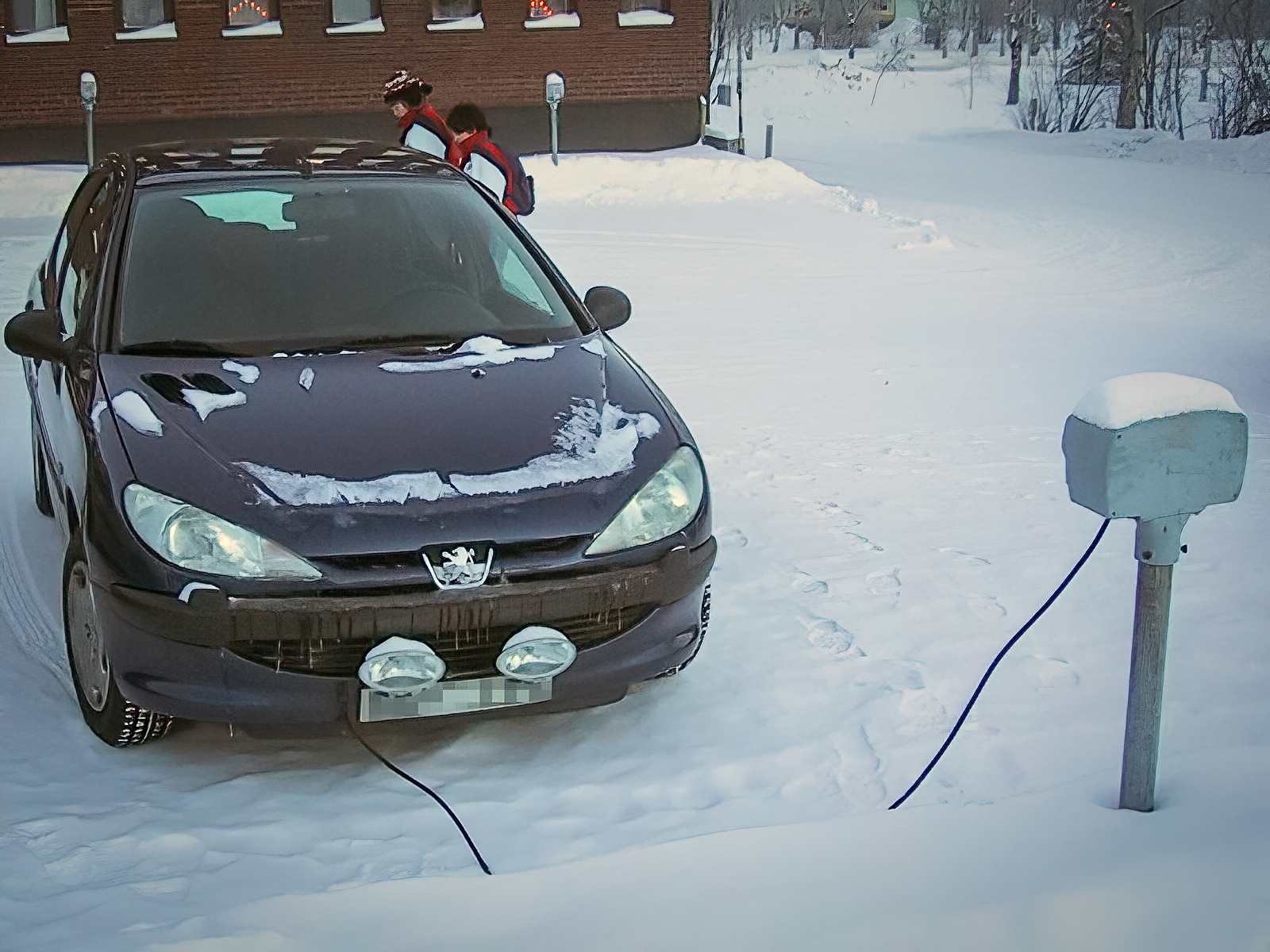
And sub-zero Fahrenheit temperatures are pretty common in the winter across the Northeast, especially at night. "Normal" driving conditions extend way below just 20°F.