People driving "Brodozers(tm)" can't see shit near the vehicle due to both the big hood and being super high up, while the gigantic, flat front grille kills people rather than crumpling them over the hood.
And while I call them "Brodozers" to be derogatory, a significant number of really tiny females are driving them as well in the name of "safety". And they REALLY can't see anything over the hood.
The combination of gigantic blind spots and complete energy transfer is good at killing unarmored people.
Images like that evoke feelings but you have to evaluate each on what would have occurred with other vehicles - even a bike hitting a child at speed is likely to be tragic.
No, because we're talking about the physical laws of nature here. A vehicle of that size hitting a child even at a low speed is going to impart much more force than a bike hitting a child at even high speeds. And that's before you get into the other physical design issues of modern cars pulling people under the vehicle in collisions.
Sure - but the point is everything is tradeoffs and we're working on what tradeoffs to focus on. A train hitting someone imparts way more force than a bike, but that doesn't necessarily mean we ban all trains.
And if the incidents of vehicle/pedestrian collisions are directly attributable to reduced visibility, then they should be resolved (the "school bus arm" in North America). But if the collisions would have occurred even with a perfect visibility bike, then changing the vehicles won't solve the desired issue.
For example, there is no way to have any vehicle traveling safely through a school yard at 70 miles per hour; no change to the vehicle makes that work. You have to separate or reduce speeds to crawling.
> Sure - but the point is everything is tradeoffs and we're working on what tradeoffs to focus on. A train hitting someone imparts way more force than a bike, but that doesn't necessarily mean we ban all trains.
No one is advocating for this.
> And if the incidents of vehicle/pedestrian collisions are directly attributable to reduced visibility, then they should be resolved (the "school bus arm" in North America). But if the collisions would have occurred even with a perfect visibility bike, then changing the vehicles won't solve the desired issue.
Which is exactly what you were responding to: a massive vehicle with low to no visibility of pedestrians in front of it.
> For example, there is no way to have any vehicle traveling safely through a school yard at 70 miles per hour; no change to the vehicle makes that work. You have to separate or reduce speeds to crawling.
This is false. Smaller, older vehicles were designed with exactly these issues in mind. That's why pedestrians would be lifted over and on top of the hood, which would reduce the total surface area of impact and prevent pedestrians from being pulled under the vehicle (which is drastically worse). And even worse, some designs of cars will outright shear pedestrians when they hit them at high speeds.


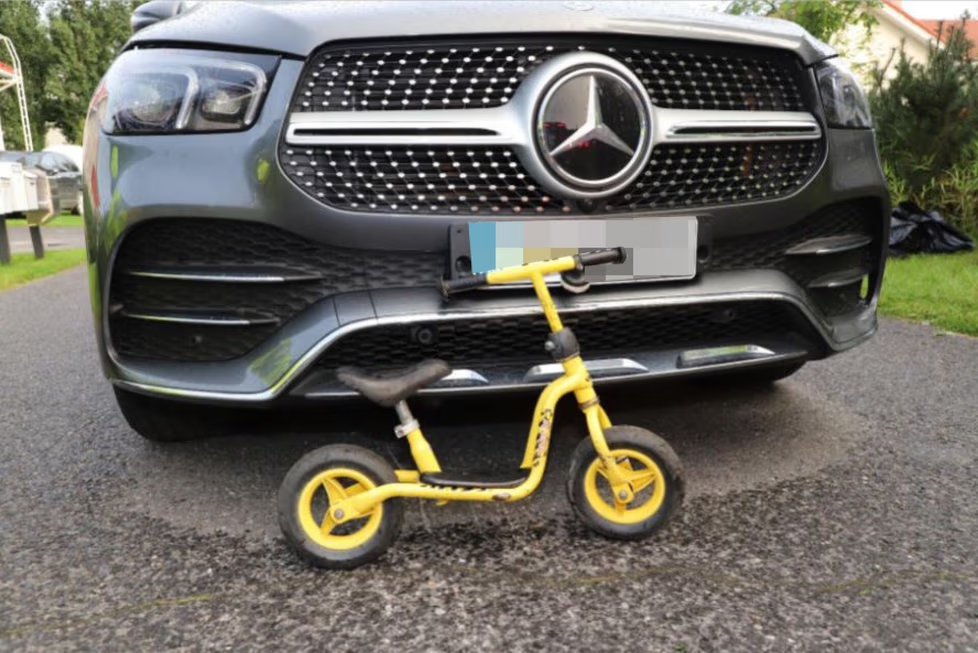
And while I call them "Brodozers" to be derogatory, a significant number of really tiny females are driving them as well in the name of "safety". And they REALLY can't see anything over the hood.
The combination of gigantic blind spots and complete energy transfer is good at killing unarmored people.