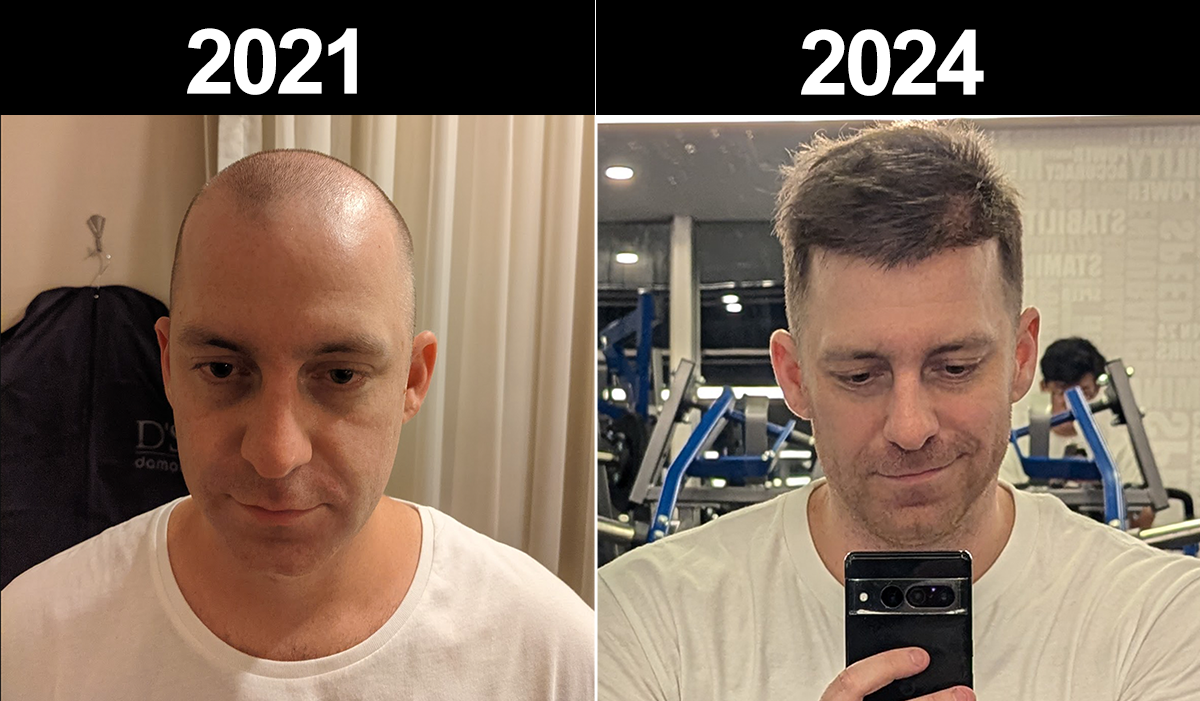
I think it's a bit similar to the deaf community hating on hearing aids or bald people hating on hair transplants. Psychologically, it's challenging to accept certain conditions, so our brains create rationalizations as a defense mechanism. Similarly, with death, we have no option but to accept it (at least for now), and so we develop rationalizations to convince ourselves that it's actually desirable.
The modern technological world has a certain approach to the individual Self and its experience of the world - it ought to be focused on almost to the exclusion of anything else. Nothing else ultimately matters, as long as your personal life experience continues - is what this philosophy ultimates boils down to.
Other people, in other places, value different things. Merely existing as long as possible is not their primary goal. And in fact, the lack of such ways to “use” one’s life and death in a meaningful way other than simply existing is one major cause of the modern malaise affecting many developed nations. To live and die for a purpose other than extending your own personal experience is something many people hunger for in current times.
The desire for immortality goes back at least as far as the epic of Gilgamesh. Medieval alchemists tried to achieve it. In China, Daoists attempted to dramatically lengthen their lives by various esoteric means. Tibetan Buddhism also has practices along these lines.
Conversely, in today's world plenty of people would like to lengthen their lives, without that being their primary goal. Just because someone wants to live longer does not mean that it's the only thing they care about; it's even possible that some larger purpose is a major reason they want to live longer.
From a Buddhist perspective, "if you are a practitioner of the Dharma, someone who is putting the teachings into practice, there is great significance to doing long-life practice."
I agree but I am responding mostly to the parent comment, which suggests that not trying to live as long as possible is some sort of disorder or disability.
That is not what they are suggesting though. They are simply making an analogy to a very real phenomenon in the deaf community. That they are deaf or are disabled is incidental, it could be any sort of community where they make rationalizations and then hate those who shatter their beliefs.
Dont forget blind people "hating" on bionic eyes and similar nonesense. And no, you haven't understood the underlying issue at all. All you can do is claim a minority group isn't quite in their right mind, thats pretty sad to read. Maybe you can read up on Ableism, but thats not the whole story. Tech based implants are very poor quality-wise. Bionic eyes have a few hundred pixels across, and hearing implants sound quite harsh and unnatural. What those minority groups are "hating" on (what a strange way to put it) is them being forced into this, without seeing a lot of gain. I am blind 45 years now. If someone would force me into a bionic eye, I would need the next 10 to 20 years at least to learn basic reading. I'd have to start at the very basics, and its likely too late for me to adapt to the visual world. My way of dealing with things, as a native blind man, is superior to every technology you undisabled people can give me. And if I decline, you say I am hating on technology. This is soooooooo fucked up, you have no idea.
You misunderstood my point. I was doing an analogy between three cases (deafness, baldness and death) where a real solution does not exist or if it exists, it is imperfect or not available to all. For example, hearing implants aren't a perfect solution and won't help much in cases of extreme hearing loss. I imagine they're also a bit inconvenient. Similarly for baldness, hair transplants aren't always an option due to cost or insufficient quantity of hair in the donor area.
So what happens is that those who aren't eligible for a solution often tell themselves that a hypothetical solution isn't even desirable at all, as a way to cope. This is where I was making the analogy with people praising death in these threads. My contention is that they're just rationalizing to deal with the fact that death is indeed inevitable, for now.
By "hate" what I really meant was that a subset of those who aren't eligible for a solution will "hate" those who are, because they are a reminder that their situation isn't actually desirable. I really should have wrote "deaf community hating on people with hearing aids or bald people hating on people with hair transplants."
In your case, it seems you acknowledge that an actual cure would be nice, but such a cure doesn't exist right now. I feel similarly towards death. I'm not about to do monthly "young blood transfusions" to gain a year or two of life but I acknowledge that a real cure would be nice.
PS: I absolutely meant no disrespect and understand that it's perfectly possible to live a good life as blind or deaf person.
The primary reason the Deaf community "hates on hearing aids" is mostly because it comes at the expense of sign language.
If you're deaf and live in a Deaf community (i.e. with sign language), you will function normally in virtually every way. If you're deaf and live in a hearing community with hearing aids, you'll be forever impaired. With hearing aids and/or CI you will still be hard of hearing, you will still struggle with group conversations, at the beach or in a swimming pool, in noisy environments and so on.
Secondly, the Deaf community strongly objects to the notion that lack of hearing is a handicap and instead consider it a cultural difference. Somehow, when (we) hearing people think of the deaf we consider it a disability to e.g. have to use a vibrating wakeup alarm, but we don't consider our own inability to fall asleep in a noisy place a disability.
(For reference, deaf=impaired hearing, Deaf=sign language user)
My comparison was aimed at your second point. Deaf people not considering it as a disability is a coping mechanism. If there was a cure for deafness, nearly all deaf people would take it and conversely, almost no one intentionally seeks to become deaf (of course, there are exceptions).
It is not as simple as you're suggesting here. Deaf people have their own culture and language, and while it is built on a lack of something considered normal by others, that doesn't mean it's inherently just a disability that would / should be eliminated unquestionably.
Consider a similar example: if immigrant parents could instantly make their children forget their native languages and learn English fluently, many would choose to do so – as it would give the children more economic/social advantages. And yet I don't think we really want to say that not doing that, and instead retaining the native language and culture, would be a coping mechanism.
Culture and disability is a really complicated thing and deaf culture specifically should not be brushed away as just a coping mechanism.
(Side note: I am deaf in one ear and agree with the commenter above that it's actually a benefit for going to sleep, but of course this isn't considered a benefit by society at large.)
Thank you for this explanation. This is really interesting. I'm not deaf, so this is very difficult for me to understand, but that doesn't mean it's not important.
I'm trying to find something to compare to, but not sure if I'm getting this right.
I can't sense radio waves in the 87-110Mhz range, but let's imagine that most people can. This means that they can hear all the FM radios all the time.
Certainly, this would be very annoying, especially if you are not able to block it out. In this sense, I would be better off - one less annoying thing to deal with.
Of course, everyone else would be able to be up to date with all the news instantly, as they would always hear them from the radio. And, assuming you also had the ability to "tune the station" that you can hear, you would be able to listen to music or interesting shows all the time.
This would be good and fun.
Would I miss the ability that everyone else has? This is a very interesting question and I don't know the answer.
But, I would think that if someone gave me a wearable FM radio that I could turn on/off at will, I would think that I certainly would accept that.
Again, I'm sorry if this is not a good analogy and as all analogies this doesn't really capture all the nuances of course, but would this be similar at least in theory?
> I would think that if someone gave me a wearable FM radio that I could turn on/off at will, I would think that I certainly would accept that.
In this way it is an apt analogy, since many deaf get CI. The implant process removes any residual hearing, so the moment they turn it off everything is completely quiet. It's nowhere near a fully qualified hearing, however, so it's useful as a supplement to sign language, not as a replacement.
I don't know of a good analogy for it, but sign language obviously also carries with it some advantages and disadvantages that vocal communication does not. You need a flashlight to talk in darkness, but you can talk (sign) as much as you want in a library, through a soundprood window or in a noisy environment.
The conversation dynamics are also completely different. Often everyone will sit in a big circle with multiple conversations going on at once, and you can "opt in" to the one you want by watching whoever is speaking.
Yeah, it's complicated for sure. I think this is probably a good example, except that deaf people functionally get along fine in the world, for the most part. At least nowadays. Whereas in your example, it seems like the people without the radio ability are just inherently behind everyone else in terms of information access. And in your example world, the people without the radio ability would need to have their own unique subculture and language where they can communicate and relate to each other in ways inaccessible to the radio masses.
Personally, I do think the sense of hearing is important enough to be worth acquiring. But the underlying point, I think, is that deaf culture is not just a rationalization or coping mechanism. It's a fully-fledged culture. And while gaining the sense of hearing is probably "worth it" and a net gain, you're also losing something in the process.
To use myself as an example (although I'm not completely deaf) – while I wouldn't mind having my deaf ear fixed, being half-deaf has also shaped my personality and sense of self. So I wouldn't want to just label it as an unimportant coping mechanism, as it's much more fundamental than that – even if I ultimately did want to fix it. I imagine deaf people getting cochlear implants feel somewhat similar.
Evaluating it purely as a broken thing that is now fixed doesn't capture that aspect. And it's worth reflecting on how this idea that "useful = always better" is just a default assumption.
The language learning example I used is a good one in this instance: while it's nice that people can communicate more by learning English, it's also a process of destruction as local languages and cultures are eliminated and assimilated into a global English-language culture. The assumption that vocal communication + hearing is superior to sign language is a similar situation.
> Deaf people not considering it as a disability is a coping mechanism.
No, it's not, and this claim just shows your ignorance and prejudice.
> If there was a cure for deafness, nearly all deaf people would take it
This is pure conjecture, and I frankly think you are wrong.
> almost no one intentionally seeks to become deaf
Do you genuinely not understand that this has more to do with culture, language, habits and the familiar, not to mention ignorance of what it means to be deaf/Deaf, than an accurate judgment of the qualities of hearing vs. silence?