> At the British University of Warwick, an extensive study was conducted in 2017. It established that beautiful urban architecture has the same positive impact on our physical and mental health as green parks.
> Here, we explore whether ratings of over 200 000 images of Great Britain from the online game Scenic-Or-Not, combined with hundreds of image features extracted using the Places Convolutional Neural Network, might help us understand what beautiful outdoor spaces are composed of. [...] We also find that a neural network can be trained to automatically identify scenic places, and that this network highlights both natural and built locations. Our findings demonstrate how online data combined with neural networks can provide a deeper understanding of what environments we might find beautiful
Yeah it "established" nothing of that sort. This whole article is built on some extremely weak research.
I think the blog post author just made a mistake and meant to cite [1]. That paper actually attempts to correlate "scenic-ness" and health. But it also says that "[v]isual inspection of photographs with the highest rating for scenicness reveals that they tend to contain landscapes with broad open areas and essentially no manmade structure", which is a pretty different claim than "beautiful urban architecture has the same positive impact on our physical and mental health as green parks" (the paper doesn't mention architecture at all).
The whole post smells strongly of "I like a certain thing and will point to any flimsy published evidence in support of it".
> On the other hand, ugly architecture could have direct negative consequences. Arnold J. Wilkins, Professor of Psychology at the University of Essex, has found that looking at certain urban landscapes may actually give you a headache and cause migraines.
> There are two ways of measuring efficiency; the first is to build simple computer models of the way that nerve cells compute what we see.
> For our own research, Olivier and I designed a computer program that measures how well images adhere to the rule of nature. After running the program, we found that departure from the rule of nature predicts how uncomfortable people find it to look at any given image – whether it’s an image of a building or a work of art.
And then later:
> That is, our brains use more oxygen when we look at scenes which depart from the rule. Since headaches tend to be associated with excess oxygen usage, this may explain why some designs give us headaches.
OK so basically making up shit that the author likes and occasionally linking to irrelevant (and bogus) study in the hope nobody will bother reading it.
Right, and a lot of bad urban design, is "good" architecture.
---
It reminds me of what urbanist Jan Gehl calls 'birdshit architecture', which is stuff that looks good from a bird's eye view or a rendering but is totally impractical in practice. Prime examples include gigantic plazas or lawns without any sort of trees or seating, so you can't really stay in them because they're too windy and the sun is overbearing, they're totally empty (and probably unsafe) as a result, and they just extend your walking distances.
Bonus points if the paths are totally fenced in because they're not where people actually want to walk and they end up trampling the lawn full of desire paths.
I forget what it's called, but something like "airplane view" architecture is also bad urban design. It's when centralized planners have lofty goals and design huge neighborhoods and plazas that look good from the air. There are towers, gigantic lawns, and a projection of power rather than chaos. There are various Latin American cities guilty of this. I'm struggling to recall the words and examples, so please help me out!
I believe we are talking about the exact same thing; “bird shit” is a play on words of “bird’s eye view”, meant to convey the planner’s/architect’s lack of thought or contempt of the actual people on the ground.
Yeah, I'd much rather live in a walkable place with unpolluted air with a ton of ugly buildings, than a place with gorgeous buildings that needs ugly, polluting vehicles to get everywhere.
But… those things are inversely correlated? Walkable cities tend to be dramatically more beautiful and ugly gigantic POS buildings are the ones surrounded by acres of parking lot and highway…?
I agree I’d take your tradeoff if presented but I think the real world tradeoff is even sillier and more obvious than the one you propose.
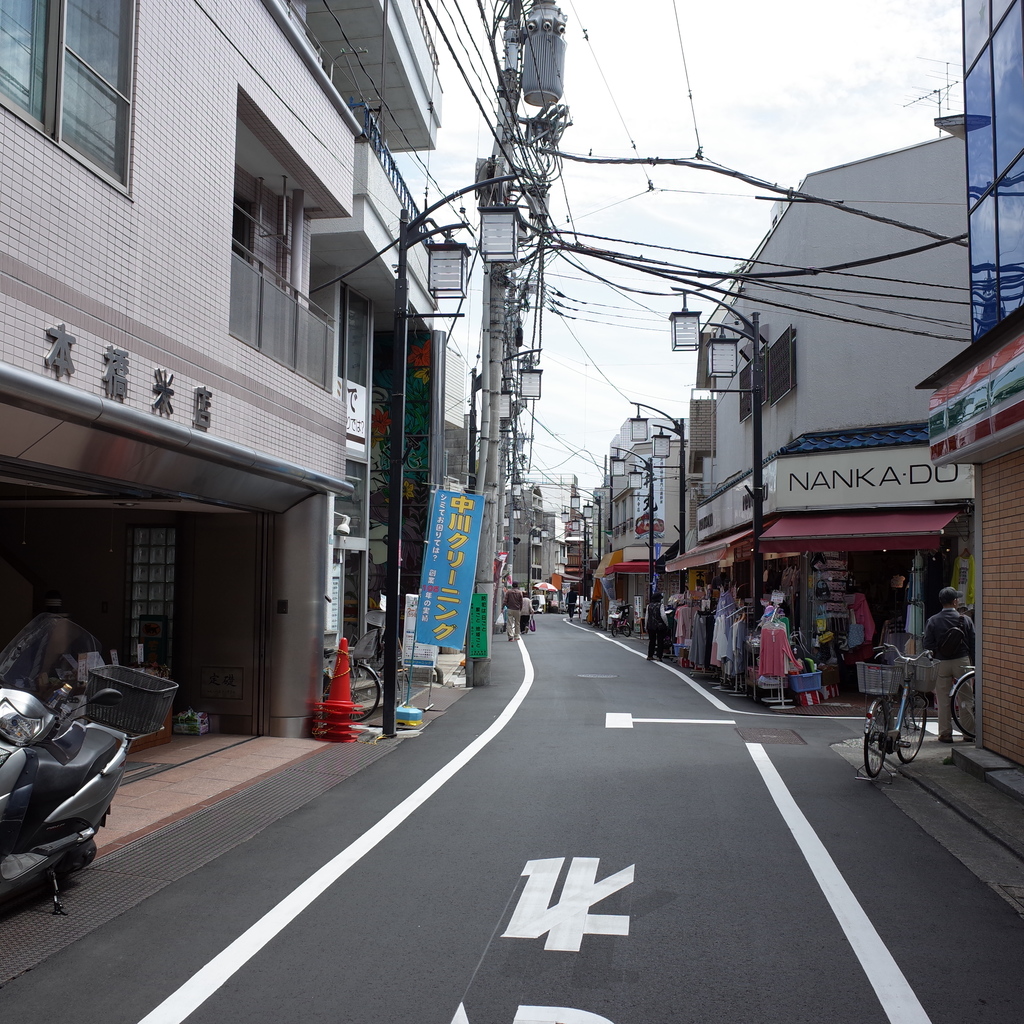
I don’t agree with the article and its definitions, it seems poorly sourced and to be advocating for English towns as the apex of civilization. That said, the photos provided and the descriptions focus more on the style of the buildings than urban form: “monotonous straight lines of modernist architecture” vs “historical architecture such as ‘Church’, ‘Castle’, ‘Tower’ and ‘Cottage’ made places look more attractive and get better ratings for their beauty.”
A "walkable" city has everything you need within walking distance. A "beautiful" city is devoid of modernist architectural monstrosities. A "lively" city is full of people.
I would argue there is no strong correlation here. A city can be walkable and ugly, lively and unwalkable, beautiful and unwalkable, beautiful but not lively...
When most people say walkable they mean safe to walk in. The trains don’t make it unsafe, and other than commuting you can do a fair amount using just walking or a bike because of the preponderance of small businesses that are safe to walk to. And you walk to and from the train station.
This is mostly meant to contrast to non-walkable spaces, where to walk to a store in an American suburb often means walking in a 3 ft wide path next to 55mph traffic and the crosswalks for said road are a half mile apart, if you’re lucky. The safe paths are circuitous if they exist and the pedestrian signals, if you can get a green one, may take minutes to cycle to and give you thirty seconds to cross 6+ lanes.
I think most people mean walkable to be more than maybe a half dozen square blocks of restaurants and small stores that aren’t really connected to anything else though. Bunch of examples in Silicon Valley.
Sure, bigger than a mall. The main point is that transit enhances walkability, they don't really compete in the absence of other factors (like transit in a highway median)
A lot of former communist block cities have places that are just giant ugly concrete block buildings, with beautiful walkable parks and 15 min city accessibility.
I second that. I grew up in a commie block that was just painful to look at, but within 10min walking distance with only streets without through-traffic(because it was either impossible or just pointless) there was:
A school, playground, clinic, culture centre(which doubled as a movie theater and a regular theater), supermarket(s), pharmacy a dentist an indoor pool (still active, even though it's tiny) and several other things I won't bother mentioning because the list is already quite long.
But to me the most important part of that experience was that there was space between the buildings - green space at that - and the buildings themselves had mostly a total of four(including ground) floors, with a few higher units here and there.
The issue is that many opponents or people who are on the fence will think of higher density as concrete jungles or commie blocks. You also need to sell them an aesthetically pleasing vision. People are emotionally first and will then find logic to justify the emotions
I believe a lot of the hatred of 5-over-1s is because in a lot of American towns and cities, that 20th century architecture they would've contrasted against is just gone. When everything is surrounded by post-1970s functional modernist architecture, minimalist modernism just feels like it's simplifying (often seen as cost reducing) things even further. Plus a lot of the materials they use make it feel even cheaper. Featureless fiberglass or plastic panels haphazardly jutting out of grey painted stucco and concrete with no sense of visual balance exudes "budget" in the same way that buying counterfeit "ADJDAS" pants does.
I think cars, and almost everything related to them, are waaaay worse than ugly buildings for our physical and mental health but I am afraid I'll die alone on this hill. The vast majority would kill for a parking spot, let alone giving up their smelly, loud chunk of metal
I don't think you are alone, or at the very least I will be buried on the hill nearby. But those with car-Stockholm-syndrome are still the politically dominant force (in the US at least).
I think there's a pretty large middle ground of society that could be reached, iff a credible and full plan for migrating from one modality to the other were presented. I have probably 30 years of ambulatory life ahead of me. My kids have twice that or a little more.
A plan that makes life worse for the next 20 or 50 years until we get to the other side where it's better is a non-starter. A vague, hand-wavy plan of "eliminate stroads; reduce parking" and no more steps is a non-starter.
I'm not sure if it's practically possible to switch an existing city from a car-centric mode to a pedestrian-centric mode inside of 10 years, but if we could evaluate and debate a credible plan to do that, we might make more progress than is currently happening.
Seattle took relatively minor steps that have had a huge impact on building more housing:
- eliminate parking requirements. Developers are still allowed to build as much parking as they want, but they are no longer required to. The impact on existing residents can be blunted by making the street parking timed and zoned unless you have an exemption permit, which is granted to all existing residents and doesn’t expire, but decreased over time to new ones.
- mandate separating parking from rent. Renters only pay for parking if they use it. In practice, people will debate if having a car is worth it every time they change a lease.
- employers over 100 employees are required to have commute management plans, and are incentivized/required to achieve lower single-person car commutes. Notably, how they do it doesn’t really matter, but it can help mitigate a large portion of car dependency which is the suburbanization of jobs into areas only accessible by car.
The last one I actually think is the most important, and it’s also the easiest because it doesn’t impact residents and if anything mitigates the most common complaints about new jobs.
And there are going to be compromises in any case. Lots of residents will want to own cars to go to surrounding areas not all of which are ever going to be easily reachable by public transit and vice versa.
Brutalism was designed to expose the functionality of the way everything was built. We'd been using Portland cement for a few decades at that point, but we always hid it behind facades meant to harken back to traditional architectural functions. Covering Portland cement in brickwork or arranged timber was a common way of doing that. By exposing the underlying core of the building Brutalism was meant to display that transparency would only be allowed so far as to show what a monolith the power structure who used it actually was. Brutalist architecture has few glass openings, vertically massive internal atriums, large thick columns, interior or exterior walls rising at harsh unnatural angles, and consecutive terracing without bracing, all unachievable with traditional building methods or in then-contemporary Mid-Century Modernist architecture. All of this was only possible due to the strong central structure, representative of the aforementioned "monolith" of power.
Not all brutalism is bad. But none of it is beautiful and most of it is so ugly it’s an assault on the soul. It can relatively easily be striking or interesting to look at but it’s a testament to how difficult or expensive it is to make concrete an attractive colour that no one ever does it.
There are a couple of brutalist buildings in Dublin that look totally out if place but also seem to fit in as part of the city now. I love them but I can see why other people might not.
Modernism. Infatuation with the transformative power of high technology (both the physical and bureaucratic kind). The preceding bourgeois order was held responsible for class extortion (from the perspective of the emancipating proles) and synonymous with a small minded pettiness (from the perspective of a libertarian youth). Modernism was an iconoclastic project, a submission to an engineering fetish.
Probably Ernő Goldfinger is the most obvious person to blame, along with the smithsons, Basil Spence and Leslie Martin.
People think of brutalism as some weird 'means to an end' from the communist countries, but brutalism was an explict choice in the UK that the soviets copied.
The Architectural Uprising is a global movement that includes people of all backgrounds, ages, genders, and political views. All united by a passion for beautiful architecture and an aesthetically pleasing living environment."
Given this, I'd treat this site, not just the article, with several metric tonnes of salt. It's like, just their opinion, man, to (mis)quote the dude...
It's a bad and lazy question, but I'll respond nonetheless.
"All united by a passion for beautiful architecture and an aesthetically pleasing living environment." is entirely subjective. Presenting opinions on what constitutes 'aesthetically pleasing' as fact is neither productive nor useful. Trying to link this with empirical research so cumbersomely is foolhardy, patronising to the reader and not compelling.
Mildly related, I remember watching an anime some time ago where the plot was that hostile architecture made its residents go crazy and start murdering each other. I sent it to my architect sister and we had a good chuckle.
I am leading the Norwegian Architectural Uprising. It is hard to proof anything in environmental psychology. I just want people to be more critical to what property developers and the state is building.
Good point. There is no scientifically proven arguments for building modernist architecture. It is really easy to find a lot fallacy in arguments modernist architecture. For instance is it common argue that it should be easy for people in the future to be able to see what age a building has been built. Th guilt by association fallacy is also very commonly used in Europe. Hitler's architect liked columns and pilasters, if you like columns and pilaster, then you must sympathize with Hitler.
Christopher Alexander "Nature of Order", "Pattern Language", "Notes on the Synthesis of Form"
It's impossible to summarize his work (the above are his most famous books, in reverse chronological order) but the essence of his idea is that space itself is the "luminous ground of being" and our architecture can conduce or block the essential selfness...
I'm doing a terrible job of describing it... sorry.


The linked study: https://royalsocietypublishing.org/doi/10.1098/rsos.170170
> Here, we explore whether ratings of over 200 000 images of Great Britain from the online game Scenic-Or-Not, combined with hundreds of image features extracted using the Places Convolutional Neural Network, might help us understand what beautiful outdoor spaces are composed of. [...] We also find that a neural network can be trained to automatically identify scenic places, and that this network highlights both natural and built locations. Our findings demonstrate how online data combined with neural networks can provide a deeper understanding of what environments we might find beautiful
Yeah it "established" nothing of that sort. This whole article is built on some extremely weak research.