I think this misses the mark on the fact that we now have an aging population in the USA, and an aging population has different needs when it comes to raising families that the urban lifestyle simply hasn't evolved fast enough to support. Urban areas in the USA like NYC are still the playground of the young and unattached. I think European and Asian cities have done a much better job at this.
With two kids aged 10 and 12, I need access to a sports park for practices and games. I need space to park a car and roads wide enough to support them because I have a lot of things to haul. I need good public schools that don't break the bank to provide my kids the support and community they need.
Everything smooth and convenient about living as a single person in an urban area quickly turns into living life on Hard Mode for families. As our working adult population ages, cities need to evolve to meet these needs, or expect people to move out as they outgrow the lifestyle.
I'm sure there are folks who live in places like SF with families and ride around in heavy urban traffic with 2 kids on an electric cargo bike, but that's just not for many of us. We're happier and way more stress free in the suburbs or even in the rural areas working remotely.
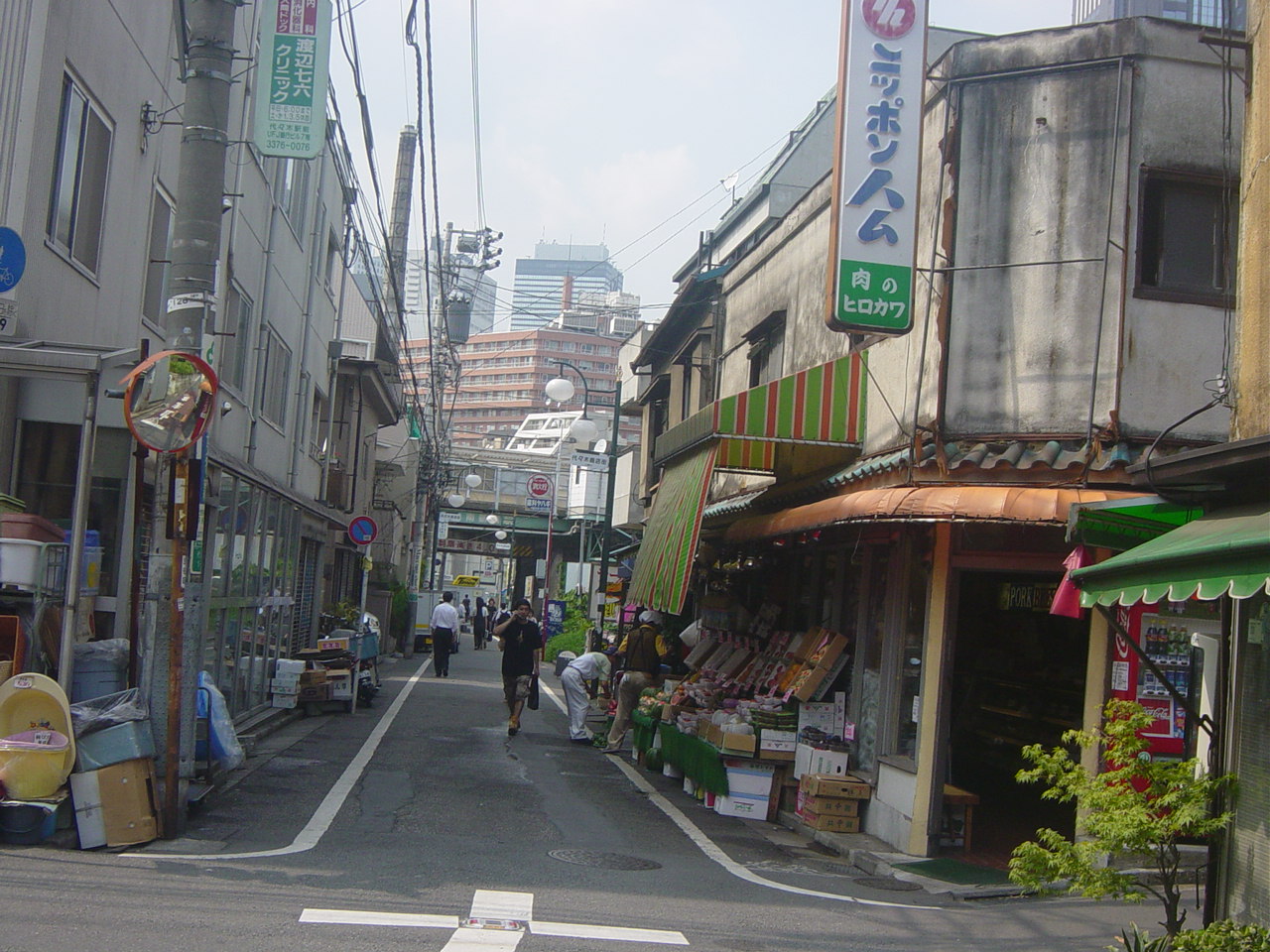
As you can see, you don't need "wide roads". Quite the opposite, in fact. When safe cycling infrastructure is present, traffic shifts to cycling, because it's faster, cheaper and more pleasant. This makes roads less congested for your car trips. Widening roads does not have this effect, as additional lanes simply fill up with more traffic if there is no faster, safe alternative. Also, wide lanes encourage high speeds, and you don't want that around your kids.
I'd say this is cultural and you won't ever get the same outcome in the USA(or Australia where I am from). Car drivers think they own the road. In Australia there is outright hostility towards cyclists on the road from the proudly ignorant.
A few towns in my area have been experimenting with "road diets" -- taking streets originally designed with only car traffic in mind, and reconfiguring them (without building new infrastructure) to reduce the primacy of cars and make other modes of transport more appealing -- with varying degrees of success. In one case, there was an observed impact of trip times _decreasing_ despite losing a lane of traffic in each direction -- the change in configuration reduced congestion at intersections.
interesting. While I'm open minded to this, I have to say I am starting from a place of skepticism. I've come to view bike lanes painted on the road as a dangerous half-measure in most places. Studies show that Women do not take advantage of these types of cycle lanes at all, and many people view them as simply too dangerous to use. still interesting that there can be benefits to car traffic in the right conditions!
The biggest impact were cases where bike lanes were protected -- that is, the view of the road from the outside-in was pedestrian sidewalk, bike lane, car parking, and then lanes of traffic, so cyclists wouldn't have to worry about double-parked cars forcing them into traffic or inattentive drivers drifting into the bike lane. That said, such a change carries its own risks (cyclists need to be aware of passengers exiting cars and vice-versa), and generally requires more thoughtful design of the intersection (since cyclists turning left will have a much longer path to follow).
Segregated infrastructure is missing the point. Putting liability on drivers where it belongs, and giving priority on the shared roads to vulnerable road users, is what makes it work, in the Netherlands or in Tokyo.
> I need space to park a car and roads wide enough to support them because I have a lot of things to haul.
> I'm sure there are folks who live in places like SF with families and ride around in heavy urban traffic with 2 kids on an electric cargo bike, but that's just not for many of us.
Maybe riding a cargo bike with your kids on the back is unpleasant because the suburban lifestyle you are talking about has bled into American urban planning. If American cities were designed around people instead of cars many of the problems with urban life you are talking about would be moot.
I point this out because you thesis seems to be that getting older and having kids is orthogonal to urban life. However, historically, and in many cities outside of north America, this is not the case. If you look at the Netherlands for example, where a deliberate effort to plan cities around people has been ongoing for 50 years, many people don't own cars, their kids bike to school and use public spaces for recreation, and they can pickup furniture from Ikea on their cargo bikes while never touching a road built for cars.
Another thing to keep in mind is that europe in general and the netherlands in particular has a far more mild climate than the east coast of the united states.
As Douglas Adams said about NYC.
"In the summer it's too darn hot. It's one thing to be the sort of life form that thrives on heat and finds, as the Frastrans do, that the temperature range between 40,000 and 40,004 is very equable, but it's quite another to be the sort of animal that has to wrap itself up in lots of other animals at one point in your planet's orbit, and then find, half an orbit later, that your skin's bubbling."
Infrastructure is almost everything. Fully separated bike roads are needed for people to bike comfortably.
Highways are built with “levels of service.” There are no level of service standards for pedestrians: sidewalk availability, trees, protection from car traffic, directness of routes, etc. Bike lanes often don’t exist or are blocked by parked cars or trash. This would never be accepted for a road.
Yeah I saw that, though I found it confusing considering the complaints op had with American cities later in the post, which I was responding to.
Asian and European cities did not make themselves more hospitable to families by adding wider roads and providing parking spaces for cars like op was talking about, they did it by doing the opposite, which is what I was commenting on.
An aging population means more 85 year olds who are faced with the decision to keep driving when it’s no longer safe or to become an non-driver in a car dependent area, losing independent access to basic needs and friends. American cities have been underinvested in due to the legacy of institutional racism (redlining). Mortgages and highways were subsidized by the government and cities were left to rot. In many European countries the wealthy live in the city center and the poor live on the outskirts. Ironically when wealthier demographics move back within city limits it’s criticized as “gentrification.”
So what about the population aging—there will always be people in their 20s and 30s and older single people too. Cities will still appeal to them. The point of the op is now people have a choice of which city to live in. Lots of folks will choose NYC and commuting because that’s the lifestyle they want. Lots of others will choose to live in the suburbs and have kids. The thing now is that your lifestyle doesn’t have to correspond directly to your job.
I have to assume at least a few of those folks will be New Yorkers!
For what it's worth, though ... I'm not sure Google buying a building it already leases means anything other than perhaps they are bullish NYC real estate?
There's also quite a lot of old New Yorkers still resident there, though.
Pluses of living in New York include not needing to drive, most things being close by, and generally more widespread things like elevators. Old people can become less able to drive cars over time, or climb the stairs in a suburban home, or carry an SUV's worth of groceries.
Listen, this is going to be a very rude-sounding comment, so feel free to not read, but:
>With two kids aged 10 and 12, I need access to a sports park for practices and games.
[0] Park access is WAY higher in US urban areas vs. the suburbs. I think having a car and driving skews your view of this.
>I need space to park a car and roads wide enough to support them because I have a lot of things to haul.
Again, I think you just like driving.
>I'm sure there are folks who live in places like SF with families and ride around in heavy urban traffic with 2 kids on an electric cargo bike, but that's just not for many of us. We're happier and way more stress free in the suburbs or even in the rural areas working remotely.
Yeah, you just like driving. Which is fine, but don't shit on our cities because of it. It's the driving that's the PROBLEM.
Is there a chance you're misreading sports park to be a more general park, versus what the OP is referring to such as a facility with 10 soccer fields or baseball diamonds?
Check out a satellite photo of central park! So many baseball fields. I'm in a small city (denver) and have tons of 'sports' specific fields within walking distance.
No. That’s just not how the concept of density works.
For example, A 5 mile radius city has x baseball diamonds in it. That’s x per every 78.5 square miles.
Let’s say the suburbs of that city are a ring of width 25 miles with y baseball diamonds in it. That makes the baseball diamond density of the suburbs y per every 1885 square miles.
I’ll spare you the math x=24y give or take.
Then I encourage you to go to google maps and look at America’s most notoriously crowded cities like nyc, sf, Boston, Chicago. There are dozens if not hundreds of baseball fields in city limits. Central park’s 26 fields alone would need to be offset by 624 in the suburbs to achieve equal density.
The “problem” is that most of those diamonds are difficult to drive to and park at, which is why OP considers them non-existent.
I think a lot of people confuse "need to" with "like to" and assume the way they live is the only possible way. People are surprisingly adaptable to many life conditions and its quite easy to get away with not using a car. With the money you save not driving, you can pay for delivery of all that stuff you would have moved yourself and still come out on top.
So from a city dweller perspective - it sounds like you actually have it on "hard mode" in comparison. That is, needing to actively take your kids to\from places and activities.
Basically everything that I needed as a kid was in walking distance. So from about the age of 7-8 I rarely needed to rely on my parents for anything, school/sports/friends/etc was all a less than a 30 minute walk away, and in turn, my parents never needed to plan around my schedule.
The caveat is that I didn't grow up in the US, where cities are usually sadly quite pedestrian hostile.
What you want is the manhattan model: a huge park surrounded by extremely high density residential towers. You'd have near-immediate access to needed free outdoor fields.
The manhattan model is so strikingly effective that the rich have basically monopolized it. What needs to happen in many urban areas is to replicate this. Of course that would mean huge numbers of buybacks of individually owned blocks of city, an almost impossibility in US legal system practically speaking, even with eminent domain.
Cities are also a nightmare if you want to get into a lot of hobbies. For example I like building and modifying cars, and you can forget about renting a private garage at a reasonable price in most large cities. The same goes for woodworking, machining, most motorsports, boating, RC airplanes and drones, etc.
I would argue the opposite. Yes, those "space demanding" hobbies are hard to get into. But there's so many other hobbies and interests people have, and having a few million people packed really close really reduces the effort required to have a niche group of hobbyists or find something niche you care about.
In other words. It's much easier to find likeminded people closeby in dense, populated cities.
"Minor repair and maintenance of vehicles and similar equipment shall include brake part replacement, minor tune-up, change of oil and filter, repair of flat tire, lubrication and other similar operations."
"It shall be unlawful for any person to engage in, or permit others to engage in, minor vehicle repair or maintenance under any of the following circumstances:
- Using tools not normally found in a residence;"
In a rural area you buy a cheap building and buy all the tools. In an urban area, for most of these at least, you join a makerspace. Many urban makerspaces have hundreds of thousands of dollars worth of tools.
Only specific hobbies mostly limited to things with large motors. They can be even more accessible for other hobbies. For a very small fee, I can get a pass to use the local makerspace down the street and get access to machinery I would never be able to buy myself. For all of my hobbies they are either the same or easier to do in the city.
Technically, you don't need anything. People evolved living naked outdoors, subsisting on berries.
Drawing the line of what conveniences of modern at "city apartment" but not "suburbs" is extremely arbitrary (I am also guessing you are saying that as a single city-living male, so your view is theoretical and not borne of experience - just a thought.)


With two kids aged 10 and 12, I need access to a sports park for practices and games. I need space to park a car and roads wide enough to support them because I have a lot of things to haul. I need good public schools that don't break the bank to provide my kids the support and community they need.
Everything smooth and convenient about living as a single person in an urban area quickly turns into living life on Hard Mode for families. As our working adult population ages, cities need to evolve to meet these needs, or expect people to move out as they outgrow the lifestyle.
I'm sure there are folks who live in places like SF with families and ride around in heavy urban traffic with 2 kids on an electric cargo bike, but that's just not for many of us. We're happier and way more stress free in the suburbs or even in the rural areas working remotely.