It actually has some nice aspects. The windmill zeppelins are unlikely to work, but the drones and harvest machine hint to some (advanced) mechanization in producing crops, so no unrealistic "we do everything by hand, even when we can only support like 10% of the population this way".
Imagining some serious improvement in battery capacity or drone propulsion tech in the next 20 years does not seem super far fetched, and this video is probably looking more at 100 year span.
Regardless of the actual costs, it's still a waste of energy to keep something hovering in the air when it can be moved over land as well: keeping something floating in the air will always require active power, whereas keeping it on the ground can be done passively (a spring/suspension system).
If we're serious about surviving the next 100 years, frivolous energy expenditure is not the way to go.
The gravity will remain the same in 100 years span so hauling agricultural loads with a drone will require same (rather enormous) energy expense. Since the video shows some tiny-ass wind turbines on generation side this is rather doubtful.
(I do realize that am nitpicking on a marketing video here)
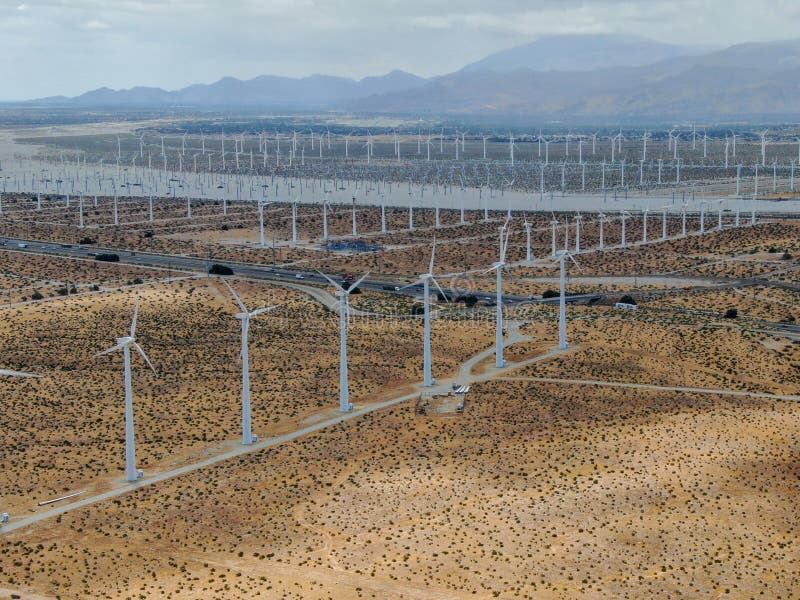
It's an issue with practicality: a smaller wind turbine requires a similar amount of maintenance as a huge one, while the latter converts the energy more efficiently due to greater rotor span.
Then you are not going to build a sole turbine† in a middle of nowhere, because it requires a transformer /DC inverter and a connection to grid. These things are costly and best amortized over large farms. Same goes for maintenance: there's periodic maintenance for various systems and much of the cost is getting specialists and gear there and back.
(†) There are cases when you'd use turbines of grid, like with remote mines/outposts but these are rather special.
Mechanization of agriculture has generally increased yields per unit area. By a lot.
This kind of futurism is solving the problems people thought would be important a few decades back - overpopulation, insufficient food supply, declining energy sources, and nuclear war. Instead, we have population leveling off and declining in many areas, obesity, cheap solar and wind, and no use of nuclear weapons for 75 years. But we have a big problem with climate change, parliamentary democracy keeps deadlocking, and better communications led to each group of nuts finding soulmates and becoming a faction.
Do you have a source for that? My understanding is that irrigation, fertization and genetic improvements are what increased yields per unit area. All mechanization does is reduce labor costs. I would love to know what exactly you think mechanization itself does to improve yields.
Just as an example, here's a video of a field full of rocks in New England being prepped for planting.[1]
Farming is not just planting and harvesting. There's tilling and plowing. Both of which are hard to do well in poor soils and need power to drive steel through soil. Mules and oxen just don't put out that much power. Humans even less.


[1] https://youtu.be/MS-sJQkr0H4