I think a lot of people here have missed the point.
Social media has made it far easier to display your values to other people. Rather than led to diversity, it has massively consolidated the range of "acceptable" opinions to a serious of slogans and "approved" ideas that everyone must agree with.
And btw, I don't think actual values have changed. But what has happened is that we have a very vocal and determined minority that feels the need to judge other people who disagree with them.
That is the point of the Village. Everything you do is controlled by social pressure. To give an example, where I am the police now spend a lot of time on social media prosecuting because it is so easy to build a case. Social media is the avenue for this control.
Just personally, I was never the biggest fan of social media. I thought Facebook was a conspiracy to steal my personal data in 2008. But I did use Twitter to build a business a few years later. I would never do this again. You are just exposed to far too many idiots. This was true back in 2011 when I was using it, it is doubly true today. Social media encourages idiots to have an opinion about things they don't understand.
I'm old enough to remember the Christian conservative mob of the 80's - the Jerry Falwell/Pat Buchanan/Tipper Gore crowd. When they went after you, they were vicious. They were ruthless. They wouldn't stop until they had done everything they could to destroy you. Slowly, people started waking up to the damage they were causing - in particular, sexual deviants (like homosexuals) were at the top of their hit list. Rational people started pushing back. Although it seemed unimaginable in the mid-80's, by the mid-90's, they had been made irrelevant by constant, gentle backpressure.
Now, though, the people that they targeted, instead of rejoicing that their oppressors are finally powerless to harm them, are taking up the mantle of oppressor themselves. There's a sense of "giving them a taste of their own medicine" - and if the actual perpetrators are too hard to find, anybody that reminds them of the perpetrators will do.
History suggests that this, too, will ultimately be defeated, but not after a lot of damage is done to very innocent bystanders.
There is a comical irony to how those roles have flip flopped over these recent decades. Evidence of how we humans do in fact have so much more in common than we give ourselves credit for -- all the while these groups hyper focus only on our differences.
There's an odd theory in history that you become your enemy.
Over time, whatever group or cause you focus on, you demonize it so much, justify fighting them the same way they fight you (or you perceive them to be fighting you), that eventually you're just like your enemy, only with different slogans.
That's why political differences should never be represented as wars, and groups of people with other opinions as enemies. Every effort should be made to personalize people who disagree with you, humanize them, show them kindness they do not deserve (at least in your own mind). It's not for them; it's for you.
Wars are bad not because there's some worthy cause that we confront and eventually defeat it, making the world a better place. Wars are bad because they harm the people fighting them, many times forever.
In the free world, we've realized that peaceful, loving, kind civil disobedience is the only way to change ourselves for the better. This is why. It has nothing to do with how worthy our cause is or what an awful thing we're defeating. It's about the stage we leave for the next generation with their struggles.
I am in the same boat as you. For me, I didn't dislike the people -- I pried myself away from that habit -- and grew to dislike the tactics. Seeing them taken up by the formerly oppressed is very disheartening. That jackboot that has been stomping my face in, I wonder if it fits me?
>That jackboot that has been stomping my face in, I wonder if it fits me?
"If only there were evil people somewhere insidiously committing evil deeds, and it were necessary only to separate them from the rest of us and destroy them. But the line dividing good and evil cuts through the heart of every human being. And who is willing to destroy a piece of his own heart?
During the life of any heart this line keeps changing place; sometimes it is squeezed one way by exuberant evil and sometimes it shifts to allow enough space for good to flourish. One and the same human being is, at various ages, under various circumstances, a totally different human being. At times he is close to being a devil, at times to sainthood. But his name doesn't change, and to that name we ascribe the whole lot, good and evil.
Socrates taught us: "Know thyself."
Confronted by the pit into which we are about to toss those who have done us harm, we halt, stricken dumb: it is after all only because of the way things worked out that they were the executioners and we weren't.
From good to evil is one quaver, says the proverb.
Fascinating myth that we all keep telling each other and ourselves that we fully own all our desires and behaviors. Western secular life continues to betray itself as a species of Christianity. European antiquity had no notion of this kind of counter-social autonomy (and no, that's not what Stoicism is about, much as people are mining it for the same gold they were trying to get out of Buddhism and Taosim in the 80s/90s). Then you read through Levi-Straussian anthropology and realize its probably the case most, if not all, cultures on Earth don't sport this peculiarity. So many moral/ethical concepts in the West, and American culture in particular as it seemingly double-downs on most sof it, are just straight up blind alleys.
In what way is the "counter-social autonomy" that led to religious freedom, democracy, and the end of slavery a blind alley?
The social structures of antiquity (European or otherwise) were horrible. We should be grateful to the people who had the courage to defy those social norms.
It only became obvious to me when I found out about the transgender debate, and that you aren't allowed to discuss reality. Just repeat 'transwomen are women' and anything against that is hate speech. You can't acknowledge they are male. It's insane. So many people are banned from twitter just for saying men can't be women, youtube channels are demontized, and the big Gender Critical sub on reddit was recently banned, for 'hate speech'. Simply because they don't believe transwomen are women.
It's identity politics and this push of feelings and individual's 'truth' over actual reality and data. I've never felt so terrified. You can't talk about reality, about a lot of things. The BLM movement is the same. If the actual facts don't fit the narrative, you can't say them. How can we fix the problems if we can't even acknowledge what is real?
There are much evidences that gender dysphoria may be rooted in biology. Transgender people don't choose to be one, for the fun of being ostracized and higher suicide rate.
BLM: it is proven by various metrics (economic, medical statistics etc.) that the Black Americans are being left behind because of SYSTEMIC racism. A radical change is necessary to address that, and people who want status quo wants 1. to deny that it exists 2. to resist the movement.
The "reality" changes everyday. The "truth" is not constant, because we don't know everything. So "terrified" that you may be wrong just may mean that you are clinging to the old "truth" and unwilling to change.
(Btw? It costs you nothing to acknowledge someone that they exist as they are, whether you believe it or not. They want to be called she/her? Fine. You can still have your opinion and respect someone's existence - it's not either-or.)
It was also proved by Muellers report Russian disinformation propaganda ran the biggest BLM social media pages but there's hardly even Americans talking about it. It's rather interesting from hackers perspective too, I suggest everyone doing it.
The distinction between gender and sex has been discussed in trans communities to death. What's really happening here is that someone claims trans women are men, the trans community responds by saying, "sex and gender are different concepts, we discussed that already". And then the original people just keep repeating, "but they're men, that's biology."
Even from the perspective of just having a productive conversation, if people aren't bringing anything new to the table -- if it's just noise -- then I think that both individuals and communities have the right to filter out that noise. The marketplace of ideas should filter out arguments that can't evolve or respond to new ideas.
If I show up in a science forum and start claiming that evolution is crazy because "no one was alive back then to see it", at first I might get honest responses. But if afterwards I just keep saying the same thing again, eventually the community might decide that it's not their job to get me over that hurdle. And it's fine for them to decide who they want to engage with, there is no Right to Communicate without the Right to Filter[0].
If someone wants to bring a genuinely new argument to the table that doesn't ignore trans responses that have already been given, then maybe there's something to be said there. But I'm honestly really unimpressed with most anti-trans arguments that I hear online, I think most of them add nothing to the conversation at all.
> The distinction between gender and sex has been discussed in trans communities to death.
Is that "enough" though? If one group discusses something and comes to some form of consensus, where's the idea coming from that that consensus must be adopted by everyone else as well?
> where's the idea coming from that that consensus must be adopted by everyone else as well?
Well, for two reasons.
A) the marketplace of ideas is explicitly designed around the concept that some ideas win, at least at a broad cultural level. Free speech advocates aren't trying to build a world where every idea is treated with equal respect everywhere, they're trying to build a process by which, in general, we move closer to truth[0]. That doesn't mean that the ideas can't resurface in the regular marketplace, but it does mean that for ideas to be taken seriously by the broad, regular population, they have to actually convince people.
The anti-trans arguments I see online are mostly just really unconvincing to anyone who's done marginal research on trans communities. I'm not an expert on trans communities, I don't have a lot of diverse friends -- I shouldn't know more about trans arguments than the average TERF does; and yet I regularly find that I do.
To look at it from a broader market perspective, is it a failure of the marketplace that none of the restaurants on my street sell ice cream with ketchup and green beans? Or is it a success of the marketplace? The marketplace demands that you be able to actually sell what you have, you have no moral claim to force the marketplace to provide you with customers.
More importantly,
B) the consensus doesn't need to be adopted by everyone and hasn't been adopted by everyone, but private communities aren't required to engage with ideas that aren't furthering their own conversations/goals. And for better or worse, because some of those private communities are very attractive to the broader public, those communities exercising their Constitutionally protected Freedom of Association means that there are fewer spaces that contrarians can join.
But again, that's kind of how the system is designed to work. It's contradictory to say that in a free market, people shouldn't be able to choose where they shop. It's contradictory to say that in a free society people shouldn't be able to choose who they associate with.
The irony is that it's the far left candidates like Warren[1] who have had by far the most sensible, market-friendly response to the problem of people being deplatformed. If Facebook/Apple is too big, break it up and enforce antitrust. Don't try to nationalize it, or dictate how people can speak, or get rid of fundamental protections like Section 230. Just get rid of the monopolies and let communities compete for members.
Outside of solutions like that, I am very skeptical of any argument that claims to be in support of free speech that doesn't think protesting, boycotting, and public criticism are also speech. A lot of cancel culture falls into those bounds: I see people who are angry about boycotts, public criticism, markets responding to consumer demand, private communities like Twitter choosing who they host. Most of that stuff is free speech.
----
[0]: And there are other goals as well, of course, but that's the main conceit of the "marketplace of ideas" argument.
[1]: Doctorow also has some interesting ideas here about revising the CFAA and breaking down some barriers for building competitors, but that's a separate conversation.
> A) the marketplace of ideas is explicitly designed around the concept that some ideas win, at least at a broad cultural level.
Right, but "this idea won in this local market, therefore it must not be challenged in that global market and doing so is a hate crime" has giant issues.
> B) the consensus doesn't need to be adopted by everyone and hasn't been adopted by everyone, but private communities aren't required to engage with ideas that aren't furthering their own conversations/goals.
But that's not what's happening. If something gets defined as hate speech, it's not a private matter, it's a criminal matter. Once we accept that as a valid process, we're just asking "who has the power to define" and give them a carte blanche for criminal punishment. I find that deeply troubling, and given that definitions, majorities and power has changed, I believe so should everyone, as the weapons they build today might be turned on them tomorrow. A somewhat recent example for that was the introduction of FB's anti-hate-speech rules that suddenly outlawed "men are trash", much to the outrage of those who asked for the rules.
Especially when it's on individual personal feelings and the only question we ask is "how man Twitter followers do you have" ("you have more, the market place of ideas has decided"), we're setting ourselves up for instability where it's best not to talk to anyone you don't 100% trust. I have relatives who lived under the Stasi, and that's pretty much what they described - if you don't know somebody very well, you limit yourself to talking about the weather and parroting the party line.
> A lot of cancel culture falls into those bounds: I see people who are angry about boycotts, public criticism, markets responding to consumer demand, private communities like Twitter choosing who they host.
I think there's a lot to say about what is a private community (and at what size it stops being one) and what they are allowed to do. Discrimination is generally considered bad, but the law enforces protection only for protected groups as it's assumed that everybody else will have no trouble to find a competing business. This cannot be said for the local monopolists on the web.
Personally, I'd prefer to not get into all out war where you get cancelled and ostracized and need to move to some place where "your people" live (by whatever criteria you define that) because the local majority rules absolutely and destroys everything that is unlike them.
That said: if anybody prefers the segregation, I'd love it if they were honest about it and said "I don't want to see that opinion, you must leave". The moralizing and pseudo-science rationalization of it makes everything hazy and dishonest, like an invisible mine-field that we must not acknowledge even exists, much less talk about and say where the mines are buried.
> If something gets defined as hate speech, it's not a private matter, it's a criminal matter.
Wait, what? Hate speech is protected by the 1st Amendment. Nobody's being criminally prosecuted for being anti-trans.
> A somewhat recent example for that was the introduction of FB's anti-hate-speech rules that suddenly outlawed "men are trash", much to the outrage of those who asked for the rules.
Which is not a criminal matter, it's a private community deciding who they want to allow into their own space. Facebook is doing exactly what you want below:
> I'd love it if they were honest about it and said "I don't want to see that opinion, you must leave"
The reason they're saying that is because the anti-trans arguments are generally pretty poorly thought out and unhelpful, but it doesn't really matter why they're saying it. They have the right to say it.
Legally, 1st Amendment protections today are extremely strong, arguably stronger than they have ever been. Culturally, people want control over their own communities and they want the freedom to choose who they associate with. I think that's completely consistent with free speech.
Again, if you think that Facebook is too big and it's a defacto public square, then the solution is to break Facebook up and remove regulations around content scraping and adversarial interoperability that get in the way of competition.
You can't protect free speech by telling people who they are and aren't allowed to criticize and associate with. It's cutting off your own nose to spite your face. I'm not old, but I'm old enough to remember when free speech advocates were against the Fairness Doctrine. What happened to those people?
> Hate speech is protected by the 1st Amendment. Nobody's being criminally prosecuted for being anti-trans.
Check your privilege! You'll be very much criminally prosecuted for hate speech in most (I believe all, but don't know the specifics of each) European countries. The definition of hate speech is similar (and it's a global debate, so they converge), only we do not have a concept of free speech that is similar.
> Facebook is doing exactly what you want below
Absolutely. I gave it as an example that looking to weaponize rules can backfire, as the weapon can be turned against you as well. The more aggressive the weaponization of rules becomes ("I am offended" as a general trigger for suspension would be the equivalent of "free nukes for everyone"), the larger the chance that unintended side-effects materialize ("I wanted to be safe from their attacks, but this also outlaws my attacks").
I'm do agree with you that breaking up the monopolists is the much better way to go. But that seems very unlikely, the utility route is the one that I consider much more probable.
> Check your privilege! You'll be very much criminally prosecuted for hate speech in most (I believe all, but don't know the specifics of each) European countries.
Very fair criticism. I don't think that Europe's restrictions are quite that broad, but there are a few countries with active hate speech laws on the books that are enforced.
That being said, Facebook doesn't really have control over European hate speech laws. This is worth keeping in mind, both Facebook and Twitter are American companies, and if they become utilities, they'll either become utilities under the American rules, or they'll get fractured and have different requirements for European users (see GDPR). I don't see how attacking Facebook/Twitter will change what the government can and can't do.
My (unrealistic) advice would be that if this is something Europe is really concerned about, then it should just adopt the more expansive American system of free speech. I realize that's unlikely to happen, but making a company public and giving the government control over what gets posted on it is a regression in free speech rights in most cases, no matter what country you're situated in.
You're worried about what happens if the government says that disagreement is hate speech. Have you considered the danger in the opposite direction?
What happens if the government says that criticizing a politician for openly bigoted remarks is cancel culture and not allowed, or that boycotting an awful company is illegal? What makes you think your government wouldn't abuse the power to force companies and individuals not to criticize, boycott, or filter objectionable content?
Even if you do live in a country with limited free speech protections, forcing platforms to carry content and forcing consumers not to boycott is counterproductive if you don't trust the government not to charge someone with a hate speech law. If you don't trust your government not to ban speech, you probably shouldn't trust it with compelled speech/association either.
Fragmentation of platforms is an issue, but it's already reality today, any market that is large enough gets to dictate their local rules. I'd prefer if we adopted the US idea of free speech globally (or at least online), but I don't believe it's going to happen.
My main problem with the idea of hate speech is that it hinges on individual judgement and is weaponized to suppress opposing speech. It's vague and in the end is only defined on a case-by-case basis by looking at the majority or the position of powerful institutions, and generally sympathy-based - a terrible foundation to build rules on.
You're certainly right that outlawing cancel culture would get us into trouble as well. We do have far reaching rules for compelled speech & association (not least via taxes that are redistributed), so I'm not sure there's a good reason to say "but we won't add this one" (I see no good reason to protect religious but not political convictions for example).
My favorite solution is to find rules that everybody is happy with, even if big tech fires all employees tomorrow and replaces them with proponents of the opposite ideology: build the shoe in such a way that you're okay if it's on the other foot tomorrow.
There is very little actual debate about facts, whether the facts of biological sex or the facts of personal identity, when it comes to the “transgender debate”. There is only a moral disagreement about what matters in how we should relate to people, traditional stereotypes based on expectations around gender presentation tied to biological sex or personal identity.
I feel that you're entitled to your opinion that transwomen are men but why shouldn't you be subject to the opinion of other people? If Reddit decides it's not the sort of content they want to allow on their site then I see nothing wrong with them removing it.
You're free to register transwomen-are-men.com or get-the-blm-facts.com where you can discuss your beliefs to your heart's content with others who share your opinion.
Finally I would point out that "womaness" is a mental and social construct so I'm not sure what facts there are to quibble about. If people were claiming that transwomen are of the female sex then that is obviously factually incorrect.
> why shouldn't you be subject to the opinion of other people?
There are people who believe that the earth is flat. They're wrong. They're entitled to their opinion, but that doesn't mean that their opinion isn't objectively, demonstrably wrong.
I notice that people who claim that we can’t talk about the facts rarely present facts. What are these facts that prove that transwomen aren’t women? Show me the data.
> So many people are banned from twitter just for saying men can't be women, youtube channels are demontized, and the big Gender Critical sub on reddit was recently banned, for 'hate speech'.
No, that's not why people get banned. They get banned because a portion of the gender critical crowd insist on harassment, sometimes taking that to people's workplaces.
Trans people are killing themselves at alarming rates along with a slew of other issues. Why is your ability to disagree with them more important than their lives?
And ten years ago the answer to that would have been: "Identifying as a gender you aren't is a mental health issue. And mental health issues often lead to suicide and other bad outcomes."
No matter how you feel about transgender issues, there is no denying that they currently have an outsized influence on the media narrative.
People kill themselves for a number of reasons. Do you have any evidence to claim that mere disagreement is the key, number one root cause that leads to them ending their lives?
Without saying anything about the transgender debate: conversations needs cooperation. If disagreeing (in a polite, respectful way) with someone means that this person commits suicide then no meaningful conversation can happen. You cannot be responsible for such a death.
Sexual reassignment surgery is, which increases the risk of suicide by about 20x, the risk of suicide attempts by about 5x, the risk of inpatient psychiatric hospitalization by about 3x.
If you want to discuss the plight of transgender individuals, then the tremendously harmful medical treatment they receive should be right at the top of your list of grievances.
Unless that’s hate speech, and you’d prefer to discuss only alternative, less hateful realities.
> Sexual reassignment surgery is, which increases the risk of suicide by about 20x, the risk of suicide attempts by about 5x, the risk of inpatient psychiatric hospitalization by about 3x.
No, it doesn't. The source for that claim [0] doesn't control for people being transgender, comparing instead recipients of the surgery to the general population, which is not be a fatal flaw for some uses of the research (such as the conclusion of the actual report, that sex reassignment surgery is, alone, seems to be inadequate as treatment and needs supplementation), but it certainly is for the question “is sex reassignment surgery harmful, helpful, or neither for transgender individuals?”
Studies that are actually directed at that question find that it is beneficial,
The study you linked measures a completely different thing all together. It measures psychiatric treatment over time after surgery. It makes no mention of suicide, and seems to just gloss over the fact that psychiatric treatment tends not to be sought by the dead.
I also don’t think it’s a very valid criticism to dismiss the most comprehensive research on this topic to date, performed at Sweden’s largest medical research institution, as “American right-wing propaganda”.
>I also don’t think it’s a very valid criticism to dismiss the most comprehensive research on this topic to date, performed at Sweden’s largest medical research institution, as “American right-wing propaganda”.
However, it is valid to dismiss the Heritage's conclusions on the study as American right-wing propaganda as the study doesn't support their conclusions whatsoever. That study compares the effects of gender reassignment surgery to the general population, not a population of transgender people who never underwent surgery. Any statement you would make about gender reassignment surgery would necessarily be confounded by the affects of being transgender at all.
> The study you linked measures a completely different thing all together. It measures psychiatric treatment over time after surgery. It makes no mention of suicide
I'm not sure which of my links you are inaccurately referring to, but the first paragraph of the first one states, in relevant part:
> Transgender individuals who undergo gender-affirming surgery are significantly less likely to [...] attempt suicide in the years following the procedure, new research led by the Yale School of Public Health finds.
So, yeah, it mentions suicide quite prominently.
> I also don’t think it’s a very valid criticism to dismiss the most comprehensive research on this topic to date, performed at Sweden’s largest medical research institution, as “American right-wing propaganda”.
I didn't dismiss the study as right-wing propaganda (in fact, I explictly said that it's methodology is perfectly appropriate to the question it sets out to explore, and the conclusions it actually draws.)
I referred to it's misuse to support the claim that sex reassignment surgery causes those problems rather than that being transgender in today’s society causes them and sex reassignment surgery alone fails to adequately resolve them American right-wing propagadanda, largely originating with the American right-wing propaganda mill known as the “Heritage Foundation", which made that exact misuse which is neither a conclusion of the study nor supportable with it's results, which does not compare transgender individuals who receive the surgery with those who do not because the purpose of the study was not to address the question that American right-wingers want to abuse it to support.
Trans people are killing themselves at alarming rates along with a slew of other issues. Why is spreading your version of reality more important than their lives?
Of course you can discuss the topics. But you aren't discussing the topic if you are just dismiss someones feelings because you don't feel the same way and can't understand how someone could.
>Simply because they don't believe transwomen are women
"Simply".. really? And before too long ago people "simply" didn't believe that a man could be attracted to another man.
It's ok to discuss the topic, but how can you expect to not sound like a complete bigot if your premise boils down to "I don't believe how you feel"
>It's identity politics and this push of feelings and individual's 'truth' over actual reality and data
That makes no sense. A man telling you "I feel way more like a woman" is not putting feelings over reality/data. It's introducing you to data that you never knew existed. Mostly because the presumption has always been that gender is completely binary; but it's just not that simple. The amount of gay/transgender/asexual people should be all the evidence you need.
If I have every reason to be "happy" (like infinite money, not a care in the world), but I tell you "I'm sad.".. is that also putting reality/data over an individuals feelings? Of course not- I'm the only one who can tell you what I feel, even if it may sound irrational. The same is true about transgender; that is simply what they feel.
>How can we fix the problems if we can't even acknowledge what is real?
You can start by acknowledging how people feel, even if you can't understand it yourself.
>That makes no sense. A man telling you "I feel way more like a woman" is not putting feelings over reality/data.
Clearly you and the person you're replying to have a different definition of "woman". To them, "woman" is a classification based on biological aspects, like having two x chromosomes, to you "woman" is something more abstract.
I see what you mean, however no one is debating the pure biological definition.
>to you "woman" is something more abstract.
Yes, and that's what we are talking about.. not the pure biological definition. If someone is going to stick with the pure biological definition then they have just closed their mind before even beginning a discussion.
I think the biggest take-away from "cancel culture is bad" letters and articles is that they never come with specific examples. For example, Gareth Roberts says he was cancelled but never say why https://en.wikipedia.org/wiki/Gareth_Roberts_(writer)#Transg... He said transgenderism is "It's almost like a clueless gayboy's idea of a glamorous lady." It's ok to have an opinion, but if you insist it beyond being respectful and/or scientific evidences, you deserve a backlash.
David Shor is a particularly egregious example from last month.
ETA the Tweet that was worthy of him being fired and cancelled: "Post-MLK-assasination race riots reduced Democratic vote share in surrounding counties by 2%, which was enough to tip the 1968 election to Nixon. Non-violent protests increase Dem vote, mainly by encouraging warm elite discourse and media coverage."
Digging into a handful of these examples, there’s a lot more to many of these stories.
Advertisers not paying for Tucker Carlsons show is itself the advertisers speech, should we deprive them of it?
The poetry society is about how an organization wants to democratically run. For now it’s a letter, and if they take action, it would be through their democratic process... should people NOT be advocating for more robust responses from orgs they’re a part of?
The Cornell professor appears to have a long history when you look into what the students are saying...
I think you CAN find examples, but we probably need to create more robust criteria before making any claims
That's not true at all. This sounds a lot like the random anti BLM propaganda you see on facebook.
The core tenants of BLM are that CURRENTLY black communities are policed in a radically different way than white communities. BLM activists want everyone to have a just and fair policing.
The assertion in that article is that all BLM activists and the whole movement are black separatist and racists because a "media commentator" taunted Tucker Carlson? That article also does not mention that she lost her job as a result of that interview (cancellation works both ways).
While there may be black separatists who support BLM, BLM is not a black separatist movement. Ultimately any black separatists will be frustrated by BLM's goals of an inclusive and just society.
Also, National Review is about as unbiased as Daily Kos, and has other ideological goals when discrediting BLM.
I agree with you re: moderation. I agree that it can get out of hand.
But (IMO) there are two separate issues at play here. 1. everyone is entitled to free speech 2. every action has consequences.
[truth] 1. People who get "cancelled" complain that they don't have free speech [which is obviously not true], which is the crux of the discussion here. The right/wrong of the opinion doesn't matter in free speech.
[opinion] 2. "Consequences" (IMO) is a mix of {a sense of righteous indignation, mob mentality, schadenfreude} - but more importantly, also very much free speech. Vigilantism implies taking the law into their own hands, which "cancelling" is not.
When I say "deserve a backlash", (IMO) it is because people who get "cancelled" are often people with a platform/entitlement/privilege. Taking that away is pretty much the only leverage that people have. Even after that, the right to free speech is still not lost.
(But do I think "cancelling" is ok? That's context-specific. I agree with some cancelling, some not.)
You do not have to be respectful or subject your own opinions to scientific evidence (are you implying that we can scientifically prove what an idea is? The anti-scientific implication behind this is ironic).
Notions of respectability is literally what the Village is about. The irony is incredible.
And yes, saying that transgender people pick funny names is not a hate crime. You may be unaware but in the UK we actually have fairly severe hate crime laws, you can go to jail if you say something hateful on social media...this isn't close (and btw, the prosecution service in the UK has said they will prosecute literally everything they can and specifically aim to crack down on "low-level" hate crime...the bar is exceptionally low).
Also "deserve a backlash"...again, the irony of saying this on an article discussing the Village is...too much. Why are you judge, jury, and executioner? Backlash doesn't exactly imply rehabilitation, it implies judgement and shaming.
Uh, no - I am saying when opinions clash, the tie-breaker should be science. Everyone's entitled to their ideas/opinions... until it starts affecting other people. Like wearing masks.
Also: PLEASE note that "respect" and "respectability" are different. It is VERY important, especially if your first language is English. [/s]
I never said what Gareth Roberts said was a hate crime. It is just a heinous opinion, which in my opinion, deserves a backlash.
It stands to reason that some people, for whatever reason, are somewhat less susceptible. It would be a strange world indeed if the susceptibility was exactly the same across all humans.
Many questions quickly surface, though. How can we tell who is less susceptible? How can we mode this variance? A single fixed number from 1 to 100 is certainly insufficient. And even if we can start to understand these phenomena, under what conditions can we actually apply the new knowledge for widespread benefit? What are the risks?
This comment is getting at a frustration I have with this article. I've come to learn about area's where I'm unintentionally falling into the patterns of thinking of those around me without due consideration. But the article is ultimately a "This is where the tolerant left is taking us".
With the US elections going on, I am desperately sick of this rhetoric.
Basically start at Shaun King and then go from there. He's HUGE with that crowd and his posts are very questionable. At the minimum, the undertone is palpable for every post.
Literally that's their title/moniker, it's not even a Tweet, it's in every Tweet!
Now if that's not racist, then what is?
And how does Twitter not consider that 'hate speech'?
How has this not been flagged?
And how are advertisers not concerned about such language on Twitter, but they are of Facebook?
Obviously, it's not the same thing as racism 'in the other direction' due to issues of power etc. but it's still racist.
This is common in Twitter.
I watched the 'Prisoner' series as a kid on re-runs, it's absolutely amazing. I'll never forget it, it's like nothing else.
That said, I do think the author of the piece is a tiny bit one-sided on it, I don't think it's about the kind of progressive-groupthink, I think it's pointed a little bit more broadly. Many classical, orthodox societies obviously have degrees of pushing social conformity etc..
Similarly, how do you know those radical accounts aren't intentionally-so in order to divide us? I interpret your comment to suggest that there are U.S. based actors trying to discredit the BLM movement because they disagree with it. I suggest that, in addition, there may also be non U.S. based actors spewing purposefully radical content just to inflame tempers here. Honestly, I don't really know what to think of some of the radical content anymore... is it genuine? Is it malicious? I'm genuinely struggling to know what I think about most of the really radical content that I see online....
In June 2020, King tweeted that statues, murals, and stained glass windows depicting a white Jesus should be removed. "Yes, I think the statues of the white European they claim is Jesus should also come down," he tweeted. "They are a form of white supremacy. Always have been.
Are you hurt by that assertion? Please show citations where actual "anti-white" comments are made. N.B. calling white people out on their shit is not "anti-white".
This is driving the problem if you're literally quoting blatantly 'anti-white' statements and then wondering where the 'anti-white' sentiment is.
This language is certainly within the threshold of civility, he should be able to say such things without being 'cancelled' , but it's obviously 'anti white' and casually racist. He's antagonising to make a name for himself. This is the equivalent of Trump's 'Whuan Virus' rhetoric.
Jesus was real. There's documentation of his existence in letters between Roman governors. So he was at least an actual historical figure that was around back then.
That being said, he would have been dark-skinned Middle Eastern, like everyone else in the region at the time.
I think you're missing the key dimensions of the issue here.
Jesus is ultimately a metaphysical figure, his skin colour is irrelevant.
Are you going to be the 'Young Stazi' going around from Church to Church with the Pantone cards making sure he's 'Pantone Lion 17-1330' and not a shade off?
And will you do the same for the Buddha, who was almost assuredly 'Brown' (Indian sub-continent), and not 'East Asian' as often depicted?
And what about all the Black and Asian Jesuses? You're going to take those down as well?
We're gonna call out 1/2 the world as "RACIST!" now?
And "That's a Lie." ... of all the concerns and 'evil lies' that people tell about Jesus and it's going to be his skin colour (?!?!) which, you're not even sure of? And maybe not, for example, the bit about 'turning water into wine'?
It's Month Python crazy.
Just FYI:
- Jesus was probably a real person (Moses was not, Mohammed definitely was, Buddha probably was) , though obviously, if you're into 'historical' Jesus, he probably didn't turn water into wine. But the 'historical Jesus' isn't that interesting, it's the metaphorical/metaphysical person/creation that is the foundation of the Church and the Teacher.
- His 'skin colour' was probably what see now in the Middle East and would have been identical to most Romans or Greek and would not have been seen as 'brown' as one would have to go to Ethopia/Nubia for that kind of thing even then. Jesus could have been fair skinned like many Greeks. In '19th century' terms people from the 'Middle East' are Caucasian - meaning 'White'. If a Lebanese citizen told you they identified as 'White' would you deny them that? The point being, the identification of Jesus as being 'White or Not' racially is not only missing the point, it's not even possible to define.
- "But son of God? Only if you consider every man a son of God" once again, not even in the ballpark. For starters, not 'every man' was Abraham Lincoln, to start, and not every man started the the most influential and enduring social movement in world history.
- Shawn King is an artist, making a name for himself. He's a rabble-rouser, getting his name spread around the world by making racist statements that others are only too willing to publish.
Now - if Shawn wanted to say 'Hey, that White people depict their Lord as White, when he probably was not, might create a problematic perspective' and if Shawn also wanted to concede that this is actually common among religions and there's a universality to it, and wanted to have a discussion about this - that would be some intellectual rhetoric worth an evening on Charlie Rose if he wasn't cancelled.
But he and his enablers at CNN are (painfully obviously) not interested in any discussion, rather, in attacking what they perceive to be 'White Culture' as the source of all of their problems.
If Barack Obama, and avowed Christian and serious intellect, for example, wanted to talk about the issue of 'White depictions of Jesus' - now that would be fine, and he'd have the ear of half the nation. But Shawn needs to be cancelled because he has nothing to contribute but racist antagonising.
"Equating the BLM movement with groupthink is actually groupthink."
No, BLM one of the best examples of groupthink.
I support BLM, specifically with respect to the notion of police violence against, specifically, Black people.
But the BLM institution itself, is founded and driven by some ideologues with whom I disagree quite a lot.
There are many public events and actions 'in the name of BLM' with which I disagree.
The reason it's 'groupthink' and possibly oppressive, is because I'm not allowed to disagree with any of, without facing social consquence.
To disagree with 'some' BLM issue, is to disagree with the the very notion of 'Black Lives Matter'.
BLM is one of the most incidentally brilliant bits of communication in modern history - take a nominal, unassailable factual truth, like 'Black Lives Matter' - that nobody, but nobody can reasonably disagree with ... and then take that and do whatever you want 'in the name of BLM' - and you can pursue your agenda with vigour and aggression, knowing that you can smackdown anyone who disagrees with you with the moniker of 'racist'.
The F1 had a race in which the drivers and teams 'knelt' before the start, but the CNN article was not in the affirmative 'some drivers support BLM' - no, it was in the negative: "Formula One drivers divided as several choose not to kneel in support of Black Lives Matter movement" [1].
No longer is this a movement which you get to support, but rather, if you do not support the movement, your actions will be made public and you will have to answer to them.
This headline is pretty much on-point with respect to the nature of the article about 'The Prisoner' - though I should add, as having seen every episode in the original series, I disagree with the author's claim that it's about 'one kind of authority', I think the message is broader than that.
You're complaining about a CNN headline. That's on CNN (which I abhor), and is typical of media in trying to get clicks and attention.
Nobody should be forced to take a knee, however, it is a simple gesture so it shouldn't be a big deal. Remember that this was originally done instead of standing and saluting the US flag, which is first class groupthink.
A list of your disagreements with BLM would be interesting to see.
"Nobody should be forced to take a knee, however, it is a simple gesture so it shouldn't be a big deal. "
These words in a different context could be a little scary though and it kind of makes my point: "Hey, don't you care about Black People, then Bend the Knee and support the cause, it's only a 'small gesture' if you don't do it, people will question you'.
CNN doesn't just write 'a headline' - they write 'all of their headlines' to very aggressively promote the narratives that interest them. Much like some other news outlets, they are incredibly influential.
The F1 drivers who did not 'kneel' were forced to 'explain themselves' in a public statement.
FYI BLM's founders are Marxists, and I disagree quite a lot with Marxism, so that's for starters. BLM is demanding 'reparations', another thing I disagree with. [1] I disagree with the notion that 'police brutality' is mostly a racial issue, as the science seems to indicate that cops in the US are generally more aggressive across the board - and while it's slightly tilted worse for Black people, the 'racial' aspect to BLM makes us miss the 'bigger problem' which is that it's mostly a general issue.
I disagree deeply, and actually find offensive, Colin Kaps' statement that 'July 4th is a celebration of White Supremacy'.
A very 'big issue' with which I disagree, absent from their rhetoric is the fact that there is a lot violence within the Black community in the US, far in excess of anything else in any other group, or any other civilised country. The #1 cause of death for Black men up to the age of 44 is 'violence other Black men' [2] (this is from the CDC, remember the group we're trying to get more attention due to pandemic), about 8 000 black people are killed in violence every year. Case and point, 5 days after the police murdered Freddie Grey ... in Chicago there was >150 people involved in shootings, 105 shot, and 15 killed.[3] This is really sad and tragic, and yet, nobody seems to care. Essentially, people claim to care deeply about 'Black Lives' and yet are seemingly unconcerned about the actual, tangible and terrible things happening daily, while focusing on issue of policing which I believe is periphery to the situation to the point that if we could solve the problem of 'mass violence' and deplorable poverty in such communities (very hard to do!), then the issue of policing would mostly go away.
Some general things I do support are 'decarceration' and more investment in the community.
So I notionally support BLM, and wish there was a lot more effort on the issue towards the real things that materially matter, I actually believe the BLM movement specifically with respect to policing is a side-show, the ugly problems are more complicated.
By the way, I think this is the majority view. Have a look at this Pew data [4], it's really interesting and it shows that most ethnic groups (White/Black/Asian) are actually pretty similar and consistent in their support for direct intervention into the community, and a lot less so for 'protests' for example. Very few people seem to think that protests matter.
I would not participate in any BLM related activities after Colin Kap's statement about July 4th being a 'Celebration of White Supremacy' - I find that offensive and I would be wary of any organisation to which I belong, asking me to do so.
What's not quite mentioned in the article, or even evident in the 'Prisoner' series ... is that many things that these systems want to project (maybe civility, responsibility, getting along etc.) are not bad at all. They're quite good things, so it's easy for people promoting these systems to get caught up in the easy nature of the ideology.
And finally - to your point - nationalism is definitely a form of groupthink. I don't think for a second anyone should have to 'stand' for the national anthem. If someone wants to sit in the locker room, or 'not participate' this is 100% fine, and a perfect example of true non-conformity because it's not antagonistic either. And surely, Nationalism 'getting out of hand' is way more scary than any kind of BLM activity that I might disagree with.
This struck me as a ridiculous statement, so I just checked the front page and not a single thing I saw could be classified as anti-white by any reasonable standard.
Speech has consequences. If you make statements that are blatantly:
- Racist
- Anti LGBT
- Anti Trans
- Misogynistic
Then don't be surprised when other people call you out on it and you face consequences.
We're not discussing some random philosophical pie in the sky question. Speech that oppresses minorities deny their fundamental right to exist. Wouldn't you fight back if someone wanted to take away your life?
I'm not a hateful person nor a supporter of them, and I haven't read the article.
But can you explain why you think someone saying hateful things to someone else "denies their fundamental right to exist"?
This is a core argument that keeps getting spouted, and it's irrational nonsense.
If I said, "all programmers are terrible, lazy people and they can all go to hell", that's a terrible thing to say. But it in no way affects your right to _exist_, let alone any other right.
The burden is on you to give evidence, because it's total nonsense.
The "silence is violence" stuff is particularly troubling because it eliminates indifference as a choice for people who simply don't have an opinion about whatever the issue is, and fosters a false with-us-or-against-us dichotomy.
I honestly don't care about most of the political dramas of the day, but by not caring, I'm now somehow guilty of supporting the status quo! This is bonkers.
You may be disinclined to watch this short video, but perhaps you would be surprised to see that it actually gives strong credence to the problems which you are seemingly arguing against, and which I too care deeply about.
I'm fighting against speech that dehumanizes Jews, LGBT, Blacks, and so on; and ensuring that people who engage in it face consequences for that speech. This gets back to Hannah Arendt's paradox of tolerance.
At what point am I allowed to fight back? If someone advocates exterminating me, do I have your permission to suggest that their speech should have consequences? Or do I have to wait until I'm dead?
Do you believe that most people getting "mob cancelled" right now are overtly advocating extermination? If so, can you provide a few examples so I can better understand your position?
Getting someone fired causes them real harm. It's not at all out of the question that this harm could escalate to the point of imprisoning people or even killing them. The motive seems pretty similar to me. Don't forget that the ideologically motivated killings and imprisonments of the past were all justified using the same sort of arguments that you're making here, and the pattern of public denunciation is unmistakably similar. The arguments you've been making in this thread ("Speech that oppresses minorities deny their fundamental right to exist. Wouldn't you fight back if someone wanted to take away your life?") could justify action way beyond firing. If these arguments are valid, what wouldn't you have the right to do? If the harms being caused to date are "only" limited to firing, that's not because the denouncers are restraining themselves. It's because the protections of liberal society prevent them from doing worse. It's easy to imagine those protections getting diluted further, and easy to imagine worse harms than firing getting inflicted on people as a result. So I don't think this "what do they have to complain about" response is really valid.
Yes. Because losing your job due to using hate speech is the same as losing your head for being on the wrong side of the committee of public safety. Next you'll tell me that I'm literally hitler.
> the same as losing your head for being on the wrong side of the committee of public safety.
Your pattern recognition engine must have some problems. In 1789 and the following years people were vilified and arrested (and eventually killed by truckloads, but that's not the point) because they were too moderate or not extreme enough compared to the radicals leading the "new culture".
Here's what St just said in the good old 90's (1790s):
> "We must not only punish traitors, but all people who are not enthusiastic. There are only two kinds of citizens: the good and the bad. The Republic owes to the good its protection. To the bad it owes only death."
And Robespierre:
> "There are only two parties in France: the people and its enemies. We must exterminate those miserable villains who are eternally conspiring against the rights of man... We must exterminate all our enemies.” "
If you don't see any parallel with what's happening right now (the insidious dichotomy between good and bad), minus the guillotine, I am not sure what else I can tell you.
Your argument is that state sponsored violence for incorrect political opinions is the same as being fired by a private corporation for hate speech. Those aren't equivalent and one doesn't lead to the other.
There's a difference between making a glaringly preposterous claim about programmers, and buying into or participating in systematic hatred against certain groups.
If you change your statement to "All people of color are terrible, lazy people and they can go to hell", you will rightly receive serious backlash due to the historical context, in which fundamental human rights have absolutely been denied.
Now rephrase that again to target people of Jewish descent, and it it becomes even more horrifying and closer to "denying the fundamental right to exist".
Context matters.
Are people taking some things too far? Possibly. But it's far from being a simple issue to navigate.
Edit: Please use your words, not the downvote button. I'm an open minded person and would like to understand your position if you disagree.
When engaged in public speech the burden is not on anyone to give evidence. The burden is on the people to act independently to any messaging or advertising if they should wish to be so burdened or unburdened.
Ahh, so it's cool then that I advocate to employers that people who say racist things should be fired; and it's the employers responsibility to duly way that so as not be burdened or unburdened? "Cancel culture" is fine by your argument then.
I think the difference is that laws aren't proposed or created based on programmers being lazy (to follow your analogy). However, there /are/ laws denying fundamental rights of, say, LGBT people (marriage, etc.).
That might be boiled down to "denies their fundamental right to exist" in a heated debate.
If I insisted on labelling all women as men they'd have a right to exist. Men and women both have a right to exist and a valuable place in society.
The basic position is crazy nonsense. It is so stupid that I doubt the trans people actually came up with it. They likely have a more nuanced view of their own existence - potentially even defined by their accomplishments rather than their gender. Perish the thought.
You are taking an extremely literal position on the word "exist", which may be where your disconnect is coming from.
Let's say you are LGBT in a place that denies you certain medical care, marriage (and associated tax/estate benefits), denial from many stores, etc. Alongside other discrimination. Yes, you still /literally/ exist. But you also have an argument to say that your existence is not valued as much as others, and many parts of existing (see above examples) are denied to you.
It's a bit more pithy to say that your right to exist is being challenged, than having to dance around your extremely literal definition of existing.
> But you also have an argument to say that your existence is not valued as much as others, and many parts of existing (see above examples) are denied to you.
I'm a man. I didn't make any special choice to be a man. I got labelled from birth, same as most of the other men. Someone may not like me enforcing the same standards on them as I do myself, or may think the standard unreasonable, but they aren't being valued any less if I apply a standard to them that I do to myself.
And it isn't an argument or slogan I've heard any actual trans people making; they tend to have non-metaphorical complaints.
There's this crazy fallacy that speech doesn't cause people to change behavior.
If I influence people consistently by saying that Programmers are terrible people; convince a bunch of people that it's true; then policies that target programmers are much easier to make into law.
Slavery existed in part because people thought black people were subhuman and plenty of people argued that quite publicly.
Or consider a gay child whose teachers say that gay people are going to hell? Do you think that wouldn't have an impact?
I really don't understand this idea that speech doesn't have consequences that cause disparate impact.
You said that hateful speech "denies [a person their] fundamental right to exist". You have not provided any evidence that this is true.
What you _have_ done is argued that speech has consequences and that people can influence others. (Which nobody would disagree with.)
You've also painted a theoretical picture where people go on a campaign to grow hate for a people group by spreading terrible propaganda, many buy into it, and the masses are turned against the people group. I never said this isn't possible, but it's certainly not an automatic outcome of hateful speech, and it doesn't support your assertion in question. At that point, their life is threatened because of the evil of these theoretical masses.
I hate that I have to break it to you, but the masses of civilized society are not out to kill any people group, regardless of anyone's hateful speech.
The speech is not the problem. The hearts of evil men and women are. You can't suppress speech enough to get rid of evil in the hearts of people.
> I hate that I have to break it to you, but the masses of civilized society are not out to kill any people group, regardless of anyone's hateful speech.
Have a look through history, and you'll find many examples where this statement is absolutely not true. Is it true today? Maybe not, but it's reasonable to be worried about the direction we're going, considering where we came from.
> The speech is not the problem. The hearts of evil men and women are. You can't suppress speech enough to get rid of evil in the hearts of people.
If the heart is evil, but that evil is not expressed or carried out, is that really an issue? If speech is the manifestation of that evil, is it really meaningful to draw a distinction between the two?
You might be technically correct, but you're really just arguing semantics. And to what end?
> Have a look through history, and you'll find many examples where this statement is absolutely not true.
Granted, but this is in response to a side comment of mine that was not part of my main argument.
> you're really just arguing semantics
False. I'm arguing the difference between direct, automatic outcomes of speech, and outcomes that only happen because of the evil that was already in someone's heart.
> False. I'm arguing the difference between direct, automatic outcomes of speech, and outcomes that only happen because of the evil that was already in someone's heart.
I'm really not sure what you're trying to argue any more. Where did the evil come from? Maybe it was learned by upbringing. Maybe it was born out of traumatic experiences. Nature vs. nurture and all of that.
So can you expand on what you see as the material difference between speech, the source of that speech (evil heart), the source of that evil heart (upbringing?). And how any of that makes a difference to the end result?
What do you say about someone who unintentionally and with good meaning aligns themselves with hate (e.g. the All Lives Matter folks)? The things said may not be born of evil, but the end result is just the same.
You haven't successfully clarified what exactly you're trying to argue.
Edit: I should clarify - I think it's useful to examine the evil heart, and the source of that, as it helps us understand where the speech comes from, but ultimately, none of that changes the direct or indirect result of the speech itself.
If I say, "programmers suck", and then you decide that you agree and you're gonna go kill a bunch of programmers... am I responsible for the murderous violent hatred in your heart?
Of course not. But that's the same argument that's being made here. And it's obviously nonsense.
There's a reason that there is a legal (U.S.) precedent that allows for speech, but not directly telling people to commit violent acts. Of course I am culpable if I tell you to go kill programmers. If I didn't say that and you decide to do it, it's ridiculous to hold me responsible.
I hope that clarifies my perspective sufficiently.
> Slavery existed in part because people thought black people were subhuman and plenty of people argued that quite publicly.
Slavery has existed in every human society, everywhere in the world.
You are correct that this was the pathological, disgusting justification for keeping it, at least in the United States in the 19th century, but that isn't why it existed, not even in part.
It's funny (and quite stupid) how people try to define slavery and racism as a uniquely white American problem from the past, and not a human problem of the present.
Slavery still exists. There are more people living in slavery now than ever before in history.
You don't think that speech that condones, justifies, and glorifies slavery wasn't part of the reason why it continued to exist in the United States as long as it did? I find that a very odd argument.
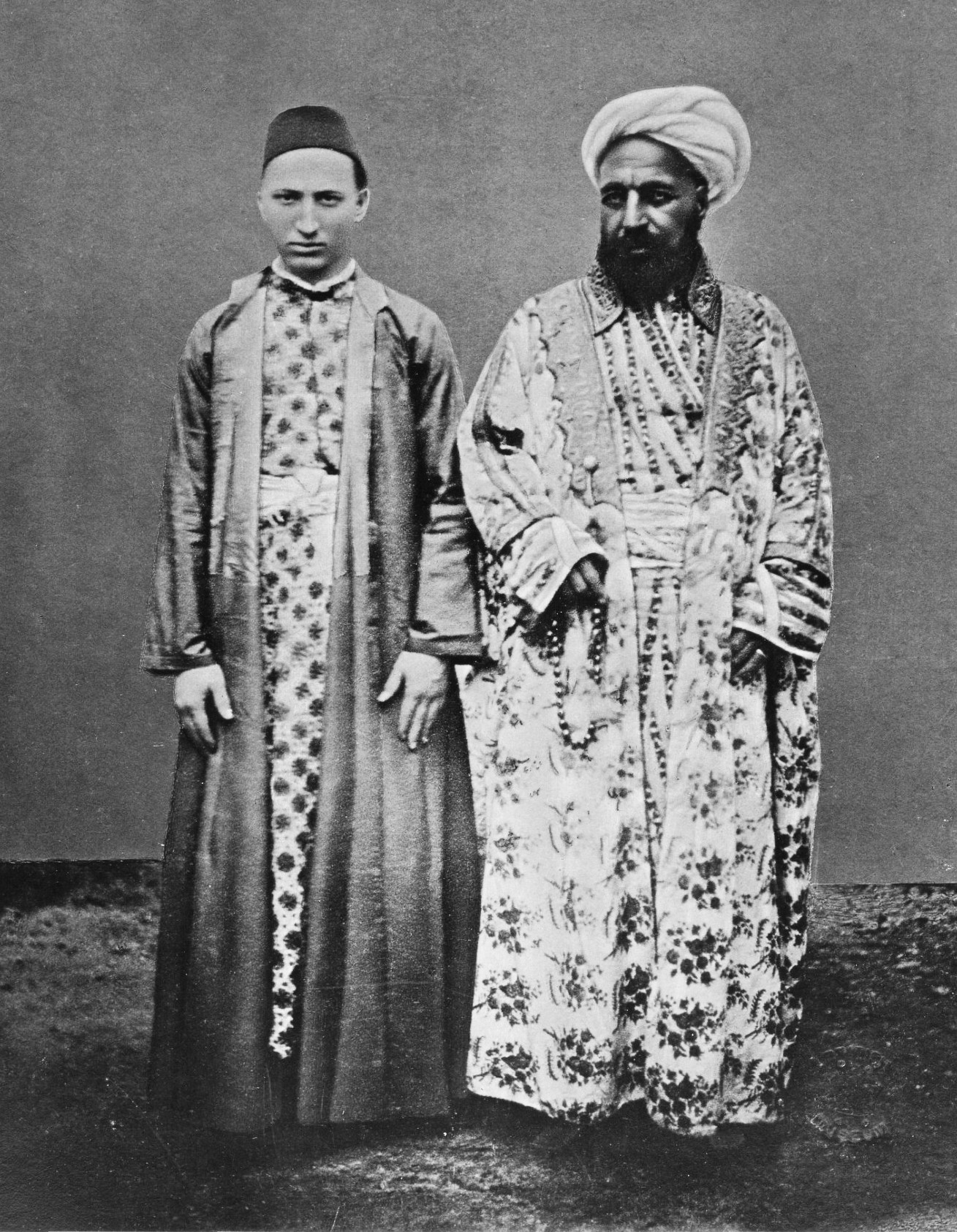
Interesting take on history. Around these parts Ottomans captured and sold white slaves ("Slavs") and Caucasian ("from the Caucasus" - not the modern definition) people for transport across the Black Sea to be used in Turkish harems (mostly women and young boys). Ottoman slavery persisted until around WWI. Not a lot of people from African descent involved in this particular slave trade. There's even photos:
You've created a straw man and called it a crazy fallacy. No one believes that speech doesn't affect behavior.
But there is a cost to allowing speech to be offensive to certain races, groups, or lifestyles.
There is also a cost to restricting speech such that no one feels offended.
Which cost is higher? Which cost are you willing to pay? And furthermore, what is actually an effective plan. Is it realistic to think you can shut people up from being offensive? Is that even a workable plan?
Many people feel that the cost of restricting speech so that we can protect groups is vastly higher than the cost of allowing offensive speech.
Ofcourse speech has consequences. But where is the line between critique or disagreement and hate speech? Right now more and more critique/disagreement = hate speach, especialy for those who can't deal with arguments or objective, inconvenient facts about reality.
I struggle to come up with examples of people who raised "objective, convient facts" that suffered undue backlash. Most of the ones that get used are usually pretty terrible.
Is canceling someone denying their right to exist? Hounding someone online and coercing their employers to fire them seems a lot more harmful than critical speech. And don't forget, that cancelled person's name will forever be associated with the controversy, making it very likely that person will also have a major barrier when trying to participate in society.
As a society, we really should think of "the poor racist who can't make a living" rather than simply making them a persona non grata and discarding them.
Do you think destroying someone's livelihood and reputation is the best way to change their views? Do you intend to punish, or to rehabilitate? Maybe you don't care about redeeming a racist (or some other deplorable) because you just want to send a message that such views are unacceptable. But all that does is create a radical with nothing left to lose.
Honestly, we need both. In order to have a civil society, we can't have racists running around calling people the n-word and burning crosses on lawns, still less actually murdering people. That stuff is not acceptable, and we need very clearly to say (and enforce) that it's not acceptable.
But we also need to change peoples' hearts, so that they don't want to do that kind of stuff - so that they regard the "other" as fully human, just like they themselves are. As you say, destroying their life isn't the best way to do that. (Neither is nagging, lecturing, and berating people.) Then how do we do it? The only thing I know that can change peoples' hearts that way is the gospel of Jesus Christ. (Note well: I did not say going to church - it's not the same thing.)
> If you make statements that are blatantly: - Racist - Anti LGBT - Anti Trans - Misogynistic Then don't be surprised when other people call you out on it and you face consequences.
Admitting this is even the case (which it isn't, as people recently are being cancelled for being just moderate, or for stuff they said when they were teenagers which is ridiculous), how can you justify having someone fired by a mob for something they SAID, therefore denying their livelihood?
It's the equivalent of burning their home, since employment is what enables people to secure long term security for themselves and their family.
So you are actively supporting denying the right to exist of people with whom you disagree with?
>how can you justify having someone fired by a mob for something they SAID
I don't follow this at all. Of course people can get fired for things they say. This happens all the time in cases that have nothing to do with hate speech or other controversial issues.
"""Admitting this is even the case (which it isn't, as people recently are being cancelled for being just moderate, or for stuff they said when they were teenagers which is ridiculous), how can you justify having someone fired by a mob for something they SAID, therefore denying their livelihood?""
Go into your bosses office and use an ethnic slur and tell me what happens. Speech has consequences and hate speech rightfully has more consequences.
> Speech has consequences and hate speech rightfully has more consequences.
And you define what "hate speech" is and how severe the "consequences" are supposed to be. If you feel that something that was said about you is hate speech and you feel that only beating up the person would be an adequate consequence, then by all means, go for it?
It's the "blatantly" part of that sentence which is causing backlash. It's extremely subjective. What's blatantly racist in your opinion could be blatantly anti-racist to someone else.
If we all agreed on those terms you threw out, then you might have a point.
But we don't.
I don't agree with the new definition of racist. There was a time not long ago that dressing up as a black person for Halloween was maybe insensitive but it was not considered racist. Especially since only the people who saw you were affected. (Now everyone can see everything)
Racist used to mean that you thought one race was superior or that one race was inferior. Now it means saying anything or doing anything that any segment of only one race's population considers offensive.
Many on one side of the political aisle will stone-face claim that it is not possible to be racist towards white people because they are the majority. That indicates that the definition has changed.
So, yes... we are discussing a philosophical pie in the sky because that's where the terms are being defined.
Hate crimes spring to mind. People tell lies about minority groups, give themselves permission structures to justify violence, and vigilantes take it upon themselves to "fix" the problem with violence.
A lot of people have been murdered on as a result of hate speech. Emit Till, Michael Donald, James Byrd are a few.
Also, the Rwandan Genocide, historical Pogroms, lynchings, arguably the holocaust.
It's pretty hard to get humans to murder their neightbors without inciting speech.
> It's pretty hard to get humans to murder their neightbors without inciting speech.
Eh, I'm not so sure about that. En masse, with coordination? Maybe, but speech is mostly about coordination at that stage.
Would you say that everybody ever saying something untruthful or hatefull about the GOP is responsible for some lunatic storming the base ball practice of some GOP members of Congress with a gun and shooting at them?
Speech is certainly involved in the actual act of a pogrom, but it's not the driving force (unless your definition of speech gets really vague and everything ever said since the beginning of time is part of "the speech"). You don't have pogroms without previous animosity. Somebody saying something might spark the fire, but the wood has been there all along, soaked in gasoline.
> You don't have pogroms without previous animosity. Somebody saying something might spark the fire, but the wood has been there all along, soaked in gasoline.
That presumes the victimized communities have done anything to warrant violence. In the case of anti-jewish pogroms the inciting factor was often speech by newspapers and officials. How should we account for anti-semitic newspapers that made a good business of concocting lies about the crimes done by Jewish people in the community?
Consider the Kishinev pogrom where "the Bessarabetz paper insinuated that children had been murdered by the Jewish community for the purpose of using their blood in the preparation of matzo for Passover"[1].
> That presumes the victimized communities have done anything to warrant violence.
No, it doesn't at all. It says that there is animosity, but not why it's there or whether it's valid or not. You might hate your neighbor because he's more successful than you, makes you feel inadequate with his good deeds, because he's literally Hitler or because he just so happens to look like somebody that wronged you. The fact that you hate him says nothing about whether that's justified. But your hate makes you susceptible to all kinds of suggestions for terrible actions against your neighbor. All it takes is for somebody to suggest burning down his house, or telling your that he has attacked another victim (or posted the wrong thing on Twitter to stay on topic!)
> In the case of anti-jewish pogroms to inciting factor is speech by newspapers and officials.
Doubtful. We'd have to look at the very first pogroms. If you're looking at the last 150 years, you're closing your eyes to the fact that pogroms against Jews were recurring events and anti-semitism was always around.
That's a problem, because you'll be surprised how these peaceful neighbors can turn into violent murderers practically over night. When you consider that they weren't peaceful neighbors right up until they became murderers, but that there was just a light cover over the hate for a while, there are much fewer unexplainable actions.
The rumors are the spark that I mentioned. The long-existing anti-semitism is the wood pile that is ready to be set ablaze.
> The rumors are the spark that I mentioned. The long-existing anti-semitism is the wood pile that is ready to be set ablaze.
Which arrives at the question, how does anti-semitism propagate through societies? It doesn't spring from nothing. What are the mechanisms that keeps the idea alive? Are all societies susceptible? Someone must be doing the work of keeping that wood pile dry and ready to catch light.
That's what I meant with regards to "speech" becoming very vague and stretching over long periods of time, making the individual expression rather insignificant and the concept very fuzzy and hard to tell apart from culture, tradition and history. Like a rain drop in a storm where all those drops combined are causing the flood, but to pin it on an individual rain drop and say "this one is responsible" is hard.
> Are all societies susceptible?
Given that we've seen some level of exterminatory warfare all over the place in history (I'm sure there's huge amounts that we don't know about because the victims have been annihilated), and it's not unheard of among other mammals as well, my money is on yes.
That some small nations did not wage war against their much larger and much stronger neighbors is not a counter example: the fact that chickens don't hunt wolves doesn't mean they're not predators, they'll happily eat worms, and will eat a mouse if they can catch it.
With those assumptions, it seems fair to state that, given enough time, any sufficiently large group of humans will commit an atrocity against an internal or external minority.
Shouldn't then societies try to structure themselves against this tendency?
I don't know how you'd structure a society against hate. We can't seem to even come together over political ideas within cultures, where everything else is very similar, so I don't have a lot of hope for situations where the similarities are few and far between.
We haven't tried adding empathogens to the water supply, maybe that's a good way to do it.
> if you want trans people to seek mental help rather than take hormones and mutilate their healthy bodies, that's seen as anti-trans and automatically considered to be wrong.
Well, no, basically everyone thinks that given the choice between the first without the second or the second without the first, they should do the first, ignoring your emotionally loaded description of the second option you present.
If you think those are the the actual options, though, you are simply factually in error.
Probably off topic but Patrick McGoohan was in a couple of good series for those at home at the moment, apart from The Prisoner, Danger Man was another (A bond like spy), and he also turns up in a few episodes of Columbo. If you like those then try the Avengers - the one with Patrick McNee and Emma peel, there are other series but the Emma Peel one is recognised as the best. Surrealist Spy dramas were at their height in that era, if you want to go further 'The Champions' is another - three spies crash land in Tibet and monks teach them some powers.


Social media has made it far easier to display your values to other people. Rather than led to diversity, it has massively consolidated the range of "acceptable" opinions to a serious of slogans and "approved" ideas that everyone must agree with.
And btw, I don't think actual values have changed. But what has happened is that we have a very vocal and determined minority that feels the need to judge other people who disagree with them.
That is the point of the Village. Everything you do is controlled by social pressure. To give an example, where I am the police now spend a lot of time on social media prosecuting because it is so easy to build a case. Social media is the avenue for this control.
Just personally, I was never the biggest fan of social media. I thought Facebook was a conspiracy to steal my personal data in 2008. But I did use Twitter to build a business a few years later. I would never do this again. You are just exposed to far too many idiots. This was true back in 2011 when I was using it, it is doubly true today. Social media encourages idiots to have an opinion about things they don't understand.