He doesn't quite say it by name, but most advertising is a classic arms race. Especially given how the internet now makes information easily available, a great deal of advertising is about manipulating consumers to pick company A's products over those from competitors B, C, and D. This forces those other companies to spend to get and keep customers. It's pure waste.
For example, everybody on the planet is now familiar with soft drinks. If anybody has never tasted Coke, it's not by accident. But Coke's ad budget is enormous. If all soft drink companies stopped advertising tomorrow, society would not be worse off. And we'd have billions of dollars [1] to spend on something useful.
Like the author, I won't work on ad tech. I don't like manipulation and I don't like waste, and most advertising is both.
I would have agreed in the past but now that my SO has started an escape room, if your ideal world existed, she would be bankrupt right now.
Most ads isn't about manipulation, it's just about getting your attention and reminding you that this product exists.
Ads are the only way to reach her market. You could argue that search is a good one too (which is true), but sadly people have trouble paying to watch videos online, there's no way they would pay for a search engine. We are still not really high in the search result after a year of existence either and paying for ads is a good way to get people on the website (which I'm sure will help our position in search results).
EDIT: In case it's not clear, I don't believe she deserve to be higher than other escape room in the search result, we have actually almost no competition close to us and it's pretty much why she started that business. Simply that Google have no metric to know that her website has to be higher than another one, so clicks are needed to provide some.
She always asks people what they think of the experience once they are done and recently one even said that we are not visible enough. It's a pretty great feedback, we are lucky that's our main issue, but sadly ads are the only way to become visible to others.
Ads are almost amazing by allowing investment into market that people aren't ready to pay for but yet provide great entertainment, learning experience or a great service. Without ads, I probably wouldn't be the developper that I am today because the guy that did the great tutorial that create the passion in me wouldn't have time to works full time on them.
Yes, you are right, there are (at least) two effects of advertising:
1. Education (let people know a company/product exists)
2. Manipulation (by various means)
From a moral point of view, the first effect is not bad. It actually helps people to make better decisions and extend their knowledge about available products and services.
However, the second effect is the harmful one. Since companies are trying to make money, they want as many people as possible to buy their products. So they start lying, leaving the negative aspects of their products out, use visual material that creates yearning contexts, present the information at a higher frequency than relevant and so on. So saying it is just about getting your attention is a huge understatement.
Simply put, the advertising industry tries to find human vulnerabilities on a daily basis. Sadly, not to inform and help protect us, but to exploit them. If advertising was actually about helping society, the spending would be more like a tax (independent from the effect), the visual appearance would be standardized and the process of presenting ads would be strictly controlled by a neutral entity. Furthermore, everybody would be allowed to not participate. Maybe the receivers of that valuable, educating information should even pay to have access to it.
And I am sure, at this point you are with me, that the majority of ads aren't about educating people but about placing information in their heads.
Agreed. A couple of exercises I recommend to everybody:
1) Take a day and for each ad you see note how much novel, useful information you receive from it.
2) For any ad that had significant novel, useful information, redesign it in a format that is optimized to be informative, with any manipulation subtracted. (E.g., imagine it written in the style of the best encyclopedia articles.)
Doing this makes it pretty clear that pure information is a very, very small portion of what's going on with advertising.
> if your ideal world existed, she would be bankrupt right now
[citation needed]
You're making a couple of mistakes here. One is imagining that in a world without ads, her experience would be the same as her not advertising. The other is that something that is bad for a given business is something that's bad for society. Both of these are at best unproven.
> Most ads isn't about manipulation
For every ad you see today, ask yourself how much useful new information you have gained from it. I've done that a few times and it's pretty close to zero. Note that the biggest spenders on ads are brands you've already heard of, suggesting that your theory needs some revision.
I can't really give financial, but believe me, after having to spend 30k$ more because of some problems, we only had about 6k$ to pay for 5k$ a month of expense. After a year, in a location surrounded by restaurants (more than a dozen), with quite a bit of event closeby, with quite a bit of people going around, the amount of people that found out about us outside of ads, is barely a handful.
After a full year, even while spending for ads, even if we can count on 1 hand the number of people that had a bad experience, we are still barely profitable and still, almost everyone only finds us with ads and not word of mouth. We still have a pretty big list of people that wait after our third room impatiently, I think there's not a day where there's not someone that mentions it.
The thing is, even if an escape room is fun, even if I think that anyone can enjoy them, sadly our public is a tiny fraction of the population and even if theses enthusiast talks about it to others, it just doesn't reach enough other enthusiast people.
> One is imagining that in a world without ads, her experience would be the same as her not advertising.
Then you would have to explain to me how she could reach people between 10 km to 300 km aways without ads in the first 6 months of existence.
> The other is that something that is bad for a given business is something that's bad for society.
Her business is great, people are all crazy about the experience, that's a few thousands of peoples that wouldn't have that experience that they enjoyed quite a bit, simply because they are too few in a huge market.
> For every ad you see today, ask yourself how much useful new information you have gained from it.
From the ads itself? More than 0. From the content that has been paid from it? More than thousands actually. I wouldn't have read your comment, simply because Hacker News is a place that advertize ycombinator startup.
> Note that the biggest spenders on ads are brands you've already heard of, suggesting that your theory needs some revision.
It's actually exactly what I'm talking about. You think about Coke regularly? I'm pretty sure you don't.
It's sad but in this world of so many choice, you need to keep reminding people you exist or else they may switch to another choice they may see more (doesn't even have to be ads related, could be just more people that consume it at that moment, could be a location that have a contract with that brand, etc..).
So both in a world where you are known or not, you need to remind people that you are a possibility to even be considered.
Even in the amazing marketing space that is a supermarket where you can extremly easily browse a good amount of choice, brands pay for the right of a specific shelf because that will sell more.
Imagine how much worse it is when you don't even have all the choices in front of you.
The world would certainly be a worse place without escape rooms existing too :|
Many people seem unwilling to admit what they do is bullshit. Not judging that at all, virtually most jobs are bullshit, I've done far more useless things for big companies earning good money too. Yeah it offers entertainment value but were it to disappear humanity would not suffer for it.
I'm honestly amazed at the number of people who truly believe what they do offers value, long lasting, real value to society. Have quite a few friends in advertising/marketing and they've drunk the kool-aid thinking that because they bring in X amount for bigcorp their existence is justified and if they didn't someone else would. Without this delusion it's likely not an easy thing to live with.
> Yeah it offers entertainment value but were it to disappear humanity would not suffer for it.
You underestimate quite a bit the value of entertainment, but that's your right.
In my case, it was a single example for which I have information about and can talk about. The same will apply to anything which is niche. You can't constantly search for things that fix your problem, even if you know exactly what is required to fix it, and you can't be aware of everything that could fix your problem. Ads are the only ways for theses niches problem to be fixed.
If you think you can do it more efficiently than ads, go for it, you'll be amazingly rich.
Do you know how to tell whether a transaction is beneficial to both parties? It’s mutually voluntary. Some third party thinking it’s bullshit is just meaningless noise.
Again, you are extremely fixated on her specific case in the current environment. I get it, it's your girlfriend, you're protective and defensive. You seem entirely unable/unwilling to see beyond that situation, which I get, but that means I don't see further explanations as likely to change anything.
I don't have a dog in this hunt, but perhaps one problem is assuming that people know what an escape room is?
I certainly don't, and if that's all it said on the door as I was walking to a restaurant, I certainly would not stop in.
Maybe the benefit of online advertising is simply making people who know what it is aware that there is one in their zip code. (Option awareness for the primed is a thing.)
> I don't have a dog in this hunt, but perhaps one problem is assuming that people know what an escape room is?
Oh yeah definitely, that's something that we will need to do in our city because the concept is too new. We just don't have too much time and money to invest in that. We were going to do that recently in a festival, but we learned too late that it wasn't going to happen in an adjacent park ^^' like it always did in the past.
> Maybe the benefit of online advertising is simply making people who know what it is aware that there is one in their zip code.
Yeah that what ads does in our case. We hope that word of mouth will help show more people it's fun.
I would disagree with the proposition that "most ads [aren't] about manipulation" (especially if we are talking about "most exposure time" rather than majority of ads being created regardless of the number of times they've been viewed).
Of course, I don't have data to prove my statement, but I doubt you have any to prove yours either.
And without ads and that "great tutorial", maybe you'd be something of greater value to society rather than the "developer you are today". (Just saying that what-ifs are even less of a support for any thesis)
Note that the original article does not complain about informative ads, but about manipulative ones.
> Note that the original article does not complain about informative ads, but about manipulative ones.
It’s funny because the title would suggest that “all ads are one of the worst things that happened to humanity”. So it’s a click bait headline = manipulative ad. Maybe without a different title nobody would read the article.
> maybe you'd be something of greater value to society rather than the "developer you are today"
I'm a pretty great value for my works actually. Could do more? I don't actually believe it. I learned what I'm doing since I was 8. There's no way anyone would have paid for theses learning experience for me except advertisers.
You could certainly argue that I could have a more fun childhood if I didn't dedicate so much of it to learning. That could certainly be true, but I still enjoyed quite a bit my childhood doing theses crazy projects.
> Note that the original article does not complain about informative ads, but about manipulative ones.
> Advertising Is a Cancer on Society
Sure he talk against manipulative ones, but he fight against the whole advertising industry.
I thought about being explicit: I am not questioning your work or your worthiness or your satisfaction with life. But nobody knows if different circumstances would have led to a life more valuable to society. I am surprised you don't think there was anything better you could have done in your life, but to each their own.
It's like saying maybe with the light off you could have done better navigating through theses rooms. Free learning experiences was available pretty early in my life because of ad suported content.
Maybe I could have done better in something else, who knows, what I do know is more learning experience is ALWAYS better.
You are repeating one logical fallacy: the fact that you perused ad-supported "free" content does not mean that there wouldn't be non-ad-supported "free" content without the internet turning into an advertising mess.
I've grew up on the free Internet resources without ads (banner ads just came to be). I've read free books on highly technical topics, on Mathematics...
> Most ads isn't about manipulation, it's just about getting your attention and reminding you that this product exists.
That is manipulation. If they weren't actively thinking about visiting one or actively looking for things to do and your advertising convinced them to do it then you've manipulated them into doing something the otherwise wouldn't have.
> If they weren't actively thinking about visiting one or actively looking for things to do and your advertising convinced them to do it
... which is exactly what our ads are doing. None of the targetting that we do is related to anything else than entertainment, or activities to do. I even had to black list plenty of keywords that triggered our ads, some for prostitution service even.
Believe me, if we weren't targetting like that, it would cost WAY TOO MUCH. I'm pretty happy right now with an average 4.95% of CTR for the past 2 weeks.
I think the other user here had a great example with his sister’s escape room. If you want to visit one how would you find it if it’s not on your way to work?
The traditional solution to this is the Yellow Pages. The business owner would pay a small fee to be listed. In the internet age, Yellow-Pages-like directories of business do not need a publishing house generating them. You can basically build one yourself from OpenStreetMap data, and if it gains traction in the community, you could turn it into a side business by taking a small fee from businesses, say 10$/yr, to offer them "OpenStreetMap update as a service" for their business's POI.
> The business owner would pay a small fee to be listed.
I don't understand how you could do that without being an advertisement. How can you make a few businesses pay a fee without being advantaged against a business that doesn't pay that fee.
You do bring an interesting idea, if it's a directory financed by the government, which is neutral and randomize results (or else we would see much more A* companies ;) ), that could works in a way.
It may become an administrative nightmare to manage though with categories and stuff.
I don't think that is true at all. Without advertising you would just have the information elsewhere.
Let's take an example similar to your girlfriend's case: entertainment. In Paris you have plenty of events, of all kinds. And that did not start with the internet. And promoters can be very small and have a marketing budget of around 0. Now how did they get people without advertising? You had a collaborative newspaper every week showing all the events with a small comment. Everyone interested in going out had access to it, either because they bought it or read it at school/work/library/press stand. You also have informative stands for small theaters in the metro.
No advertising does not mean no information.
At last, the majority of ads budget is taken by huge corporations with famous products, like Unilever, and really don't bring anything to society, not even information.
If the current ad model of the popular search engine(s) was made extinct by law. I would be extremely surprised if search simply disappeared rather than move to a paid model. Who wouldn't pay to have any information in the world reachable in the 30 seconds it takes to craft a query and scan the first page of results? It is a huge competitive advantage.
Nobody ever paid for something like that. If there is anything on the internet people assume it should be free. Taking example of the HN crowd, every time there is a pay walled article people ask for web links, praise outline links and generally complain.
This is because there are free alternatives. When 99% of the articles on the frontpage are freely accessible, it feels "wrong" to find an article that requires you to cough up money first, especially when it does not hold up to the insane quality level implied by that price difference.
If there were no free search engines, I can see people paying a few bucks a month for Google. Even more so if Google would then again make their results as useful to users as they once were.
A practical example: I'm incredibly price-sensitive wrt productivity applications because there are many great such applications available as open source. I'm much less price-sensitive when it comes to video games (e.g. I spent 300€ on Breath of the Wild since it required buying a Switch) because the selection of open source video games is very limited.
Sure, because the web was ad-funded from the early days. People have an irrationally strong preference for "free". Even though in this case "free" really means "paid for by people manipulating how you spend your money".
But I think it's implausible that if ads didn't happen the web would just be an empty wasteland. Up until the web existed, people paid for all sorts of information and informational services. And plenty of people still do. I spend maybe $1k/year on journalism.
I would gladly pay, say $2-8 a month, for a search engine that actually delivered good results. Nowadays it's just SEO garbage and blog spam.
Try searching for product reviews for example. It's almost impossible to find good, honest review sites via a search engine (they definitely exist though). Most are shopping sites or fake reviews that just list scraped product information.
My guess is that the vast majority of people wouldn't pay. Firstly, because it's notoriously difficult to get people to pay for something that used to be free. Lack of tracking and respect for privacy is not something most people would recognize as an obvious upgrade - hence the need for legislation in the first place. So the public will see it as paying for the exact thing that used to be free, and just won't do it. If Google won't find a loophole to bring marketing, paid results or some other monetization back in such a legislative environment, someone else will. You'll end up with something that's won't necessarily be better for consumers than the advertising model.
> I would be extremely surprised if search simply disappeared rather than move to a paid model.
Sure, but that would be available to the ones that can profit from it directly, not the mass population that would have an hard time seeing value created from it.
Instead they would expect word of mouth to be sufficent, and in a way they wouldn't be wrong in that world because in that world everything would depends from it. They just wouldn't have the luxury of having all theses others experience that depends on ads to exist, simply because ads wouldn't be there to allow them to exist.
I would pay for the search and to watch videos as long as the price were reasonable. I already pay for SlingTV and Netflix for example. Yet there is free to watch PlutoTV, filled with annoying ads. There should at least be an option to pay for ad-free, tracking-free, service.
The existence of ads definitely stops that. People were happy to pay for newspapers for decades before they appeared for free on the internet. They are still happy to pay for news that isn't available for free, as Bloomberg, the WSJ, etc show. It's only when there are "free" alternatives that people flock in droves to the "free" options.
> It's only when there are "free" alternatives that people flock in droves to the "free" options.
People were happy to pay 10$ for something until there was the same thing for 5$ and theses peoples thus flock to the "5$" options. This is why we should stop the 5$ option because it hurt the 10$ one!
People that paid more, just did because they had no alternative to get that. In that amount, there was some that couldn't pay that and didn't, and maybe you don't know them, but they exist. The cheaper option still provide enough value, or else why would the one that paid more move to the cheaper one? It also allowed the one that couldn't afford the previous price, to afford it and get that value too.
It's even possible that it was in aggregate delivering more value in total when the people that wanted the 5$ options were paying 10$ for the one with more things in it, but is it ethically right to force them to pay 5$ more for something they don't care about? Isn't it one of the important point here in this discussion manipulating people to pay for something they didn't want?
> The existence of ads definitely stops that.
It thus doesn't stop that, it only show that people were forced to pay more for value they didn't care for.
The people that want more and can afford it are still there. Like you said, they are still happily paying for Bloomberg and WSJ.
Talking about that, I don't read theses newspaper, yet they are annoying me enough that I may pay for it one day just because I keep getting linked to their article on Hacker News. It's weird how the paying one is giving me worse experience than ads ever did in my case, but I still believe that option is needed.
If you have to tell people they need something then they don't need it. Escape rooms are an entertainment luxury. When there is essential work that needs to be done (infrastructure, healthcare, education, &c.), it makes sense that it takes psychological manipulation to convince people that what they really need to do with their time and effort is temporary entertainment. If you want more customers, provide something that people find more necessary, like childcare.
But we live in a culture that can afford entertainment luxury, if people don't find this gals business, they will spend that time on Netflix or at a bar instead.. The zero-sum game you propose is not really close to what would happen without advertising imo.
We only tell our selves we can afford. The truth is we are constantly putting off work that needs to be done as if some future generation will fix all these problems.
There are tens of millions of Americans living in homelessness, shanty towns, and trailer parks. We need to build housing (apartments, homes) for them. No individual person can do that. We have to organize ourselves to tackle these kinds of problems cooperatively. However, our society insists that we allow the market to organize our activities.
The market is controlled by exchange, and people who can afford to exchange more than anyone else can control the market. The majority of our wealth is concentrated in the hands of a minority of people. Thus the market mostly organizes people to solve their concerns while paying no mind to people who cannot afford to engage with it.
Either you can fix the market (something arguably impossible to do) or you can use a different method of organizing humans into cooperative efforts.
Even with absolutely 0 advertising I probably wouldn't be working to build apartments for the homeless. Sure maybe I'm not seeing some movie, or buying some piece of chocolate I heard discovered through advertising but in that case I'm going to be spending my time watching/reading/playing/indulging in various other hobbies and vices and any money I would otherwise have spent I'd be saving.
Absolutely no benefit to future generations or my fellow man, and I'd assume the case to be true of most people. It isn't as if advertising has made me more callous or lazy.
Unless your point is that companies could be doing those things instead of spending ad dollars, but that is a ridiculous proposition because they'd be using it to make more capital in some other way
You believe these things about yourself, but it's not like you have much evidence, so maybe consider the alternatives.
One function of advertising is demand generation. It makes people believe they need things they don't. The broad message of most ads is "spend more money to be successful/popular/happy". Is it really impossible to think that if people stopped getting told that all day long they'd focus less on spending/consumption and more on other things?
Well yes, but that doesn't mean those "other things" are not entertainment related. I am not a very lavish spender myself. I rarely buy things and have ad-block on every platform I use. However, I read books, or exercise, or hangout with friends and discuss theoretical topics. My lack of major participation in consumerism, doesn't de facto lead me to become a saintful servant. Everyone is different, but one of my key drivers is mental stimulation; this is a big reason I read so much and advertising has nothing to do with that.
There are so many other ways to escape, something virtually everyone needs to do at some point, that don't require someone else's time and effort to do. There are even productive ways to escape, like sports (can keep you healthy). If your escape detracts from essential efforts, it is counter-productive.
No it's more that I'd your product fulfills a real need, people will find you. The fact that people don't without advertising says it isn't a real need.
There's just a lot of presumptions buried in statements like this that I have trouble getting past. What criteria do we use to establish a need is "real" once we get past life requirements? Do I need a better chair? A better keyboard? A more efficient car? A monthly rail pass? The criteria you and several other comments in this thread use seems to include "if you found out about it through an ad, it's not a real need," which is the original canonical definition of "begging the question."
If nothing else in your life gave you the idea to buy something but an advertisement did, it's not your idea to buy the thing. I needed a new chair because the one I used to have gave me back pain. I went on Amazon to look for a replacement chair, and because I use an ad-blocker (uBlock Origin), I didn't see any advertisements for chairs (whether there are other features of Amazon that could count as advertising, like the Amazon's Choice branding is, sure, debatable but also besides the point). Instead, I saw a list of chairs with information about them. I looked through the list and found the one I thought would best suit me and bought it. Why did I buy it? Because I felt I needed it since I was concerned that my old chair might have caused back problems if I kept using it.
Since I bought the chair on Amazon, when I don't have an ad-blocker on, like on other people's computers, I can see Amazon showing me advertisements for other chairs. Why? They are trying to convince me, because I showed a willingness to buy chairs, that I need more chairs. There are all sorts of flashy listings showing off the neat gimmicks their chairs are capable of, all to convince customers like me that what we have isn't good enough.
They can't make money if they solved people's problems, so either they design things to break (like planned obsolescence) or they psychologically manipulate people into thinking they have problems they don't have and sell them the solution (InfoWars is this taken to the extreme).
There is a difference between putting information out there for people who want to find it and blasting information at them to get in someone's head and convince them they need to do something for your own benefit.
> If you have to tell people they need something then they don't need it.
None of the ads we got say to anyone that they need it. No one thinks that they need it when they see it.
What the ads say is that we exist. When they look for entertainment, and the debate isn't about whether entertainment should or not exist, they see us in the search engine (which is ads financed). When they search for movie theater (which is not related to our business, so it's fair that Google doesn't show our business in the results), they see us.
Actually, it's not even possible trying to convince people that they need us, even if we would want to. We NEED to target people that want entertainment because that's already pretty expensive for us to do.
You're not describing an advertisement, you're describing a listing in a business index like a phonebook or a classifieds section. You don't have to buy ads to show up in a Google search. You buy ads to float your Google search entry to the top so it's right in people's line of sight. If you want people who are looking for entertainment to find you, give pamphlets to your local tourism bureau or travel agencies and hotels to put in their lobbies so that when people are looking for things to do they find you. Advertisements don't provide information to people seeking it, they shove information down people's throats and try to convince them with messaging that people need what is being advertised.
True, but because all ads are spread via media, and interrupt the experience of enjoying that movie, song, paper or magazine or book, the delivery of every ad inevitably lessens your enjoyment of whatever activity they interrupt.
Nobody chooses to watch a TV or radio show that's all ads. Ads are the opposite of entertainment, otherwise we'd tune in Wednesday at 8 PM to watch our favorite ads.
Entertainment and relaxation are necessary, you are right. However, both can be done in ways that are at best productive and at least not-counterproductive.
Entertainment does not have to unproductive. People who play sports or do other recreational activities are working to maintain their physical health while having fun. There are games of all sorts you can play to help you improve life skills or even physical and mental abilities.
If your relaxation requires someone else's work, it is counter productive (think resort-type venues that need staff to operate). There are plenty of ways to relax and unwind that don't take away from other people's efforts. Visiting a nature park or a museum, for example. The work to maintain natural resources or to educate and inspire people is necessary beyond simply pleasing people.
It's not my decree, it's nature's. The world does not have infinite resources. We have to be careful how we use them.
If you cannot live efficiently, you will exhaust your available resources and your lifestyle will die out. Humans have put in a great amount of effort in the last few hundred years to make as many resources as possible available to use, but this only encouraged us to use more. If you want to see how to live life efficiently, look at present and past cultures that do. They seem to be plenty happy living on much less than the average person in the first world.
You don't exist to be happy, you exist to survive. What would we have accomplished as humans if after thousands of generations of working to build a world with more possibility if all that work is dashed by a bunch of greedy, selfish idiots who think pleasure is more important than the sustainability of human life?
Speak for yourself. You exist to survive apparently, and what a meager and sad existence that seems to me. Good thing there's no authority telling us why we exist and we're each free to decide for ourselves.
What would we have accomplished as humans if...
What would we have accomplished if we survive until eternity without being happy?
The world does not have infinite resources. We have to be careful how we use them
"All fun must be productive" doesn't follow from that.
> Good thing there's no authority telling us why we exist and we're each free to decide for ourselves.
You aren't. Everything you do, even doing nothing, has consequences that are beyond your control. Even worse, your actions have consequences not just for you but for others, even people who don't yet exist. We only exist today because generation after generation of the people that came before us have worked together to survive. You absolutely can choose to be a selfish idiot, but selfish idiots go extinct very quickly because they greedily consume the resources they depend on. There are also people who recognize the threat selfish idiots pose to themselves and others and may intervene to stop them from mucking things up not just for themselves but for others. Remember, you yourself took the effort and resources of the human race to get you where you are. Your life is on loan to you from the universe.
Just like the cells in your body, humans work together to make things more capable than themselves individually. Just like the cells in your body, humans are constantly replaced by a new generation that takes our place. If you want to live life as a cancer cell on the human race, you can expect it will react the same way we react to cancer in our own bodies.
This article is about this very problem. Advertisers are abusing the fact that our brains have not adapted to their schemes to trick people into spending their effort supporting not just the advertisers but the enterprises that advertise through them. They climb over the backs of their fellow man to selfishly guarantee their own survival, paying no mind to the consequences their actions bear for others and for the generations that follow us.
> What would we have accomplished if we survive until eternity without being happy?
Doing what we are here to do. Life exists because the universe had latent potential that unthinking matter could not release. The whole universe is working to exhaust its potential. Intelligent life is just another step in that process.
You also don't seem to get what happiness is. Happiness is not a state of ecstatic joy, it's a state of contentment, free of threats and concerns, when you can be at peace. Like all emotion and sensation, we have them because they were useful to our survival. Mental reward mechanisms don't exist because you can't be conscious without them, they exist because without them survival is more difficult. Happiness is always a temporary, illusory, and fleeting feeling. There will always be more mountains to climb, happiness just rewards us for getting to the next peak.
You can choose to live a willfully ignorant life and pretend to be confused just to feel better, or you can see what the world is telling you and listen to it.
Doing what we are here to do. Life exists because the universe had latent potential that unthinking matter could not release. The whole universe is working to exhaust its potential. Intelligent life is just another step in that process.
Haha... yeah ok. I know better than to try to convince religious people that their irrational views are baseless. It never gets anywhere. But you snuck by my guard because your religion is somewhat non-traditional.
Let's go our separate ways, you believe whatever you want :)
PBS Space Time has some great videos on the cosmological side of all this. Their video "Are You a Boltzmann Brain?" does a great job of explaining entropy: https://www.youtube.com/watch?v=nhy4Z_32kQo
Kurzgesagt has some entertaining videos on the subject, too:
Why is that necessarily so? Maybe some products inherently can't be sustained by word of mouth, and in a world without widespread commercial advertising they wouldn't exist at all.
We may assume there are fansites for escape rooms available. Such serve as word of mouth advertising, just like reviews do. There is more focus on facts, and the user voluntarily participates (in contrast to all the billboards, online advertising, useless pages in magazines)
A great many potential escape room customers are not looking specifically for escape rooms, they're looking for something fun to do in the area. So, again, no ability to advertise would be a gigantic advantage to established incumbents in the "something fun to do with friends" category of businesses.
What city doesn't have brochures of fun things to do, community newspapers where new things like this can be announced or meetup groups for people that like activities like this? There are a lot of ways potential customers can actively find you without manipulating random people who weren't looking.
Maybe technically, and mostly because of how they're typically implemented. I'd call providing brochures to people that explicitly request them information not advertising.
So you start Apple Maps and look for fun to do. You know the data in Apple Maps does not contain spam. Even the local tourist center might have information available. Or you ask around on an escape room subreddit or escape room community forum.
>Maybe some products inherently can't be sustained by word of mouth, and in a world without widespread commercial advertising they wouldn't exist at all.
Maybe those products shouldn't exist, then. Just because someone has an idea or wants to sell yet another iteration on an existing product or service, doesn't mean they deserve to. Maybe advertising allows markets to be far more diverse and saturated than they should be?
Also, maybe advertising isn't as necessary as it once was in a world where search engines and online stores exist and you can literally see a product and its competition all listed in one place if you're looking for something.
Don't be so reductionist. Someone could find this escape room via a search ad, have a blast and tell all of her friends and none of them may never choose to do the same. And an escape room experience isn't something you can easily bring people back for - you need to find new customers every single time.
I suppose a good way that could make word of mouth work is to create two experiences and recommend the other in an email afterwards.
Advertising has made the internet a bit shit, yes. But let's not pretend it has it's upsides because it really does. That's why people pay for it. Now I'll grant that old school banner ads aren't worth much and we'd probably be better off without them. Most of what they're funding is garbage, not independent bloggers like I'd want to be funding.
>Someone could find this escape room via a search ad, have a blast and tell all of her friends and none of them may never choose to do the same.
And they could ignore the ads, too, which most people probably will because it's not that common a thing to want to do. But at least word of mouth can be expected to be reasonably accurate. If this escape room were terrible, the word of mouth would be terrible, but the advertising for it would never reflect that.
>And an escape room experience isn't something you can easily bring people back for - you need to find new customers every single time.
Maybe that makes it a bad business model?
>Now I'll grant that old school banner ads aren't worth much and we'd probably be better off without them.
I'll be honest, if I had to choose, I'd prefer old school banner ads. Get rid of modals, pop-ups, ads in video, javascript tracking, and just give me a banner with a link, or even just text. Something that doesn't intrude on the content.
Here's an alternative. All escape rooms need a steady stream of new visitors, so they have a good incentive to cross-promote. Hang a "if you've liked this room, you might enjoy" board by the exit, filled with flyers for other escape rooms in the area, and ask those other escape rooms to put your flyers on their "escape-room-ring" boards.
Funny, such webrings used to exist in Web 1.0 as well. You could even argue this is the point of a franchise. Need a McDonald's (not my cup of tea but a known international subject)? You know what they got, you know the price. There's some culture-specific deviations, too.
Maybe there could be a middle ground: keep most of the internet ad-free, but allow users to do explicit "commercial searches" for e.g. vacuum cleaners, or hotels, or fun things to do in their area. Then the escape room would show up there.
I've actually thought about that model a lot recently. If Google does this then it's one more step towards their goal of getting somebody what they want. Ads usually only show when you're typing a phrase which correlates with a product. Whenever you type "vacuum cleaners", that's you signalling you're likely searching for a commercial product. If not, ignore the ad.
But let's be honest, search ads are not the problem here, toxic banner ads across the web are.
Yeah, I've been saying for years that someone should make a search engine for the ad-free segment of the internet :-) Then we could use it most of the time, and fall back to Google explicitly when doing queries with commercial intent.
Advertisement-bugged content is indeed essentially content for the poor. The rich just buy an iPhone and buy the apps they use on it so they don't see advertisements.
I'm willing to pay for Mozilla Firefox and Duck Duck Go and Wikipedia. I'm not sure it should be paid in month or by amount of usage. The beauty of Wikipedia is that it is open source, same with Firefox. Not sure about DDG.
You would need to pay for such an ad-free internet in some way, other than being an ad target. This is a critical point of you expect the variety and quality of this ad-free internet to approach what we have now.
The first spam on Usenet was by a company called DEC. DEC was known for its great products (VAX, OpenVMS, Alpha) but for shitty management and marketing.
I've witnessed the Internet before Web 2.0. Yes I received Viagra spam on my mailbox as well. Amount bought thanks to all of that spam: zero. The marketeer does not care about any second in my life I wasted thanks to their spam. Neither do the assholes who hosted them. And still, that Internet functioned. Of course the bills for the IRC server and Usenet server need to be paid. Usenet access was just part of my monthly dial-up subscription though.
As far as I am concerned the invention of high quality (relatively) search engines and high quality (relatively) fact sources such as Wikipedia as well as high quality, honest reviewers could easily make up for advertising. How is such paid for? Donations and credit card.
That's only because the current business model is very closed source (proprietary) a danger RMS warned about decades ago. The original GPLv3 was meant to address that, and websites such as Wikipedia and I suppose OpenAI don't work that way.
If we were used to no advertising and paying for services, we'd be outraged by if there was advertising. Ironically, that way is more efficient. The ideal model for data is a Patreon/Kickstarter/Indiegogo-esque project where people are able to offer bounties. This way you could pick a journalist (who's self-employed) and pay them to write an article to research a subject. Such research could then save other people time and money. I mean, if only 100 people in the world pay 10 EUR each then you already got firepower to do some research already.
Advertising and 'free' (where you're the product) is a race to the bottom, and ultimately a product for the poor.
Podcast hosts (at least those I listen to) are often asked to provide a paid version of their content without ads. The answer is always the same: ads bring way more money in that a subscription would.
There are examples where subscriptions work perfectly well. Is the model perfect? No.
Podcast hosts are biased either way. Ads waste people's time while a subscription doesn't. The subscriber amount is inflated, and the quality of content is lower than it could be because of clickbait and other non-content.
One subscription-based model for news I'm looking forward to gaining adoption is essentially a Spotify for news, called Blendle. I also believe we focus too much on news, and not enough on in depth articles which is a model De Correspondent pursues.
Aka "influencers". Our children are growing up with YouTube idols who don't have integrity. It is even illegal here to focus on children with advertising (which these buggers do).
If a product can't be sustained by word of mouth, it's because it doesn't fill a need that wasn't artificially created by advertising. These products shouldn't exist.
You're describing a commodity. So what's an example of a popular product that no longer differentiates on features/quality yet exists solely due to advertising? ... Actually I'm having a hard time thinking of mature products that DON'T meet that description.
Soft drinks, insurance companies, investment advisors, pretty much all prepared foods, all over-the-counter drugs, shampoo, deodorant, desktop computers, etc, etc -- these are the sources of 95% of ads. Yet the difference among them is almost nonexistent.
The ads for these products don't inform the consumer; they exist only to push the brand into consumer consciousness, a necessary evil because otherwise your company's commodity won't survive competition with other companies's commodity products without fabricating mindshare via by constant repetition of media promotions.
Branded commodities exist at all because advertising has constructed a fantasy around them intended to give consumers a sense of identity, and ultimately, meaning in their lives. Buy this slightly tweaked commodity to become smarter or sexier.
Without ads, 95% of everything we guy will quickly drop by at least 50% to match that of the nameless generic commodity that it is.
> Soft drinks, insurance companies, investment advisors, pretty much all prepared foods, all over-the-counter drugs, shampoo, deodorant, desktop computers
Soft drinks / prepared food / shampoo / deodorant I never buy due to ads. Heck, I never buy soft drinks. I drink a beer once a week, usually a special one. I find it by looking around at the liquor store dept. of the grocery store. I have zero brand loyalty in this regard (the amount of choice is a fata morgana anyway). I have a sensitive skin as well, so I can't stand a lot of these deodorant / shampoo.
I go to the grocery store to buy my food. The only time I may differentiate is when something is on discount. Which, true, is advertising, but its a clear deal. I don't follow the "saving" deals where you need stamps or whatever because it creates artificial brand loyalty / expenses.
OTC drugs I only buy when I need them. I'd buy the cheapest of active substance. I don't give a rat about which brand. If its insured, I get the cheapest one automatically cause otherwise I can't get it back.
Insurance, water, electricity, I go with the cheapest I can find. No commercial is going to tell me about which one's the cheapest. Comparison websites will, and there are good ones. My favourite one is the national equivalent to US Consumer Reports. To which I'm also an active subscriber.
Quite frankly, all I get from your post is that advertising is pushing crap we don't need. Cause we don't need to buy the branded versions.
If you want an example of a website which is doing great yet doesn't advertise nor contain advertisements then you're currently visiting it.
I don't think that's necessarily true. If you and I both enjoy escape rooms, but we aren't friends/don't have a way of contacting each other about it, one of us won't hear about something that would bring us value. Good advertising would take out the roll of the dice that comes with social networks.
Advertising is not information. If i like invite rooms I can search for <myplace> in best escape rooms.com and find what other people are saying on this forum. Has worked before, can work. Hosting prices for those can be low.
It can easily be a matter of timing/bootstrapping. Great idea, great service, not enough word of mouth initially, business burns through cash and fails. Who's better off? Established incumbents, of course. This would create a completely artificial disadvantage for new businesses.
Also, plenty of useless junk is peddled through "word of mouth" (MLM, anyone?). Fake reviews, paid word of mouth - banning ads won't ban marketing, it will just force marketers to change tactics to ones that aren't clearly better for customers/consumers. Maybe much worse.
Its a cat and mouse game but easy fact checking is the enemy of all the marketing examples you gave, including MLM. If I learn that MLM is a pyramid scheme where the word ethics does not exist, I look up the company name and run away.
Certain medical products, various hygiene supplies, or other things that cannot be talked about in 'polite society' would fall into the realm of things that are very hard to spread by word of mouth. Additionally, things that are rarely used by a person but are widely used by society, like stump removal services, plumbers, etc.
All of those can do just fine with a general search engine.
You just need to know that removing a stump is generally possible. That fact itself can be advertised by a the guild of stump removers if it is obscure enough. "Tired of hitting your toe on the stump in your backyard? Ask you doctor for an eye check!"
> In the old days, if her product -in this case escape room- would be good, she'd get enough customers by word of mouth alone.
We get clients from 5 m away to 300 km away. The product is great, on a few thousand client, only an handful weren't happy.
> she'd get enough customers by word of mouth alone.
Word of mouth works when there are enough people to listen to it that may be interested in the experience. I'm a fervent believer that anyone can enjoy it, but let be honest, not everyone believes that being locked somewhere is fun ;). Believe me, it's a complaint that we hear often from our client that they weren't able to convince people around them about how awesome escape rooms are.
There's actually money to be made in something that could allow people to find others people to do escape room together, it's something that I often see people asking for in escape room communities.
My SO has claustrophobia. I'm pretty sure she won't enjoy it. I've never done it, but I like the challenge of a puzzle element combined with working together. I don't think such is for everyone. What I've learned from gaming is that a lot of people (most) don't want to be challenged, and M&S (morons & slackers) tend to get away in groups. In general, people just want to be entertained.
> [...]
> There's actually money to be made in something that could allow people to find others people to do escape room together, it's something that I often see people asking for in escape room communities.
Especially something with a small community could use this exposure of word of mouth, or having a platform for their community. You could also be part of the things to do list with the local tourism bureau.
The problem is a lack of standardization/consensus on communication method. You could use Facebook for this, or Mastodon, or Discord, or Slack, or Discourse, or Subreddit, or ... someone with authority just has to pick one, make it half decent, spread it by word of mouth, and you're done. If you can find volunteers for this, great. Otherwise, escape rooms could make a non-profit for this to maintain it. Of course, an escape room in Poland can afford to pay less for membership than one in San Francisco.
How old are the days you're talking about? Archeologists have found commercial messages going back to ancient Egypt, Greece, and Rome. According to some historians, the first printed advertisements go back to the Song dynasty a thousand years ago.
I just don't buy the argument that all kinds of advertising for anything at any time are intrinsically evil and must be stamped out. Even in a post-scarcity utopia, writers, artists and other creators would very likely be promoting their creations in an effort to reach people who might not otherwise hear about them.
When I grew up football (soccer) matches had virtually no advertising. Driving around, virtually no advertising (you gotta be kidding me regarding safety). Magazines had barely any (pages of ads is my last memory). The internet when I joined had barely any. All the free shit existing thanks to advertising is a race to the bottom. Premium brands can sneakily do such too, all in the name of profit; not the customers interest. And it's worse. Clickbait is a byproduct of it because journalism is no longer about observing, research, hear multiple angles which is all too expensive; it is about page views. Which you can observe here in linked items as well as in YouTube videos. How often do you have the phenomenon where you feel you could have summarized it shorter? Where you feel come on, get to the point. Or where you feel deceived after reading the article? All because of page views.
As soon as I got to play with AR (such as Google Glass) the first thing I will look into is filter out the shit I don'tn need.
> For example, everybody on the planet is now familiar with soft drinks. If anybody has never tasted Coke, it's not by accident. But Coke's ad budget is enormous. If all soft drink companies stopped advertising tomorrow, society would not be worse off. And we'd have billions of dollars [1] to spend on something useful.
Not that I disagree, but where do you draw the line? Sure, if Coke stopped advertising we'd have billions of dollars to spend on something "useful". On the other hand, if Coke stopped making soft drinks, we'd have billions of dollars to spend on something "useful" AND significantly decreased obesity.
If you are going to make the argument that having soft drinks improves life somehow, then that implies it's better for people to know about soft drinks, and how will they know? Advertising.
As a doctor, I'm all for banning soft drinks, recognizing that it probably will never happen.
But, the health externalities associated with drinking such beverages should get priced in and be used to offset eventual health complications. This is not easy because no one likes taxes, but you get what you pay for.
I think not in terms of should, but as a bare minimum. You sell a product with little socially beneficial upside and significant negatives. Then you should be happy to only have to pay a Pigouvian tax instead of being banned outright.
Why does it have to? Coke as a company is responsible for some horrifying effects on the world. Health effects, economic depression in the developing world, ongoing environmental harm. And for what? Sugar water. Not space travel, not energy, not transportation, not safer aircraft or cars, not saving lives, no. For fucking. Sugar. Water.
And they're far from the only company burning energy, effort, time and knowledge to accomplish nothing but profits at the expense of virtually everything else touching them.
The parent comment said that externalities should be priced in, I am saying it's not an externality and is already "priced in" if it hurts only the drinker. That's orthogonal to Coke being good or bad.
The externalites aren't priced in though. Heavy consumers of soft drinks require more health care on average which affects insurance prices of non-drinkers. To be truly "fair" this should be factored into the price of such products so that buying a coke includes an x dollar tax for your estimated increase in medical needs. This is however only doable with a socialized medical system.
The other option is to let insurance companies monitor your diet, but that sounds quite a bit more dystopic...
This view is too myopic. In India, for example, Coke sucks millions of litres of fresh water when surrounding areas are suffering from drought or mostly barren. There has been cases where Coke was forced to move out of a location due to outrage from people ... Personally, I'm of the view that individuals should be responsible in their decisions and how banning advertising of toxic products or the product itself will lead to a better society ...
Coke is enjoyable to many, that's a benefit. Air travel and space travel also cause ongoing environmental harm, whose says the benefits of those outweigh the environmental cost?
Maybe we should ban them as well. All companies "burn" energy, effort, and time to produce profits, that's pretty much the goal of a company.
True. But would people enjoy it as much if it were priced accordingly to give the workers who made it a living wage? If they had to pay full non-subsidized prices for the corn sugar they use, and to give those workers a living wage as well? In other words, would people enjoy it as much if it was instead of a dollar a bottle, more like four dollars?
And don't even try and shift to a different company. It is not unreasonable to assume that there is ethical compromise involved in purchasing anything from a company Coke's size. Chiquita almost started a war so they could continue exploiting South Americans for cheap bananas.
I take issue with this "well there's no haaaarm" point because there very often IS harm. There is tons of harm if you follow the supply lines back to the developing world where western corporations exploit entire nations for the sake of cheap goods that then are consumed at a break neck pace in the West, far more than they should be, which then even harms THOSE people by making them overweight.
If your company could do actual good in the world by ceasing to exist, then I question why you need to exist in the first place. That's all I'm saying.
I would bet excess sugar (and carbohydrate) consumption is the second largest externality via taxpayer spending on people’s healthcare due to obesity and diabetes. The biggest externality is destabilization of the environment from pollution.
That's only a problem if healthcare is taxpayer-funded. Otherwise it's your and your insurer's problem to price this in somehow, maybe even offering cheaper plans for people living healthy (e.g. meeting weight goals).
The whole idea behind insurance is that the unlucky ones who require more care than average have their costs covered by those who require less than average. Taxpayer funding systems are literally the same thing.
Yes you can get cheaper premiums by living healthy, but how far do you want to go? Are you going to let your insurance company log everything you eat and how many steps you walk every day? Seems much easier to just factor in the external cost of goods into their price.
The whole idea of insurance is amortization of rare costly events over large numbers of people. Ideally, each person's insurance cost is equal to the expected value of the payout.
When I got my driver's license at age 17 (or possibly the learner's permit? I forget), we learned that the car insurance company would reduce the premium for me if we regularly submitted them some kind of proof that I was getting good grades. It's possible this was some kind of "public-service program to encourage desired behavior", but I suspect that at least part of why they did it was because straight-A students are less likely to get into accidents.
For medical insurance, it seems they could at least do something like "if you send us evidence of healthy exercise/diet/weight, then we'll lower your premiums; otherwise you'll get a premium based on the estimated risk of the set of people who don't do this". (If the government doesn't forbid it. healthcare.gov says "They also can’t take your current health or medical history into account", which sounds like it might rule out some of that.)
2. It was probably also both a community service project AND a reflection of lower expected insurance payout.
3. Maybe the straight-A students are correlated with insurance payers that would rather pay the repair known 1-off payment (or skip doing anything at all) vs the unknown recurring increase in insurance payments?
(Source: drove a dented-up pickup for over a year after a short romp along/into an orchard)
1. What would a tax deduction have to do with an insurer charging lower premiums to its customer?
2. The lower expected payout is exactly what an insurance company is trying to determine, and they’re very good at doing that assuming they have lots of data.
3. Most vehicle insurance cost are liability related, meaning the damage their insured to others, and namely healthcare costs. A collision with another person or their property will not be fixed without the insurance company getting involved, and a reduction in those is what the insurance company is betting on.
May we be allowed cake and ice cream or would you ban those as well? Maybe you can get a special license if it's a birthday?
Absolutely reasonable question. How about coffee? Soda-prohibiters usually ignore it, because, I guess, they like it themselves, or expect a huge backlash. However, it's a very common way of excessive sugar consumption world-wide.
No, it doesn't, not sure where you live, but I see low-calorie soda drinks in every supermarket I visit. You also, believe it, or not, are free to not buy any soda at all, in the same way you may decide not to put any sugar in your coffee. Probably, it's true to say that majority of buyers still prefer sugary sodas, because simply put people like sweet tastes a lot. Logically, it means that forced unavailability of sodas will be compensated by other means, including oversweetened coffee, chocolates etc. and I'm just asking where this I-save-you-whether-you-like-it-or-not zeal will end: would you regulate a number of grams of sugar allowed to buy per day as the next logical step?
As I said, the zero-calorie stuff uses artificial sweeteners, which is just as unhealthy and likely to cause diabetes as the stuff loaded with sugar.
There's no option to just have less-sweet soda. It does not exist. (Unless perhaps you're counting the fact that artificially-sweetened drinks simply don't taste sweet to some people, but that's a different argument.)
Whether you want to believe it or not, it is very easy to control how much sugar you pour into your cup of coffee at work (and you don't have to put artificial sweetener in it either as the only alternative; you can simply not put anything in it). There's no such option with soda, because it's premade. I don't know why you're arguing about this, because it's a simple fact.
As I said, the zero-calorie stuff uses artificial sweeteners, which is just as unhealthy and likely to cause diabetes as the stuff loaded with sugar.
Not sure I see what do you mean by "artificial" here. Making extracts from stevia is not more artificial then from sugarcane. What is more (un)healthy is still matter of gathering data, but it doesn't make an argument in either case. The argument is that you are not obliged to buy soda, as you are not obliged to put sugar to your food, and drinks. As well you are not obliged to drink alcohol for which WHO says there's no safe dose - unlike sugar. And which if we stick to your reasoning should be prohibited in the first place. But wait... does it sound as if it was tried already?
I don't know why you're arguing about this, because it's a simple fact.
I don't know too, because I'm nor arguing about exactly that. I suggest you to look at my previous comment again, you probably glanced over it too quickly.
I don't know why you keep bringing up the obligation to buy soda thing. I never said you were. You aren't obligated to buy coffee either. What's the point of this argument?
The whole thing started when someone compared soda to coffee and said coffee had sugar too, and I responded that you don't have to put sugar in it, or as much, since you're the one controlling the sugar addition. We're not talking about safe doses of sugar here, or the WHO, or whether you're obligated to drink anything besides water. We're just comparing the sugar in soda and coffee, that's all, and the simple and completely undebateable fact is that you can put a little bit of sugar in coffee, whereas there is absolutely no way for you to control the amount of sugar or other sweetener in your soda. (I guess you could try adding sugar to non-sugar soda, but you can't take out the artificial sweetener (or stevia, which just tastes bitter), and good luck getting sugar to actually go into solution while the soda is still cold.)
Finally, I don't drink soda at all, or coffee either, I'm just pointing out that the drinker is the one in control of the sweetener with most coffee, and this is simply not the case with soda.
You need to judge a social impact of something before you ban it. The reason why soft drinks are under fire is because there is a lot of people who drink them literally every day. I know several people who drink 8-12 cans of diet coke every single day. On the other hand people usually don't eat cake or ice-cream everyday. I mean, I have no doubt that you could find someone who does, but it's not a widespread behaviour, so there is no reason to ban it.
Glad you phrased it that way, because a lot of the people who want me to pay a tax for eating a cookie probably aren't imagining themselves paying a tax for going Whitewater rafting, or for driving their car multiple times a day.
I guess you'd be for banning alcohol then? The aggregate negative effects on society due to alcohol are incredible, extending far beyond simple healthcare questions.
It's very shaky reasoning. For starters, I'm sure you are seriously underestimating how much per time unit, and how much people do eat sweets. Second: if someone likes taste of sugar, and you deny that person sweet drinks, you likely to see increased consumption of sweets, or just plain sugar added to other drinks (coffee anyone?) How deep are you ready to go with prohibitions in that light?
In Finland we do (or did, it might have changed on 2017) tax sugar. Then they added artificial sweeteners and even mineral water under the tax because it’s ”fair” that way. Thus negating the original point.
Yeah, just drink tap water. Bottled water is quite a big waste with all the plastic, transport etc. Especially in countries with great water supply like Finland, it shouldn't exist were it not for marketing.
Leave it up to the hospital. They are best equipped to assess the cost and likelihood of being able to save the person. They also are most responsible for the repercussions in terms of positive/negative publicity and reputation.
Won't this lead to a situation where some hospitals are known for doing free work, while others aren't? The former will quickly go bankrupt if they aren't subsidized by a charity or religious organization, which has serious drawbacks in itself.
As for the rest, the doctors, nurses, and paramedics are now going to be required to do something that's against their training and likely their nature, by letting people die on the sidewalk out front. Do you suppose this policy will be workable in the long run?
Basically, if you're poor, you will get a public defender. Someone who is overworked, underpaid and probably won't give your case the appropriate time it needs to develop a valid defense..
Whereas if you have money, you can afford an attorney that can spend the appropriate time to create a robust defense.
> and be used to offset eventual health complications
that would be predicated on an honest and direct pricing scheme for healthcare. taxing soda may be a feel-good thing to do, but how can you say - with a straight face - how much dialysis treatment or 'beetus meds actually cost? The whole business model of healthcare is built on information hiding.
It still has the same problems, in that people can bootleg it. Just at a smaller scale. Remember, they have low-grade turf wars in NYC over cigarette sales due to the really high taxes.
Cigarettes have cost $6 a pack in the US for over a decade and nobody bootlegs these. Same for beer, at $6-12 for a 6-pack.
Bootlegging is generally a short term response to diminished access. But soon after the controls arise, demand generally shifts elsewhere to less inconvenient alternatives.
I can think of no examples of continuing bootlegging in the US, aside from piracy of media, which is another kettle of fish.
And that also goes to my other point. They have the police another tool to harass people and the police ended up choking a man to death for selling cigarettes illegally that he brought across state lines.
Because a law has worked really well to stop underage drinking, smoking, and weed.
It’s the same consequences. Little Johnny with well connected parents and a judge who doesn’t want to ruin the life of someone “who could be his kid” gets off easy while they expel little Jerome who is just “going to turn out to be a thug anyway.”
The good solution - already practiced in many European countries for alcohol and tobacco - is to punish the store if they sell to a minor, not the kid who buys it.
A government has power only if it does exercise it. If all government employees sat around all day and did nothing, the government would be powerless. The more a government exercises power, the more power it takes away from others (like the people).
It's only through action that power manifests (and the inaction of others to oppose the use and abuse of that power).
> A government has power only if it does exercise it. If all government employees sat around all day and did nothing, the government would be powerless. The more a government exercises power, the more power it takes away from others
That's bullshit. A government can't take away power from others by exercising the power it doesn't have yet.
> (like the people).
A democratic state cannot take away power from the people, the people cannot take away power from itself. And non-democratic states don't have a legitimate government anyway.
The more laws you pass where the government can decide to punish people for their own choices that don’t hurt anyone else. The more tools you give them. There is long history of public officials not applying laws equally.
If you live in a country where the government decides to punish people (as opposed to the courts), you do indeed have bigger problems than advertising.
There is no epidemic of dangerous hobby-related health issues, but obesity is aone of the biggest health problems in the developed world, especially the US.
There's no epidemic that can be ascribed to one food item in isolation, either. Why pick on soda? Where are the (reproduced!) studies that justify that? (Standing by for the inevitable authoritative-sounding pubmed link that actually proves nothing of the sort.)
Meanwhile, why should my health insurance rates go up because Dr. Joshgel is into cave diving or parachuting or enjoys the occasional track day in his GT3?
Or because someone else leads a sedentary life playing video games? How about banning those? There's no valid science behind claims of an "epidemic" of soda-induced obesity, but if you're going to generalize the argument to include all common causes of obesity, I'd respond by pointing out that there's certainly no shortage of studies showing the harmful effects of a sedentary lifestyle.
Rest assured, after the Dr. Joshgels of the world have come for my soda, they WILL come after something you enjoy. Maybe your steak, maybe your beer, maybe your guns, maybe your Playstation or your sofa. The slippery slope argument is a logical fallacy, but these people aren't logical. They're too busy being right.
People who are seriously into extreme sports already have pay for extra insurance as related injures aren't covered for such high risk activities.
There's also huge taxes on alcohol and tobacco for instance.
There's also a lot of other stuff that is banned already or strongly regulated or taxed heavily. Recreational drugs, medicine, certain additives that turned out to be harmful. Or rules like having to buckle up in your car. A lot of nanny state stuff that saves people from themselves.
I especially like how every time I state something specific, you respond with a vague generalization that, if acted upon, could be used to justify all kinds of bans, laws, and taxes... some of which, once again, you would not personally care to be subjected to.
I responded to the extreme sport one. As for the sedentary lifestyle that's not directly a product in itself.
Maybe you're just not convinced about the actual harm that sugar and obesity causes. I won't be able to write a good summary of the research here and now,but there's a lot of evidence out there. It's more dangerous than many people would assume.
Soft drinks aren't an arms race where most of the money spent is pure waste. When I buy a soft drink, I value it directly, so it isn't waste.
> that implies it's better for people to know about soft drinks, and how will they know? Advertising.
Are you really saying the only way you have ever known about a product is advertising? I honestly have trouble believing that, but if that's the case please consider that you're an outlier.
Me, I avoid ads vigorously and have for decades. I have no trouble learning about new products.
How do you define "Something useful" though? The advertisement money eventually makes it to Google, broadcasters, sites, TV-channels, sports events and people running those organization in term gets more money to spend on [Potentially useful stuff]. It's not like the money magically vanishes to never be seen again, and business to business transaction like this make the money flow faster instead of slower.
Economy is basically production vs consumption, money is just the grease to keep the cycle flowing, to follow the money isn't getting to the base cause of our problems.
> It's not like the money magically vanishes to never be seen again
No, it remains in corporate budgets, which, without all the marketing spend, can be shifted to better wages, charity work, capital investments, better wages, safety and health initiatives, better wages...
We'll find something else for them to do. Something that isn't just systemic waste.
A good example for me comes from SF's MUNI system. For decades, they had people whose job it was to track bus arrival times so that schedulers had good data to work from. Eventually, the buses all got computer+GPS devices so they could be tracked continuously. Should we have refused to enable those because of the job losses?
I say no. There's no point in having people doing something wasteful just to protect jobs. Where we find systemic waste, we should eliminate it and shift the people to doing something actually valuable. To say otherwise is a variant on the Broken Window Fallacy.
But it doesn't really work like that, does it? After all, it's up to an individual to create something meaningful. The money will always be there in one form or the other. Without google or facebook relaying on advertisements as their business model, coca cola would go for other channels. They'd pick billboards instead of instagram ads, or local newspapers ads instead of native ads. Now I may be a bit biased, however can you really argue that local newspapers and billboard owners will make better use of that capital? And it's not facebook/google restricted either; big companies like that have a very wide range of things they do and ways in which they promote the brand. And come to think of it, facebook, google, and all the other advertising giants we here seem to hate are in a much better position to use that money in a meaningful way. Definitely better then a random wannabe instagram influencer.
....and without some of that marketing spend, revenue would decrease (or be co-opted by competition) and then we're back at the same problem. Companies probably over-index on advertising spend, but it's not as simple as "look no ads, now we can raise everyone's salary 2x"
The money itself doesn't vanish obviously, but the work does magically vanish, in the form of human consumption. The sheer amount of useful energy and resources required to feed those people, power their computers, etc. is being "burned" in the same sense that bitcoin mining "burns" something. It's millions of hours of work for simply redistribution of demand.
Bill Gates could pay 10000 people $10/hour to dig a hole and 10000 people $10/hour to fill the hole back with dirt. Obviously this money doesn't "vanish", but millions of hours are wasted (and the food and resources needed to power this work).
If I go around smashing windows, I will make money move faster. The people who install replacement windows will have more money to spend. It's not like the money magically vanishes! But it's still a terrible idea, because all this economic activity is based on systemic waste. It's the same for most advertising.
If Coke does not buy the large ad campaign, the available advertising resources can be used by the next-highest bidder, and that bidder might potentially be selling something with a higher social utility function value. Since the ad infrastructure does not get as much money from that transaction, less is then reinvested into ad infrastructure. If McDonald's stopped advertising on billboards, billboard advertising would be cheaper in the short run, and then there would be fewer billboards in the long run.
And how do you measure social utility? Price is currently
the best measure of 'social utility' that we have.
People choose to spend their hard-earned dollars on the products that provide the most utility. Companies spend their hard-earned dollars on the vehicles that allow them to sell the most product.
But advertising is explicitly designed to skew that measure - the purpose of essentially all advertising, and certainly all of Coke/Pepsi's advertising, is to convince people that they need something that they don't need; and to make them appeal to their feelings instead of their rationality when doing purchasing decisions (e.g. by inspiring brand loyalty).
That's the problem with saying Coke shouldn't buy so many ads. Coke got all their ad spend from people who gave them money in exchange for Coke's products.
Coke is rich because society likes drinking Coca-Cola and pals.
I find advertising useful mainly when it’s an event I didn’t know was happening and aren’t always checking for. Usually for consumer products I find it not so useful.
A problem we could pretty easily solve with event listings and maybe some subscription-based notifications. That would be both more fair and more effective than depending on the luck of seeing something that somebody with money wants to promote.
I'd really love to have an AR real-life ad blocker. Replace all billboards with works of art.
Separately I think advertising will have to find new forms of expression that are less repulsive. I won't want to block ads if they are actually fun and interesting.
I am not sure this is a technology problem, this is more of a societal problem. This city had the will to experiment with removing ads, and it had good results
What makes you think the company that makes the best AR wouldn't put ads in it. The top 3 in the field Microsoft, Facebook, and Google to some extent, would never let you disable ads let alone override them with something you wish.
If I own a piece of physical hardware, they can't dictate how it runs software. Hardware ultimately listens to its owner, which is me, not them.
If they try to interfere with that, I will try every route I can to ensure my personal freedom.
For phones you can do most of what you want with LineageOS and Xposed; for AR headsets I'm sure something similar can be done and it's just a matter of time before hackers get together and make freedom a reality.
To your point, I was about to respond to OP as well, and point out that ad-blockers can be installed on Chrome. Then, I remembered that that's not likely to be the case in the near future[1].
IIRC Firefox Mobile is not going to allow extensions anymore within the near future. Although finding the article that brought it up is proving difficult.
Are you thinking about their recent "new Firefox" beta that didn't include extensions? AFAIR this was because they deemed it non-essential for the MVP - but the public response quickly corrected that mistake.
You don't think they have ever tried that. They stopped ad spend in certain locations and in those locations sales went down.
People don't have time to research every single choice in their lives. At some point you just go with brand trust. When I see Uncle Floyd's Cola and CocaCola, I just go with what I know. Advertising establishes brand trust.
Yes, they did that and sales went down because competitors did not stop advertising. I doubt that if all advertising stops tomorrow that globas usage would stop. Who would suffer would be companies that rlie on hype instead of quality.
Some advertising, like Superbowl ads, does establish brand trust - because you know a fly-by-night company couldn't afford a Superbowl ad. But targeted advertising, which is the whole point of adtech, cannot do that - because you never know if it was shown to a million people or just you.
It works like this but I still don't understand why people trust a company that has the resources to buy a Superbowl ad. If they can afford that ad they must charge their customers more than needed. In other words, the product is more expensive than necessary and the brand isn't offering the best possible value.
The brand is signalling that they have convinced many people, or otherwise, they couldn't afford that ad. So I can trust in the choice of those people. But why should I trust the brand itself?
All advertising is targeted; the granularity and fidelity of targeting are what changes.
Also, the systems used to calculate conversions from Superbowl ads, TV ads, cross-reference multiple data sources that often contain more private information than whatever data sources are consumed by your regular targeted banner advert.
That's part of the problem imo, these companies have done nothing to earn trust (and often are significantly worse than companies that actually try to earn trust by being trustworthy), because they can just rely on the ads to build it for them.
> People don't have time to research every single choice in their lives. At some point you just go with brand trust. Advertising establishes brand trust.
This is a non-sequitur. Brands existed long before advertising, and regardless they aren't the only way to solve the problem of choosing what to buy.
If you really care about making things easier for purchasers, you'd be eager to eliminate advertising, which a) adds a great deal of confusion and distraction, and b) reduces the value of earned brands in favor of whomever can spend the most money.
No, there's plenty of money in alternative careers to advertising. It's absurd to claim otherwise.
But advertising is an easy way to make money fast, that is, if you're happy to sell people stuff they don't need at triple the commodity price. Or... you could turn your hand toward more constructive and lasting alternative endeavors like treating / defeating disease, cheaply desalinating sea water, or a zillion other ends that would do more than pry money out of the clueless hands of fools.
While I’ll agree he never uses the phrase “arms race”, he does say this:
>The growth of advertising is fueled by the enormous waste it creates. In any somewhat saturated market - which, today, is most of them - any effort you spent on advertising serves primarily to counteract the combined advertising efforts of your competitors.
I didn't use the term "arms race", but I tried to communicate this point in few places, calling out the zero-sum and negative-sum properties of advertising, and the waste it creates. I'll update the post later on to make the arms race aspect more visible.
I'm no fan of ads, but that would only result in making ads ~30 to 50% more expensive for pass-through small businesses and ~14% more expensive for most [1] large US companies.
If every company stopped advertising then google and facebook and twitter will disappear. Are all these companies pure waste? How do you fund a replacement for them? Should these services be provided by governments?
I do not have the sources by hand, but I think google and co make only about some $ per user per year.
In other words, most users could easily afford it.
And yes, here is the current problem, the mindset of the people. Not willing to pay for services and rather get it for "free" and accept manipulation and time waste.
On the other hand, where services are adfree avaiable, like netflix, users indeed do pay. So I am positive that it is about to change.
One company that does exactly the same things? No.
Companies that do part of what Google does? Absolutely, duckduckgo for search, countless email services to replace gmail, openstreetmaps to replace gmaps, the list goes on.
It wouldn't be that big a deal. Ad-funded commercial services like Facebook and Twitter would probably just be protocols, if not for all those ad dollars incentivizing moat-creation and jealous user capture. We'd figure something out to replace google—the need's too strong not to. The replacement(s) probably wouldn't make $3,000,000/employee or whatever Google does, though. Which is fine.
I would argue that society would be worse off. There are a lot of things we enjoy, for free or cheap, because of advertising.
Tv, radio, street fair, among other things
And no, we wouldn't have billions of dollars to spend on other things. The soft drink companies would have billions of dollars more profit. And fewer people would have jobs
The cost of drinks wouldn't go down. Basically the only thing that would change is we would lose a lot of free things, and fewer people would have money.
The same is true of cocaine. Yet without advertising the people who 'need' cocaine manage to learn about it and acquire it, often at great personal cost.
Smart dealers don't "advertise". They communicate their available goods to individuals who are already looking and who pass a basic smell test. While on vacation a few years ago, I went out at night to see if I could find some plant matter, and passed a guy on the street who looked like he might know the score. (Being present at a particular time/place to serve a market and dressing in a non-official manner is not advertising). So I said "got any green?" and he said "no...white?" and I said "ah, no thanks" and moved along. No advertising required.
That's because it's like targeted advertising: Now that they know you 're looking for food, they can make the advertisement relevant. It would sound worse if they said "No but would you like a pair of sandals"
Advertising is understood to be push and broadcast (or at least multicast) communication. If I initiate the communication, that is not advertising. If it is targeted to an audience of one, that is not advertising. The OP was lamenting the ubiquity and tactics of abusing broadcast media to manipulate consumers en masse. I'm taking a wild guess here that the OP would not put consumer-initiated communication into the bin of "advertising" they were talking about.
OP also mentions targeted online advertising which is central to the current debate and has even led to specific legislation. That is targeted to an audience of one, and is initiated by the person herself, by visiting the website.
"we'd have billions of dollars [1] to spend on something useful." - If companies stopped advertising tomorrow the people doing those ads wouldn't go building space rockets.
The wikipedia page literally lists them as a sponsor of a team:
"From 2006 until 2018, Oettinger was the official sponsor of Rockets, a professional basketball club based in Gotha. The Rockets played as "Oettinger Rockets" in Germany's first distribution, the Basketball Bundesliga.[5]"
Ah only a strong central government could redirect resources and restrict freedom of speech in such a manner.
In theory this works, in practice it doesn't. Nobody is quite sure about what the dichotomy is between the theory and actual results. Basically by allowing commercial interests to control the direction of capital you get useless areas of inn-efficiency like advertising. The weird thing is, these types of economies still thrive. However, when you restrict and redirect resources in a centrally controlled manner, the economies tend not to thrive.
Nobody really knows why. However there are hints as to why it works. Google, gmail, search, google docs, hangouts and google maps would not exist if it wasn't for advertising. Google and the services and technologies they provide to the world would not exist if they did not receive revenue from ads.
I heard a hypotheses that one reason planned economies failed was available computing power and communication speed at the time. To manually calculate how many screws each little shop will need takes an ever growing army of bureaucrats, is prone to mistakes and lags a lot.
So lots of uneven distributions (anybody growing up in USSR will know what I mean), and lots of overhead.
A modern networked infrastructure could mitigate that. A general AI could solve it (but that has its own drawbacks, great if you like your paper clips though).
Markets in a sense create that distribution system organically, but they pay efficiency costs (comparing to a strictly optimal solution). One of those operational costs is advertising.
Market has its own deficiency/glut profile too -- instead of whole city lacking butter and drowning in socks, we have individual people lacking everything evenly and others having abundance.
Good comment. I agree but I feel even an AI can't deal with it. The system is chaotic so it's like predicting the weather. If we can solve the problem of predicting the weather to 99% accuracy with AI then we can do the same with the economy, if we can't then we can never manage the economy with AI.
If you aren't happy with what your government go into politics, don't just hand money and thus power to some random capitalist that doesn't even remotely try to work for the common good.
They aren't saying get rid of coke. They are saying get rid of coke advertising. Everyone already knows about coke and is indoctrinating the rising generations without the need for additional advertisement.
Exactly. I drink energy drinks pretty regularly. With the sole exception of Monster, I've yet to see any ads for any of them (and the Monster "ads" are more sponsorships for various motorsports events that postdate me actually starting to drink the stuff).
Of course, the packaging itself is technically advertising, but still.
If they didn't, they'd be buying something they were even happier with. So from both a consumer perspective and a societal perspective, it's a net gain. It's only from Coke's perspective it might be a problem. But I think it's wrong to privilege their success over everybody else just because they have enough money to manipulate people.
No. Refined sugar is incredibly toxic. It doesn't just rot your teeth, make you obese, and eventually turns you into a Type 2 diabetic, but it also raises the risk of heart disease, strokes, Alzheimer's, and many other conditions.
The direct economic costs - health care costs, lost productivity caused by illness - are immense, and the soda and junk food industries make no contribution towards them.
There are also less direct personal and emotional costs, in the form of family/partner illness and sometimes death.
Some luxuries are similarly toxic, but as a "cheap" luxury sugar abuse affects a much larger demographic.
IMO the ad efforts that support these products are unconscionable, and there's no question the money would be better spent elsewhere.
Whatever marginal risk increase I suffer from my moderate consumption is well worth the guaranteed enjoyment I gain.
A lot of HN users wish to "optimize" these facets of other people's lives through government regulation, but it's no less odious than going up to people in person and knocking their drink to the ground. It's not your choice.
Exactly. I'm more than happy for more labels saying how bad sugary drinks are - like a less extreme version of smoking warnings - but taking a choice away for someone because you think you know better is authoritarian, even if we're only talking about a drink.
It's far more authoritarian to promote industries that spend outrageous sums on manipulating people into harming their own health, with incredibly expensive social and personal consequences.
It's absolutely and completely false to frame this as a government vs individual issue. It's actually corporate propaganda vs the individual.
No one who supports individual freedom has any business encouraging corporate propaganda, because it's the psychological equivalent of sugar - absolutely toxic to genuine free choice.
Big Tobacco has already discovered this strategy doesn't work in the long term. Big Pharma is catching up slowly. (Ask the Sacklers.)
Big Sugar is still lagging behind, but it's only a matter of time.
I'm not really disagreeing with you. Like I said if we had more warning labels and less corporate branding I'd be perfectly fine with that. I'm yet to be convinced that Coca-Cola is as bad as cigarettes and needs to be totally banned/heavily taxed though.
You know the one of the things the worse off in society enjoy doing? - drinking a soda. They need to know the health risks, yes, but taking that away/adding a sin tax makes their quality of life measurably worse even if their health would be slightly better off in the long run. You're either taking away some of the little enjoyment they have or more of their money and I don't think that's fair.
> You know the one of the things the worse off in society enjoy doing? - drinking a soda.
Wait, what? This exact same argument could be made for cigarettes or hard narcotics. This argument is a non-starter. Especially since advertising is targeted at this demographic to convince them that a sugar addiction makes them less miserable.
You're talking about banning advertising, I'm talking about banning products. It would be ass-backwards to ban soda itself and claim you're enabling free choice.
This is a dogmatic viewpoint I think often seen in very technical people who are unwilling to see the interconnectedness of how our society works.
I bet there's any number of things this person values that simply wouldn't exist without advertising.
It's a childish and immature opinion really.
Anyone who hates advertising this much should show their commitment by working at an organization that does not advertise. Loathing advertising and at the same time depending on it for income is deeply hypocritical.
On the contrary, I think the author addresses this via the "cancer" metaphor:
> It's a malignant mutation of an idea that efficient markets need a way to connect goods and services with people wanting to buy them.
> Over time, it became increasingly manipulative and dishonest. It also became more effective. In the process, it grew to consume a significant amount of resources of every company on the planet.
I interpret the loose analogy as: if controlled advertising is like normal cell growth, then out-of-control resource-consuming advertising is like cancerous cell growth.
It's much easier to control advertising if its deployment has more friction, e.g. in a physical newspaper or billboard. On the internet, it's different. We haven't figured out how to control advertising on the internet yet, such that it doesn't have all the harmful side effects cited by the author.
I bet that if we do figure it out, it will be because we've made significant technological advancements in customer<=>product matchmaking* combined with an unrelenting focus on preserving humane values.
* This will also probably entail us, as a society, somehow reframing the way that customer<=>product matchmaking happens, putting more control into the customer's hands.
I think there is room for a bit of optimism here, but it means admitting that there are serious problems with the current system.
Yeah, the problem with that is it's a completely flawed premise.
"It's a malignant mutation of an idea that efficient markets need a way to connect goods and services with people wanting to buy them."
No, it isn't. It's an expansion of the idea that people are more likely to buy things they have heard of. If it was just to connect people with what they already want to buy, there would be no product development, no product roll-outs, because people don't know they want to buy something that has never existed before.
Also 'over time it became increasingly manipulative and dishonest' is a joke. It's been dishonest since the start. Criers lying about the effectiveness of some tonic, the attractiveness of some woman, the strength and wisdom of some leader.
You are being a bit pedantic and misdirectional with that first quote. It's not an important thesis of the article that people already know about the products ahead of time.
In no way have you demonstrated a "completely flawed premise".
> It's been dishonest since the start
How is it a rebuttal to the say that advertising was always dishonest and manipulative...?
Firstly, I don't think it's unnecessarily pedantic to say that the origins of advertising and what they are for are not what he says they are.
>How is it a rebuttal to the say that advertising was always dishonest and manipulative...?
Because if your argument is that advertising is becoming or has become dishonest and manipulative and it needs to be pulled back to what it was before, that is a lot weaker if advertising has always been dishonest and manipulative.
> It's been dishonest since the start. Criers lying about the effectiveness of some tonic, the attractiveness of some woman, the strength and wisdom of some leader.
If those are harmful practices, why would someone turn them into a business venture? To profit off of evil? Making something into a profitable business does not cleanse an activity of morality.
There is also a significant difference between saying you have found a magic bullet for all illnesses and saying you have discovered a specific treatment for specific diseases and had the treatment studied by independent experts to characterize its positive and negative effects in detail. Trying to convince people they need something (advertising) is manipulative, but informing people of something they might need is not.
>> I interpret the loose analogy as: if controlled advertising is like normal cell growth, then out-of-control resource-consuming advertising is like cancerous cell growth.
> That analogy applies to literally anything that can grow. Great. Startups are a cancer. Technology is a cancer.
Not a logical flow in that analogy from my perspective. There is legitimately bad advertising out there that is blatantly malicious -- malware, popups, click jackers, spyware, non-consensual tracking, etc. -- that could be described by that to a tee. But the original article goes further and calls all advertising cancerous which is just plain dogmatic and frankly, extremist. Its extremely easy to put down advertising, but the truth is everything in life is advertising, since advertising is just a game of attention -- predating the internet and printed paper. I think an average internet denizen has a viewpoint somewhere between.
Then we have people who work in marketing, and might see the article and be opposed to the article. But I don't think that matters. Advertisement is not going to stop because of some article putting it in a undefended spotlight, it's a fulfilling prophecy from a game theory perspective precisely because you can't not advertise -- as the article notes.
What makes the current system suboptimal? I mean, the markets are Dutch auctions, which penalize overvaluation. Compared to my youth, I'm definitely exposed to far less advertizing.
If advertising truly is an arms race, then the cost is money and effort wasted on keeping up with the competition -- building an excess of supply because you lose if you can't keep up.
Of course there are also plenty of opportunity costs to wasting billions annually on the overpromotion of overpriced products that are consumed in excess...
There must be a way to do advertising that respects the consumer, and doesn't use some form of sketchy manipulation to achieve the desired goal. And yet the vast majority of advertising is (to me) offensive.
> Anyone who hates advertising this much should show their commitment by working at an organization that does not advertise.
That's a rather childish and immature rejoinder. The world of employment simply doesn't work that way, and people's job mobility is not infinite and frictionless.
That's because we discovered psychological manipulation for advertising in the 30's thanks to Freud's nephew, Bernays. And it was brought to light when psychology hit center stage in the 70's after the psychedelics lash-back. So our current advertising methodology is a very recent phenomenon.
I won't be offended if advertisers can figure out which ads I won't respond to and then refrain from smacking me in the face with them. Or if they can avoid annoying me with moronic gimmicks like dancing lizards selling insurance.
I'm ready. Go ahead advertisers. Delight me with silence.
>I bet there's any number of things this person values that simply wouldn't exist without advertising.
That isn't relevant regarding the truthfulness of the author's claim.
Whether or not ads are vital for any industry, product or technology (an extremely complex question by the way, not to be easily dismissed with a dogmatic "X would not exist without advertising") has no logical relation whatsoever to any opinion one might have about ads.
"Dogmatic viewpoints" are the real cancer on society. Actually "lupus" might be a more apt comparison.
Take a very broad issue like "advertising", which nearly everyone has had a negative experience with but performs a vital function. Highlight some damaging anecdotes and envision a world free from the issue. Thus, we have laid the groundwork that the issue is actually a problem. The stated or unstated solution is obviously to get rid of the problem, but the specifics of how to accomplish this are hazy at best. The conclusion boils down to anything which helps get rid of the issue must be good, and anything which supports the issue is bad. The resulting actions of true believers attack everything blindly because the moral logic has been simplified.
Lupus causes the immune system to start attacking your own tissue in the same way. Instead of identifying specific problems and working to eliminate them, it starts attacking everything, making the body weaker as it destroys an otherwise healthy organ.
He doesn't directly call for the completely abolishment of marketing/advertising and actually recognizes the free markets have a place for advertising but is using that blog as a place to complain about the cancer it has become.
"It's a malignant mutation of an idea that efficient markets need a way to connect goods and services with people wanting to buy them. Limited to honestly informing people about what's available on the market, it can serve a crucial function in enabling trade. In the real world however, it's moved way past that role."
Its definitely one of those pieces that merely points out the flaws without suggesting any solutions. You can take those articles how you will but I think its dishonest to take his overall message as being advertising is bad entirely and without exception.
I've worked at an organization that failed to advertise its products, causing massive inefficiency & waste - lots of people have access to our technology but don't know about it and end up implementing the same basic CRUD app over and over.
Don't underestimate the economic loss caused by people just not knowing there's a better way.
Real world advertising is not about informing, it's about convincing. Over time, it became increasingly manipulative and dishonest. It also became more effective. In the process, it grew to consume a significant amount of resources of every company on the planet.
There's a huge difference between informational advertising, which I support, and manipulative advertising, which is reprehensible. Telling people that their custom CRUD app could be ready quicker, cheaper to support, and contain fewer bugs if they used your product is great. Bombarding people who already know about your product and its half dozen competitors with subconscious messages that your competitors are evil and that if they use your product their sex appeal will increase is dishonest and stupid.
I work at an organization that does almost no marketing; we mostly spread by word of mouth. We have no shortage of customers or work, and growth would be harmful to the quality of our product, so we're pretty content with our place in the market.
> I work at an organization that does almost no marketing; we mostly spread by word of mouth. We have no shortage of customers or work, and growth would be harmful to the quality of our product, so we're pretty content with our place in the market.
The good old survival bias. You did it thus it's possible for all!
Sadly the truth is, word of mouth doesn't always work, you are just lucky.
The primary reason word of mouth doesn't always work is because of advertising. If you don't scream, nobody will hear you over everyone else's screams. But if people stopped screaming, then they could actually hear conversations.
So in your world where advertising went away and Facebook/Google/YouTube/etc are gone (don't pretend they'd survive without ads), where exactly do you do the screaming? In real world public spaces? That's an even more toxic form of advertising and far more wasteful.
You don't scream. You talk to people. They talk to other people. If your message is worth it, it'll organically reach those who'd benefit from it. Also, you could post your message in places where people interested in the kind of problems you're solving come to look for solutions. Trade shows, product catalogs, storefronts, and their on-line equivalents.
> don't pretend they'd survive without ads
I don't see why Facebook and Google couldn't work with a non-advertising-based business model. You might end up having to actually pay a little bit for it, though.
> In real world public spaces? That's an even more toxic form of advertising and far more wasteful.
> You might end up having to actually pay a little bit for it, though.
How old are you? I'm from the 90's, I'm from the generation that was on MSN all the time. My parent would have never let me pay for anything online, with no access to credit cards...
There's no ways they would have paid 5$ a month for a social networks, even if "all my friends were on it", which wouldn't be true, just like Runescape in the past.
Late 1980s. MSN didn't exist at the time. MSDN did, though, and didn't require advertising support, Microsoft was fine with offering it for free.
I didn't mention it in the article, but I do recognize what you said as about the only redeeming thing about advertising on the Internet. Free content is a huge boon not just for the less wealthy, but for kids. I do not have a good idea how we could get rid of ads on-line while not excluding these demographics at the same time. I was kind of hoping someone on HN would have some ideas, but nothing turned up so far.
But that's the problem. Businesses are always going to scream about their product, there's no easy way to put restrictions on that and still have a free market. Remove advertising and incumbents have all the advantage. Word of mouth is powerful, but it can't be done alone.
> Trade shows, product catalogs, storefronts, and their on-line equivalents.
These are all advertisements, just a different type.
Informational promotion is not the same thing as advertising. A PSA is not an ad. There are many ways to inform the public of services or resources other than interrupting a media stream with ill-targeted spots. Getting someone credible to favorably review your product would be a far better way to differentiate your innovation than web ads or TV spots.
The waste you speak of sounds the result of misjudging demand rather than spamming too little. Or maybe people were informed about the merits of your better mousetrap, but just didn't care. Startups often guzzle that kool-aid.
Advertising is the last place I'd go to learn if someone's novelty is better. Who trusts ads?
Right, but there's a difference between the occasional text or non-animated static image ad and the sorts of browser-fingerprinting spyware prevalent today.
There's also a time and place for ads, and the article's examples (like actual medical documents) are neither.
We do not have to accept the current state of advertising because it may or may not have had good effects in the past (practically by accident). Wanting things to change for the better is the opposite of dogma, and I daresay most advertising is much more childish and immature than this blog post. It is not hypocritical to hate ads and be subjected to them/benefit from them as they are so pervasive as to be unavoidable; they can also still have a net harm even if you think that orgs "depend" on them for income, which is dubious.
And just for the record, I work for a nonprofit who advertises minimally, and definitely not to the public.
The problem is nobody is having a proper discourse on how to make ads better. There is a real problem here that we can fix and need to fix if we want to keep the internet economy from eventually collapsing when everyone gets too sick of ads to avoid adblockers.
There is a wide range of aggression in advertising tactics, and the arguments made in the article apply in proportion to that aggressiveness. It is not necessary to eliminate all advertising to start recognizing and addressing these problems.
It's the average opinion of people who are uninformed, and who've never had to sell anything for a living. They live in a fantasy world where ad people are wizards who can control people's brains and make them buy things they don't need by making them sad.
Absolute nonsense that wouldn't survive a 5 minute test in reality. Unfortunately it's more convenient to let other people at your company do that "dirty job", while mocking the "stupid sales jocks" and their "suits", while assuming you have a great understanding of what they're doing.
It's really the mirror image of nerd bullying, and it's not any better.
> I bet there's any number of things this person values that simply wouldn't exist without advertising.
There aren't many things that can only exist because of advertising. Most of the things people things think depend on advertising already existed in some form before advertising took over and would continue to exist in some form if ads went away.
Maybe they're valuing inferior products they only prefer due to advertisements?
Imagine how much better our world would look without advertising. Will some adtech devs lose their job? Yes, but honestly it would probably be worth it. They'll find work in a non-scummy industry and can be a net positive for humanity.
> I bet there's any number of things this person values that simply wouldn't exist without advertising.
Those are outweighed by the things that don't exist because due to advertising, resources are allocated to less valuable things instead.
> Anyone who hates advertising this much should show their commitment by working at an organization that does not advertise. Loathing advertising and at the same time depending on it for income is deeply hypocritical.
The classic non-argument of conservatives defending the status quo. People who don't depend on advertising for their income just get criticized for selfishly demanding the stop of a practice that doesn't benefit them instead.
I have a SaaS business which exists ONLY because of advertising. It’s highly niche, really the only product that does what it does, and a few dozen people a day click through from Google Ads and find that I have a product to automate something they had been spending hundreds of hours on. You should see the effusive thank you notes I get if you think advertising is pointless. This product wouldn’t exist without Google Ads because I would have no way to find the 50 people a day worldwide who need it.
I won’t even share it’s name, why would I open source it? Lol. It makes a decent amount of money and requires close to 0 engineering know how to build. So no, I will continue to let it make money quietly...
The things I buy may be advertised, but I buy nothing based on ads. I see almost no ads because I pay to remove them from all services that allow me to, and the rest I block.
I search for a product based on its category, read reviews, and find unpaid recommendations from things like Consumer Reports or Wirecutter.
Computers. And if you want to be pedantic, you'll say but they would exist for military etc!!!!!
But if you're not being pedantic you'll agree that most stuff relating to computing exists in its current form in lockstep with yhe ability of companies to sell and therefore advertise their products.
Not just computers but everything related to them too.
Companies would absolutely be able to sell stuff without advertising their products. Self education, word of mouth, and 3rd-party informational sources has been enough for a lot of products. Purely informational advertising - the kind you'll see in an extremely old newspaper - would probably not be considered cancerous by the author of this article.
Tune into the TV during a sporting event tonight and you won't see some new information about a product that solved a problem you didn't know how to solve. You'll see problems that you didn't know you had, solved in ways no rational person would expect: Your problem is not enough attractive women making eyes at you? Solution: Buy new car. Your problem is life doesn't consist of exciting parties with cool youths? Solution: Buy light beer. Your problem is you're not a professional race car driver? Solution: Buy chunky watch. And if you missed the message, the same three commercials will air during the next ad break in 6 minutes, and you'll see them when you look at your phone or computer, in the wad of glossy ads cocooned within the thin pages of your newspaper, and you'll hear about them on the radio until the host decides it's time to play another song.
That kind of advertising may be necessary for Budweiser to keep up with Coors, or for Ford to keep up with GM, but if it disappeared tomorrow, people would still know that beer and cars were a thing. People might make smarter choices on how much alcohol to drink and when to be content with their current transportation instead of buying a new car, and sales might go down a little, but that would not spell the end of society.
Oh, sales might go down a little. So GM doesn't advertise their latest model and it doesn't sell as much. No worries. It's not like the livelihood of thousands of people is at stake. They'll just find other jobs. Who cares about them?
Replace GM with a factory, and advertising with dumping toxic waste into the local river. Would you still cry about the lost jobs if someone proposed banning dumping toxic waste into rivers?
Strawman argument. When advertising works it has some upside for everyone (customers, platforms and advertisers), dumping toxic waste only benefits the dumper.
I don't see the upside of the crapton of billboards I pass daily, or the flashing, potentially malware-inducing garbage I would see everywhere on the Internet if I turned my ad blocker.
Advertising has ridiculous externalities; this is what makes it similar to the toxic waste scenario.
That's because companies have abused the ecosystem and created all this garbage. The irony is lost on them that they're going to be less profitable because they've devalued ads so much.
I truly believe we can find an equilibrium which works.
I believe we can find an equilibrium that works too, and that it starts with rolling back almost all advertising "innovation" of the last 100 years.
You'll note the game-theoretical mechanics at play here. If your competitors use garbage advertising, you can't not use it and hope to compete (much like if your competitor is dumping toxic waste to a river, they have advantage over you who tries to safely dispose of it). If one of your competitors invents even more garbagy way of advertising and gains a temporary advantage, everyone will follow suit and the advantage will be cancelled out.
This suggests that simply making it not possible (technically or legally) to engage in garbage advertising won't hurt companies much, and might even be beneficial - companies will still engage in the same competition, but at a cheaper and less invasive level.
There's an anecdote about tobacco companies that I still need to find a proper citation for, but it goes like this: tobacco companies were apparently happy about legal restrictions on advertising, because it was applied to everyone equally, so no one ended up relatively worse off, but now they didn't have to spend so much on advertising anymore.
The two scenarios aren't that different. Sure, poisoning rivers is worse. But my point is that "think of the jobs it supports" is a poor argument for a practice that hurts people at large.
Unless you think that only companies that produce 0 pollution are acceptable, all you have to do is provide the cost/benefit analysis of (no advertising, less employment) vs. (advertising, more employment).
I don't think it's a poor argument, because I don't think "advertising" is hurting "people at large." I think that's a fantasy.
Of course there's some shitty, lame advertising, and there's some "manipulative" crap, and there's shady practices like ad tracking. No one is arguing those are good. Ad people are constantly mocking shitty advertising themselves. But no one is offering better solutions.
I'm always baffled that on a website that's devoted to technology, hosted by the most ambitious startup accelerator in the world, that topic comes up almost monthly, and no one has had any idea how to kill all of those ad tech startups by offering a superior solution. That's a huge opportunity to make billions and make the world a better place that I would support 100%.
Unfortunately, it seems like people are more interested in infantile hot takes and engineering vs. marketing culture war screeds. I'd rather we talked about the above.
Can someone who thinks advertising should disappear explain how they intend their new fangled startup to grow and reach its target market with no form of "advertising" or "marketing", bearing in mind things like opportunity cost and cash flow management? Feel free to include/exclude whatever you want from those labels and explain why.
> Of course there's some shitty, lame advertising, and there's some "manipulative" crap, and there's shady practices like ad tracking. No one is arguing those are good.
The argument I'm making in the article is that it's not some advertising that's manipulative and shady, but that it's almost all of it.
> I'm always baffled that on a website that's devoted to technology, hosted by the most ambitious startup accelerator in the world, that topic comes up almost monthly, and no one has had any idea how to kill all of those ad tech startups by offering a superior solution.
It comes up monthly because it's a problem, particularly on the Internet. But solutions are hard to find, because it's a hard problem. For one, it has prisonner's-dillema-like nature - if you show up with a way to do well without advertising, a competitor will take your method, add advertising to it, and proceed to do even better.
(Scott Alexander once wrote a very long essay specifically about such problems[0], and he didn't figure out anything actionable either. It's a hard problem, and arguably the root of all the big human-caused issues on this planet.)
I have no good solutions and I said that exact thing in the article. If I ever find one, I'll let the world know. Best I can think of now is individual and collective (i.e.: regulatory) ways of resisting and reducing the individual shady practices and negative consequences of those.
The home PC revolution was started in big part by accident when IBM made a computer that was both cheap and easy to clone. They became the leader against other, much better recognized computer brands, clones appeared left and right, and here we are.
They became the leader because their product was a better market fit, and not because of advertising. If anything, PCs actually canibalized the products that IBM was actively trying to market (mainframes come to mind).
And then there's Unix and GNU/Linux, the OS of choice for servers.
Home computers were initially a novelty item, sold mainly through direct-response advertisements in magazines like Popular Electronics. This early hobbyist market created the economies of scale that made a mass market home computer a possibility.
In the late 70s and early 80s, most people simply had no idea why they would want a computer; The first home computer adverts in the mainstream media didn't really sell the benefits of one computer over another, but sold the idea of the computer:
Without that kind of advertising, it's entirely plausible to believe that home computers might have been a fad, with the computer resigned to being a specialist tool for business and industry. There's a parallel universe where the home computer and video game boom never happened because nobody told consumers why they might want a computer, the 6502 and Z80 remained niche microprocessors for embedded applications, Woz went back to HP and Bill Gates finished his degree and got a job at Honeywell.
The fact that people were already reading about electronics in magazines they bought with their own money shows that people would have known what computers were regardless. Those advertisements only worked because the audience was already interested in computers. Those computers also already existed and the notion that no one would have used a computer if an ad didn't tell them to is absurd. Computers exist because they're useful and fun and they were purchased by people who wanted computers and were willing to seek out products they wanted.
"In it's current form" is quite the qualifier. "Hey, computers would probably not look exactly the way they do right now if we had changed something thirty years ago".
I don't know whether there are examples (aside from "the funniest advertisements" shows), but computers certainly aren't one.
Advertising should still be regulated for the stability of society, but regulation is always behind, and is frequently distorted by the folks being regulated.
examples where better regulation is needed: robocalling, pervasive tracking and data sharing, dark advertising patterns, drug marketing, etc.
>This is a dogmatic viewpoint I think often seen in very technical people who are unwilling to see the interconnectedness of how our society works.
You're asking him to argue against himself rather than put a strong case forward for a position. And you're framing the fact he doesn't as a mental limitation. You're denying the authors agency by asserting it wasn't even a stylistic choice about presentation; he didn't present what you would have so therefore his brain must be broken.
Businesses are made of people, and people have ethics. If you're running one, consider the way you advertise. Are you aiming at making mutually beneficial transactions, or are you just trying to milk you users out of their hard-earned cash? Not all advertising is inherently harmful to individuals or society. Choose the ethical option. It may cost your company some lost profits, but then again, you may gain loyal customers who'll want to reward a honest business.
Indeed. We remove advertising, how many folks lose their jobs that are allowing them a level of self-actualization where they can analyze advertising effects on society at large?
> Anyone who hates advertising this much should show their commitment by working at an organization that does not advertise. Loathing advertising and at the same time depending on it for income is deeply hypocritical.
It's the same as saying that living in China and criticising communism is deeply hypocritical.
I believe it's actually the opposite. It takes courage to criticise something your livelihood depends on.
In the matter of reforming things, as distinct from deforming them, there is one plain and simple principle; a principle which will probably be called a paradox. There exists in such a case a certain institution or law; let us say, for the sake of simplicity, a fence or gate erected across a road. The more modern type of reformer goes gaily up to it and says, "I don't see the use of this; let us clear it away." To which the more intelligent type of reformer will do well to answer: "If you don't see the use of it, I certainly won't let you clear it away. Go away and think. Then, when you can come back and tell me that you do see the use of it, I may allow you to destroy it."
My brother has the same view of advertising as this author but also loves MotoGP and other motorsports and doesn't see the conflict staring him right in the face as sponsor-branded bikes fly past. I agree it's childish and short-sighted, and I'm certain the author would have a different viewpoint if the time came to market his own small business.
Of course, he rides bikes relevant to the series and wears gear from the sponsors involved. Not to mention all of the non-motorbike sponsors like energy drink companies, insurance companies, tech companies etc...
I think LinkedIn is despicable but I have a LinkedIn account because it’s basically expected that you have one for recruiting purposes by many employers.
This argument that you can't criticize anything if you benefit from it is absurd. If he didn't use any technology that comes from companies that advertise, he would never be able to communicate his message in the first place. In fact he wouldn't even be able to leave his home or feed himself, unless he just farmed off the land and made his own clothing. Ridiculous.
I'm not involved in those, I merely use them for obvious reasons almost everyone uses them - network effect. Facebook is the XXI century rolodex (also, I was very young when I got on it, and it looked differently then); LinkedIn account I maintain for the off chance it could be useful in finding a job. Also, that doesn't mean I like how these services work.
I fortunately avoided being ever involved in anything directly related to adtech, and I plan on staying that way.
Using Facebook to talk to your friends is literally a form of exchanging word of mouth. It's not a dating site for me, I don't advertise myself there.
A LinkedIn profile is technically an advertisement, but it's not one I push on people. Someone needs to go and look for it to find it. It's akin to an entry in a product catalog. I consider this kind of advertising to be fine, and I said so in the article.
(Also incidentally, all the jobs I ever had I got through the word of mouth.)
I wanted to mention that advertising kills the ecosystem for free and cheap stuff. People say things like "TV wouldn't exist without advertising," but TV would probably be better without it since networks would have to convince you to pay them, rather than just stop you from flipping through the channels. Certainly the news would be better because TV news tries to tease the viewer to watch past the commercial break with intentionally false and misleading statements.
Advertising isn't free, its costs are just hidden. They wouldn't spend money if it didn't relieve you of yours. People who watch TV do pay for it, it's just that the mechanism by which it happens is a magic trick of persuasion. The only question is do advertisers provide a legitimate service to society that is worth paying for and enough to support what we pay to adertisers. That's the only way advertising can be "free" - if it is self-funded service worth value in and of itself.
IMHO, marketing is a good thing, and advertising can be when it's sufficiently targetted. Getting the word out about a new product is fine. But most traditional advertising that tries to sell an image or feeling is a blight.
So how do over the air networks convince people to pay for them? Do you want them to encrypt the signals and sell a decryption box? So instead of having information that anyone can access for free, people who can’t afford a monthly subscription should lnt watch tv?
"Do you want them to encrypt the signals and sell a decryption box?"
You sound like you think this is some sort of impossibility, but that's exactly how cable provided multiple packages back in the analog days....
The reason OTA networks aren't allowed to do that is that the spectrum is considered a public resource and the government made that a term of their lease. There's nothing impossible about that idea.
npr is always doing fun drives...they are annoying, but the content used to be worth a donation. they are still around. don't see why it wouldn't work for others. places like HBO already don't have an issue getting people to pay for their content, but are not freely available over the air either.
I went and visited my parents who still have cable. I sat and watched for a little while and was dumbstruck by the ads every few minutes. It was unbearable. I don't know how anyone can deal with it unless you don't know better
We were at a rented condo and my 6 year old told me that paw patrol was broken, she said it kept stopping and starting. I had to go watch it with her before realizing she was talking about advertisements. She had never seen advertisements before (having only ever watched shows like paw patrol on DVDs checked out from the library) and didn't understand what was going on. It was really eye opening for me.
This exact situation happened with my 4 year old. He only gets "TV" time from streaming services. When we tried to let him watch cartoons at an Airbnb he told us the "channel was changing" whenver ads came on.
This does give me some hope that future generations will start to see video-interrupting ads (like traditional commercial breaks) as absurd, unusual, disruptive, and annoying.
This is a good question. All I can speak from is the experience of my own family. We don't watch TV that includes ads. We don't really watch any TV shows that would include product placements. All of our browsers have multiple ad blockers running (First Party Isolation, Change Geolocation, AdNaseum, Ghostery, and Ad Block Plus), so very few ads in browsers. We don't have any magazine subscriptions. Where we live there are very few billboards or other road side advertisements. I'm sure they are exposed to ads, I'm just not sure from where.
It pains me so much. Every time I visit the in-laws I find myself thinking this. Their living room is centered around a tv, that is on no matter the time even if no one is watching. During get togethers, you'll hear adverts blasting. It just feels offensive knowing that this has become their norm.
To be fair to the in-laws, my parents do the same as well. It's mind numbing.
I'll give my elderly mom credit: whenever I visit her, she has the TV on, but it's always playing something on Netflix. I never see ads at her house any more.
Strangely, my ex-gf, who had zero interest in watching any kinds of movies or TV with me (she said it was all stupid) and just wanted to text her friends while I was visiting liked to watch the local news every morning, ads and all.
When I moved from Europe to the US I just couldn't believe it. In my home country there is one commercial break during a 2 hour movie. It's a little longer than the breaks in the US, but there is only one. There is also one during a 45minute TV show, and none during a 20minute show.
I can't tell you the shock when I started watching American TV. I couldn't believe people were putting up with this.
"I can't tell you the shock when I started watching American TV. I couldn't believe people were putting up with this."
A lot of us aren't. I suspect that causes the TV companies to try to squeeze more out of who is left, which is a slow-motion death spiral.
Even if you were raised with it, as I basically was, it's gotten a lot worse. I sometimes buy shows that air on prime time on the legacy networks (ABC, CBS, etc.), and over the last few years I've been watching their run times creep steadily downwards. My current record so far is 19min of runtime for a 30min show with a popular 2019 release that I don't want to name to derail the conversation, plus of course the networks tend to shave off the front & back 30 seconds nowadays. If somebody told me they found a 16 I wouldn't be that shocked. By contrast, looking at MASH season 1 (1972) on Amazon, the runtimes are all 26 minutes. Syndication usually ran some cut versions for a bit more time, but, still. That's over 25% less time for a "half hour" timeslot.
Back when television shows made in the US were still made for cable and had to facilitate a bunch of advertisement blocks it used to be really obvious when you watched one of those shows in a country that didn't advertise quite as much. The show would wrap up a scene to prepare for a pause, and then instantly resume with a small recap of the action it ended with. That was the queue for us non-US viewers to know when viewers in the US must have had an ad break.
Of course with streaming services this phenomenon is mostly gone.
I wish America would group TV ads together, it would make them much easier to skip and would remove the need for forced cutoffs (you really notice them when watching on non-cable sources)
Which is why the networks will never group them, given that their revenue is arising from those advertisements. Making them "easier to skip" also reduces the prices the network can extract from the advertisers (because the advertisers would see "easier to skip" as "less effective").
I'd go the other direction: don't group them (a lot of shows already account for / include commercial breaks, so it ain't like they're that disruptive) but make them shorter. The shorter the commercial, the less likely a viewer is to skip them or change the channel, which means more engagement. The ad's subject wins (more engagement), the viewer wins (less ads), the channel wins (more engagement + less supply = more leverage to charge higher prices for ad slots). Win-win-win.
----
If I had the resources and know-how, I'd start a radio station on this premise. I've noticed that most radio stations feel like they play more commercials than actual music, with the sole exception of one station in Reno (96.1 Bob FM) that does hour-long non-stop music split up by very short (1-2 minutes at most) commercial breaks. I've also noticed that I never feel the need to switch from Bob FM to some other station because I know that the music will come back soon. Unsurprisingly, those commercials are way more impactful than the ones on other stations specifically because I'm actually listening to them instead of skipping them.
I'd like to take that to a greater extreme with 29-minute music blocks separated by single 30-second commercials (with 15-second station identification blurbs on either side of it, or perhaps combining them into a 30-second news update for e.g. traffic and weather). Companies probably wouldn't pay a premium for these ads at first, but I suspect once they see the upticks in customer engagement they'll be more willing to bid higher for those slots.
>If I had the resources and know-how, I'd start a radio station on this premise. I've noticed that most radio stations feel like they play more commercials than actual music
Of course. They're all owned by ClearChannel these days, so why should they play more music than ads? What are people going to do, switch to another (ClearChannel) radio station? You might also notice the ads are usually playing at the same time if you switch between stations.
Non-NPR radio is basically just like landlines and cable TV these days. The only people who still use/listen to/watch these things are dinosaurs who haven't moved on to streaming radio (or just buying your own music), cellphones, and streaming movies, so these companies are milking these people for all they're worth.
> The only people who still use/listen to/watch these things are dinosaurs who haven't moved on to streaming radio (or just buying your own music), cellphones, and streaming movies
Or people like me who drive cars that predate the widespread availability of AUX jacks (which I've worked around by using one of those cassette adapters, but I know of at least some people who drive cars in that awkward phase where cars had neither.
If you can't afford a newer car, that's understandable. If you have the means, though, cars that old are downright dangerous in a crash, and if you spend much time in your car it makes sense to upgrade to something newer that won't get you killed. People walk away from crashes in newer cars now that would have killed or severely maimed them in cars made 20 years ago.
I don't, at least not comfortably (I probably could swing buying a newer car, but it'd definitely be painful). There are millions of Americans out there for whom that's probably out of the question entirely. And then there's the people who can't afford streaming radio (and/or a device + data plan to actually stream it) or buying music outright, or otherwise don't want to pay for those things, and at the same time don't feel like sailing the high seas for it (if your sails catch my drift).
>I don't, at least not comfortably (I probably could swing buying a newer car, but it'd definitely be painful)
Remember also, older cars cost a lot: they might not cost much to buy, but they cost a lot to keep running, because of repair costs. If you do your own work and have the time, this might not be a big issue, but for a lot of people it definitely is, and it's why they trade up to a newer car every so often: the repair costs on the old car become greater than the value of the car, so it's cheaper to just sell it and buy something newer that isn't breaking down all the time. On top of that, don't forget the cost of having a breakdown, as this can affect your job.
No, my repair costs + price of my current car ain't anywhere near what it'd cost to buy a newer car, at least not yet (if it gets to that point where it really is cheaper to buy a newer car than to fix my current one, then fine, but so far that hasn't been the case). This kind of assumption also hinges on the idea that newer cars don't break down as often (which may be true statistically, but is nowhere near guaranteed).
At best, one could argue that I'd save a lot in gas due to efficiency gains and/or electric drivetrains. That's probably true in the case of electrics, which is why I'm saving up to that effect, but those are - unfortunately - pretty expensive, especially for my needs (I routinely haul enough stuff to justify at least an SUV, if not an outright truck). In any other case, it'd take a long time to get to break-even.
Depending on how much work you do on your own car, and how long you keep it, new cars may not be a great investment, since they depreciate so rapidly. Basically there's a bathtub curve: too-old cars have very high repair costs, and too-new cars have high depreciation. So if you really want to be frugal, you want a car that's between 2 and 10 years old I think, depending on your finances and what you want to drive.
>This kind of assumption also hinges on the idea that newer cars don't break down as often (which may be true statistically, but is nowhere near guaranteed).
It's absolutely true statistically. It might not be guaranteed because there are lemons out there (as well as Chryslers...), but in general it's absolutely true: machines wear out over time so of course older cars have more things breaking on them. But some are definitely better than others. I know someone with an '01 Toyota Camry with 300,000 miles on it and it's still running great, though it's needed a few minor body things fixed (like a side mirror, probably broken by getting hit by something). I wouldn't expect an '01 Chevy to be that reliable, and certainly not an '01 Chrysler.
>I routinely haul enough stuff to justify at least an SUV, if not an outright truck
My suggestion here if you want to save gas is (assuming whatever you're hauling isn't too heavy, and this is an occasional task and not everyday) to get a car, add a tow hitch, and get a 4x8 utility trailer. I had one of these for a while and it was pretty fantastic for things like hauling appliances or furniture in town.
Blatant ads get flagged with impunity. There's a standard here - you can promote your stuff as long as it's genuinely useful and relevant in context. If this was the standard for advertising in general, we wouldn't have to have this discussion.
How else will you grab the attention of people already locked into their networks and very resistant to change? Small startups dont have enormous budgets to pay google for it
Submit it as a “Show HN” or make the intent clear in the title instead of being duplicitous. Throwing money at the problem and being deceptive are not the only solutions.
I used to just ignore them. Now I click the shit out of the ones with pretty women modelling skimpy clothing. More and more, those types of ads dominate my targeted ad stream and it's beautiful.
Since I don't generally see ads I honestly don't mind watching them the first time they come on in the rare cases I'm watching TV.
Then of course less than 10 minutes later (or 4 when I'm in America and that's just horrendous) the same ad gets shown again. That's the bit that is truly mind numbing and turns me off ads, the share the copious repetition of low information drivel.
Long, long ago, someone suggested their extremely simple fix for advertising: stop letting companies declare it as a business expense.
The Law of Unintended Consequences always gets you in weird ways, and I'm not a lobbyist or a public policy person, nor do I know anyone highly placed in those fields.
But one of the ways companies slowly fail is by choosing to sell harder instead of making their product better. If we lower the rate of return on advertising dollars by 15%, won't that shift some more money into R&D, logistics and other divisions that provide something approximating value (although one unintended consequence I can see is an increased focus on strip-mining the Third World, literally and figuratively).
Great idea, I think you’re on to something! How do we prevent it from hurting good advertising which informs, such as trailers for good movies which you might not have otherwise known about?
No such thing has been proven. Brand recognition is higher even for brands whose ads piss you off. Over time you forget why you were so mad.
I had a coworker who insisted you could just chose not to participate. My argument to him was the same I’ll make to you: the other side is using psychological warfare. It’s privatization of propaganda tactics. That requires something a bit more vigorous in response than taking your ball and going home.
There's nothing stopping anyone from not buying the product. Just because you recognize their brands doesn't mean you have to buy it. I really don't get it. For example, I used to hate the Dodge ads: they really rubbed me the wrong way. It's very easy for me to not buy Dodge products.
and as far as pyschological warfare goes. Just don't let it affect you. Only buy things you want or need and don't let yourself be manipulated so easily.
Why do I have to let a company consume my time and mental memory? Why does anyone? Why are we as a society accepting the continued robbery of our time, attention, and thinking?
Yeah that’s why it’s called warfare and not conversation. You’re tricking the person into doing something they don’t want to do by overcoming their defenses and reasoning to work against their own interests.
You are either a zen monk or have a huge blind spot. Who else would offer this sort of advice?
Modern advertising is propaganda and agitation. While commercial entities have advertised their wares for as long as there have been commerce[0], the modern mass hallucination inducing form became the norm only after the world wars.
The essence of propaganda is to weave a story and engage the target population in an action that creates commitment to the story and creates secondary effect due to social proof as people see other people committing.
This is the essence of modern marketing as well.
Cancer is not really a well thought out way to describe it, it sounds a bit fanatical.
There is nothing conspiracy like about this. This is all well known and researched.
General public is just kept ignorant of it. I don't know why. Maybe it's because the more you know about how propaganda works the less effective it is? Thus teaching people en mass how propaganda works would make even benevolent attempts at mass mind control less effective.
[0] Branding is nothing new. In the viking age particular german swords were very well thought off - and they had particular inscription on the blade. The brand was so strong that blacksmiths around baltic created "pirate" copies of the blades by writing the same inscription - or, as some were illeterate, attempted to copy the markings resulting in almost-but-not quite correct spellings. As their clients were likely illiterate as well I don't think it mattered for business.
> Maybe it's because the more you know about how propaganda works the less effective it is
Actually propaganda is so effective exactly because it works even when you know that it's propaganda. People remember the message but not the source of the message.
We get rid of it, Google/Facebook/etc. shut down. While social media is of arguable benefits, Google has provided incalculable value to the world. Ads are the magic money fountain that give them the power to organize all of human knowledge, a phenomenal resource anyone can tap.
Wikipedia provides more value to me than Google, and it doesn't rely on adverts.
And static websites with mostly text are very cheap to host now, and there are lots of people willing to share their knowledge without adverts. That was how it was usually done before the rise of web advertising, and old-fashioned websites still exist. You don't even need search engines to find them; there are volunteer-run directory projects like Curlie (successor to Open Directory Project and DMOZ).
Bloated websites full of video and megabytes of Javascript are probably too expensive to host without adverts, but I think the web would probably be better without them. I'd miss Youtube, but how many Youtube videos are really the best way to present the content and a good use of your time? A non-commercial web is possible.
Wikipedia almost goes under every year if their banners are to be believed. They have to beg for money to stay open. That's not a ringing endorsement of an "ad-less" model.
They're going to shoot themselves in the foot doing that. Eventually people are going to stop donating as people become more blind to the donation drives.
As the article itself mentions, ads are not inherently bad.
When justified, it's a way for a company X to say "hey, I've this product Y that does Z", informing the market.
However, things go south very rapidly in our world, and is far from this simple honest task of informing the market.
Wikipedia banner falls more or less in the honest category. It's even slightly better as the population "paying" for the product (through gifts) are already using it, and know its quality and its flaws.
Sure, but last I checked Wikipedia doesn't advertise itself outside of its own domains, nor does it actively spy on you with those ads wherever you go throughout the World Wide Web.
Still, I'm trying to imagine what the web would be like if every site that currently does the "bad kind of advertising" put up guilt boxes instead. For one thing, Wikipedia would probably disappear, because all the other sites are competing for people's limited altruism.
Pegging the viability of a searchable index to ad revenue is a deeply perplexing move.
The technology to run and maintain a web index is not new. Paid indexes have existed in specialized domains (academia, law, news) for decades.
Wikipedia is a vast, self-indexed resource supported by donations. It's also indexed by Google, and it's availability over the public internet makes them (Google) an enormous amount of money. The labor of creating Wikipedia (the actual labor of organizing human knowledge) was done for free, and the maintenance of Wikipedia is funded by donation.
Every paid ISP prior to Google maintained its own index, which was paid for by user fees.
Expert communities (which often can't depend on commercial indexes) maintain encyclopedic curated sets of links.
The internet - a vast decentralized web of self-published information - is what people want. It drives people to the internet in droves. One strategy for capitalizing on that hunger is to index everything, offer a pretty good index for "free," then sell access to those eyeballs. It is far from the only way to make the internet more accessible.
The only thing I use google for right now is a glorified phone book, because I'm too stupid to remember urls and too lazy/forgetful to bookmark them. So sometimes (sadly), I'll google the twoplustwo forums for poker, or "hacker news" because I forgot news.ycombinator.com. But it's the expert communities that I want, not Google's inscrutible index.
No one has really succeeded in substituting attentional transactions with actual micro-payments, but it's certainly not impossible. There's obviously a demand.
If projects as large as Linux or Wikipedia can thrive without ads, I'm sure a Google-quality search engine can do the same. So far it hasn't been done because the ad-supported model is promising more money to anyone who tries; but if the ad-supported model goes away, you'll see a good non-ad-supported search engine soon enough. It could be P2P and free (like Mastodon, which proved that social networks don't have to rely on ads), or it could be paid (like your Windows license or your internet connection).
The Linux Foundation's sponsorships are technically ads. Not particularly intrusive ads, so I generally don't mind them (much like I don't necessarily mind sponsorships of other things, like sports arenas and NASCAR drivers), but still ads nonetheless.
Seems most of the contributions are from hardware/distro developers. Recent contributions pin Google at making up about 2% and Facebook at 0.8%. I can imagine they're contributing far more value with their Linux Foundation memberships though.
Fair enough. But, that still means that most Linux contributors are not doing it out of the goodness of their hearts and that they are getting paid for it - not volunteering.
Plenty of otherwise-viable business models can't compete with free-but-spying. Hell, open protocols with free implementations aren't having much success. Just not enough incentive to use them, which lowers incentive to work on them, causing a feedback loop that keeps them from improving much.
If people value it then at a certain point they’ll pay for it. What we might find out however is that a lot of these free services aren’t valued and no one will pay for it. And I think that just reinforces the point of the article: those services are cancers, literally no one values them, they’re just manipulated into using them.
Things like search engines will be able to survive because they’re necessary. They may look different (e.g. wrapped up in a subscription package with gmail and gdocs). We are used to paying $X per month for an internet connection, it’s absurd to believe people won’t add on $Y per month for the over the top services that make that internet connection useful.
That sounds fairly alarmist. I'm sure there's a (small) subset of users who'd be willing to pay for services like those if there weren't any creepy advertising tricks happening in the background. Would the business model change? Certainly. But shut down? Probably not.
Google/Facebook are big and motivated enough that they could probably figure out how to make money.
And regress to a world where access to the best tools and information is denied to those who can't afford it? No thanks. I consider the alignment of profits with breadth of access to be one of the biggest engines of progress in the modern age.
But we've always gotten the milk for free. In fact, the milk has gotten better and better, they're also offering cheeses, yogurts, and steaks. Why would anyone start paying now?
I know why (privacy and ethics), but most people won't and don't care.
> Google has provided incalculable value to the world
I'm not convinced by this statement, and I'd be genuinely interested to hear your reasoning behind it. Is it specific products? Specific technologies? Although Google has built some interesting stuff, I can't think of anything off the top of my head that they've done that was either a) something that couldn't have been invented without them, or b) only unique due to their ability to scale it out, rather than a true innovation.
The problem with arguing your viewpoint is that no one can prove something wouldn't have been invented without Google. So, no matter what is listed, you can just say "someone else might have invented that".
And regarding your second point, what would the practical difference be to the consumer if the innovation happened because of their ability to scale out, or "true innovation"?
You don't need to like Google to admit they have added value to the world.
You may be assuming you know my viewpoint without me having presented it in full, but anyway I wasn't looking to argue in bad faith, I guess I just see a strong difference between "successful company that has made money and cool products" and "added incalculable value to the world." That's a very strong statement!
The parent comment was looking to weigh the problems of the ad-supported economy and the ills brought about by that described in the article against the value Google has brought to the world, and I just don't see how the two stack up, so I wanted to understand their weighting of the latter.
Everyone seems keen to write haigiographies of companies that in all honesty I mostly find ... okay I guess? Could do better but they make cool stuff? I don't "hate" Google, but I do think that a company the size of Google doesn't need such zealous defenders, it needs a critical society that pushes it to do better with the crazy resources it has, and one of those things is to examine the ways in which it's basic revenue model is harmful.
I didn't think you were trying to argue in bad faith, and you are correct that I had assumed you presented your full position in your initial post - my apologies.
And I agree, "incalculable" makes it quite a strong statement, and I probably wouldn't have chosen that word myself.
I think it's important to consider that Google is not the sole inventor, proponent, or user of advertisement. You probably aren't claiming that either, but the way your statement reads("problems of the ad-supported economy and the ills [...] against the value of Google") leads one to believe that you put those two things on equal footing. Google certainly evolved advertising, and is certainly a major player, but they aren't solely responsible. So, to weigh "Googles Good" vs. "Advertisements Ills" is hard to reconcile.
a) something that couldn't have been invented without them
Are you suggesting that order of magnitude improvements on information accessibility in a planetary scale is nothing?
b) only unique due to their ability to scale it out, rather than a true innovation
Scaling out search engine to the entire globe is THE innovation. You need to realize that any kind of innovation doesn't freely come from a bunch of idea guys, but from execution.
Google is the easiest thing in the world to sell ads for. You literally have a user telling you exactly what they're looking for. Why do you need to track them or do any of that shady stuff? When I search for "gaming laptop", just show me ads for gaming laptop. You don't even need to know who I am!
If they know more about you they can show you one at the top of your price range. Or maybe they know you like to finance things and they can show you a monthly payment. They could also show you one that happens to be your favorite color. Or if they know your political affiliation they can show you the limited "MAGA" model.
Nah I'm good, if I'm looking for "MAGA-themed pressure cooker" just show me a good one, I can refine my query myself and avoid giving you my SSN and bank details.
Your hypothetical is poorly considered. We'd find another way to fund it. Things that are of incalculable value generally get paid for.
And I'll note that Google, etc, only take a fraction of the money flowing through the ad system. So if we got rid of ads, we could not only afford Google, but a number of other valuable things of Google's size.
Good riddance; it's been most of a decade since Google provided anything of value to the world. They're ruining HTML with AMP, their sponsorship of YouTube has crippled torrent-based video distribution, their search engine is a sick joke, and ReCaptcha puts large chunks of the web behind a Kafka-shrouded spyware-wall.
Ok, great, it provided incalculable value to the world. At what point do we decide it is just existing as a barnacle and pumping money into making billionaires richer? How do we move past Googles dominant position and reclaim that monetary stream for better causes? Like you said, it is incalculably valuable, kind of like you might consider some public services to be.
So we split Google, Facebook, etc into two parts - content with no ads, and the "yellow pages" that are ads only, for when you want to go find product info.
2nd option... add a useful/not useful flag to every search result, so users can flag blogspam, content farms, etc and help keep the results useful.
Yes, it was. I can remember desperate attempts to look for specific documents that I forgot to bookmark on Altavista or Yahoo . It usually ended with going through all the indexed documents and finding nothing relevant. With Google, I usually find such documents within an hour.
I haven't read the article yet, but I was thinking about this yesterday. I was sitting in my car and a sign that had "RENT TO OWN" on it where "RENT TO" was flashing. I felt offended by the fact that my attention was taken from me all for the sake of drawing me in to spend my money on something I didn't care about or need to know about during that time. I know that there are physical limitations on what you can say is or is not acceptable for an advert; the implications on free speech would probably be too much to ever be able to pass any meaningful changes, but, to me, advertising is an assault on your senses that you have no control over.
It made me think of a future where AR is highly prevalent. What will your life be like? Will you have to pay to not have adverts stuck in your face all the time? To me human attention is valuable and it should be protected. I'm concerned for future generations as technology is going to progress further.
I don't have a full argument formed, but in my opinion we should rethink what should be allowed in regards to advertising in the internet age. Why is advertising required at this point with services like google? Could you just have a regulated service directory that operates similarly to google instead?
To those of you that are reading, I get it, yeah we wouldn't have services today without advertising, but now that we have technology, isn't most advertising antiquated? If I really do need something, I'll look for it and let technology bring the service or product to me.
Missing from his cancer analogy is the feedback loop.
The cancer is monetization and preferential attachment (recommendation engines) leading to outrage culture.
Any remedy, mitigation would interrupt or add friction to that feedback loop. No more retweets. Require all statements to be sourced. Hinkley's notion (elsewhere) of not allowing ads to be treated as biz expense. And so forth.
None of those things will happen. Until...
Advertising today is like petroleum wildcatting in the early days. The bottom will fall out when everyone wises up to the con. Then investors will demand US Govt intervene with regulation, to save the market.
What are the other models that exist and are currently working? As someone who is looking to build a free consumer product, I don't know what else exists that can offset my costs other than advertising. I hate paywalls just as much as advertising, so I'm opposed to just charging for access.
I'd say provide both models but be light on ads. If people are going to use adblock, you can't stop them and they'd never click on ads anyway. If people aren't using adblock then treat them with respect like most of the modern web isn't. Put focus on making your premium experience better because these are obviously your most loyal customers.
If you expect income, you're not really looking to build a free product, are you? Seems to me, a paywall (or similar) is the honest way; those who get value from your product give value back, in the most direct and transparent way possible.
(I know I'm trivializing the question; I'm not in your situation and I don't know the perfect model for your product. But I disagree with just lumping together "paywalls" and "advertising" in the same category of "non-desirable things".)
The internet is not ready to give up on ads/it depends on it. Subscriptions can be scammy - and they need a lot of advertising themselves ironically : paywalls - “support us on patreon” - “please call between 1 and 2pm australia time to cancel your subscription”.
We could try micropayments, probably in the form of crypropayments, probably unaccounted for tax purposes (which is the main obstacle to their acceptance. They can be accounted for via alternative means, eg. by correlating traffic statistics). Until then ads are the most democratic to monetize small websites in the absence of VC money. Unless you can suggest better ways - i d love to try them.
"Advertising has us chasing cars and clothes, working jobs we hate so we can buy shit we don't need. We're the middle children of history, man. No purpose or place. We have no Great War. No Great Depression. Our great war is a spiritual war. Our great depression is our lives. We've all been raised on television to believe that one day we'd all be millionaires, and movie gods, and rock stars, but we won't."
"People are taking the piss out of you everyday. They butt into your life, take a cheap shot at you and then disappear. They leer at you from tall buildings and make you feel small. They make flippant comments from buses that imply you’re not sexy enough and that all the fun is happening somewhere else. They are on TV making your girlfriend feel inadequate. They have access to the most sophisticated technology the world has ever seen and they bully you with it. They are The Advertisers and they are laughing at you.
You, however, are forbidden to touch them. Trademarks, intellectual property rights and copyright law mean advertisers can say what they like wherever they like with total impunity.
Fuck that. Any advert in a public space that gives you no choice whether you see it or not is yours. It’s yours to take, re-arrange and re-use. You can do whatever you like with it. Asking for permission is like asking to keep a rock someone just threw at your head.
You owe the companies nothing. Less than nothing, you especially don’t owe them any courtesy. They owe you. They have re-arranged the world to put themselves in front of you. They never asked for your permission, don’t even start asking for theirs."
No. The movie shows a very real problem that many people experience. It goes on to show a partial solution of getting in touch with your primal emotions (beating the shit out of each other). It then turns into a cult and cults have a tendency to go off the rails.
It's a multi-layered story that resists simplistic interpretations, which is why it is so beloved by so many.
Of course not, what he says is incidental. This could have been set in a completely different context without much loss. As I understood it, it's all about a split, obsessed soul figuring how to become whole - mostly in wrong ways.
Maybe some of it...but without any advertising at all it would be really hard to know what products or out there or even that there is a restaurant on the other end of the block.
A good portion of advertising is probably a net negative to society in the form of promoting consumption beyond healthy/financially responsible levels. However, anyone who's ever started a product business knows that advertising is often the only effective way to get new customers, even if your product is amazingly helpful to people. It's difficult to draw the line between advertising that is helpful and advertising that is harmful.
> without any advertising at all it would be really hard to know what products or out there or even that there is a restaurant on the other end of the block
There's a huge difference between reviews, directories, and advertising. You can seek out information without being pushed advertisements. Another facet: whether payment from the entity being promoted is involved and affects placement.
One of the best concerts I ever saw, I only knew about because of a TV commercial. In theory I could have found out about it another way, but I don't follow music news closely.
I generally mute/fast-forward commercials. Those are the best kinds of ads we can hope for because they're easy to skip and they're completely distinct from content. I'd rather fast-forward through an anonymous, non-targeted commercial for diapers than have Netflix manipulate me into watching what's profitable for them with their browse interface, based on my viewing and internet history, and then there's Coca-Cola all over the show itself.
Yeah, I've been so effective at cutting out ads from my life that I do regularly find that I'm behind on some stuff I'd be interested in and I wish there was a better way to stay on top of things. I try to follow certain blogs and subreddits to help, but it is something I've noticed.
The reality though is that even without ads I'm never lacking for things to spend my money/time on. In fact, without ads my main problem is still more often the finite nature of my time/money than a lack of options.
A restaurant on the end of the block can be discovered with even a minimal amount of awareness of one’s surroundings. Products can be displayed in stores or listed in catalogues.
One doesn't have that awareness when one is traveling. Many a time I've been helped by a well designed ad, posted on a wall or in the street, in a language I don't know but with an arrow and clear pictures of food and coffee.
well, I guess they can be considered ads, but at least I don't get bombarded with them on every site I visit (like google ads)... I have to voluntarily go search for them on a specific site...
A few years ago, I made a website that used the Facebook API to look up events in my city (I had to manually add all the venues) and show them in a nice interface on a single page, with no ads, etc.
It was amazing, I loved being able to see all the week's events in a single view. Then Facebook decided to shut down the public events API, and that was the end of the site.
The morals of the story are two: You can be notified of pop up events without being data-mined, and fuck Facebook (I know, it's "their" data, but I hate it anyway).
Pop-up events are likely "advertising" according to this site, which includes pretty much every form of communication or display not explicitly asked for.
Advertising (Which appears to be defined in your broad doc as anything that gets your attention without asking for it first) is the worst way to get people to pay attention to things, except for all the other ways. The alternative to "advertising" is the rate of people discovering new things dropping to 1% of what it is now.
1% of products have natural virality and will be found on their own. The other 99% of products and services in existence, no matter the quality, needs to be promoted so people can find them and use them.
Say you make an app that helps plumbers do their job well. If every plumber used it, plumber productivity would go up 50%, making life easier for all. It cost you years of your time and lots of money to make this great app, and you need a lot of plumbers to buy it to afford to continue working on it.
There's a big plumber app on the market already, but yours is way better.
How do you get plumbers to hear about your product?
1) The press? Uninterested. Plumber magazines or sites? Very low traffic - no way to scale.
2) Call or knock on doors of every plumber near you? If everyone did this, the spam would be unreal. Also inefficient and not scalable.
3) Referrals? You get some, but most plumbers aren't chomping at the bit to help their competitors. And because you started with so few, referrals are a snails pace and by no means exponential.
4) Organic postings and SEO? The big plumber app is way ahead of you. And 100 other worse apps clog up the listings. No one sees your posts.
See the problem? Without ads, you can't grow many many categories of genuinely valuable products. Even if no one else is advertising, you can't really grow without them.
This is barely a hypothetical by the way. I've worked with a dozen companies with similar situations.
Here's a real life example:
I was just hired to scale marketing for a particular app. This app currently has over 100 real reviews online, averaging 4.9 stars out of 5. Retention is nuts - 98% of people who ever started using the product (which has a monthly fee) are still using it. The company is three years old.
Perfect to take off, right? But few industries are actually viral. We just doubled the number of new customers per month using FB ads in the first two months of scaling it out, and we'll scale much further over the next 3.
Anyone who works in start-up growth will tell you the same things I am.
> 1% of products have [...] 99% of products and services [...] plumber productivity would go up 50% [...]
Did know that 97% of statistics are made up on the spot?
The problem with your fictions here is that they're based in a world with a lot of advertising. In your fantasy, people just sit around dying of thirst because there's nobody to advertise water at them. But in reality, people would still find ways to get what they need.
I find great new products all the time despite living an ad-free life. I find them through friends. Through internet discussion like Hacker News. And through sites like Wirecutter and Consumer Reports. I don't find my life particularly lacking.
Would ending ads mean it would be harder for businesses to manipulate their growth numbers? Sure. So I can get why you feel panicked at the thought. But you're used to a world where everybody's burning investor money to get attention, so it's required to do the same. Maybe think about the world where nobody can do that. I promise you, it'll keep on turning.
My job is talking to start-ups and established companies that want to grow. It's not a fiction to say that most companies don't grow if they don't promote themselves.
If they merely existed but didn’t engage in advertising, you could advertise and, consequently, outperform them. But they all know this too. This is the game theory I’m alluding to. It’s a Prisoners Dilemma except with added externalities in the cases where anyone advertises at all.
Now, how does the prisoners dilemma get solved? External enforcement. In advertising that might entail laws and regulations to curtail advertising. These laws and regulations may be net positive to the erstwhile advertisers themselves in this scenario. (The equivalent mechanism in the actual prisoners dilemma is that snitches get stitches.)
You could never remove advertising without silencing companies. Let that sink in. As long as companies exist and have tools to reach out, even if it was a free Facebook post, they're always going to do that.
It is possible to heavily reduce available advertising channels with some clear regulations. It isn't that hard to imagine. Sure, it wouldn't be perfect, but there is a wide range of "advertising pervasiveness and harmfulness" that we can dial the knob down on.
Exactly. We don't have to let the perfect be the enemy of the good.
And it's not like I object to companies publishing on their own channels. They can have a website, a Twitter account, a Facebook account. If people volunteer to read that, great. If we just eliminate paid manipulation, it'll be a huge step forward and we'll free up enormous sums of money.
Without advertising being a crucial part of that environment, they'd have to focus on making a better and cheaper product than their competition, instead of engaging in a shouting match.
Without advertising, no matter how good your product is, people will never find you. People would just go with whatever product they happened to know (the market incumbent, usually), or just not have access to that category of product.
I have never seen advertising for Zojirishi rice cookers, and yet I somehow own one. The same is true for my shoes, which I bought at a shoe store. I don’t really see advertising for firearms but I have purchased some, and particular models thereof for that matter. I have seen advertising for the mattress brand I own, but it was sleeping on a friend’s mattress of the same brand that made the difference. Most of my net worth is in a brokerage I have never seen advertised. My primary credit card was one I learned of by way of mouth; it’s seemingly-deliberately advertised nowhere. I have booked airlines I’ve never heard of before. My charitable donations go to a charity that does not seem to advertise. The beer I drink has a funny name, but I saw it in the beer store and tried it and I’ve been drinking it ever since despite no advertising that I’ve seen. And none of these individual decisions are particularly rare or hipsterish; in fact, the main reason I give my business to most of these companies is because other people do so as well and recommended it.
Likewise, all the advertising in the world didn’t seem to save a particular obnoxiously-promoted product that one is meant to “apply DIRECTLY to the FOREHEAD!”
"It is difficult to get a man to understand something, when his salary depends upon his not understanding it!" -- Upton Sinclair
As I told you, I find good products all the time without looking at advertising. The problem you imagine might conceivable have been a big issue before the rise of the internet. But now anybody who feels a lack can quickly search. E.g., right now I'm traveling; before I left I looked at Wirecutter's travel products guide: https://thewirecutter.com/reviews/travel-guide/
It was great. I found and tried out a few new products. I'll buy more of some of them, and have already recommended a couple to friends.
The reason you keep failing to understand a pretty simple point is that you are identifying with a particular business, rather than consumers. But think of it the other way: Why should I as a consumer care if a given business can't manipulate me into buying their product?
Answer: I don't. I trust that I'll find sufficient good products when I need them. Indeed, without paid audience manipulation, I expect I'll find better products on average.
I agree that competition against incumbents might get more difficult, though if the offering was truly superior, it would become known through word of mouth alone. As for not having access, why would that happen? When people have problems, at least a fraction of them is actively looking for a solution, and those people would introduce everyone else to a new category of products.
What would definitely suffer is products that exist only to fulfill a manufactured demand, but that would be a good thing.
> Anyone who works in start-up growth will tell you the same things I am.
Some who works in adverting values advertising?
Yes, you’re well placed to judge, but I’ve little time for adverts and actually dedicate time to avoiding Facebook (blockers, Pihole etc).
If I miss the odd product or service, so be it. The current situation is toxic.
This is a valid point but.. advertising seems like a very inefficient way to solve that problem. In an ideal world, people would have knowledge of all available products and services and also the ability to pick optimally among them.
Something that could possibly replace the function of advertising would be an independent organization that would provide tools for picking the best product given your situation. And information channels for new high-quality products (i.e. there's a new restaurant in your neighbourhood).
It makes a really important point, though: where do you draw the line at what is considered "advertising"? It's a pervasive part of humanity.
> Real world advertising is not about informing, it's about convincing.
That's life, though, isn't it? Me convincing my employer I'm the best person for the job. Convincing my wife I'm the best choice for a husband. Ultimately, everything becomes a sort of "advertisement". It's a very slippery slope.
It's even more interesting that this article even says:
> When I say "advertising", I use this term somewhat loosely...
Which is a problem when you want to make bold claims like "Advertising as cancer".
> Me convincing my employer I'm the best person for the job
To do that I presume you would actually have to believe that you are the best person for the job. Otherwise you would fill emotional distress, as normal people do when they lie. Professional marketers on the other hand don't have to believe in what they sell.
They don't have to believe it. But I think many do (Whether they are lying to themselves is another thing). Most sales/marketing folks I've worked with actually do believe their product is superior and the best.
I don't think it's really as black-and-white as your suggesting, though. In the "employee/employer" context: there are plenty of employees who do think they are the best person for a job. In most cases that's probably just not true, given the size of a candidate pool. Are they lying to themselves?
Anyone know the old Bill Hicks joke? https://www.youtube.com/watch?v=l4Mn2NbjlqU I think advertising is part of the human condition. Once people want something, they tend to change how they relate the facts to better fit their self interest. I see this as an evolution-created short cut. So, while it is valuable to recognize it, demonizing it may not turn out to be that useful. Instead, if we take that advertising is as inevitable a phenomena as language, we can try to avoid its pitfalls as consumers and producers.
> Edward Louis Bernays ... was an Austrian-American pioneer in the field of public relations and propaganda, referred to in his obituary as "the father of public relations".
> Of his many books, Crystallizing Public Opinion (1923) and Propaganda (1928) gained special attention as early efforts to define and theorize the field of public relations. Citing works of writers such as Gustave Le Bon, Wilfred Trotter, Walter Lippmann, and his own double uncle Sigmund Freud, he described the masses as irrational and subject to herd instinct—and outlined how skilled practitioners could use crowd psychology and psychoanalysis to control them in desirable ways.
I'd like to see solutions offered, that aren't just of the "do things that are against your own self interest" variety. Anything that requires you do something that individually hurts yourself in a tangible, measurable way, while not giving you benefit in a tangible, measurable way, falls under this. For example, if you boycott, you notice the impact on yourself because it is undiluted, but almost never will you notice the impact of your actions because it will be spread among everyone.
So here's a radical suggestion. Legislation that says: any web site or app that shows ads should offer an option to view the site without ads, by paying for access, and that is priced reasonably (approximately equal revenue as ads) and with options for "a la carte" vs. bundling. Any provider of ads (adSense, etc) has to provide this service as well.
It's complex legislation, I'm sure, and tricky to get right. But it's better than tilting at windmills, as this article leaves me feeling it is doing.
There's good advertising and bad advertising. Calling all advertising "cancer" is ludicrous.
My YouTube subscription feed is full of stuff that is some form of advertising - music instrument retailers demonstrating new products, advertorial content from tool manufacturers, tutorials from software companies and so on. It's all paid for out of the marketing budget, it's all intended to sell more product, but it's also a useful service to me as a consumer.
Back in the day, I bought computer and music magazines in large part because of the advertising. It's how I kept up to date with the industry, it's how I learned about new products that weren't necessarily available in my town and it's how I found out the market price for products.
How do consumers find out about new products without some form of advertising? How do manufacturers find a market without some form of advertising?
Anyone else find the user of 'cancer' in these terms to be frustrating? Having had to experience the pain of people I care about having cancer, it immediately just makes me feel like shit. I guess maybe I'm just sensitive...
I've had cancer, and I've had people close to me die of cancer, so I can see where you're coming from. Even the mention of it would freak me out - I remember when my mom was dying of cancer, and I was being treated for it, watching an episode of Stargate to escape from it - and one of the characters in the episode was dying of cancer - so much for escape!
But, then again, somethings really are as virulent and aggressive as cancer, and I'm ok with them being compared to it. I'm fine with the (needed, imo) reaction.
It's incredibly lazy, but unsurprising. I find the people who talk about advertisements so dramatically on HN intersect really nicely with the kind of people whose day is ruined because the free bagels their company provided that day didn't include their favorite cream cheese flavor.
I was diagnosed with cancer this week. I couldn't bring myself to read the article and came here only to see if I needed to make this exact comment myself or if someone like you already had.
Totally a valid concern and this usage should probably be limited or eradicated. However, I think there is some legitimacy to it in this case considering how negative of an impact ads can have on lives.
In other words, it's obviously figurative, but not necessarily (meant as) hyperbole.
No its not. I had to move quickly last week. Needed to find someone who could take some stuff. Remembers the 1800gotjunk commercials. They fixed my problem. I guess I could have used google but without ads google wouldn't exist so...
I would be happy to pay Google for ad-free search. Even $5/mo from me would be much more than they get from me now, and it would cover costs for thousands of unpaid users.
I don't know what Google's average revenue per user is, but Facebook supposedly is around $8 / month. I would expect Google to be in the same ball park.
Who knows, without the adtech infrastructure & research, their costs would likely plummet. With an aggressive anti-ad approach, their index wouldn't contain a billion spam documents, so every dollar gets you a lot more searches.
I don't know what they're like these days, but when I was younger, the vast majority of the phone book was a series of advertisements for various businesses.
I live in a small town in southeast Alaska, and we are exposed to much less advertising than people in more densely populated parts of the US. We have no billboards, we don't have any large box stores, and we don't have cable TV in our house. When we travel, my 8yo is fascinated by all the advertising around us. He finds a lot of it funny because he hasn't been overexposed to all the standard tricks that advertisers pull.
But, he is already deeply frustrated by the intrusiveness of online ads. He is old enough and informed enough to be aware that he's being manipulated, but not old enough yet to consistently spot the manipulation that online advertisers use on his own.
A little advertising is a good thing. Inundation is not a good thing, and we are far past the inundation stage.
* I don't like something.
* Why do people do it? It is not even effective.
* It should be outlawed.
If you and a bunch of other people like you think advertising is a waste of money, what is preventing you from starting your own company that does not use advertising? I promise you the government will not come and force you to buy commercial time or Facebook ads.
It's not a new trend. There's always people that think big, regulatory government is the answer to everything, and people just cannot be held accountable for their own actions. It just seems worse now that they can spout their nonsense to the masses, but good thing they're still a (very) vocal minority.
Targeted Instagram ads have been very useful to me recently. I just moved apartments, and the ads have been showcasing products that I wouldn’t have otherwise known about.
The argument can be made that maybe I didn’t need these things in the first place. But I want them, it makes me happy, and these ads have saved me time.
This is a pretty rare ad experienced. They're much more commonly used to generate desire that doesn't need to exist; to manipulate public opinion in a harmful way; to sell dangerous products; to astroturf; etc.
The fact that people attempt to ignore most ads, with varying degrees of success, tells you that they're net-harmful.
I really detest the general "hate" of advertising. Don't get me wrong: I'm a zealous ad blocker, largely because advertising can (and does) go over the line of being intrusive. Also I think the dirty secret of ad tech is ad personalization has pretty limited value.
But advertising in general is how people find out about things they might need or want. There might be a bakery 2 miles away you'll really enjoy. How will you find out about it if they don't advertise? Being strictly reliant on word-of-mouth is woefully naive (IMHO).
Take Google search, the user is literally looking for something. Why isn't an ad an appropriate response to someone searching for a search for "ozark jetski for hire"? As long as ads and organic search results are clearly differentiated, IMHO this is totally fine.
Certain behaviours obviously need to be restricted, like I'm a big fan of outright outlawing advertising to children. But advertising in general? In what world is that reasonable?
> But advertising in general is how people find out about things they might need or want.
That's in the article. He's arguing the exact point that advertising has a legitimate function in a market to inform about products. They've outgrown that, he continues, and now they do not inform, they convince (and often lie to do so).
How would you know? I could see it in a map or recommendation sites. Even user-contributed projects like OpenStreetMap could do. This is how I discovered couple of places. There doesn't have to be advertising to discover something. On the other hand, advertising may work better for less smart people who don't even know how to use internet properly and live within Facebook for example. :( Unless something pops over their screen they won't notice it.
There must be a better way to solve the problem of helping people make better market decisions. For example a public service that notifies you about new high quality products or services, tailored for your location and interests.
I really have a dual view on advertising: as a person I hate being on the receiving end of ads (especially when the ads follow me through my browsing....), on the other hand as an entrepreneur I'm quite happy to have means of advertising my tea subscription service [1]. "Build it and they will come" doesn't quite work. People have to hear about your product somehow.
I don't do much advertising at all for Tomotcha as our churn is low and I am quite content with the number of subscribers right now. But from time to time we send a tea to an "influencer" or run an adword campaign. It helps.
[1] When I mention my tea subscription service (https://tomotcha.com) right here on HN, does it count as advertisement? It should, because it is, thankfully HN as a community of entrepreneurs is rather forgiving about self-promotion. Other communities (some subreddits) can be very hostile towards it...
We send very different kind of teas, but they are all Japanese teas. So for instance we only sent black tea once [1] so far because wakocha is pretty rare, though it is gaining in popularity among tea producers. I recently found a very good one produced in Tanegashima, we may send it soon. Otherwise most teas will fall in either the roasted family (hojicha), or in the non-roasted family (sencha, gyokuro, etc.), with sometimes teas that are really infusions, not actual teas (like Zaracha).
But taking just non-roasted green teas, there is a lot of variations. Depending on the way green tea is prepared, it will taste very different. Difference can come from the steaming (asamushi -> futsumushi -> fukamushi, from light and quick to deep and long), from the shading, or lack of shading (sencha -> kabusecha -> gyokuro from no shading to a lot of shading). Then there are teas prepared with different part of the tea plant: my favorite tea is actually called karigane, and is made of twigs instead of tea-leaves.
The teas are definitely all quite different, there are many to try.
I prefer to simply say "marketing today is immoral": it is using scientifically proven methods to manipulate us into doing something we would otherwise not be inclined to do.
I don't mind informative advertising: "hey, we are making this thing which can help with this" is ok. But that's a rare breed of ads nowadays. One of the eye-openers for me was when I noticed in my early student (and shaving :)) days how all Nivea shaving products were branded as being for sensitive skin (does your skin turn red if you pull razor over it?): I've simply stopped buying their products. They've scaled back on that, but I didn't "forgive" them their attempt to manipulate me.
As a cancer survivor myself, I don't mind the analogy and term, it just seems to not be explicit enough about what the trouble is with ads today: you have to work backwards to establish parallels from "cancer" to "advertising".
As I mentioned, all of their products were being marketed as being for "sensitive skin". Eg. a skin that turns red and/or itches after you shave with a very sharp razor: I would generally expect that almost everyone's skin behaves like this. So by saying "sensitive", they were attempting to manipulate me into thinking how my (and everybody else's) skin is sensitive so I need their "special" products.
If you expected that, you would most assuredly be mistaken. Skin sensitivity is a thing that people experience on a wide variety of levels. Some men can shave every day and experience no redness whatsoever. Some can't begin to think of doing that without redness/pain/etc.
This is the first I've learned about things like the "Evercookie," and now I'm wondering if there's a U.S. Attorney out there who would be interested in a CFAA prosecution.
I utterly fail to see how it could be the case that website scraping arguably violates the CFAA (though I have my doubts there), but this kind of malware deliberately designed to violate the expressed intent of people to remove data from their own machines, for the purpose of accessing identity information, doesn't.
Interestingly, if you try to download the zip file of the evercookie repo from github, Chrome detects it as malware and blocks it. That makes me rather more confident in the security model of Chrome.
> "There's really nothing stopping any government from tapping into this total surveillance infrastructure other than lack of will."
Why assume a lack of will at this point? We know they routinely approach companies about collecting the data the company collects. They've clearly demonstrated the will to collect our data regardless of legality. (Does/did this site have a warrant canary?)
At this point I treat all ads as hostile. As much as websites try to make you feel guilty for blocking their ads I feel zero obligation to allow or support their efforts to manipulate me or compromise my privacy and security.
Advertising is as much of a cancer as any form of communication.
What's happening is that the barrier of entry - better yet let's use the industry terms: the cost reach of advertising campaigns is low thanks to the internet that drove the cost of distribution of information close to 0.
So you're just seeing what was once a privileged tool open to the masses - and it's bad. Anyone can have access to it with a credit card.
Now just because there's a lot of bad advertising, probably the great majority of it, doesn't mean it's a cancer. Else everything that's abused in a bad way is a cancer.
How much free reign does anyone have when it comes to advertisement? I feel that the biggest issue is not only the volume / spam of advertisement, but how much misinformation it projects.
If the quantity of advertisement can be curbed in such a way that corporates are more conscious of how much space they have on television with advertisements (time limiting law), as well as what message they can convey, this starts discouraging and treating in-your-face advertisement less of a prioritiezed form of pitching a product.
While I understand both the purpose (cultivate desire, entice, inform)
and the necessity (forward movement, economy, business) of advertising, I'd still like to get about my life without it. Unhindered by it.
The noise to signal ratio of the modern Internet is such that I, as a technical person, someone that finds it preferable to read instead of listen or watch; I still find myself on Youtube 99% of the time. Almost all of my web browsing is now Youtube. AND I HATE IT.
What I'd like to see is an HTMLx that addresses the core needs of the Web-using entities, and an ecosystem of Web extensions that expand on the capabilities of it. So, something like what smartphones with their apps and markets are doing. Basic call and message capabilities, but then there's TrueCaller and WhatsApp and the like.
"Please support our project by enabling advertising on this domain [OK] [Later] [Never]"
"For Youtube Movies please install DRM/x264 package from the market [OK] [Later] [Never]"
"You will need to enable storage, code, and gaming modules to use Itch [OK] [Later] [Never]"
Because browser extensions suck. Browsers suck. Mobile browsers suck. The experience of the Web sucks, for anyone that knows better. Shopping, gaming, streaming, syndication and publishing all suck big time.
I remember thinking years ago that advertising would slowly disappear because we would have tools which would help us make optimal market decisions, so people would just use those and ignore the ads.
Basically, I imagined a website where you pick the type of service or good that you're interested in, fill out some sort of questionnaire and then get a list of recommendations which are optimal for your situation.
There is one part of the anti-advertising rhetoric which has to do with the fact that we spend so much time online and advertising is very visible there - after all Google, an advertising company, is the largest and most important internet company. That's unfortunate of course. There is another part though that is not just fed up with advertising, but comes from a certain trends towards protecting "my safe space". It's more prominent in the latest generations and it's a knee-jerk reaction to anything that might spread speech that is not explicitly desired (not just acceptable). It's the same aversion that sometimes makes people intolerant to their neighbors who don't share their own views. I think the article similarly slid quickly from advertising to all forms of manipulation, forgetting that paid advertising (pamphlets) is what enabled a number of positive revolutions in societies, from martin luther to french revolution to the bolsheviks.
There is a difference, whose significance seems to be lost on you, between peer-to-peer, voluntary communication and centralized, forced distribution.
You are not forced to read pamphlets nor do they insert the content of the pamphlets into your newspapers and letters. Typically the only thing you are forced to do by someone distributing pamphlets is to tell them whether you'd like to take one. If advertisements had to ask whether you wanted to see them, the entire industry would collapse.
Pamphlets are also not magically distributed to everyone. People have to decide to help distribute them, which means other people have to cooperate with you to help you spread your message. It is also easier for others to interfere in your efforts, as, unlike online, people can see who and where the information is coming from, and they can also more easily and directly inhibit distribution. On the other hand, any individual can buy a Facebook ad and, with enough money, shove it in millions of people's faces with little to no oversight. Hence, it is easier to spread misinformation (like anti-vaccine propaganda) through Facebook than in real life.
> If advertisements had to ask whether you wanted to see them, the entire industry would collapse.
Online ads - and most ads tbh - don't force you to do that either. They want to attract your attention but you re free to ignore them. I used pamphlets as the equivalent of advertising in older times, i m sure people would consider them just as pushy/spammy back then as we consider online ads now. They are not peer-to-peer by definition - there is no point preaching to the choir.
You aren't free to ignore them. To even look at them to identify whether they are advertisements takes time. Even if it took a millisecond, with a billion people looking at it that's 12 days of man-hours lost on every advertisement.
Pamphlet distribution is peer-to-peer. People have to distribute them to other people. However, Advertising is usually lopsided: typically a group of people working together, like a magazine corporation, or a machine, like with Facebook, is distributing content to people. And again, receiving ads from these places is not voluntary. You cannot engage with the activity but refuse receiving advertisements, unlike my experience of walking around on university campuses and refusing pamphlets I am offered.
Advertising is not a bad thing in itself. Think of newspaper advertisements (paper edition). I think I owe a lot of my success to a newspaper ad I saw which led me to apply to join for advanced math and science classes. We have had it for centuries, and there will always be some form of advertising around. A "ban" on advertising is neither practical nor fruitful. What is bad is specific, targeted advertising based on user behavior or deep knowlege about the user. This is somewhat vague, of course - if I buy a car magazine, I expect to see car ads which the publishers have posted because they know that the people who buy the magazine are car enthusiasts. It is a question of precision - I am ok with ads targeted at IPs from, say Queens area in New York, but not ads that use my precise location or street. Age should be completely out of bounds except for general statistics like - readers of this newspaper tend to be 20-30 year olds.
As an example, google "cbd oil vs cbd isolate" or "why is cbd isolate in powder form...", in order to understand the difference and the relation betweens the 2 components (knowing Canabidiol should already be an oil, as its name suggest) and why cbd isolate is under the form of powder and not liquid as CBD oil.
Everything that come in the first results pages are fake blog posts from commercial sites or commercial offers. We quickly understand one contains the other after reading the first 3 pages from the result. But we never find an article explaining the actual chimical nature of cbd isolate (or pure form of cbd) or even an actual scientific study about cbd.
It's only the same and repeated argument, "article" after "article" about one pure form contained in another... and that for the first several result pages from a meta-search engine like searx (searx.be in this example with setting settle to include in general results Bing, Google, Yahoo, Yandex, DuckDuckGo and StartPage).
The good information has been covered under a thick layer of low density infomertial bullshit.
It's like trying to watch a movie in the middle of car traffic : You can't hear anything from the movie original soundtrack.
It take to further research, like "why is cannabidiol a powder", to have access in the first result page to actual independant articles for cbd, but under the form of its less "commercial" name, "cannabidiol"... to learn that lot of claims about cbd are not founded on actual scientific researches.
In short, the word CBD have been hijacked by commercial entities for profit and lost the biggest chunk of its actual meaning.
Information is lost in the process.
And I still don't know why cbd isolate is in powder form.
> This is why my kid isn't going to watch YouTube. If and when we decide to show her any children's show, it'll be from a manually curated set of videos downloaded and streamed from a NAS.
Until what age? I doubt this resolve will last until 18, particularly when they become old enough to know what their friends are watching. The vast majority of video content isn't legally downloadable, and even illegal downloading is a bit difficult because children's shows aren't as widely shared as content aimed at adults. (Even really popular shows like Paw Patrol have surprisingly limited availability.)
If you want to limit ad exposure, using subscription services like Netflix is more practical, as does purchasing shows on a per show basis on YouTube (which granted gets very expensive). Public broadcasting is also typically ad free; in the UK we have iplayer which has ad-free children's programming available for streaming.
At the risk of much hate and downvotes, this is I feel the prototypical example of one of the issues with HN. Disagreeing is fine, but this is a pretty long, detailed article yet half the comments here are "the author is wrong, there's nothing wrong with advertising"
Advertising never works on me unless it's for a product I already wanted in the first place in which case i would've gotten it anyways. But other than that, I'm completely immune. I've calculated, less than 0.25% of my earnings go towards a product that was advertised to me.
I have no idea what brand my clothes/shoes are, if any. None of the food I buy has any branding whatsoever. ever seen a branded cucumber? nope, neither have I. I only buy new eletronics when the old one breaks, and I almost always get the cheapest one. Other than that, almost all of the rest of my spending goes to housing and savings/assets.
If everyone was like me, the advertising industry might not exist, or at least be much smaller.
I'd rather be worried about whether advertising is (cost-)effective. Couldn't there be an advertising industry bubble? I block all ads online nowadays, but when I didn't, I found it hard to believe that they could be worth the money.
Around 2009 I saw it as "unprofitable venture backed companies advertising on unprofitable venture backed platforms" as if it's some kind of matryoshka doll system that works as a baton passing from one generation of bad investments to the next - no revenue is trading hands, just poorly placed investor money:
A kafkaesque anarchy of people siloed at companies named after adjectives spelled without vowels passing pixels for sale among each other hoping that some unicorn will fall out of their back pocket.
I see how invasion of privacy fits into this self-reinforcing kafkaesque matryoshka bubble: massive collection and statistics of people's personal data are being used as advertisement for the advertisers.
I wonder why we don’t see any kind of tax on advertising (or maybe we do?). It seems to me like a way to recoup some of the social cost of advertising. It also seems like it could be popular with eg some European governments as a way to get companies like google and Facebook to pay some tax on the profits they make. If the tax were per estimated impression then it would encourage more accurate estimates of volume (or at least it could curb the inflation of the estimates) as companies offering advertising would be incentivised by taxation to keep estimates low, and by competition to keep estimates high. Perhaps instead there would be some kind of gdpr inspired tax on collecting unneeded information to cover the societal cost of breaches and leaks and tracking in general.
A few reasons that we don’t see this:
1. It seems a slightly weird thing to tax. On the other hand, sugar taxes are becoming a thing in some places.
2. Elected governments may not want to piss off the media companies who they feel elected them.
3. Maybe people don’t care about advertising and so would feel like such a tax was for some hidden purpose. São Paulo (iirc) banned almost all public advertising. I wonder how the people there feel about it.
I'd say silver lining of advertising as it's done today is that the budgets are so high, I know many artists that would not survive without it.
My behance feed is full of artists doing amazing things, being supporded by ad company budgets. GMUNK actually has a great talk on this, I think it's 'pearl 5'
https://www.youtube.com/watch?v=F93CP8UjRxk
There would have to be a fundamental shift in our economic system, not just 'advertising', for artists to be able to have a support system outside of corporate sponsorship and gigs.
I agree with many of the ideas with the comparison, however to call “advertising” as a whole is cancer is out of touch. I believe what should be said is “modern-day digital advertising”. I speak with advertisers all the time and they choose us because we display ethical ads (website is codefund.io). We do not track, profile, or collect information. All of our ads are chosen and displayed solely based on the context of the site.
We all need advertising in order to enjoy the free services we all use. Cancer is something that nobody should have to live with. Advertising is something we can all live with if done ethically and responsibly.
"Businesses are made of people, and people have ethics. If you're running one, consider the way you advertise. Are you aiming at making mutually beneficial transactions, or are you just trying to milk you users out of their hard-earned cash? Not all advertising is inherently harmful to individuals or society. "
So, some kinds of cancers are OK. It's hard to take this sort of article too seriously when it undermines it's own point so effectively.
I think you're reading "is" in a particular (and reasonable) way, but there are other ways of reading it. For example "is" can mean "is essentially" or fundamentally, or it could mean "is currently".
The fact that advertising doesn't have to be a cancer is compatible with the claim that it is one at this point in history.
"What can be done about it?
I honestly have no good ideas"
One possibility would be setting up some sort of cloud/container solution that isn't really trying to TOR is up, but does manage to obscure and filter traffic enough to harden us mortal targets.
Up from there, perhaps there is some tarted up proxy as a business model that supports doing social media and searching in a low-fingerprint way.
These ideas must have been explored already, so tell me who has some good products, HN.
Most comments are referring to a claim that the author did not make: that all advertising and the practice of business marketing should be abolished unconditionally.
That's probably because the author uses loaded language, and bases the whole article on an analogy with cancer, which has a slight tendency to evoke the worst kind of crap people can think of and want to entirely get rid of at all costs.
What loaded language? Loaded language appeals to a stereotype, this is just a provocative analogy. The use of an attention-grabbing title does not mean that one should be excused for creating a straw man instead of debating the actual content.
"In rhetoric, loaded language (also known as loaded terms or emotive language) is wording that attempts to influence an audience by using appeal to emotion or stereotypes."
Provocative analogies can use loaded language, for example when they appeal to emotions. Riddling your text with things like how advertising "infects", "destroys", "corrupts", is "industrial scale abuse" and so on, is loaded language that's not conducive to debate.
Regardless, I've debated the actual content elsewhere in this thread, and many times in the past directly with the author over Hacker News. I'm familiar with his position — it's hardly uncommon — and his arguments. They're not uninteresting, but I'm not sure they're helping push things forward much.
Thanks for the critique. I'll consider how to discharge some of the unnecessarily loaded parts - it wasn't my intention to push emotional buttons here, though it's hard to avoid doing that by accident given that I have strongly negative emotions to the topic I've covered.
However:
> Riddling your text with things like how advertising "infects", "destroys", "corrupts", is "industrial scale abuse" and so on, is loaded language that's not conducive to debate.
I used those terms not because of their emotional implications, but because I believe they are accurate in terms of actual mechanics. When some aspect of our daily lives, which used to work perfectly well without ads, start to accumulate them until the point they no longer can exist without them, I feel the terms "infection" and "corruption" are apt.
It doesn't seem that impossible to implement clear regulations that would significantly mitigate the overwhelming amount of aggressive advertising that we are surrounded by today.
Obviously, it wouldn't be perfect. But we don't need perfection here.
It also seems fairly obvious that there are plenty of alternative ways -- both existing currently and those that could be developed -- for informing people about various products or solutions to problems.
There is certainly too much advertising, and a large portion of it is the worst kind: distracting, privacy-invading, or both.
However some advertising is very good. I go to work to make money and I want to spend it ... how do I know what to buy? I like video games, an ad that tells me there's a new game coming out for a console I own is really useful to me! I'm not embarrassed to be a consumer and to be open to influence.
I recall watching, some years ago, a documentary about the making of Tetris in which one of the contributors noted how much less colourful public spaces were in the advertising-free Soviet Union compared to the West.
Which isn't to say that a better balance couldn't be struck (in the West and elsewhere) now, but 'cancer' is the sort of thing you want to eradicate rather than moderate.
> So you think the reason the Soviet union was less colourful was because there wasn't ads?
I think it can have been a contributory but not a determinative factor. Mainly, I was just relaying an interesting observation, about the impact of advertising on public spaces, that I hadn't heard elsewhere, or previously, which prompted me to think that eradicating advertising probably isn't an optimum solution.
I honestly wish I could get a data only phone without a dedicated phone number. I get an average of 10 calls a day from random spammers claiming I'm owed $5,000 to IRS etc...
Only thing stopping me is a lot of companies have moved to 2FA via my call phone number as opposed to an authenticator app.
What if advertising spend was taxed at an incredibly high rate?
Would this reduce the overall amount of advertising and cause the remaining advertising to be smarter and more effective? Could this even be implemented? Could it be subverted?
I would be okay with advertising if they were at least truthful. There are too many false claims and statistics. Business should not be based on misleading people but somehow that's where we are today.
author mentions AdNauseum but also that there's significant fake click detection: anyone have any idea as to how effective defeating AdNauseum by advertisers is?
Our ads are self-hosted, static images that basically just show pictures of office design products. We also have an area that is literally just a listing of office design products which works kind of like a catalog.
We also sell the ads ourselves and do not participate in ad networks. The only 3rd party scripts we use are a google font and google analytics and the site still works if you block them.
While we are an exception, I'd like to see more people take the approach we do.
Strong dislike. I'm already paying $2.75 per ride - how much are the ads subsidizing my ride by? I couldn't find anything on it with a cursory search but my guess is not much - far less than the psychological cost of getting toothbrushes, mattresses, food delivery services, and who knows what other ads shoved into my face any direction I look. I think the worst ones are the TV show/movie ones lining the subway walkways where I feel like I'm walking through some sort of physical channel directory.
I do think the space should be reserved and used for advertising city services such as 311 information, elderly housing services, housing rights etc. It's a great way of educating the city residents about benefits and rights they might not otherwise be aware of.
I guess, the next step now should be declaring "Sales Is a Cancer on Society". I believe one could draft a similar list of downsides for sales and sales tactics.
Jokes aside, advertisement itself maybe not a "cancer on society", but click-based advertisement is definitely ruining the internet and damaging the society. Can't wait until its era is over.
Why should someone with more money get to show off more?
More money doesn't mean a better product.
But what is the alternative?
A nationalized ad network? Like public healthcare, you pay X% of ... IDK ... your sales or something... but the amount of money doesn't determine what you get.
In public healthcare, your medical needs determine what you get, what would be an equivalent in business?
The only reason we call it content is because it's just filler for the spaces between ads. I understand why ad tech and platform people call it that, but it kind of bugs me when people call themselves content creators.
Agreed. Thanks for articulating it so nicely; I've felt the same for a long time, but couldn't find words to describe it.
"Content" to me is like corporations calling people "human resources". It's a grouping word which removes all that makes elements of the group valuable in the first place.
The real cancer on society are religions. Not only they are totally useless, but they have been obstructing critical thinking and the progress of sciencific development for thousands of years.


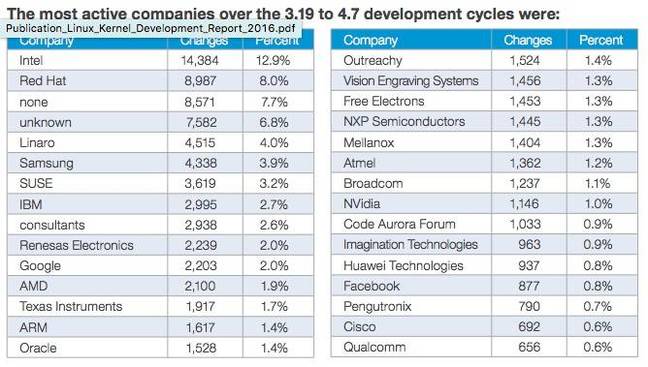
For example, everybody on the planet is now familiar with soft drinks. If anybody has never tasted Coke, it's not by accident. But Coke's ad budget is enormous. If all soft drink companies stopped advertising tomorrow, society would not be worse off. And we'd have billions of dollars [1] to spend on something useful.
Like the author, I won't work on ad tech. I don't like manipulation and I don't like waste, and most advertising is both.
[1] e.g., https://notesmatic.com/pepsico-advertising-and-marketing-bud... https://www.investopedia.com/articles/markets/081315/look-co...