Write for yourself, because you enjoy writing, and don't worry whether anyone reads your writing. If someone reads it and enjoys it, all the better. If not, your personal satisfaction is the reward.
How did these hammerhead worms arrive in Ontario? As for earthworms, are they native to Ontario? I thought I had read that earthworms are not native to the glaciated parts of North America.
The problem is money. Burning fossil fuels is profitable, not burning them is not. If you want to make money then you must opt into the fossil fuel economy and utilize whatever resources are available to increase GDP. It wouldn't be much of a conceptual leap to consider the global economy a death cult (40k+ drivers are killed every year on the freeway before we even get to side-effects of pollution). Everyone knows what the inevitable endpoint is going to be but no one is willing to do anything about it. But as a techno-optimist and singularitarian I believe AGI will save all of us for a mere $80B so tell all your VC friends how cheaply I can save the world. All I need is the GPUs and compute fabric to build the "panoptic computronium cathedral"™ and enact a world government managed purely by algorithms and math.
It started off well. I thought this idea was insightful:
"This is often the real challenge to tech incumbents: once the network effects are locked in, it’s very hard to get people to switch to something that’s roughly the same but 10% better - they switch to something that solves one underlying need in an entirely new way."
I would love to be able to image elements inside a wall cavity: studs, pipes, ductwork, electrical lines. I don't know if it's possible with this technique, but maybe someday these ideas will lead to something like an x-ray for building structures.
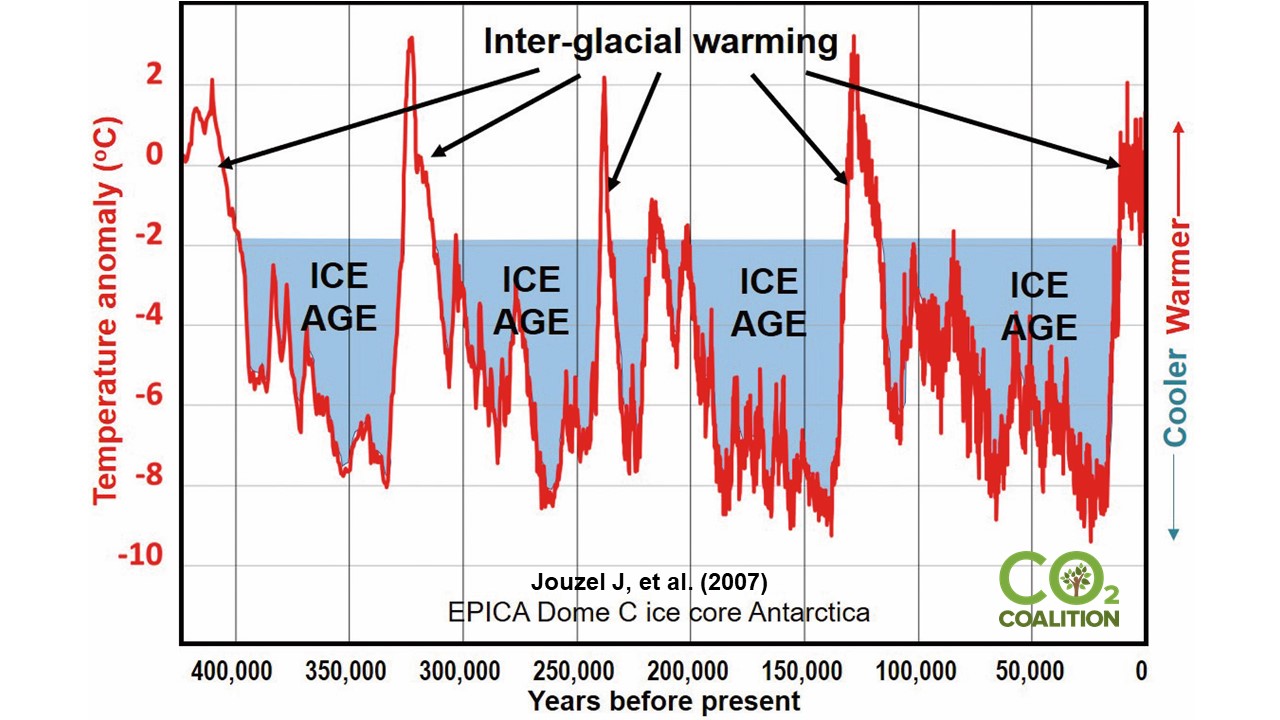
Interesting: "Towards the base, the ice is more than 120,000 years old and dates back to the last interglacial period, a time when the atmospheric temperature above Greenland was 5°C warmer than today."
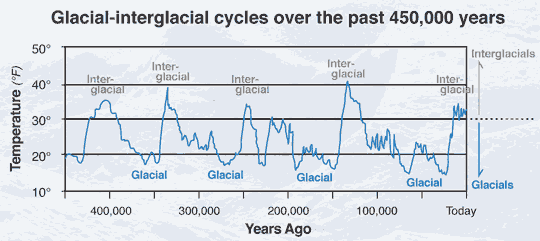
It also shows how crazy it would be if we get the projected 2-3 degrees average temperature increase. Even in a period where we'd expect to be going into a new ice age; instead shooting to a previously unseen high temperature.
On the other hand if we only have 2-3 degrees of warming, if that’s enough to prevent the next ice age, didn’t we just dodge a massive icy bullet? Might we not one day thank ourselves for doing something reckless and stupid that actually worked out?
Yeah a warmer climate brings all kinds of horrible changes. But food still grows in the northern hemisphere. A colder climate is arguably even worse for us.
By the way, that’s no excuse to keep doing what we’re doing. Limiting warning at 2-3 degrees will be nice. Things get really horrific above 4. At some unknown point feedback cycles really kick in and we go to 5-10 degrees and get completely fucked. We really have to not find out where that threshold is.
There's no bullet to dodge. Minus human intervention, the next ice age would be in 50,000 years. Humanity will be either some unrecognizable scifi trope or, more likely, long gone by then. Planning for it is pointless.
The time scales for anthropogenic climate change and the previous temperature cycles are so different as to not be comparable.
> Minus human intervention, the next ice age would be in 50,000 years. Humanity will be either some unrecognizable scifi trope or, more likely, long gone by then.
I think you are overestimating the probability that humanity would be "long gone by then". Even if a series of catastrophic events + climate change make life as we know it (modern civilization, globalized society/trade) untenable, humans are smart and many places on earth are reasonably forgiving to survival. Not saying it would be comfortable tho.
I’m just saying that a silver lining of the mess we’ve made is that we probably won’t have that ice age in 50,000 years. We’ve likely disrupted the cycle.
It’s mostly caused by Milankovitch cycles. Which are cyclic variations in our orbit around the sun.
The earth varies in distance to the sun and axial tilt and precession. Like waves, there factors can either overlap and somewhat cancel or they can stack for a larger effect.
ice ages didn't happen until after the asteroid strike. Antarctica moving into the south pole is likely a large part of it, but they don't really understand ice ages that well TBO. Anyhoo, the Earth was a lot warmer prior to the strike and we have been going through extinction events every 100k years.
By "the" asteroid strike I'm guessing you mean the one 66M years ago? There were definitely ice ages before that, likely including one or more Snowball Earth phases (the whole surface frozen): https://en.wikipedia.org/wiki/Snowball_Earth.
What I gathered is that if the gulf stream stops, warm water will no longer flow north and the ice sheets will grow explosively, triggering an ice age (the kind where thick ice sheets flow southwards). That would pretty much wipe out anything built in the northern half of Europe... although granted, I don't know if it was like a kilometer high ice sheet rolling our way or how fast it went in previous ice ages, it might be slow enough that it can be stopped and broken down before it causes damage.
This is 99% conjecture. The current climate models do not predict those kinds of changes and most don’t have the fidelity to do so. Even the best models can’t account for simple things like aerosol pollution and they don’t have the resolution to determine the behaviour of ocean or atmospheric currents.
Early onset of glaciation via warming instead of cooling. Counter intuitive idea.
It’s unclear that it would play out that way. One could look at what happened the last time it stopped to get some idea, but things are different this time. We have a lot more atmospheric CO2.
  * 170,000 years ago: humans are wearing clothing by this date.
  * 125,000 years ago: the peak of the Eemian interglacial period.
  * ~120,000 years ago: possibly the earliest evidence of use of symbols etched onto bone
  * 75,000 years ago: Toba Volcano supereruption that may have contributed to human populations being lowered to about 15,000 people
The Eemian climate is believed to have been warmer than the current Holocene. Changes in the Earth's orbital parameters from today (greater obliquity and eccentricity, and perihelion), known as Milankovitch cycles, probably led to greater seasonal temperature variations in the Northern Hemisphere. During the northern summer, temperatures in the Arctic region were about 2-4 °C higher than in 2011.
The hippopotamus was distributed as far north as the rivers Rhine and Thames. . . . The prairie-forest boundary in the Great Plains of the United States lay further west near Lubbock, Texas, whereas the current boundary is near Dallas. . . . Sea level at peak was probably 6 to 9 metres (20 to 30 feet) higher than today . . . .
There is definite evidence of hominins in North America 130,000 years ago (search "Cerutti mastodon"). Nobody knows if they were H. erectus, Neanderthal, Denisovan, modern humans, or "other", but with an interglacial at 125,000 years ago, it is not hard to see how they could have got here.
Wikipedia over-represents the opinions of retired professors. As Max Planck wrote, "Science advances one funeral at a time".
The usual shallow, reflexive objection is that the bones must have been broken and carefully re-arranged via being run over by construction equipment. This absurd suggestion has been very thoroughly demolished without assistance from construction equipment. It is hard for dump truck tires to produce green-stick fractures in 130,000-year-old bone, or to put bone fragments into the pores of stones and then move them yards away, all while underground.
This raises a very critical point. Nuclear is the only dependable energy source. Fossil fuels will run out or go out of favor. Solar and wind on the other hand will become victims of the next major volcanic eruption as ash destroys them or renders them ineffective.
Deep drilling based geothermal can fill this role too though - and does have the substantial benefit over nuclear that it leaves no surface-supply chains for resources (uranium).
Given that we're so close to being able to do it, we honestly need a Manhattan project initiative to push it through to reality (with the outcome being the machine and process to do the drilling).
An eruption significant enough to impact solar and wind generation globally will also affect other critical requirements of humanity, and the Earth's ecosystem, globally.
Which is to say: You Will Be Having Bigger Problems.
Recovery from regional meterological catastrophes is well within human capabilities.
I do think they are, but it's also (obviously) the case that if an eruption blotted out the sun and disrupted wind currents, having the ability to keep generating power would not help much because the plants and animals we eat would all die.
And what's with the weird tone? It's a super banal point that our food requires sun. I highly doubt you're "shocked" by it.
Nuclear facilities seem pretty fragile / demanding, I doubt one would survive any kind of apocalyptic event. The infrastructure supporting it will be gone.
Nuclear facilities can probably continue to operate amid persistent cloud cover and ash. Wind turbines and solar can not. Agriculture would have to shift artificially lit greenhouses.
Though as a corollary, such an event would be civilisation-ending in any regard.
It's also ... highly rare. Somewhere in the 1 in a million to 100 million year range, which is to say, not only longer than the planning horizon of most human institutions, but well outside the existence of the human species for the most part.
It's also well beyond the available supply of terrestrially-minable uranium,[1] and possibly of ocean-extracted uranium,[2] and thorium[3]. Breeders might be another option, though I've seen no substantive estimates of total fuel availability for that case either.[4]
But as an argument favouring nuclear over other energy options ... this is pretty silly, really.
About the only viable defence against such a risk would be, and I say this as someone who's markedly pessimistic on space colonisation, independent and self-sufficient habitations off-Earth: YACP.[5]
________________________________
Notes:
1. If we relied on naturally-occurring terrestrially-mined uranium for all present human energy consumption ... supplies would last fewer than two decades. This is seldom mentioned by nuclear advocates.
2. This offers a potentially much larger supply, as uranium is present as a solute in seawater, but viable industrial-scale extraction is unproven and would require filtering vast quantities of seawater.
3. Thorium is reasonably abundant, though I'm not quite sure how abundant. Thorium-based reactors are not much used, and the concept of molten-salt reactors (MSR) which gained some popularity in the past decade ... faces some very significant engineering hurdles. Managing high-temperature highly-corrosive radioactive salts is ... challenging.
4. Breeders produce plutonium. And now you have two, or more, problems.
"75,000 years ago: Toba Volcano supereruption that may have contributed to human populations being lowered to about 15,000 people."
The key question is: How much CO2 did that super-eruption emit into the atmosphere?
In our hurry to attribute climate change to our meager impact on this planet, we tend to forget what horrors an eruption of this magnitude can cause. And who knows how many of them happened during the past millennia.
Water vapour is consistently the most abundant volcanic gas, normally comprising more than 60% of total emissions. Carbon dioxide typically accounts for 10 to 40% of emissions.
Citing: H. Sigurdsson et al. (2000) Encyclopedia of Volcanoes, San Diego, Academic Press.
(Late edit: though I note that this seems to discuss percentages of gaseous emissions, not total ejecta. Anyone have a better source here?)
One of the largest volcanic events I'm aware of is the Siberian Traps eruption, about 250 mya, with a volume of about 4 million km^3, another three orders of magnitude greater than Tomba.
This has been linked to the Permian–Triassic mass extinction event, with the mechanism being release of methane clathrates and/or stimulating growth of a microbe which released vast quantities of methane into the atmosphere, killing ~81% of all extant marine species and 70% of terrestrial vertebrate species.
"The level of atmospheric carbon dioxide rose from around 400 ppm to 2,500 ppm with approximately 3,900 to 12,000 gigatonnes of carbon being added to the ocean-atmosphere system during this period."
-- Wikipedia, citing Wu, Yuyang; Chu, Daoliang; Tong, Jinnan; Song, Haijun; Dal Corso, Jacopo; Wignall, Paul B.; Song, Huyue; Du, Yong; Cui, Ying (9 April 2021). "Six-fold increase of atmospheric pCO2 during the Permian–Triassic mass extinction". Nature Communications. 12 (1): 2137. Bibcode:2021NatCo..12.2137W. doi:10.1038/s41467-021-22298-7.
Yeah, it's the comparison between DRE and Gas ejecta that got me bogged down before.
Having now given up, I asked ChatG4. It says "the mass ratio between DRE and gaseous emissions might be on the order of 20:1 to 100:1", no citations ofc.
So, just as a strawman and using your 10-40%, on the low end .01.1 = 0.001, high end .05.4 = 0.02. So .1%-2% of ejecta by mass is CO2 emissions. Hah :)
Using my orig figure for Toba of a billion gigatons of ejecta, of which roughly a million gigatons would be CO2. Correct math?
> And who knows how many of them happened during the past millennia.
We at least have a significantly large list of what we know [1] - that's part of the purpose of core drilling, the ash deposits worldwide can be linked together to estimate where ash traveled to. Also, craters and their surrounding can be drilled into to determine eruption events.
Not even close to what we as humans emit. The rate of the global annual natural CO2 emissions are 1-2 orders of magnitude slower than anthropogenic emissions.
Considering the rapid rise in temperature on a relatively miniscule geological timescale, I'd be more interested to see evidence that it's not a manmade phenomenon.
Iirc, the CO2 concentration now as been pumped up higher than it was then, which is in part what is worrying because temps might then potentially shoot even higher.
Bottom line: we need large scale carbon capture quickly because even if we reach net zero CO2 will take millenia to drop back to the level it was pre-industrial revolution.
Edit: I wouldn't focus on "pre-industrial levels" specifically, the point is that there is too much now so we most likely want concentration to drop as soon as possible.
One of the many misleading things done by climate scientists is to splice together data derived via different measurement methods.
The CO2 curve 800000 years back is an excellent example.
CO2 in air bubbles in ice will diffuse into the ice during the many millenia the ice have been stored under pressure. You can therefore expect the ice core CO2 to be lower than hypothetical atmospheric measurements at the same time.
The diffusion is expected to progress fastest at the start, and then more slowly.
Still the artifact is absolutely obvious as the CO2 concentration peaks are lower
and lower the further back in time it goes.
Yet of course someone had to splice it all together and not even add error bars.
Not sure if you are trolling of really believe this to be true, but for anyone else assuming good faith: The diffusion aspect is (of course) well-modeled, see e.g. references under "past greenhouse gasses" at [0].
They have found some meltwater layers with unexpectedly large quantities of CO2 > 750ppm.
But they also show that there is unexpected heavy diffusion around the meltwater layers. And they argue very compellingly, that the ice core CO2 records have been smoothed through natural diffusion.
Why is this information not given when showing this graph?
Where is it well-modelled? Noble gasses will diffuse differently from CO2. And on-top of diffusion of course CO2 will make hydrogen bonds with water in the ice.
It is well-understood that many ice cores give the same relative shape of peaks of various gasses through time.
Going from there to claiming knowing the absolue concentrations without very large error bars, is just not science.
"Carbon dioxide measurements from older ice in Greenland is less reliable, as meltwater layers have elevated carbon dioxide (CO2 is highly soluble in water)."
I do wonder if some of the "massed solar sail" ideas for terraforming Mars' atmosphere would work here (in short: use cellphone processors to build and launch a couple hundred thousand solar-sail equipped satellites).
Because it would be expensive, but it would kill several birds with one stone: we (1) prove whether the concept would work on Mars, (2) develop the technology to do it, and (3) unlike SO2 in the atmosphere, "switching it off" or modifying the scale of the effect can be done almost instantly (you could remove the swarm by having it fall back to an Earth orbit).
Is there anything left to really "figure out" about carbon capture? The tech works, it's just too expensive. Given a sufficient amount of cheap enough energy it could be scaled up as far as I understand.
As a layperson, it's just one more reason I so wish we'd invest in nuclear. Nuclear powered DAC plants might be the only way to scale it fast enough. Sure, it would still be expensive, but that's much cheaper than not massively reducing CO2 in the atmosphere.
Based on our record of environmental interventions; SO2 sounds suicidal. But it only lasts a few days in the atmosphere so maybe it has an in built off switch.
Note that is for the stratosphere, not the atmosphere.
The mechanism is well known from volcanic eruptions, and it only lasts (from memory) 1-2 years in the stratosphere, so if something goes wrong, it can easily be tapered off.
We have also pumped a very large amount of long-lived fluorine compounds into the air, that will last for centuries. They have from 2500x to 25000x times the "greenhouse gas warming potential", kg for kg. They are mostly refrigerants (CFCs, HFCs, and soon their successors) and transformer insulation gas (SF6). Volcanoes do emit some amount of fluorine compounds, too.
We also have a great deal of methane leakage, which is usually cited as 25-100x, and we may soon have a lot of hydrogen leakage, at >100x. Rocket launches are installing water vapor, another one, into the stratosphere like never before.
So even if we got CO2 down to a pre-industrial level, we would still have heat forcing from the fluorine- and other compounds.
Capturing CO2 is kind of pointless until we get emissions under control. I.e., a dollar spent preventing emissions buys much more than a dollar spent capturing. Solar panels and wind turbines directly displace mass emitters of CO2.
I don't know about all compounds but CFCs stay in atmosphere for about a century only and we've already banned them, and methane has a very short lifetime of about 12 years. So we 'only' need to control emissions of those to solve the problem.
On the other hand, as said, CO2 stays for centuries if not 1,000+ years so at this point net zero is only half the job though probably the hardest part.
Yes and: I understand that we want to prevent the non-human emissions from becoming a positive feedback loop. Meaning that at some tipping point, the thawing tundra, burning forests, and acidic oceans will continue to get worse, even if/when human emissions completely stop.
Pre-industrial CO2 concentration is synonymous with the "natural concentration", at least in the recent past. We made a very large change that has thrown Earth's systems out of equilibrium. Returning to pre-industrial CO2 levels would undo that change and bring things back towards equilibrium.
“Natural concentration” is not the right way to look at it because there are higher concentrations that predate the industrial revolution and humans. The all time high (that we know of) is from about 350,000 years ago. This was by all means natural and pre industrial revolution.
"The only known natural concentration empirically compatible with long-term human civilisation".
"The planet did exist/will exist just fine without us" is a pretty worn truism. You might as well wryly note that water isn't natural because everything was hydrogen once.
> empirically compatible with long-term human civilisation
Empirically observed, atmospheric CO2 went from ~320ppm to ~410ppm from 1970 to 2020[0], during which period the human population more than doubled from ~3.7B to ~7.8B and yet deaths caused by climate dropped threefold[1] (not 1/3 the rate; 1/3 in absolute number).
On the scale of human civilisation, 50 years is hardly "long term".
Polonium by that ultra-short-relative-term reckoning is not only harmless as it you still feel fine 10 minutes later, but actually healthsome as you rather feel refreshed by the delicious green tea you just drank in that 5-star hotel bar.
They are dynamical systems, there is no equilibrium. See also: climate charts for the last few ice age cycles.[1] In the bigger picture we want to modify Earth's climate and definitely do not want to end the current interglacial period, to be fair we've already done that, but returning to a "natural" pre-human climate cycle on the 10,000 year scale is not desirable.
Dynamical systems can have equilibrium points —- e.g. an inverted pendulum is stable when hanging straight down. If you deviate too far from an equilibrium point, the system may find another equilibrium that is less desirable for the user. I’m not an expert in climate change, but those things certainly happen for engines, robots, and other systems.
I like to think of it as scrappy terraforming because we aren't even sure we could handle any of the naturally occurring variation.
Scrappy because, well the planet doesn't quite become uninhabitable and we're starting from the end-game. Science fiction also had me expecting some very cool terraforming infrastructure, not psy-ops to get the serfs to eat bugs.
The point is that net zero is most likely not going to stop warming with 400+ppm CO2 in the atmosphere. CO2 concentration most likely has to drop but naturally it does so very slowly. Arguably at this point we already need cooling because 40+C every summer in half of Europe (for instance) is getting annoying...
Yeah it would be pretty silly for humanity to invest so much time and effort into lowering CO2 levels only for a Yellowstone or equivalent to erupt and send temperatures plummeting into a new ice age levels. When if humanity did nothing the eruption would only have taken us back to pre-industrial age temperatures.
That is the point where we started adding greenhouse gases that lock in energy from the sun, we need to at least get back to those levels to start releasing some of the heat. Otherwise we're containing to add insulation to an oven that already overheating - you'd ideally want to take off all the insulation and the metal casing since you can't turn off the heat, but the casing isn't an option so we need to remove the insulation and hope it hasn't gotten too bad yet
I think people who are not already familiar with the known history of the Earth find it interesting that there have been higher CO2 levels and temps than there are now.
And I agree: the history of the Earth is interesting. Which is why so many people study and work in the field of geology.
It's interesting because the whole ice cap as we know it is around 120k years ago which I don't consider the long ago on human development scale. This also appears to mean that in the past 120K there wasn't a polar ice cap. I read that as the worst case scenario we should be using for long term planning. This also may help determine how fast the ice was built and how fast it will melt.
This will also assuredly fuel some interesting ideas about the origin of the Piri Reis map. A 120k year old ice sheet could mean that humans once lived on Antarctica.
It does make one wonder if any ancient sea fearing humans happened to carve a world map into a durable material such as granite which could have survived until the modern historic era. Maybe such a map, or other mythological artifact fueld the Roman idea of Terra Australis Incognita
The Polynesians used stick maps to identify currents and land masses relative positions.
With no evidence I believe navigation cues were built into the vessel. By keeping celestial bodies aligned with marks on the vessel one can achieve a seasonal calendar as well as documentation on how to modify the configuration for the next leg of the journey.
IIRC the 'maps' made of organic materials were very much a rarity slash teaching aid for the later incarnations of traditional navigation cultures of the Pacific which we have surviving material on. Mostly they used mental maps, and of course the most sensitive instruments available at the time ... at least one example of which was hanging their balls off the edge of the canoe to see if they could detect a temperature shift. A good book on the subject is We: The Navigators though it draws only from one area.
Source: Have a Pacific art collection, have been to most of the major museums on the subject, interested in sailing, authored some of the Wikipedia (featured) articles on related watercraft.
Yep. All art is interesting for its relative flattening of multi-dimensional realities in to lesser-dimensional representations. Key concerns for the navigators were signals such as migration patterns, seaweed and other flotsam drift currents, temperatures of said currents, star positions, wave qualities, dominant wind directions, conditions and precipitation and cloud over seasons. These dynamic realities cannot be flattened in to any standard two dimensional representations even today, yet often emanate from or are disturbed by the often-tiny landmasses they would specify as origin, destination or reference points within the navigation problem. In the same way modern navigation uses multi-layered systems like bathymetric maps, local depth sensors, RADAR, GPS and navigation lights to provide orientation and safe passage amongst static and dynamic obstacles, so too the traditional navigators combined layers of sensory input considered too subtle for modern systems yet potentially equally effective in their place and season.
Maybe humans become more developed because it got colder? Even on a country and global scale, the south is usually "behind" the north. It's hot, no one wants to do anything.
The American south (Arizona, Florida) were tiny and unimportant until air conditioning entered the chat. Phoenix was at 100 thousand people in the fifties.
The cold makes us think, the cold make us survive, keeps us on the edge - where we need to be. Respek the cold!
All of the world's "great" civilizations come from places with strong seasonality. The ones that didn't have winters had flooding seasons and dry seasons. Some of them had both. It also doesn't need to be bitterly cold for winter to have an effect on crops.
Sumeria and Egypt both had seasonal flooding. Italy and Greece have winters that are cold enough to disrupt agriculture. The Aztecs and Mayans had seasonal floods. The ancient Chinese empires had both. Japan has winters. The list goes on.
On the other hand there’s something to be said for a comfortable climate that leaves people with time to think when the everyday isn’t a constant complex struggle.
The Inuits of Greenland and Sami people of Lapland didn’t have Aristotle or Confucius.
Maybe there's a "sweet spot". Too warm and not enough seasonality leads cultures to not be that productive, but too cold and daily life is just too much of a struggle to invent calculus. Greenland and Lapland are probably too far north to have decent agriculture, and never had large enough populations to develop much civilization. Cultures that had people like Aristotle or Confucius had very large populations for the time.
That we know of; did they have a system of writing?
I find it hard to believe they wouldn't philosophise at all. Confucius got famous (like sun tzu et al) because his ideas were written down, published and spread.
The number of different words they have for snow and ice demonstrates a cultural understand of distinct attributes of objects. I think this would be the first step of consciousness understand one thing as distinct and separate from another.
That is only due to writing. I always felt that the high latitude civilizations led to technological development due to the high risk and high solitude.
I find it interesting because it raises questions that I don't have answers to. For example:
- What caused the temperature above Greenland to be 5°C warmer than today? Why is it cooler now compared to 120,000 years ago? What causes the interglacial periods? Is glaciation the more common state of the climate?
- The article says the ice sheet is melting at the bottom? Why? Pressure from above? Friction from movement? Heat from the Earth? Something else?
- Was the ice sheet shrinking or growing when the temperatures above Greenland were 5°C warmer than now? Does existence of the ice sheet imply that 5°C warmer for some period of time is not enough to melt the Greenland ice sheet?
- How much climate data has been lost to melting from the bottom? Is the ice sheet thickening or thinning compared 120,000 years ago? How would we know?
- How much has the Greenland land mass moved in 120,000 years due to plate tectonics? Could this have impacted the ice sheet in this short amount of time?
- Humans adapt. How did humans adapt to a climate that was warmer by up to 5°C 120,000 years ago?
- How long did the warm temperatures persist 120,000 years ago? 10,000 years? 50,000 years? Or more?
- Could a cooling climate be more worrisome to humanity than a warming one?
the drilling allows sampling of environmental components over extended period of time. this meas a historic record of, gases, ash, soot, pollen, spores, silt, insects, plant animals, metals, salts.....
It's not scientifically interesting, the glacial-interglacial cycles are pretty well established. I'm guessing they're trying to insinuate some climate change minimalism argument.
Just in case this is just a case of word confusion (which I've had before), "anthropogenic" means "caused by humans", not "occurring at the same time as humans".
I read it but I didn't take it as proof. A team of people when faced with a mystery and the came up with an answer.
They is not the same as proof in my book. I also did poorly in school. I'm not good at taking this as stated. I enjoy wallowing in the unknown rather than believe everything I'm told to me own detriment.
A wikipedia article does not pretend to be proof. It is a summary. For proof you would need to look at the, y'know, evidence. The decay rates of the isotopes involved are known exactly. It is hard to find anything more certain than timelines revealed by radioactive decay.
You don't need to be able to start a fire, when you keep the fire burning all the time. And you can do that, once you control the fire and figure out the difference between dry and wet wood.
Also humans are the dominating species on land since quite a while. Hunting certain species to extinctiom has certain effects on the local ecosystem and globally on the global climate. It all adds up.
But things surely changed in dimension since industrialisation.
People had fire in those times but it's extremely unlikely they produced enough CO2 to have an anthropogenic impact on the climate leading to large-scale temperature changes.
I'm not sure what your perspective on this situation is but I think the case for modern anthropogenic climate change with deleterious effects is based on a wide range of different evidence, and a careful accumulation of facts and analysis. Simply pointing out that humans had fire 2Mya doesn't change the general conclusion about today.
I suspect gr main change caused by humans >100 k years ago will be wiping out various species and starting fires in seasons and places where fires wouldn't normally start (eg. In places without dry lightning or volcanoes - the only two other ways fires naturally start)
People worry about accelerating climate change now because we live here now.
It’s not a theoretical science thing. We have farms and cities and towns and bridges and dams and reservoirs in particular places, and we are accelerating the depreciation of many of them. The result will be tremendous loss of wealth, movement of populations, and the associated social consequences of those.
Humanity doesn’t hate itself, we like ourselves, which is why we are so concerned about what we are doing to ourselves.
> Humanity doesn’t hate itself, we like ourselves, which is why we are so concerned about what we are doing to ourselves.
Yeah. The argument that single cellular life or some small animals might survive and eventually evolve into something else is a bit weird for people who are hoping they don't die out like many species have in the past when there have been major changes to climate and carbon levels.
Because it forces us to recognize that the risk isn't to "the Earth" as a separate entity, but to ourselves specifically (well, our future descendants).
We've already confirmed through our behavior that humans largely don't care about any other part of the Earth ecosystem, so asking people to basically do the right thing as a favor to the Earth are probably wasting their time.
I swear, if one more person quotes an old George Carlin bit, as if it were still clever or useful...or as if said person didn't know what was meant by the statement.
Yeah but there is more to it. There are active crisis, like cancer & heart disease. Or upcoming ones like Alzeimer & Parkinson. That in the current day already affect more people per year, then the climate crisis will affect in the worst prognoses in a 100 years*.
But Climate change is different, it speaks to the psyche of humans, the modern story of the flood. And in the same way it gives people meaning & without religion in the West they form morality around it. Those for it, are good, those against it, are bad.
That doesn't mean its not something important or real, and we have to solve it. But it's one of the many things for us humans to solve.
*In worst prognoses, climate changes will affect 10 mil deaths per year, which is the same amount cancer is doing every year today.
Can you provide the citations for that? Migration forecasts are absolutely enormous [1] and 10 million seems very low in terms of relation to the numbers and how humanity will react to it all. Just think of the current reactions to migration currently and multiply that 10-fold or more. And I can see that happening in the next 20 years.
I mean there are a bunch of studies and articles, with an extreme wide range. It also difficult to count. For instance if a heat wave leads to heart attack in an obese person, should that be included, etc.
Thanks. For me, I just do not think humanity in its current state could handle the the massive amount of migration that could potentially happen without ugly political upheavals and conflict. I guess we will find out.
Except that neither of the things you mention affects more people than climate change will. The estimate is that there are about 54 M people World wide suffering from alzheimer.
To put that into perspective the average altitude of Bangladesh is 9m above sea level, but the majority of the population lives in he south at about 0-1m of altitude. So there would just in Bangladesh alone be more people (let's say 50% of 160M) directly affected by climate change than alzheimer world wide. We are not even talking about the indirect effects of displacing 60M people, all the other countries and all the other effects of climate change.
Apart from that, the argument is under the false premise that we shouldnt do anything anyway because there is worse things. By that argument we should also not do something about alzheimer, because more people die of cancer.
So I question what your aim was with your argument. It was clearly using wrong facts and was under a false premise.
Just because they will below sea level doesn't mean they will all die. That's a bit ludicrous. Even more ludicrous are your nrs 4-5 meters, will get to that.
Whole of Holland is below sea level at the moment. Yet we are miraculously sitil alive.
To take it further, in a 100 years every house in Holland that's here now will still be standing.
Now certain countries don't have the skills that the Dutch have, and we should help them. But this isn't something that will come unexpected, so we have the time to do so. Half of Dubai was created out of the sea.
Although indeed the temperatures and GHG have been lower and higher on Earth before, that was never with the amount of humans we have now. Our economy and society is quite optimised and our infrastructure hubs are largely located on coasts. Our prosperity also relies on a large amount of sophisticated technology that is hard to replace and to bootstrap.
So although the human species will probably survive a drastic climate change, many individuals will not due to famine, lack of medical supplies and care, and war over the remaining resources.
Oh shut it. You can't have any knowledge at all about this issue and not appreciate that the problem is not temperature as such but the rapidity of the change - over 150 years rather than 15000. Your troll post is an insult to intelligence.
Folks, don't waste your time trying to reason with such bad-faith arguments. It's a form of theft, because the time cost to refute bullshit is about 10x that to spew bullshit. And the above post is just that - bullshit.
Before someone invokes the HN guidelines and talks about curious conversation, recognize that throwing phrases like 'doomsday cult' into a discussion of a serious scientific project that has hit a milestone after many years of effort has only one purpose, and that is to derail. Flagging and downvoting are all very well, but there are also times when it's necessary to call bullshit.
You seem angry, so I'm going to try to explain (from my perspective) why someone may have the perception that you reacted to.
There is plenty of criticism over relying on mathematical models that fail to accurately predict the future (all of the glaciers were predicted to have melted 3 years ago, snow was supposed to have been a thing of the past, etc.), cherry picking data, questionable measurement & sampling, not considering other forcing inputs, etc. It's a complicated claim that has valid criticism on it's foundational pieces If any foundational premise of the claim is invalidated, the entire model is invalidated. The consensus models are complicated so I'm not surprised that it has a difficult time standing up against scrutiny & needs to be adjusted frequently.
There is also dissent among scientists, including from Nobel Laureates (who had opportunities cancelled after dissenting). "The doomsday cult" reference comes from the doom & gloom sensationalism. For example, I a heard chorus of "we are fucked" from coworkers in the office about 15 years ago in response to some news back then. I don't agree that "we are fucked". Humans have been through more environmentally challenging times with less technology & global knowledge.
The climate is changing...always has changed & always will change. What are we going to do about it? Are we going to pretend that we can stave off the inevitable, taxing/restricting the population which weakens their ability to adjust to these inevitable changes...while wealth is concentrated to the elites? There is a widespread perception that is happening. When the issues reach it's crescendo later in this decade & the fallout in the 2030s (winter occurs after the Solar Solstice, solar exposure increases during winter), there will be many who will not buy the APGW narrative as the reason for their problems. The peaceful solution is a decoupling from systems that don't benefit the person/group, which I expect to happen. Others, such as Peter Turchin think there is a high probability of violent uprising & he seems to think addressing APGW is a unifying force...I disagree on both premises but I think his analysis is valid & worth getting into.
I think the animus generated by climate alarmism putting the blame on the population reduces effective cooperation among people & will be exasperated as the climate does change, as the Geomagnetic wander deepens in it's cycle, as magnetic fields fluctuate in our solar system, etc. A spirit of cooperation will unify humanity while the blame game will cause conflict. Doom & gloom is unhelpful. The "doomsday cult" will increase in their doom & gloom as people walk away from their petulance & their social leverage wanes.
> all of the glaciers were predicted to have melted 3 years ago
I don't think any mainstream models predicted that? Which model was that?
Also remember that our actions are influenced by models. "If current trends persist, then in 20 years [...]" may very well be true, but if we take action based on those predictions (e.g. change the trend) then the outcome will be different.
You can see this clearly in population levels of things like elephants[1] or whales[2]: people who were predicting the extinction of whales and elephants weren't wrong.
Also, the ozone holes, acid rain, and things like Y2K. “This thing would have been very bad, but we (expensively, with great effort) fixed it, so it was okay” somehow becomes, in the public imagination, “this was not a real thing”.
Yup, loads of examples! I really like the population levels of threatened species because the charts for that are so incredible concrete and demonstrate the point very well in a very concise manner. Something like Y2K or acid rain is a lot less concrete.
The population levels of threatened species is a straightforward model with predictive value unlike the climate models. One issue with the climate models the algorithm frequently changes, not all inputs are accounted for, measurement problems & factors introduced (the 1930s thermometer measurements were higher than the equal thermometer measurements today but factored to be lower in the model), and the length of natural cycles (many are longer than modern instrumentation & some last > 1000 years).
The most outlandish sensationalist claims grab mainstream attention (no snow by 2020) and when the predictions turn out not to be true, the advocates retreat to "well it was never a mainstream model". Classic Motte & Bailey. So in this case, the models that predict doom & gloom in the mid-term future saturate the media (Bailey) and when the predictions turn out to be false, it was claimed to never be a mainstream model (Motte).
If it's not a mainstream model, why are news outlets scaring the population with these fringe models? Even the IPCC director is chiding the doomsayers to not be so extreme in their prognostications.
Weather reports now use scary red color schemes to represent highs when a few years ago, higher highs were represented with a sun & blue color scheme. News coverage of heat outweigh coverage of summer time record lows & record sized hail in the mid US & Europe.
At the risk of being downvoted in bad faith by the doomsday cult, I will lay out a rationale of not giving into the doom & gloom, but rather to promote a more effective system of adaptation opposed to blind faith in institutions.
> Also, the ozone holes, acid rain, and things like Y2K. “This thing would have been very bad, but we (expensively, with great effort) fixed it, so it was okay” somehow becomes, in the public imagination, “this was not a real thing”.
The decrease in large volcanic eruptions had a large impact on the restoration of the ozone layer, which coincided with the ban on CFCs in 1987.
Don't get me wrong, I'm in favor of reducing air pollution. However, there are other factors. A new ozone hole was recently discovered & the "Cosmic Ray Electron Reaction" model shows that non-human factors have a significant impact. So we have three factors, such as volcanic eruptions, CFCs, & Cosmic Rays which can deplete the ozone layer.
I think this drives at the heart of this discussion. Even if we ban CFCs, holes in the ozone layer will still occur. Even if we ban CO2, climate change will still occur. Due to change being inevitable, the best investment is in adaptation. An effective system of adaptation covers all of the possible cases. Banning CO2/CFCs does not stop climate change/ozone layer depletion, leaving us in the same position of needing to adapt.
Adaption is pro-people while bans are pro-institutions. I favor helping the people in tangible ways instead of funneling money to large capital interests & the elite cadre. Funneling money to the elites always enables corruption & waste. I would rather everyone be strengthened to adapt to the coming changes to the climate instead of forcing them to have faith in institutions led by the elites that will be unable to stop the climate changes, but have promoted fringe models to scare the people into complying with funneling money to the elites.
The earth may have survived those changes, but not all its inhabitants may have. So there definitely is still reason to worry as far as humanity is concerned.
The major ecological shifts may bring change humanity does not bounce back from.
It is also because it will result in incredible levels of migration and competition for resources in the short term (ie wars). Yes, humanity will survive but it might make global shocks like the pandemic seem very tepid by comparison.
Please correct me if I'm wrong. The amplitudes of co2 ppm seem to always have been within a certain band though, topping out at 300ppm. Right now, we're at 420ppm and increasing what looks like exponentially. [0]
I'm not saying humans won't be fine but we've never been so dependent on the stability of the climate before. People will die, get displaced, suffer economically, etc as far as I understand.
It was over 4000ppm during the Cambrian period 500m years ago, then down to about where it is today in the Carboniferious period, during the 60 million year period where trees evolved to make wood, but nothing had evolved to eat it yet, so dead trees literally just piled up for 60 million years. Then during the Mezozoic it went up into the 2000s again, lots of dino farts or something? Then back under 1000 again and dropping until the last 100 years or so.
Of course, there were also mass migrations and extinctions as the environment changed so radically, which seems like something that would be nice to avoid.
> On the positive, the earth has been much warmer and much colder, and has had more carbon and less carbon in the atmosphere.
the way I read it suggesting that it'll be fine. But it won't be, if co2 increased to 4000 ppm quickly enough, humans would not be fine. There were no humans during the time you were describing.
It's not but it's also not much less time than what we consider "humans" to have been around and we're talking about co2 in the atmosphere in the context of whether humans will be fine or not.
A critical piece is the speed at which the climate is warming. The Earth has had much warmer and colder periods in its history that (most) life adapted to. However, life was only able to adapt happened because those changes happened at a sufficiently slow pace. To perhaps put the current trend in the context of geologic time, there have been 5 mass extinctions in the fossil record of life on Earth. These are associated with rapid changes in climate (e.g. asteroid impacts, large volcanic eruptions). Anthropogenic climate change is driving Earth's 6th mass extinction event. To be clear: what is happening now has not happened often in Earth's history. Life has survived, but it has not been pretty. Some alarmism is warranted from the ecosystem collapse alone.
Part of the problem, which you fail to address, is the time frame when these changes take place and the possibility of the ecosystem to adapt. Yes, we've been much cooler and much warmer, with these changes taking place over thousand of years: not a couple of centuries.
Not all natural disasters can be pinned into global warming (earthquakes for example), also some weather related disasters are caused by cyclical patterns (e.g. El Niño), but certainly the higher frequency (and potency) of some weather related disasters are already linked to human influence: https://news.un.org/en/story/2021/09/1098662
Is not doomsday as the world won't change overnight, but some areas of the globe will suffer a lot from the higher intensity of the weather and this will probably create a lot of global challenges and might bring (mostly) overcome tragedies, like widespread famine, back to the news
When temperature rises slowly, ecosystems adapt in parallel to the change. When temperature rises fast, ecosystems don't. And so we have major die-offs of coral and trees, without corresponding colonization in places where they could now live.
When CO2 rises slowly, the ocean's pH is buffered by large deposits of calcium carbonate on the bottom. When CO2 rises fast, we get ocean acidification, which is on track to be the most extreme shellfish extinction event in the last 50 million years.
Therefore larger absolute past climate changes were less likely to have extreme impacts than faster present climate changes.
The short term effects are all about the slope. And the short term is all that matter to us, because if we don't pass through this bottleneck we won't have a long term (it may well be our "great filter" preventing us from spreading through the stars)
>>"The doomsday cult saying we are all going to die, or that every single heat wave and natural disaster can be pinned on extra carbon, are just yet another in a long line of apocalyptic predictors"
The problem with this argument is that 'humans' surviving, is different than 'our nice comfortable human society' surviving.
Yes, the human species as an animal that can survive by foraging, probably will survive. That isn't a great argument.
I keep project notes in SnippetsLab. The Markdown support is great and I output really nice looking PDF files when I need to share something professional looking with management.