have you considered using https://github.com/hashicorp/terraform-exec to run terraform inside you go process to manage the entire AWS connection piece. Terraform being largely rock solid and frequently updated on this.
Thanks a lot for your advice, I work every day with Terraform and I understand what you mean, but that is out of the scope at least right now, I want to keep this tool as simple as possible, but definitely this worth an analysis
Nearly all modern SOCs have built in RAM now. Apple Silicon does it, AMD Strix Halo and beyond do it, Intel Lunar Lake does it, most ARM SOCs from vendors other than Apple do it…
Now, unified memory shared freely between CPU and GPU would be cool, like Apple and AMD SH have, if that’s what you meant.
AMD Strix Halo does not have on-package RAM. What makes it stand out from other x86 SoCs is that it has more memory channels, for a total of a 256-bit wide bus compared to 128-bit wide for all other recent consumer x86 processors.
Qualcomm's laptop chips thus far have also not had on-package RAM. They have announced that the top model from their upcoming Snapdragon X2 family will have a 192-bit wide memory bus, but the rest will still have a 128-bit memory bus.
Intel Lunar Lake did have on-package RAM, running at 8533 MT/s. This new Panther Lake family from Intel will run at 9600 MT/s for some of the configurations, with off-package RAM. All still with a 128-bit memory bus.
Isnt Strix Halo and apple's m series a bit different. Iirc you need to choose how much ram will be allocated to the igpu, whereas on mac it is all handled dynamically.
With Strix Halo there's two ways of going about it; either set how much memory you want allocated to GPU in BIOS (Less desirable), or set the memory allocation to the GPU to 512MB in the BIOS, and the driver will do it all dynamically much like on a Mac.
deepseek kind of innovated on this using off-the-shelf components right ?
to quote from their paper
"In order to ensure sufficient computational performance for DualPipe, we customize efficient
cross-node all-to-all communication kernels (including dispatching and combining) to conserve
the number of SMs dedicated to communication. The implementation of the kernels is codesigned with the MoE gating algorithm and the network topology of our cluster."
the Qualcomm Adreno 750 GPU is a Snapdragon Gen 3 device. This is basically an android device.
I wonder why Valve is maintaining a separate linux and driver fork for this. Snapdragon Gen 3 android game SDK works very well...including Windows emulation. https://www.youtube.com/watch?v=-hsQ_-8HV6g
not saying what Valve is doing is not spectacular. But i cant help but wonder if it isnt a more productive use of their resources to mainline this in Android ?
Maybe even accelerate the Desktop Android merge (which Qualcomm is pushing ! https://www.theverge.com/news/784381/qualcomm-ceo-seen-googl...)
Android that is Valve compatible will further Valve's goals of open platforms than maintaining their own fork.
If you want to "accelerate the Desktop Android merge" you need devices to be properly supported in the mainline kernel and Mesa stack, which is what everyone uses on desktop. This is what Valve is doing. Google may be merging Android and ChromeOS, but even ChromeOS is far from a true "desktop"-class OS.
this is pretty cool!
have you found success with image editing in nano banana - i mean photoshop-like stuff.
from your article i seem to wonder if nano banana is good for editing versus generating new images.
That IS the use-case for Nano Banana (as opposed to pure generative like Imagen4).
In my benchmarks, Nano-Banana scores a 7 out of 12. Seedream4 managed to outpace it, but Seedream can also introduce slight tone mapping variations. NB is the gold standard for highly localized edits.
Comparisons of Seedream4, NanoBanana, gpt-image-1, etc.
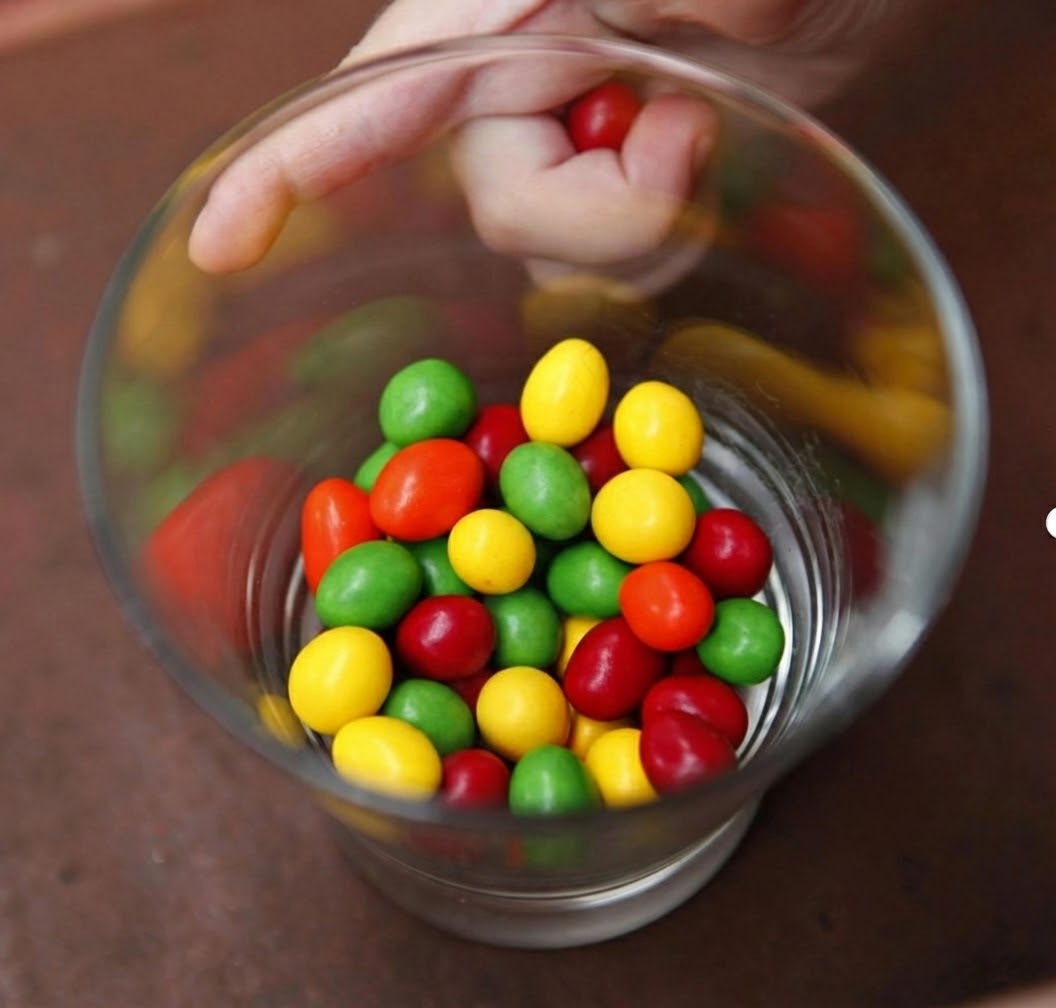
I tried your "Remove all the brown pieces of candy from the glass bowl." prompt against Nano Banana Pro and it converted them to green, which I think is a pass by your criteria. Original Nano Banana had failed that test because it changed the composition of the M&Ms.
Thanks Simon - I'm in the middle of re-running all my prompts through NB Pro at the moment. Nice to know it's already edged out the original. It also passed the SHRDLU test (swapping colored blocks) without cheating and just changing the colors. I'll have an update to the site shortly!
EDIT: Finished the comparisons. NB Pro scored a few more points than NB which was already super impressive.


Windows is the best (sandboxed) linux
reply