I won't make a claim to the accuracy of the numbers, but I can offer an example of how long COVID can be undercounted. My daughter was a competitive long distance runner. Months after recovering from the acute symptoms of COVID, her performance numbers were still about 10% down and no amount of training would allow her to reach her previous level of performance. After many visits to doctors and specialists, she was eventually diagnosed with long COVID due to lung damage. She's still very fast by most measures, but in track, the difference between being in the 99th percentile and the 89th percentile is the difference between a top 3 finish and a bottom 3 finish. This basically ended her track career. In our case, if we didn't have hard data tracking her before and after performance levels, we may not have ever noticed a difference. How many people who aren't competitive athletes are walking around with 10% degraded pulmonary function and just didn't notice?
It's a pretty sad reflection of the times that there's a need to create a throwaway account to talk about long COVID symptoms, but this is a good personal anecdote to draw attention to what's likely happening. In my case, I only caught covid once - somepoint last year just before I would've gotten the updated booster. It took me well over a year to stop having acute pulmonary issues, and my lung performance is down year over year (measured during high intensity training) even though I finally feel no differently at baseline than I did before I caught it.
Most people don't exploit the full capacity of their bodies and so would never notice, which is essentially the point OP is making. This disease very likely ravaged the 20% claimed, but the vast majority may never know because they're just never pushing their bodies hard enough.
I mainly created the throwaway because I'm sharing personal medical information and I'd rather not do that with my main account where people know me IRL.
It ought to be possible to test that hypothesis by comparing publicly available race results for the same athletes on the same courses before and after the pandemic relative to the expected age-related performance loss. Anecdotally as an age-group endurance athlete I'm not seeing any big declines in myself and my friends so I'm highly skeptical that 20% were "ravaged". The actual incidence of significant loss of pulmonary function is probably much lower although I have no idea as to the actual number.
If anyone wants to quantify this then Athlinks is a good place to start for race results. Obviously the data is somewhat noisy, like you'd have to throw out the slower finishers who maybe weren't trying hard. But if there's a significant correlation then it ought to show up.
> you'd have to throw out the slower finishers who maybe weren't trying hard. But if there's a significant correlation then it ought to show up.
Poor performers and no shows are exactly the population you’re looking for. To be clear the argument isn’t about a 10% decline across the board among people with long COVID as there’s non cardio pulmonary symptoms like brain fog, loss of smell, and difficulty sleeping.
If 80% of the fit population had COVID, 20% of them had long COVID, and half the people with long COVID had a 10% decline in race performance. That’s something like an overall 0.8% drop of performance assuming nobody dropped out or joined, but again you’re loosing people on both sides who were most impacted. Thus I’d be highly skeptical of finding an actual connection here rather than something else that impacts more people.
A more useful approach is to take a cohort of people who raced in 2019 and track what happened to every single one of them specifically.
This makes sense. I would've been marked as a "no show" because I had to rescind a job offer because of long COVID which lasted a year. From the government's point of view I was just an unremarkable figure prolonging my bout of unemployment when in fact I had a great job offer lined up that went to shit because I got COVID while on my little bit of celebratory vacation
The PVCs, adrenaline dumps, sleeping problems and anxiety/panic were insane! The doctor thought that my hypothalamus was inflamed because of COVID.
Did any treatments help? Or just took a long time to settle down?
When you mention “adrenaline” was this somehow tested or just a frequent feeling of being stressed when you had no reason for such?
I find finding the right type of specialist isn’t always straightforward and even when one does, about 80% of the time they aren’t interested in diagnosing anything not blatantly obvious…
This, and also brain fog – which unless it is truly debilitating is hard to prove, hard to treat, and can feel pointless to talk about after a while. You won't necessarily hear people talk about "having Long Covid" unless their symptoms are easily measurable and debilitating in a key area of their life. 20% sounds viable to me, too.
I was a highly trained endurance athlete my entire life and covid/long-covid absolutely destroyed all of that, permanently
After 5 years I would happily trade only a 10% performance loss for the days and nights full of nerve damage pain (neuropathy)and what seems to be 30% performance loss
BTW very relevant to your daughter's story:
the first year of long-covid I was absolutely certain I had permanent lung damage and started searching everywhere for solutions
There are two possibilities that might be hopeful for her
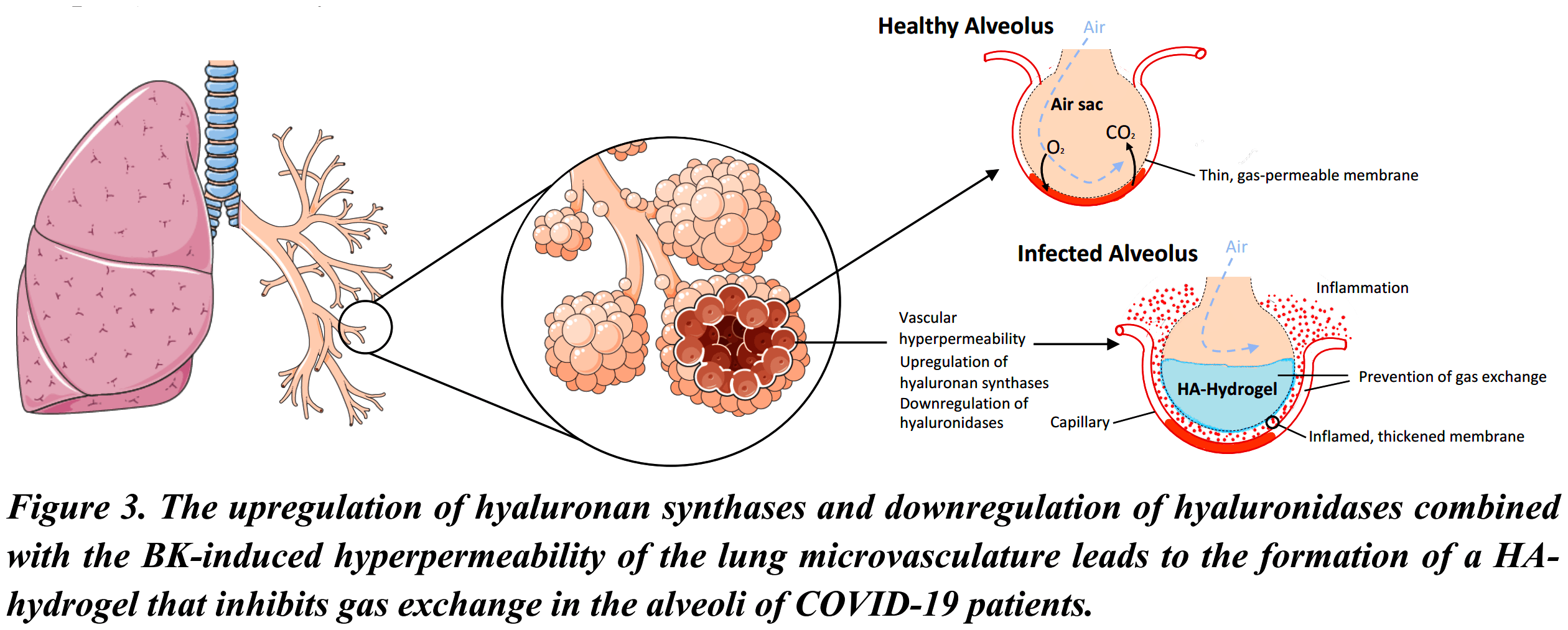
The first is that it might not be permanent alveoli damage (which do not regenerate in humans) but rather obstruction from a "hydrogel" that forms during active covid and takes many many months if not years to dissipate entirely
which are simple enzymes, you can buy Natto-Serra on Amazon and very very slowly perhaps over many months it might help her lungs (this is just a guess)
Thank you for the information, and I'm sorry to hear about your struggles.
> The first is that it might not be permanent alveoli damage (which do not regenerate in humans) but rather obstruction from a "hydrogel" that forms during active covid and takes many many months if not years to dissipate entirely
I didn't go into too much detail in my original post, but we think this is likely what happened to my daughter. Post-COVID, she could still go for long durations at 80% but when she pushed her limits, she would hit a wall and start to experience asthma like symptoms along with the feeling like she had mucous in her lungs that she couldn't get out. It took close to 2 years for her to stop experiencing those symptoms, at which point her competitive running peers had passed her by. She's happy to be able to enjoy running again but she did lose out on the competition part.